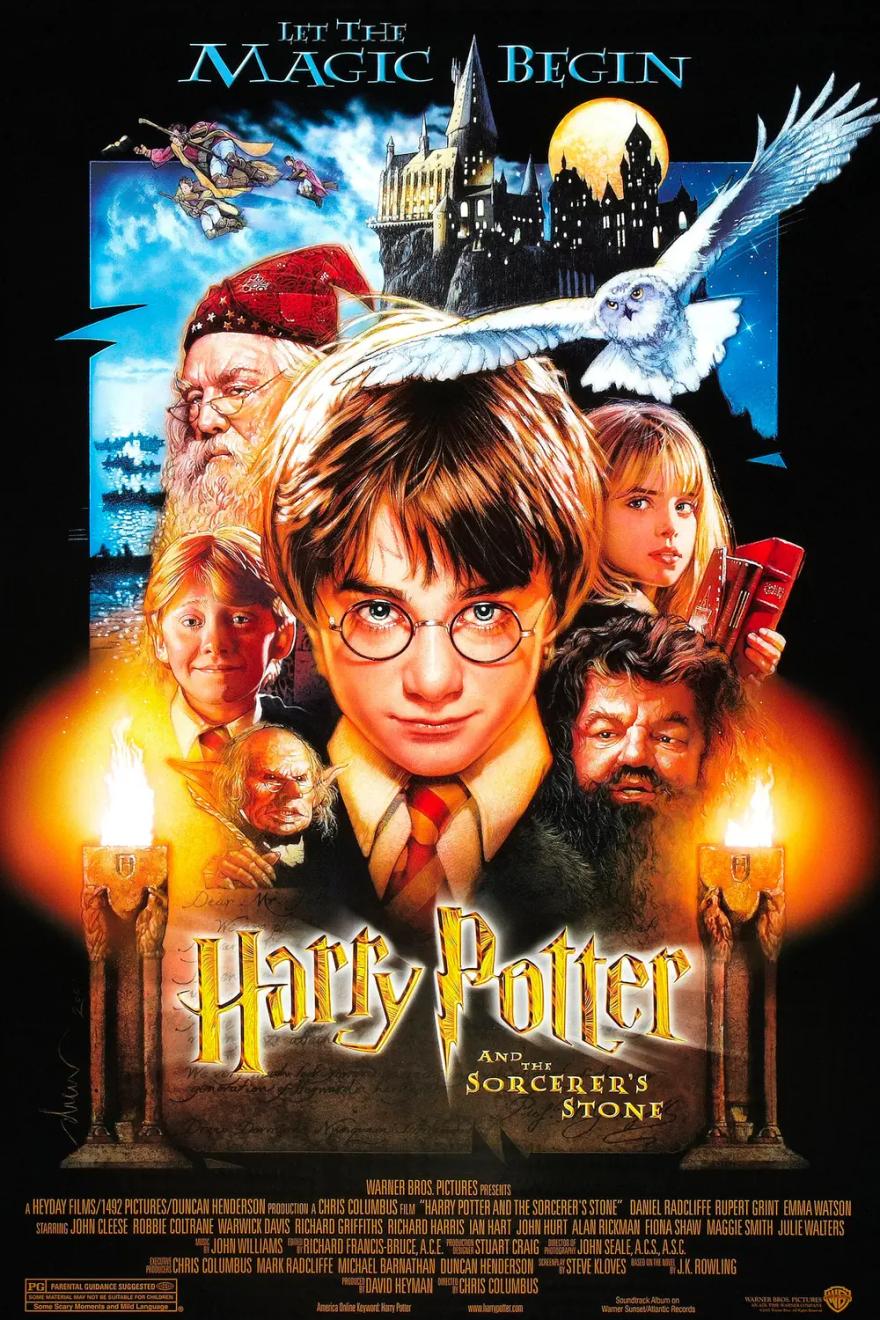
Before you press play
Watch if
You are a fan of the books, you like magic and the things around it, and you want a world that extends the one you already live in. Different enough to be worth the visit, close enough to still feel like ours. Mostly, you want to see what being there actually looks like.
Wait if
You are a book reader who does not get on with adaptations. That is the only real reason to hold off, and it is not a strong one.
Is Harry Potter and the Sorcerer's Stone worth watching?
Yes, and for a reason that is easy to miss. This is the film with more to introduce than any other in the series. Three leads, a school, a sport, a government, a dead set of parents, and a villain who barely appears. It mostly hands all of that over as Harry finds it out. There is plenty of explaining in here. What there is not is a first act that reads like a manual.
It runs two and a half hours. That is long, and it needs to be, because you cannot build mystique in a summary. Length is only a problem when a film stops holding you, and this one never does.
It is also, quietly, a detective story.
The Dursleys, and how the film gets Harry out
Harry (Daniel Radcliffe) starts as a servant in his aunt and uncle's house, sleeping in a cupboard and punished for things he cannot control. Chris Columbus takes his time getting him out, and the patience is the point. The glass vanishing at the zoo, then one letter, then a hundred, then a chimney firing them into the room like confetti. By the time Hagrid (Robbie Coltrane) kicks the door in on a rock in the middle of the sea, curiosity has been built rather than announced.
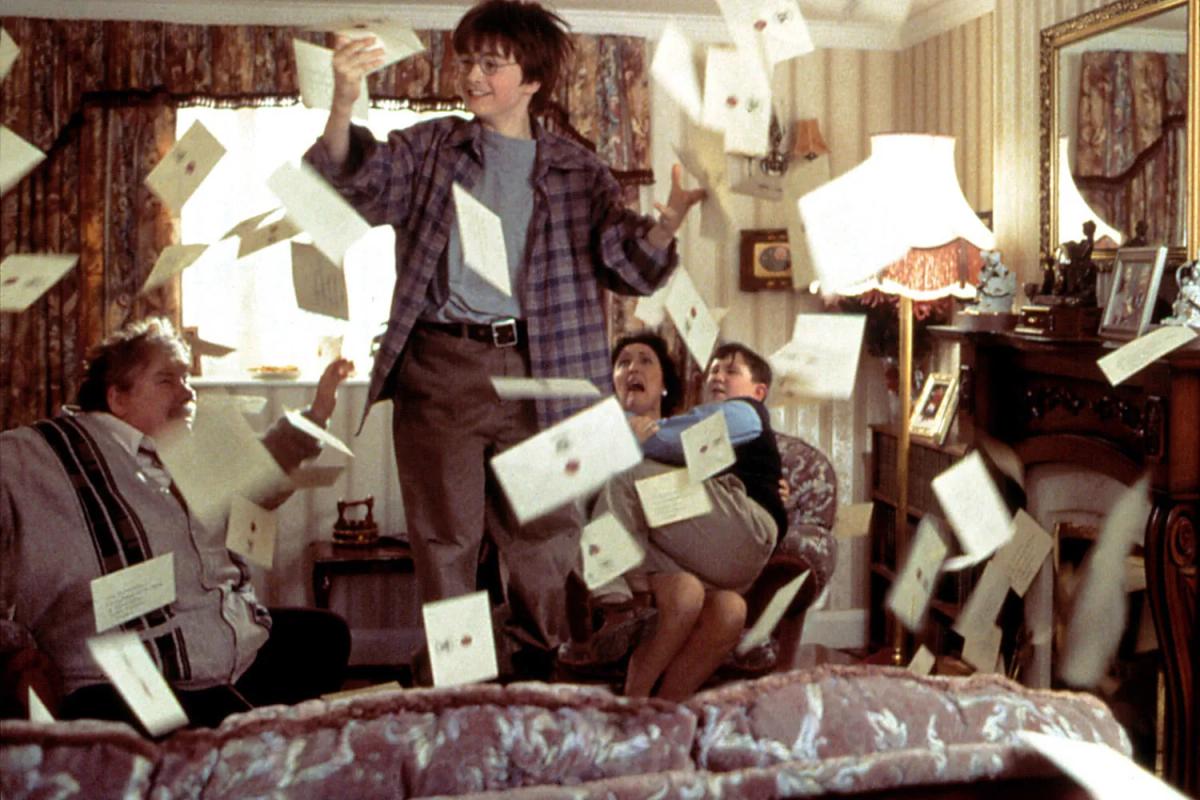
Then the film does the thing it does best. Harry walks into the Leaky Cauldron and the room stops. Everyone knows his name. He goes from a boy nobody wanted to a celebrity in one cut, and the film lets him be bewildered by it instead of pleased.
Daniel Radcliffe, Rupert Grint and Emma Watson as the trio
Radcliffe was eleven when filming started, and he carries the thing the part actually needs, which is not grief but disbelief. Ron (Rupert Grint) gets the thinnest arc of the three. He knows this world, he is a good friend, he is not a quick study. But he is the one who shows up when showing up costs him something. Hermione (Emma Watson) arrives on the train as a walking encyclopedia and only becomes a person after the troll, when it turns out she was crying in that bathroom because of something Ron said about her.
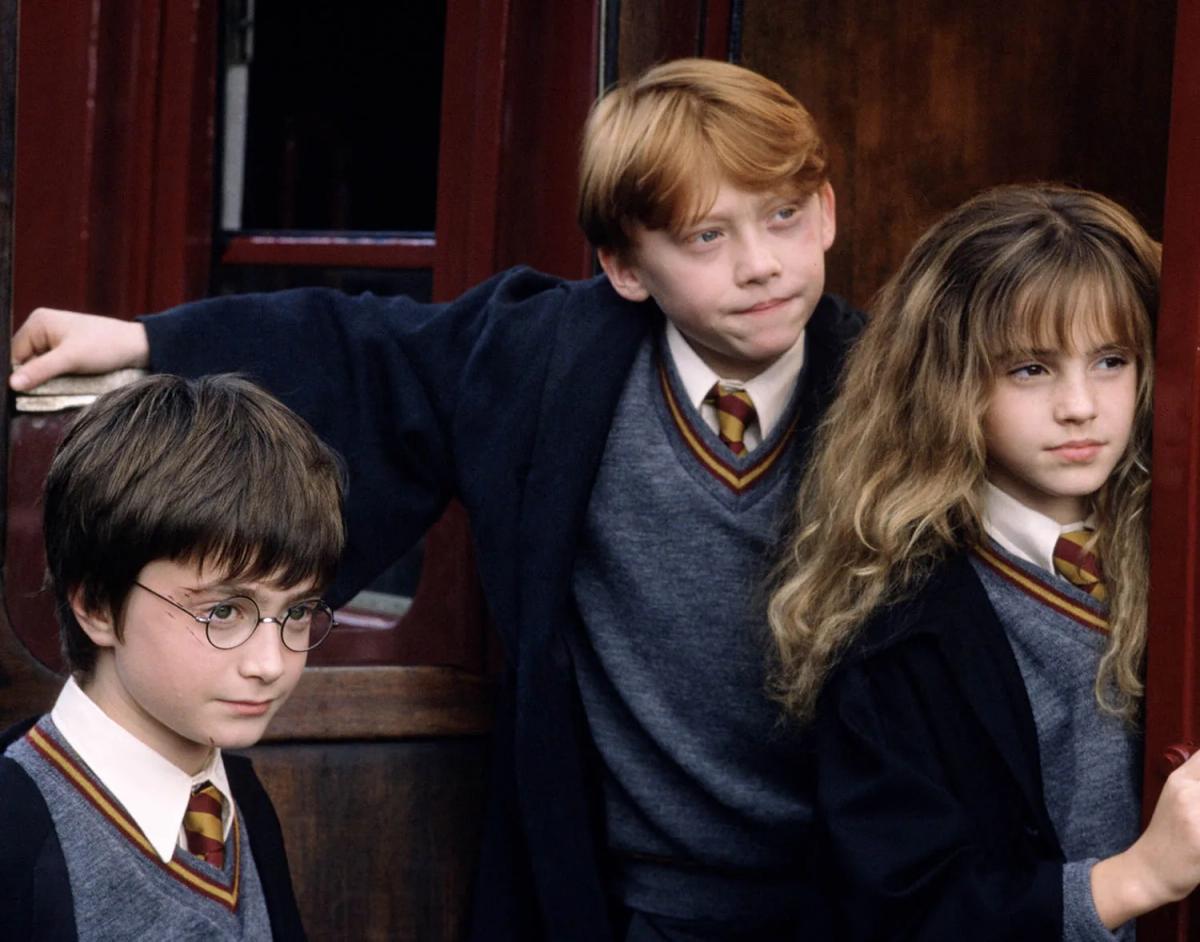
All three could plausibly have been sorted somewhere else. They are all in Gryffindor, and by the end you can see why.
The Mirror of Erised, and what it tells you about Harry
Harry finds a mirror in an empty room and sees his parents standing behind him. It is the best scene in the film and, at the time, it moves the story precisely nowhere. That is what it is for. It exists to tell you what he wants. Not revenge. Not answers. He wants to belong to somebody. He has an aunt, an uncle and a cousin, and the film has already shown you he is alone anyway. Dumbledore (Richard Harris) warns him that men have wasted away in front of it. You believe him.
The mystery running under the school story
Underneath the lessons and the Quidditch there is a culprit to find, and the film plays it straight. Suspects, motives, evidence, wrong conclusions. What makes it work is that the detectives are first-years who can only reason from what is in front of them. They watch Snape (Alan Rickman) humiliate Harry in class and mutter through a Quidditch match, and they draw the obvious line. Rickman plays him as something close to demonic. The walk, the pauses, the contempt for a child he has already decided about. The film is perfectly happy to let you draw that line with them.
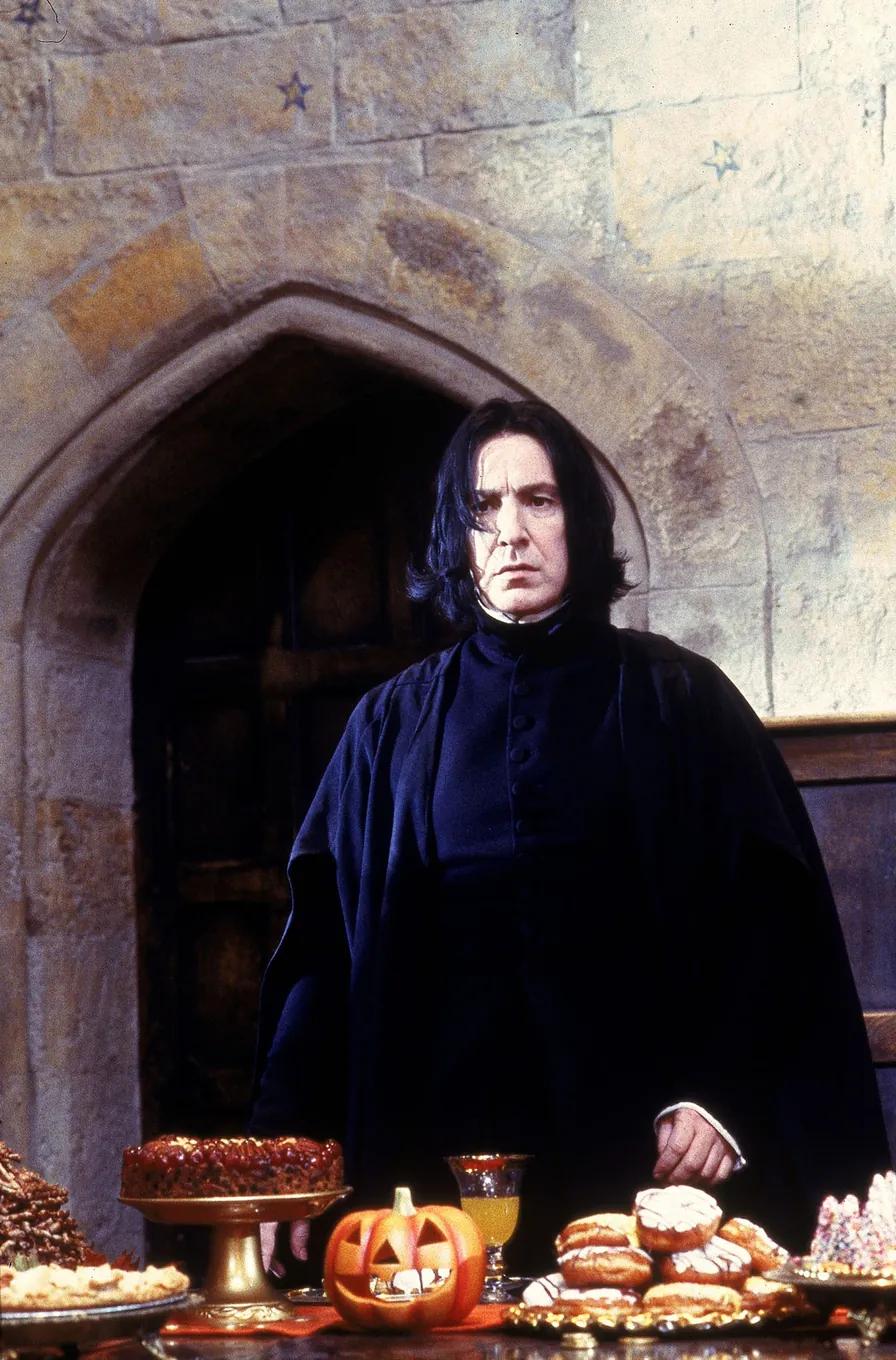
It is a mystery for the audience, not just for the three of them.
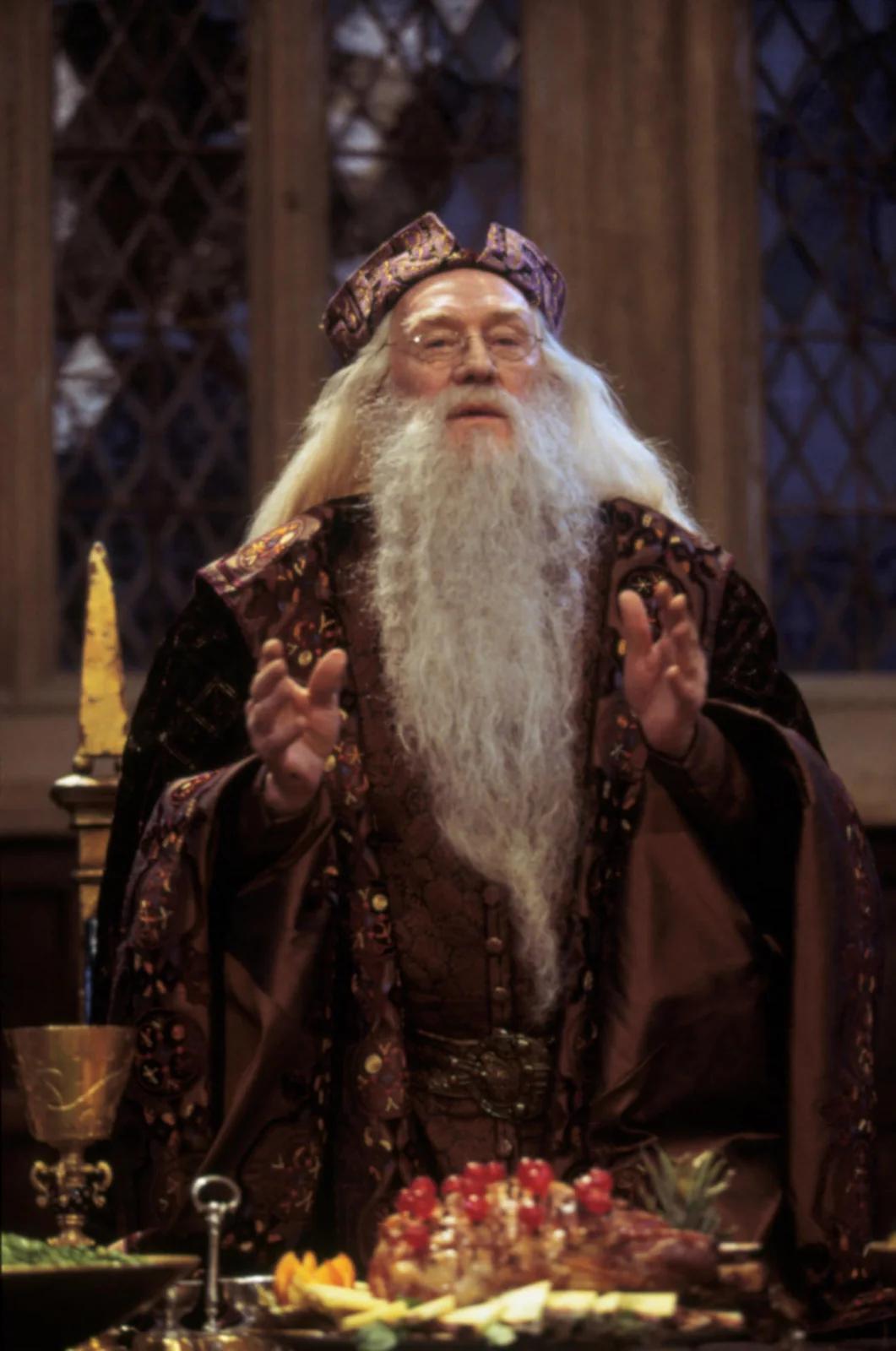
Richard Harris as Albus Dumbledore
Harris does nothing showy, and that is probably right. His Dumbledore is a grandfather. Warm, unhurried, there to stand between a child and the weather, rather than the sharper and stranger man the later films arrive at. On its own it is not the most interesting performance in the cast. Against this film it is the correct one, because a story about a boy nobody has ever looked after needs an adult who looks like he would.
Quidditch, John Williams and how the world was built
Quidditch earns its screen time. Muggles have football and cricket, and it would be strange if a hidden society had no game of its own. Giving them one with a ball that fights back is world-building wearing the costume of a set piece.
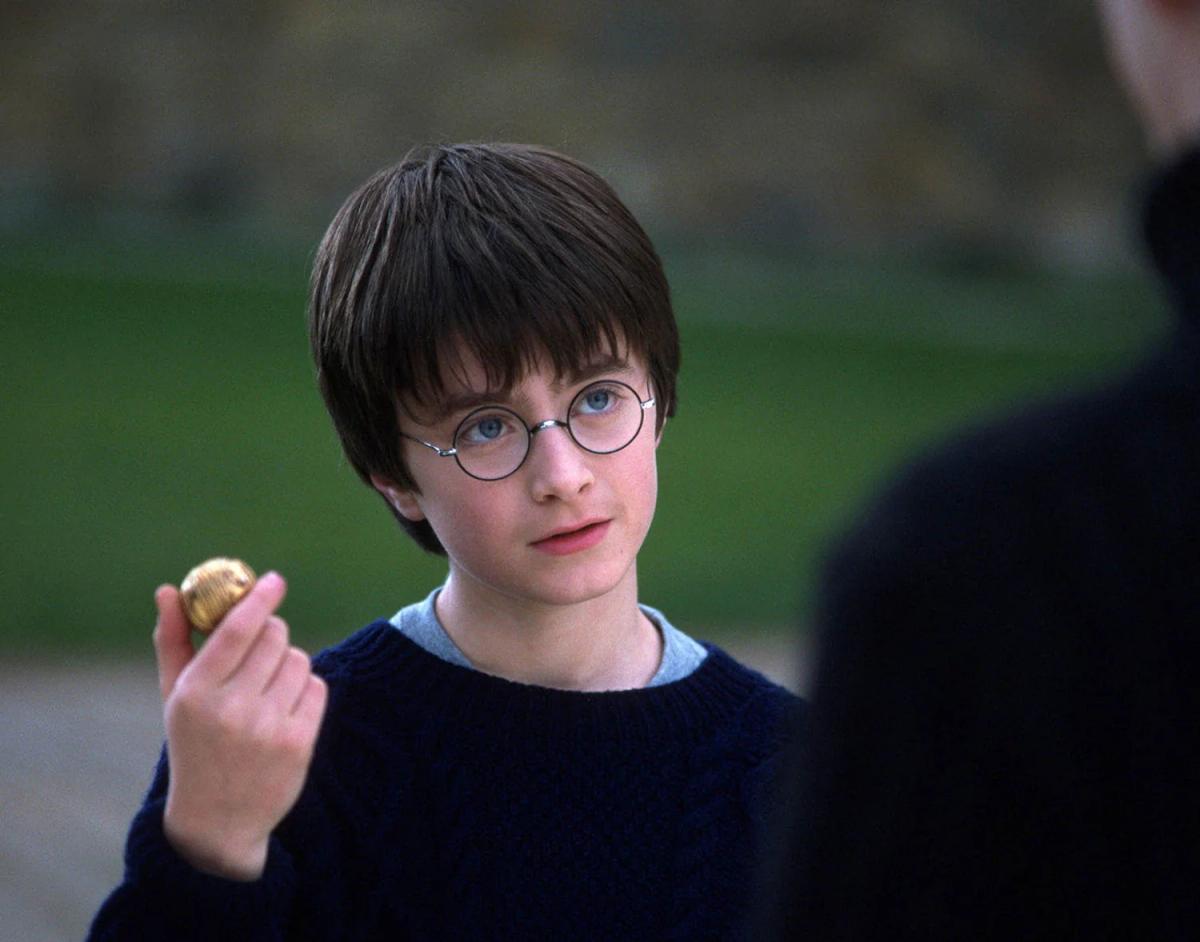
The score does what very few manage. Twenty-four years later, the first eight notes still produce the feeling the film wants you to have before anything has happened. Intrigue, and the wish that any of it were real. Stuart Craig's castle and John Seale's photography do the rest, and Hogwarts holds up as a building rather than a backdrop.
The magic is built more often than it is rendered, and where it is rendered it shows its age. That is a 2001 film being a 2001 film. Remarkable then, merely fine now, and never once the reason anybody turned it off.
What the film leaves you wanting
You are shown a sliver of this world. A few subjects, one sport, a handful of teachers, and almost nothing about the rest of it. Draco (Tom Felton) is set up as the school villain and then mostly parked.
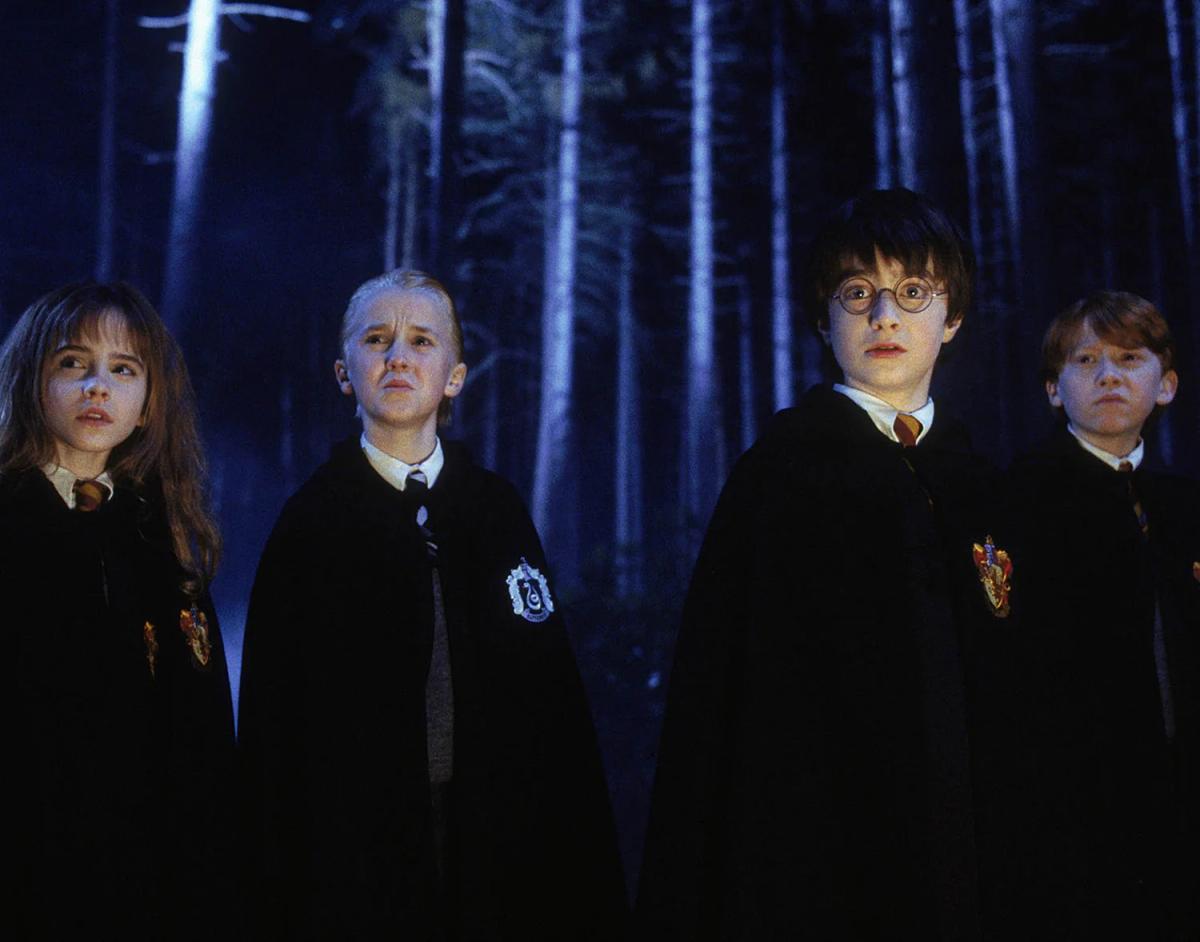
The worst of it is a punishment. Four students are caught out of bed, and the detention McGonagall (Maggie Smith) hands down turns out to mean the Forbidden Forest after dark, supervised by the one adult the film has already told you is not allowed to do magic. The school treats it as routine.
And the adults, generally, stand still. A castle full of powerful people, and the film keeps arranging for the children to be the ones in the room. You forgive it because the alternative is a film about the headmaster, and nobody would watch that one.
You do not need to have read a word of anything to follow it. That is the quietest thing it gets right.
The Stone. Fluffy is standing on a trapdoor, and what is under it is Nicolas Flamel's Sorcerer's Stone, which makes the Elixir of Life.
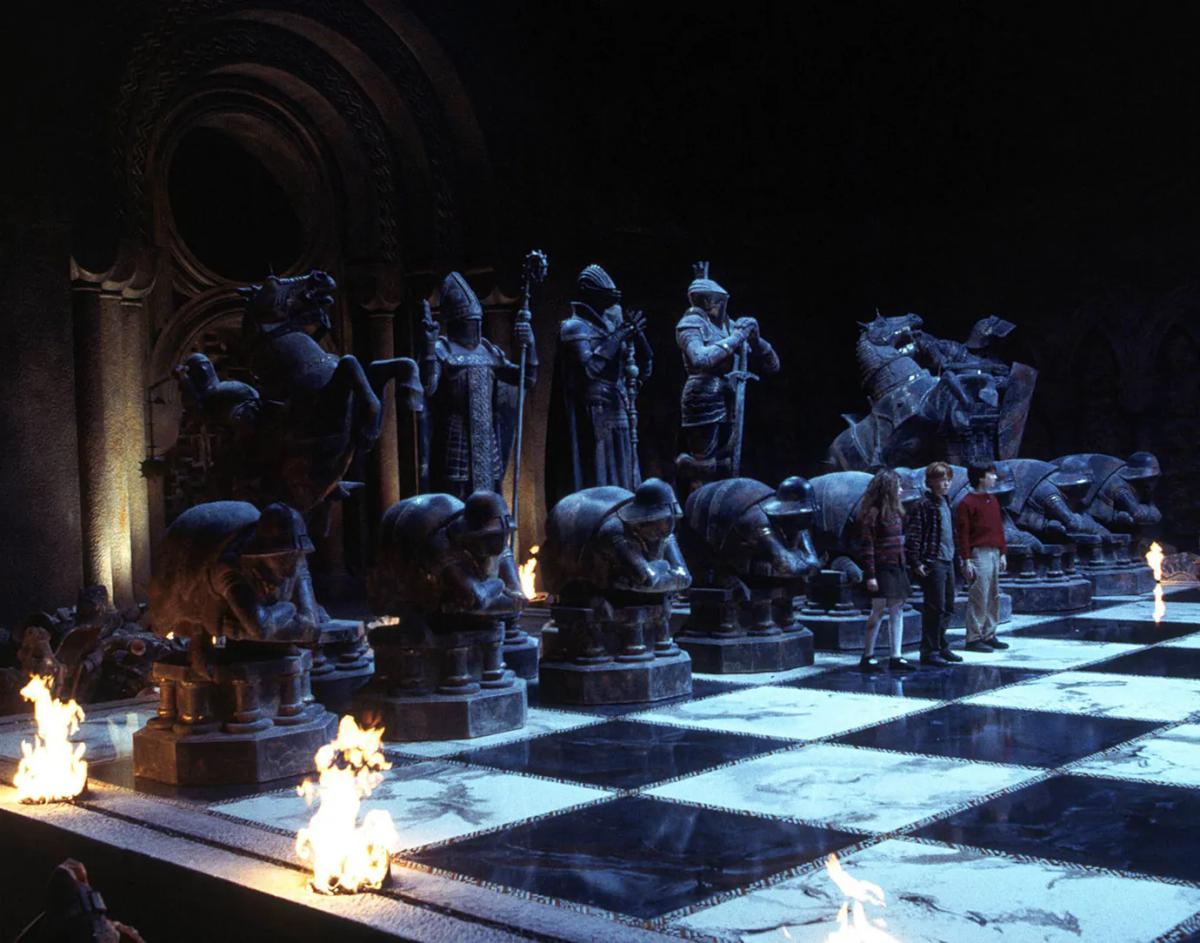
The obstacle course. Devil's Snare, a room of flying keys, a giant chess set. Hermione (Emma Watson) beats the plant, Harry (Daniel Radcliffe) catches the key on a broom, Ron (Rupert Grint) wins the chess match by letting himself be taken. One apiece. Which raises the question the film never answers. Why would anyone guard the most valuable object in the world with a course that three first-years can clear in an evening?
It was never Snape. Quirrell (Ian Hart) is the one after the Stone, and Snape (Alan Rickman) had been protecting Harry all year. The muttering at the Quidditch match was a counter-jinx. This film does that flip itself. What the later ones add is why he was doing it.
The Mirror again. The last obstacle is the Mirror of Erised, and it gives Harry the Stone because he wants to find it rather than use it. The scene that did nothing for the plot turns out to be the plot.
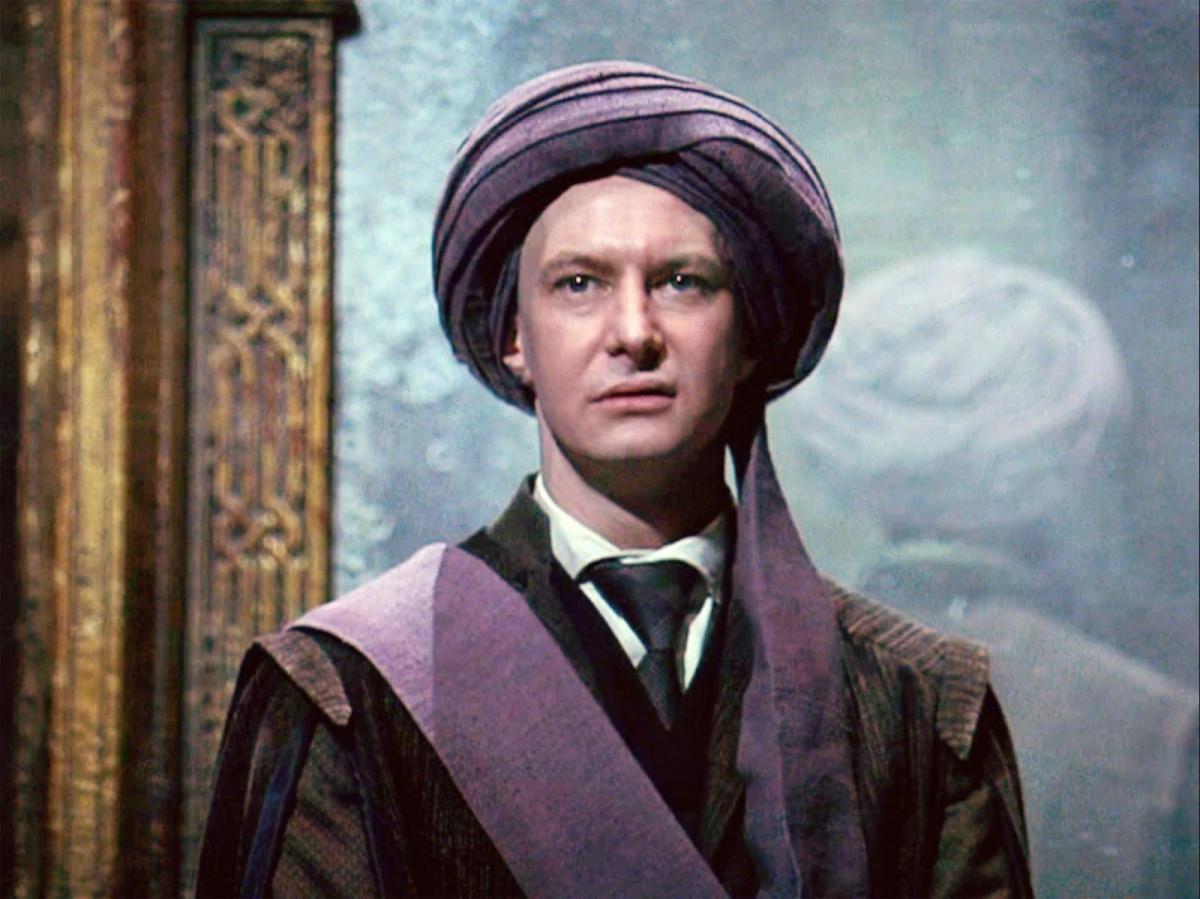
The turban. Voldemort's face on the back of Quirrell's head, offering to give Harry his parents back in exchange for the Stone.
The protection. Quirrell burns wherever Harry touches him. Dumbledore (Richard Harris) explains it afterwards, and the film is careful never to call it a spell. His mother died for him, and that is still sitting in his skin.
The smoke. Then Voldemort's wraith tears out of Quirrell, passes straight through Harry and drops him. Seconds earlier Harry's bare hand had burned Quirrell to ash. The film never says why one kind of contact destroys and the other goes through him. Maybe a bodiless spirit is a different case. Maybe the image got ahead of the rule. Leaving you to decide is not the same as answering.
The ending. Late house points take the Cup off Slytherin. Hagrid (Robbie Coltrane) gives Harry a photo album of his parents. Hermione says it must feel strange, going home. Harry tells her he is not going home. Not really.
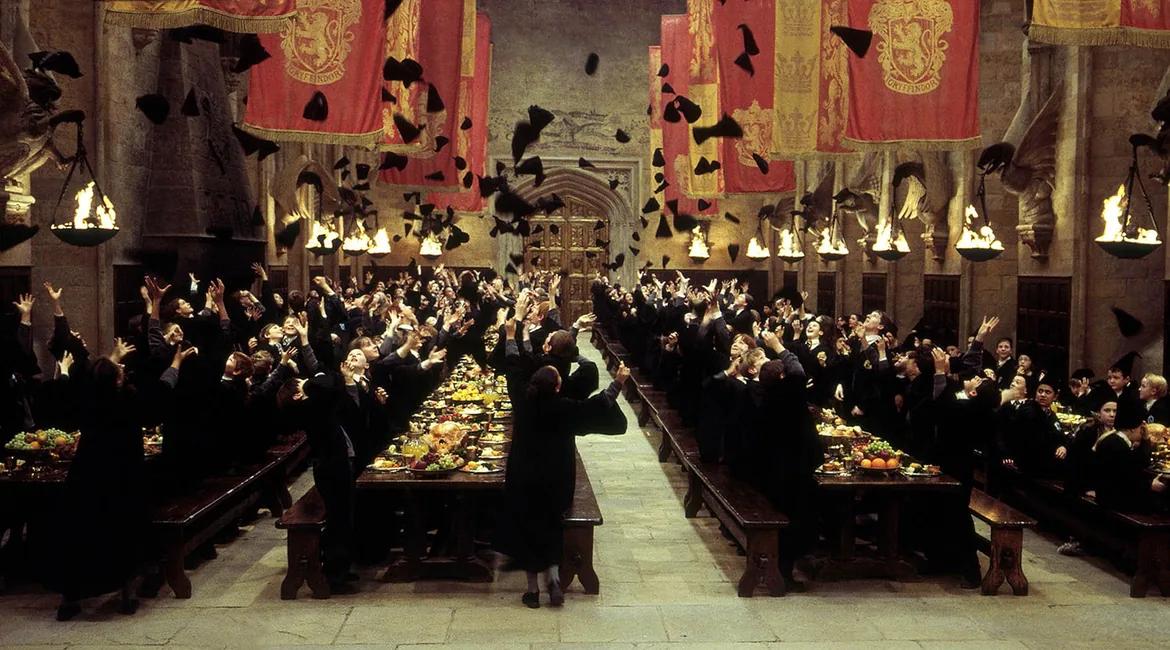
Bright Bulbs
- John Williams wrote a theme that does its entire job in eight notes, and it still arrives before the film has shown you anything worth scoring.
- Harry (Daniel Radcliffe) steps into the Leaky Cauldron and a room of strangers rises for a boy who has never once been wanted.
- A child looks into a mirror and finds the only thing he has ever actually asked for. Nothing in the plot moves. It does not need to.
- One owl, then a dozen, then a chimney that will not stop. The film builds wanting before it builds explaining, and that order is why it works.
- Snape (Alan Rickman) turns a first potions lesson into a public execution, and Rickman takes exactly as long over it as he likes.
- Quirrell (Ian Hart) plays the stammer like a squirrel that has just remembered something terrible. All of the twitching and none of the cuteness.
Dull Bulbs
- Ron (Rupert Grint) is likeable, useful and very nearly the same person in the last scene that he was in the first.
- A few subjects, one sport, a handful of teachers, and then the film runs out of hours to show you any more of the world it built.
- Draco (Tom Felton) arrives fully formed as a school villain and then spends most of the film waiting for something to do.
Cast
- Daniel Radcliffe as Harry Potter
- Rupert Grint as Ron Weasley
- Emma Watson as Hermione Granger
- Richard Harris as Albus Dumbledore
- Maggie Smith as Minerva McGonagall
- Alan Rickman as Severus Snape
- Robbie Coltrane as Rubeus Hagrid
- Ian Hart as Professor Quirrell
- Tom Felton as Draco Malfoy
- John Hurt as Mr Ollivander
Related quizzes
More from Harry Potter
Which Harry Potter Death Eater Are You?Ten questions on why you took the Mark. Seven Harry Potter villains, from the books and the films.- Which Hogwarts Professor Are You?Which Hogwarts professor are you? Ten questions, six professors: Dumbledore, McGonagall, Snape, Hagrid, Lupin or Trelawney. From the books and the films.
- Which House Would You Belong To at Hogwarts?Ten questions about how you handle things, and the Sorting Hat asks where you’d put yourself.