Before you press play
Watch if
You want a fast, good-looking serial killer thriller and you can let the plot holes go.
Wait if
You need the people on screen to keep behaving like people once the danger starts.
The Whisper Man opens with more confidence than most thrillers manage the whole way through, and then spends the rest of its running time undoing it. The premise is good, the house is genuinely unsettling, and four capable actors are on screen. What it never manages is a single stretch in its back half where the people in it behave like people.
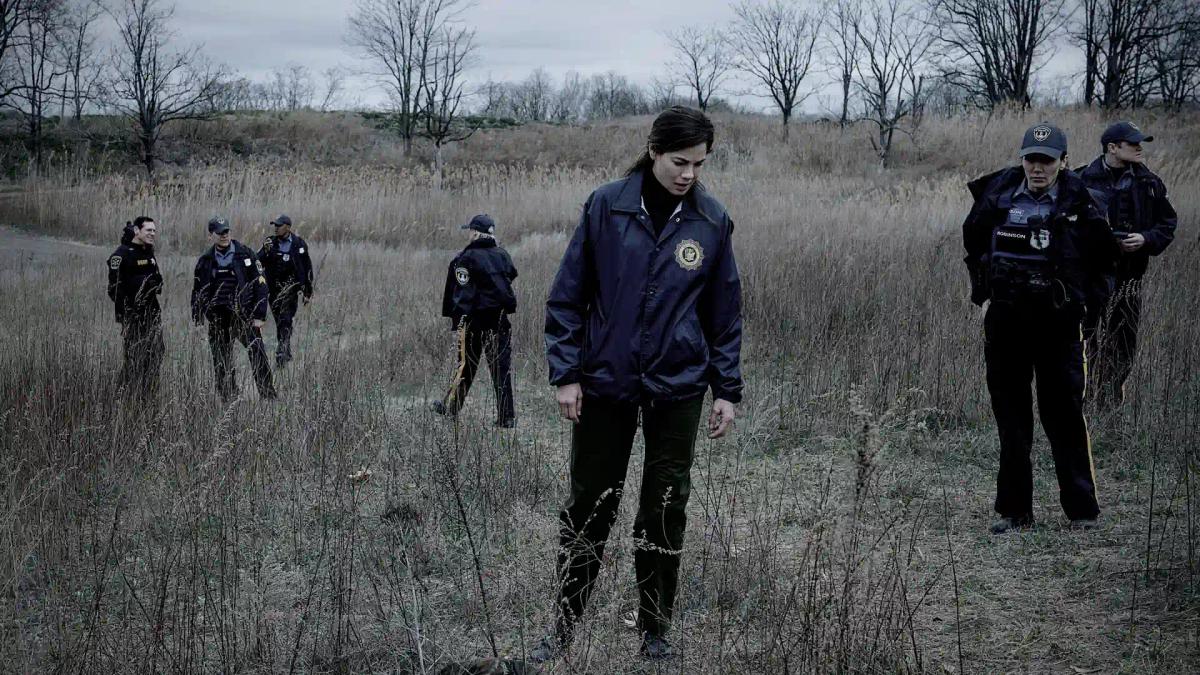
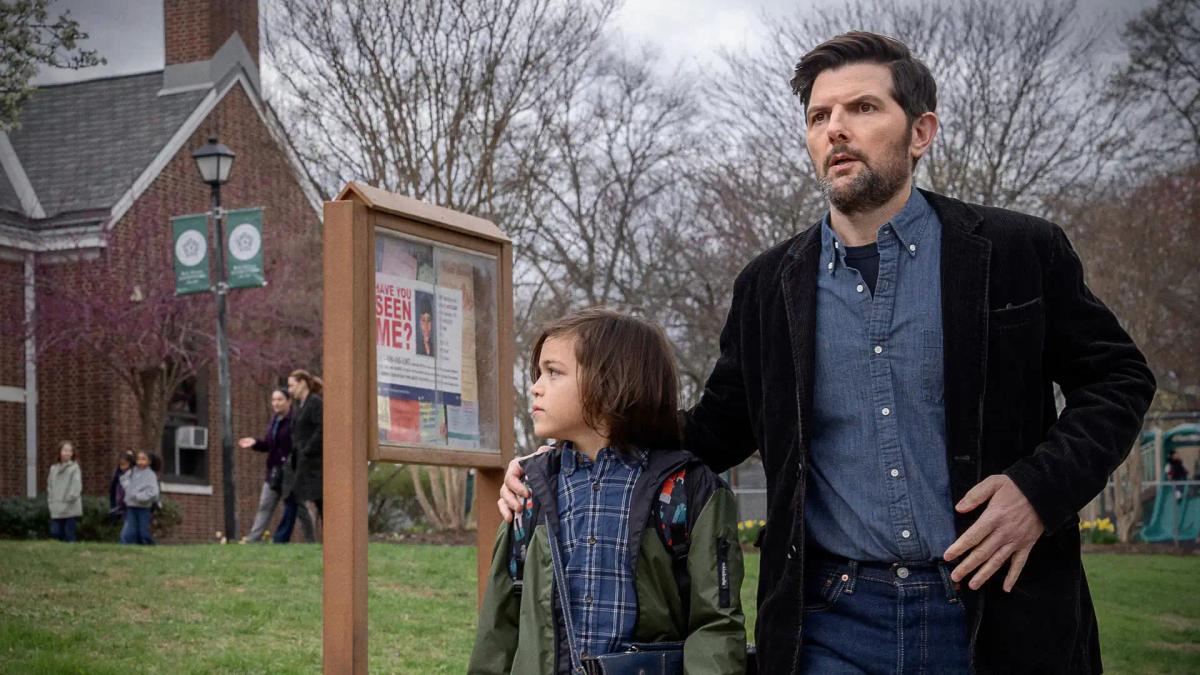
Detective Amanda Beck (Michelle Monaghan) is searching the woods for a missing boy when the police find a different one, strangled, his face covered. That is the exact signature of a killer the town caught decades ago, which ought to make it impossible. Months later, widowed crime writer Tom Kennedy (Adam Scott) moves to Garretton with his eight-year-old son Jake (Acston Luca Porto), both still flattened by the death of Tom's wife. Jake talks to an imaginary friend. Then something outside starts talking back.
Nothing in the first twenty minutes is wasted. The search, the body, the move, the new house: the film gets through all of it fast, then slows down just long enough to say who these people are before it takes the boy.
The horror look and the crime story underneath
Everything about how this film is shot says horror. The palette runs cold, it rains constantly, the trees are bare, and the house Tom rents does most of the work on its own. There is a basement you do not want to go into, an attic with water coming through the roof, and an echo on every drip. One image delivers on all of it completely: a hand pushing through the mail slot in the front door, from outside, at night.
Then the film puts that register away. What follows is a straight investigation of a man, not a ghost story, and the horror never comes back except as decoration. That would be fine if the film had picked a side. Instead it keeps a supernatural thread running, in the shape of Jake's imaginary friend, and then refuses to say whether it means anything. Director James Ashcroft has said the ambiguity is deliberate and meant to work both ways. On screen it reads as a film dressed for a genre it never plays.
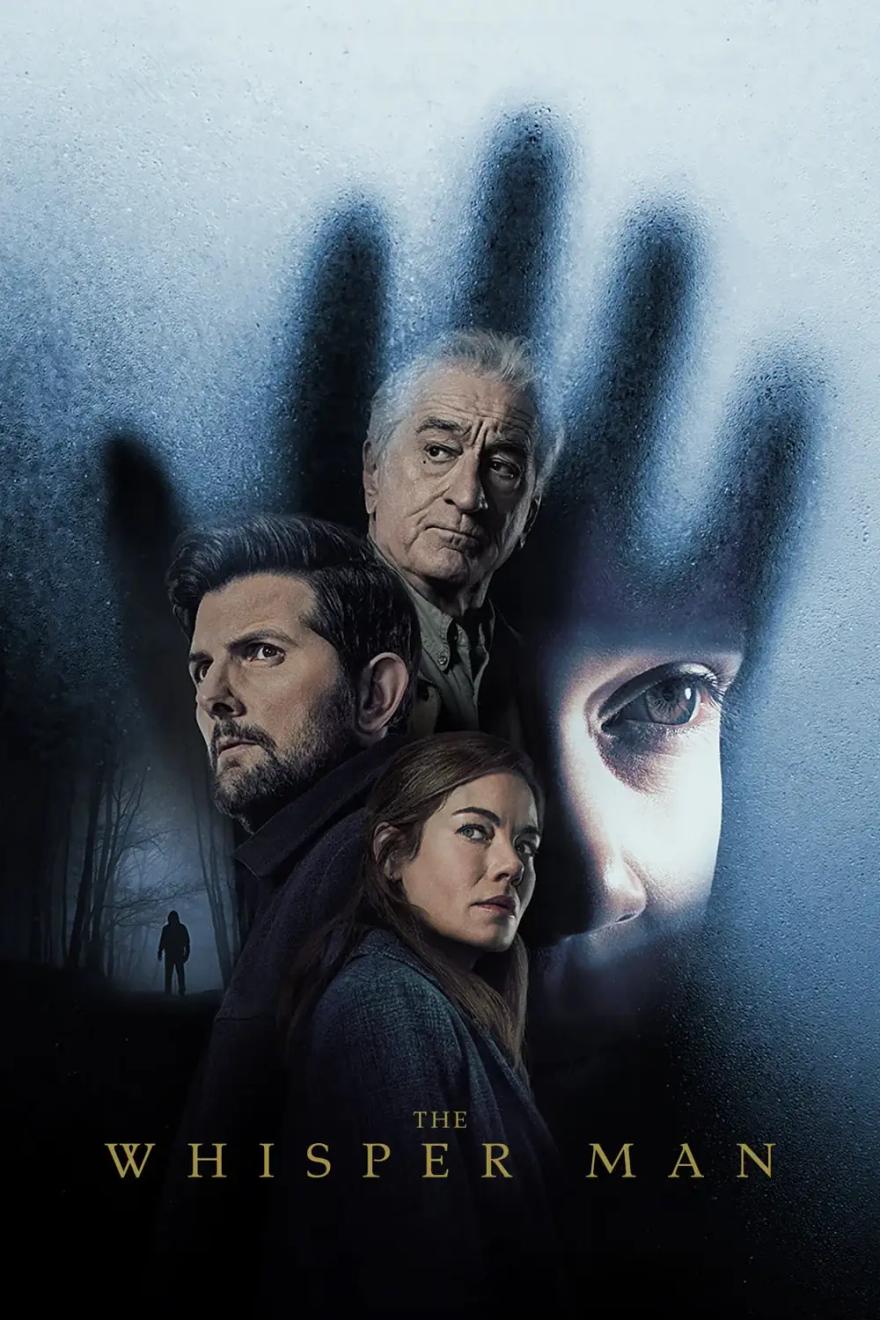
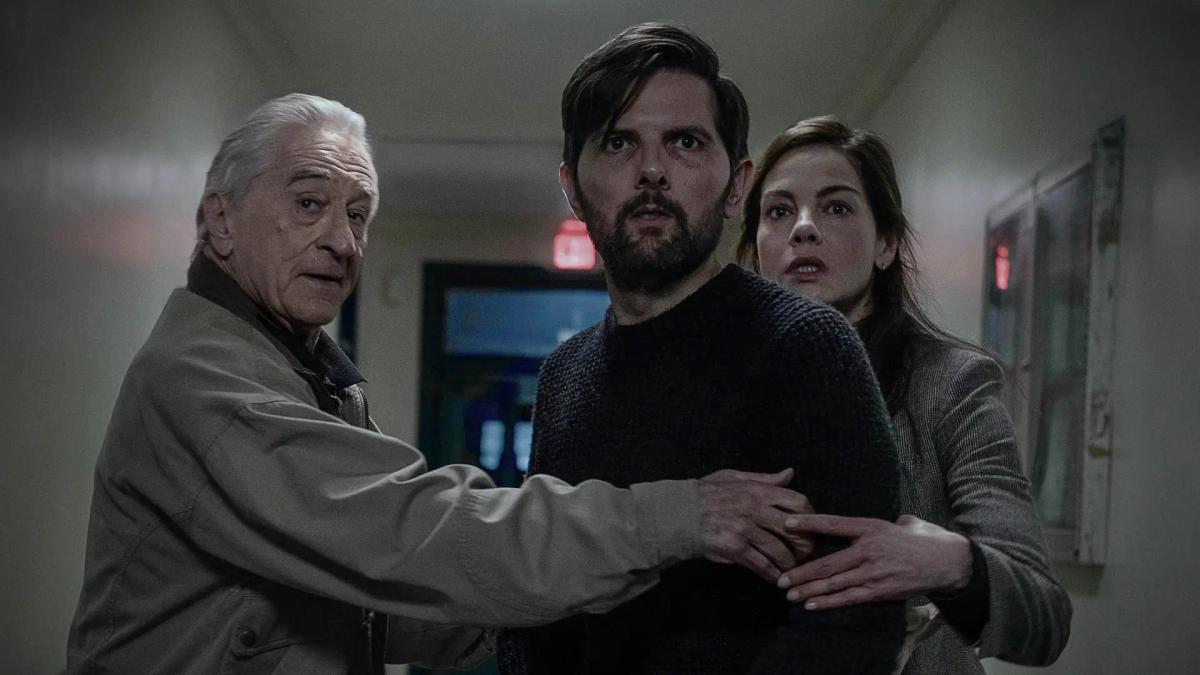
Robert De Niro, Michelle Monaghan and Adam Scott
De Niro is good in some scenes and noticeably not in others. Pete Willis is a retired detective who lost his family to drink and to a case he could not close, and the arc is the most interesting thing on the page: coming back for the victim he never found, working next to a detective half his age. He plays some of that beautifully and walks through the rest.
Monaghan comes out best. Beck is the one person here you actively want to succeed, and she is played as someone who respects the work rather than someone who solves things because the plot needs solving. Most of what she turns up goes nowhere until the very end, which is a script problem rather than hers.
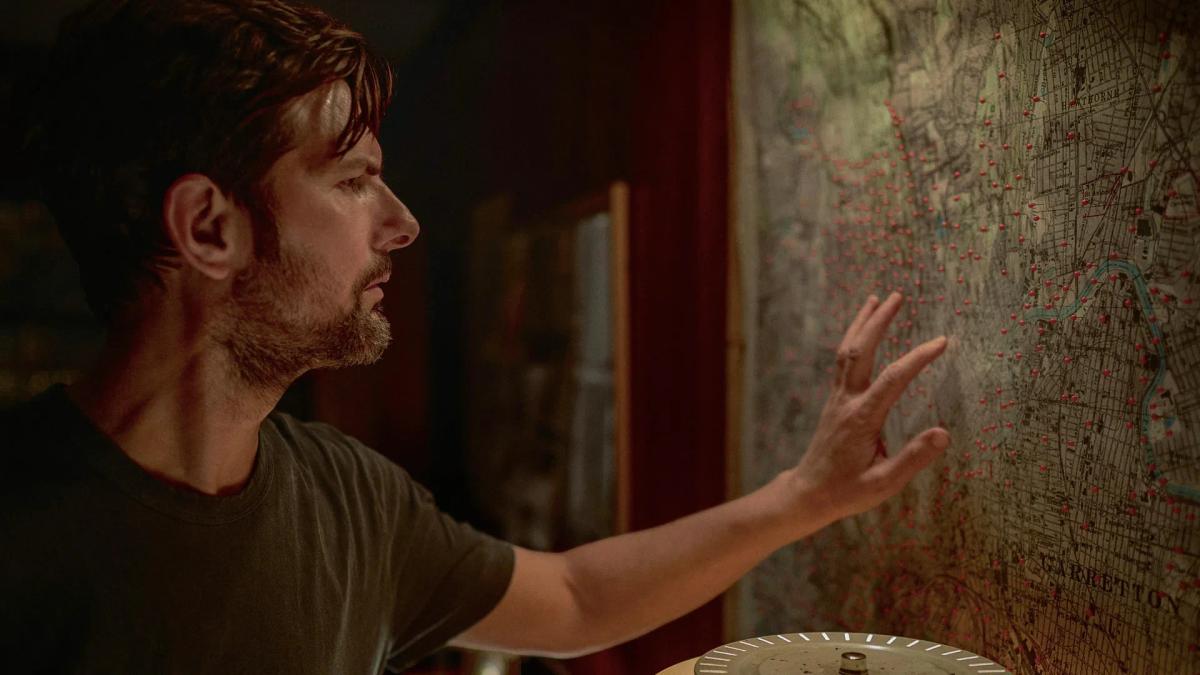
Scott has the hardest job and the least help. Tom is a loving father and the film is clear about that. He is drinking, and the film treats it as grief rather than as a moral failing. What does not work is what he does once Jake is gone. The film establishes early that Tom is not competent in a crisis, then hands him a vigilante subplot anyway, which he fails at, repeatedly, at length. There is a version of this where a father coming apart is unbearable to watch. This one is mostly irritating.
Frank Carter (Michael Keaton) is fine. He does the caged-killer routine properly and is never given anything unusual to do with it. The new killer (Owen Teague) works hard with a small amount of material and the ordinary moments land, but nothing in the performance lifts the film. Norman Collins (Hamish Linklater) is a knot of connections the script explains carefully and never makes matter.
The police response and the pacing
This is where the film gets careless, and it starts long before the ending. Tom finds a stranger rummaging around his basement, and the officer who responds writes it off as a squatter: during an active hunt for a missing boy, in a house with an eight-year-old child. The property turns out to matter more than anything else in the case, and it is Tom who has to drag it there himself, chasing down the owner and the previous tenant before the investigation comes back and searches the place properly.
The procedure stays loose elsewhere. The killer phones in an anonymous sighting of Jake on a highway, and dispatch has units moving before it has asked who is calling or checked a single thing against it.
Some of it is pacing. Films compress action, and the cutting here is aggressive: a fight that would run ten minutes plays in about one. That is normal enough, but the joins are visible, and once you start noticing them the scenes stop holding.
The action does not survive the scrutiny it invites either. People under direct threat in this film stop behaving like people, freezing, absorbing punishment that should finish them, forgetting the weapon in the room. You can read that as terror. You can read it as bad writing. The film gives you no reason to prefer the first.
Is The Whisper Man worth watching?
If you want a good-looking serial killer thriller that starts strongly, and you can switch off the part of your brain that asks why nobody is doing anything, it will fill two hours. The house is worth seeing, Monaghan is worth watching, and the opening is genuinely good.
But the film builds real credit in its first act and then spends all of it on choices it has not earned. Two bulbs.
The copycat. The new Whisper Man is Frank Carter Jr. (Owen Teague), the original's son, who has been working at Jake Kennedy's (Acston Luca Porto) school. Pete Willis (Robert De Niro) gets there by turning Frank Carter's (Michael Keaton) own taunt around: Frank sneers that a boy denied his father's love will mythologise him, meaning Tom Kennedy (Adam Scott) and his crime novels, and Pete realises the person actually doing that is Frank's own child.
Norman Collins. The collector (Hamish Linklater) turns out to have traded Frank something in exchange for time alone with the remains of Tony Smith, the fifth victim, buried under the floor of the house Tom rents. Dominic Barnett, the ex-convict who showed the place to interested parties, is in the walls; Norman killed him for laughing at what he wanted. Norman then kills himself in front of the police. It resolves on paper and never lands.
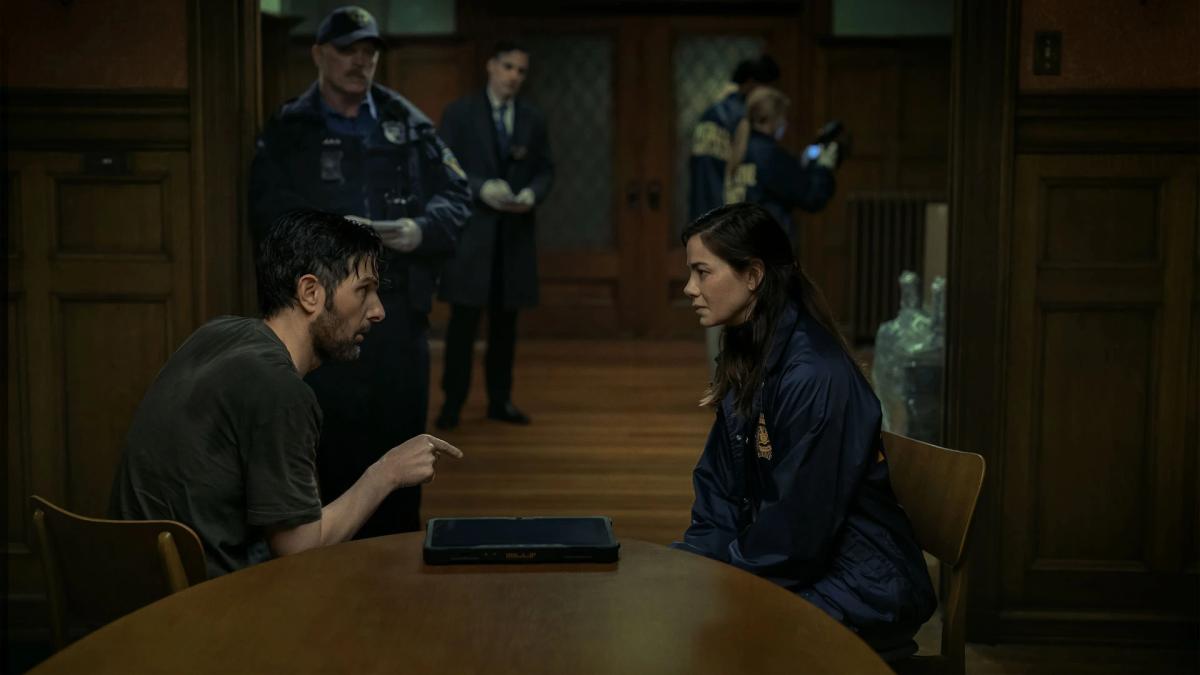
Beck. Amanda Beck (Michelle Monaghan) reaches Francis by working a door-to-door canvass, not by knowing where he is: he answers as a young man called George, in the home of the police psychiatrist he has murdered. Once she realises what she has, she radios it in. He runs her through the house and stabs her several times, and she still has enough left to open up his leg, which tells you the fight was never built around anything physical. He gets away with Jake.
Pete. Pete works out that Francis is taking the boy back to Tom's house, and the two of them get there. Pete pulls Jake out of the crawlspace and takes a screwdriver in the stomach for it. He tells Tom to go and get Jake, then tells him he loves him. Tom says it back; those are their last words to each other. His only moment with his grandson is telling the boy to run.
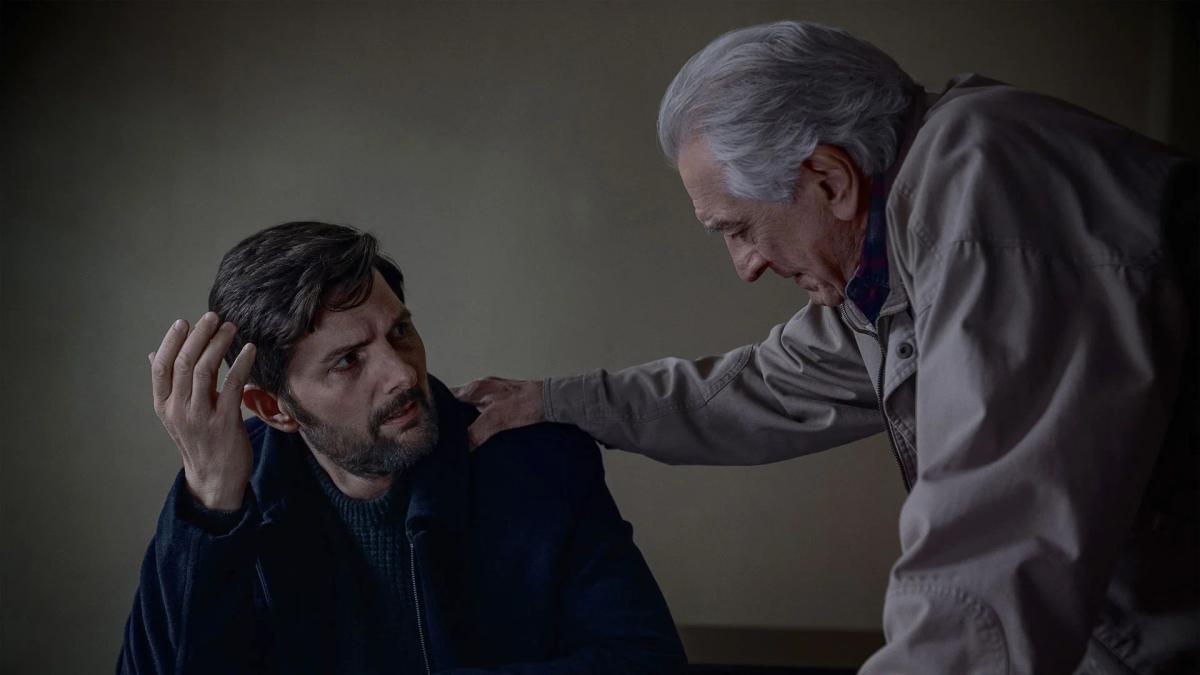
The fight. There is a gun in this sequence. Pete fires it once, Francis throws something at him, the shot goes into the ceiling, and the gun never matters again to anybody. Pete and Tom each haul Francis off the other at different moments, which is the best material in the scene and is over quickly. Then Tom chases Francis upstairs and fights him there, which the film asks you to accept from a man it has spent an hour and a half establishing as hopeless under pressure.
The attic. Jake runs upstairs and hides, and then screams, which is what brings Francis to the one corner of the attic where the roof has been leaking since the first act. The floor gives way underneath him and he falls. Tom does the fighting; the house gets the finishing move, using the rotten wood the film pointed at an hour earlier. It also means a boy who ran upstairs to avoid being found gave himself away and got the result anyway.
The girl in blue. Tom finds a childhood photograph of his dead wife in the sweater Jake kept describing. The film will not say whether she was a ghost or a child's invention. Both readings stay open, which is another way of saying neither was committed to.
The prison. Frank is let into his son's cell and strangles him with a shirt over his face, exactly the way he killed the boys. Someone unlocks the door and tells him to make it quick. Prison staff hand a convicted child killer his next victim, and it settles the bargain Pete made to deliver Francis in exchange for Jake's location. It is the most purposeful thing any institution does in this film, and that is not a compliment.
Afterwards. Frank writes to Beck in her hospital bed to thank her for everything she has done. He has a new favourite officer. Tom and Jake move into Pete's house and keep his ashes there.
Bright Bulbs
- The first twenty minutes waste nothing: a search in the woods, a body that is not the missing boy, a family arriving in a town that already has a problem.
- The house does most of the scaring. Cold light, constant rain, a basement, an attic, and water dripping through the roof with an echo behind it.
- One shot fully earns the horror the rest of the film only borrows: a hand coming through the mail slot of the front door at night.
- Amanda Beck (Michelle Monaghan) is the one person here worth rooting for, played as someone who takes the work seriously rather than as a plot device.
Dull Bulbs
- Pete Willis (Robert De Niro) is good in some scenes and noticeably not in others, which is not a sentence anyone expects to write about him.
- Frank Carter (Michael Keaton) is fine in a small part. He does the caged-killer routine competently and is never handed anything more interesting.
- The new killer (Owen Teague) works hard with very little and the ordinary moments land, but nothing in the performance lifts the film around it.
- Norman Collins (Hamish Linklater) is a web of connections that the script explains carefully and never makes land as anything but homework.
Shattered Bulbs
- The first police response to a stranger rummaging around the family's basement is to call him a squatter, during an active hunt for a missing boy, in a house with an eight-year-old child.
- The killer phones in an anonymous sighting and dispatch has units moving before anyone has asked who is calling or checked a single thing against it.
- Under direct threat, people in this film freeze, absorb punishment that should finish them, and forget the weapon lying in the room with them.
Cast
- Robert De Niro as Pete Willis
- Michelle Monaghan as Amanda Beck
- Adam Scott as Tom Kennedy
- Michael Keaton as Frank Carter
- Hamish Linklater as Norman Collins
- Owen Teague as Frank Carter Jr.
- Acston Luca Porto as Jake Kennedy
- Will Brill as Sgt. John Dyson