Before you press play
Watch if
You want the series at its most grown-up, with a school slowly taken over by a government that will not admit it is wrong.
Wait if
You want the whole book on screen, because Quidditch and several subplots are gone, and the final battle may test your patience.
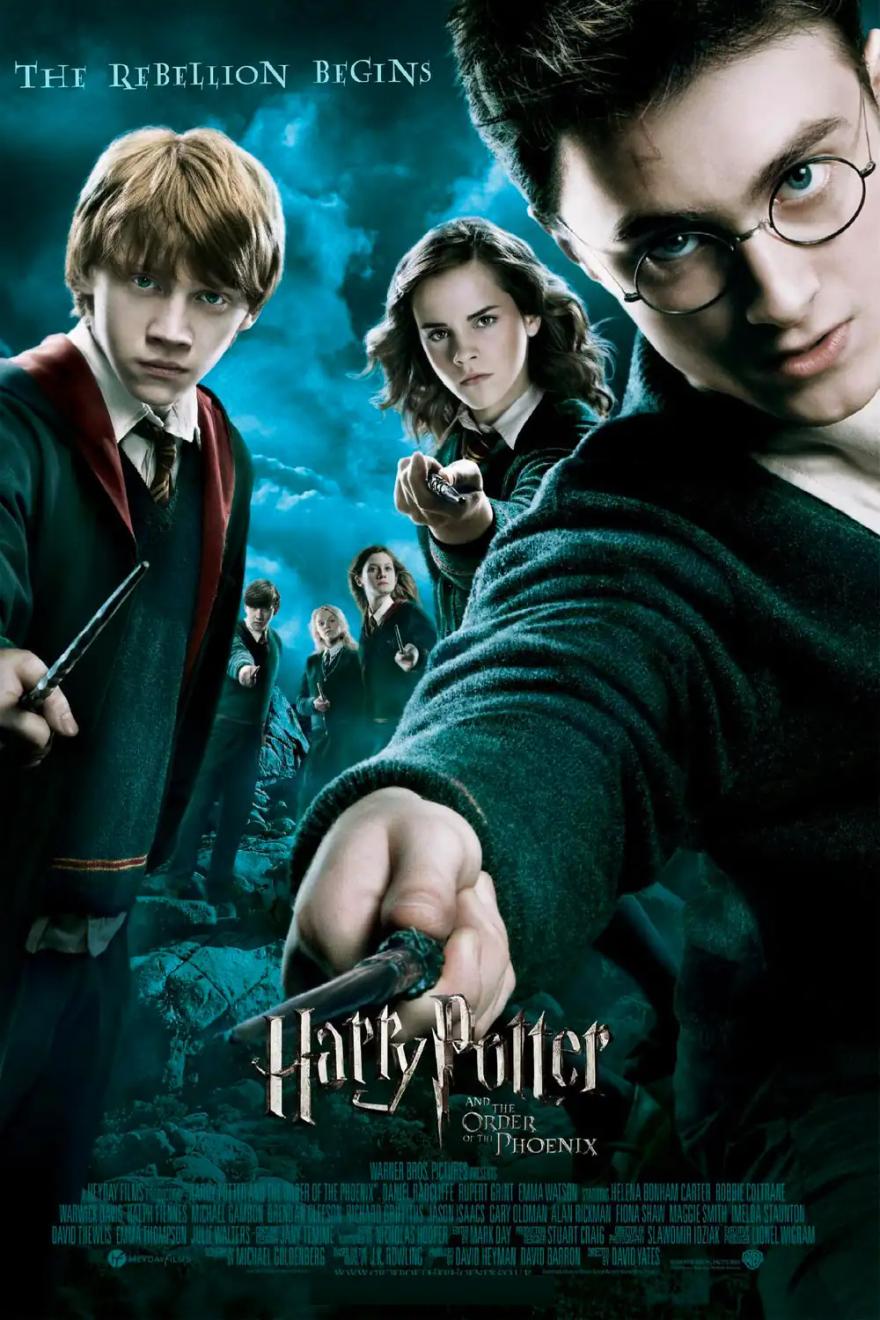
Harry Potter and the Order of the Phoenix is where the series stops being a school story with a monster in it. Lord Voldemort (Ralph Fiennes) is back, but the villain doing the real damage works for the government: Dolores Umbridge (Imelda Staunton), a Ministry official in pink who takes over Hogwarts one rule at a time and smiles while she does it.
It is the darkest film in the series so far and the most political. It is also the most compressed, and the final battle does not hold together.
Is Harry Potter and the Order of the Phoenix worth watching?
Yes. Harry Potter (Daniel Radcliffe) starts his fifth year still carrying what happened at the end of Goblet of Fire, is bullied by his cousin's gang, and is then attacked by Dementors in Little Whinging. He saves himself and his cousin with a Patronus, and the Ministry of Magic expels him for doing magic in front of a Muggle.
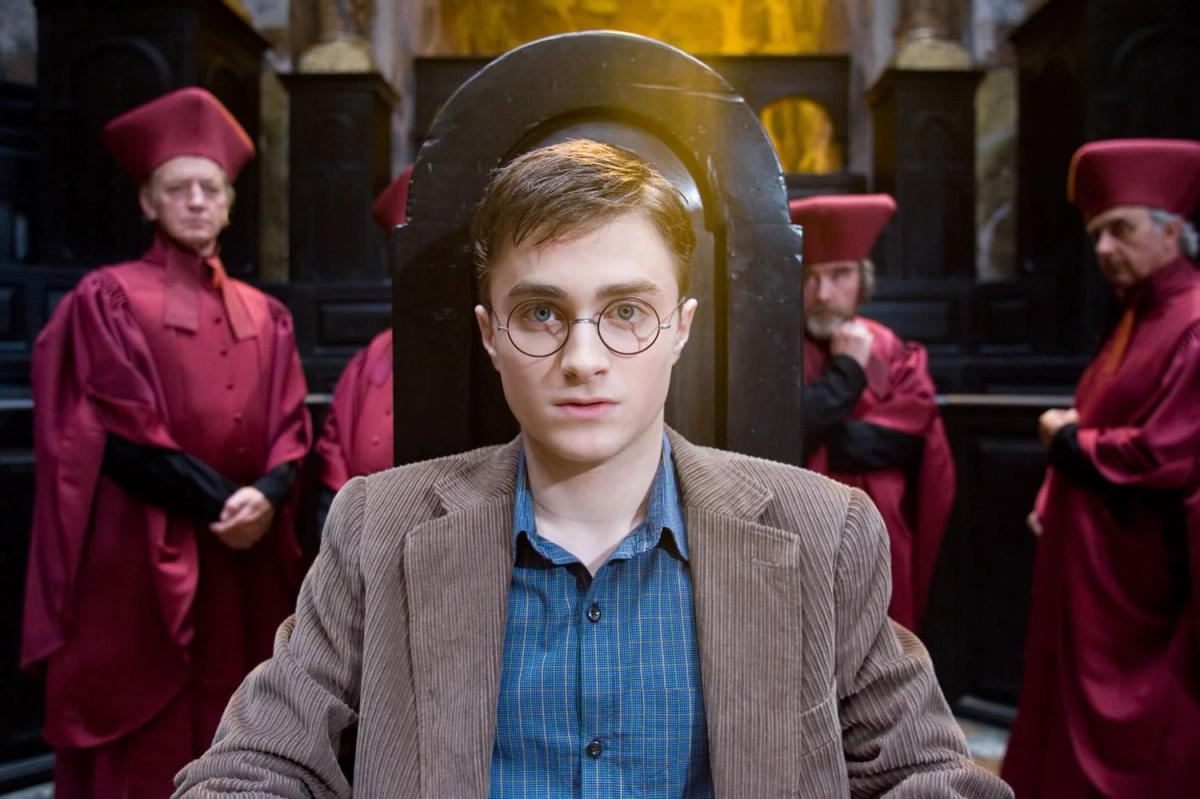
His hearing is moved at the last minute, and the wizarding press has already decided he is a liar. The rest of the film is about what happens to a school when the government decides the truth is the problem.
Imelda Staunton as Dolores Umbridge
Voldemort wants Harry dead. Umbridge wants him to agree that he deserves his punishment, which is somehow worse. Her detentions use a quill that needs no ink, because it cuts the words into the back of his hand.
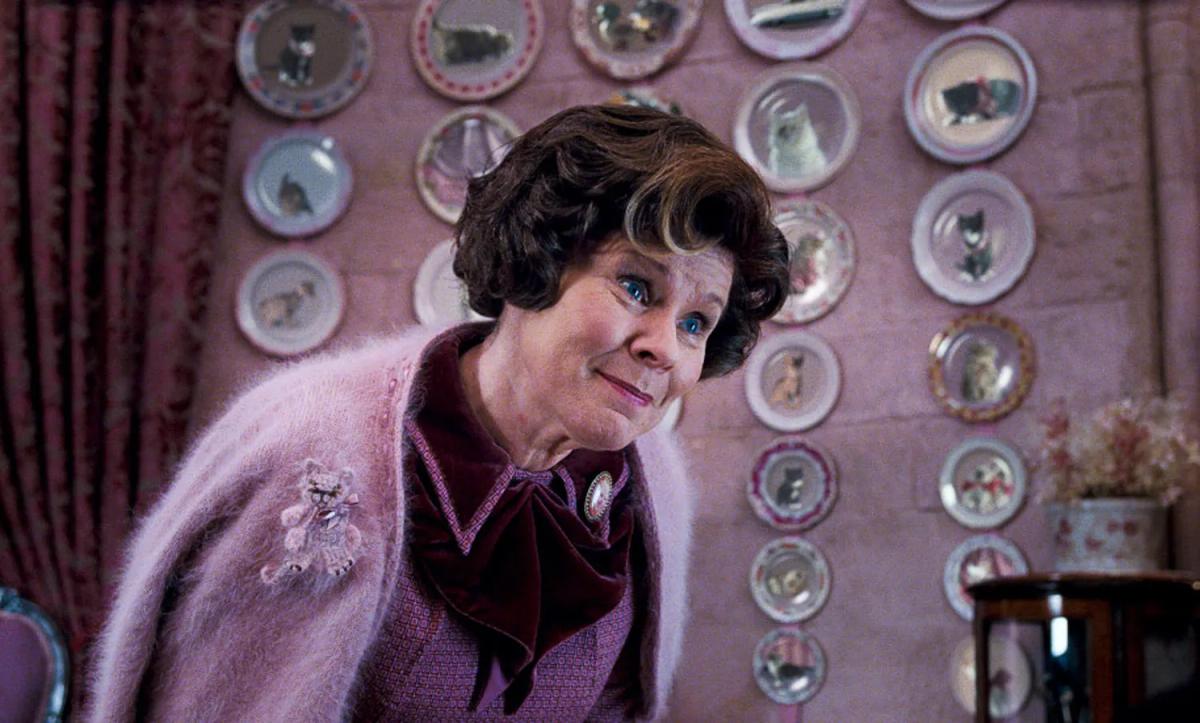
Imelda Staunton gets every detail right: the face, the pink suits, the prim little walk, the voice that stays sweet while she does something appalling. Umbridge also fills her office with kittens, and that wall of mewing plates is the most unsettling set in the film. J.K. Rowling has written that a love of sugary, twee things often turns up where real warmth is missing, and that Umbridge's need to control and punish is every bit as bad as Voldemort's open evil.
Her best scene has no magic in it at all. On a staircase, Minerva McGonagall (Maggie Smith) objects to the way she punishes students, and Umbridge turns the complaint into disloyalty to the Ministry and to the Minister himself.
The Ministry, the Daily Prophet and Hogwarts
This is the strongest idea in the film. A government frightened of people speaking up uses the press to discredit them, then moves into the schools to shape what children are taught, and the Ministry works through that order exactly.
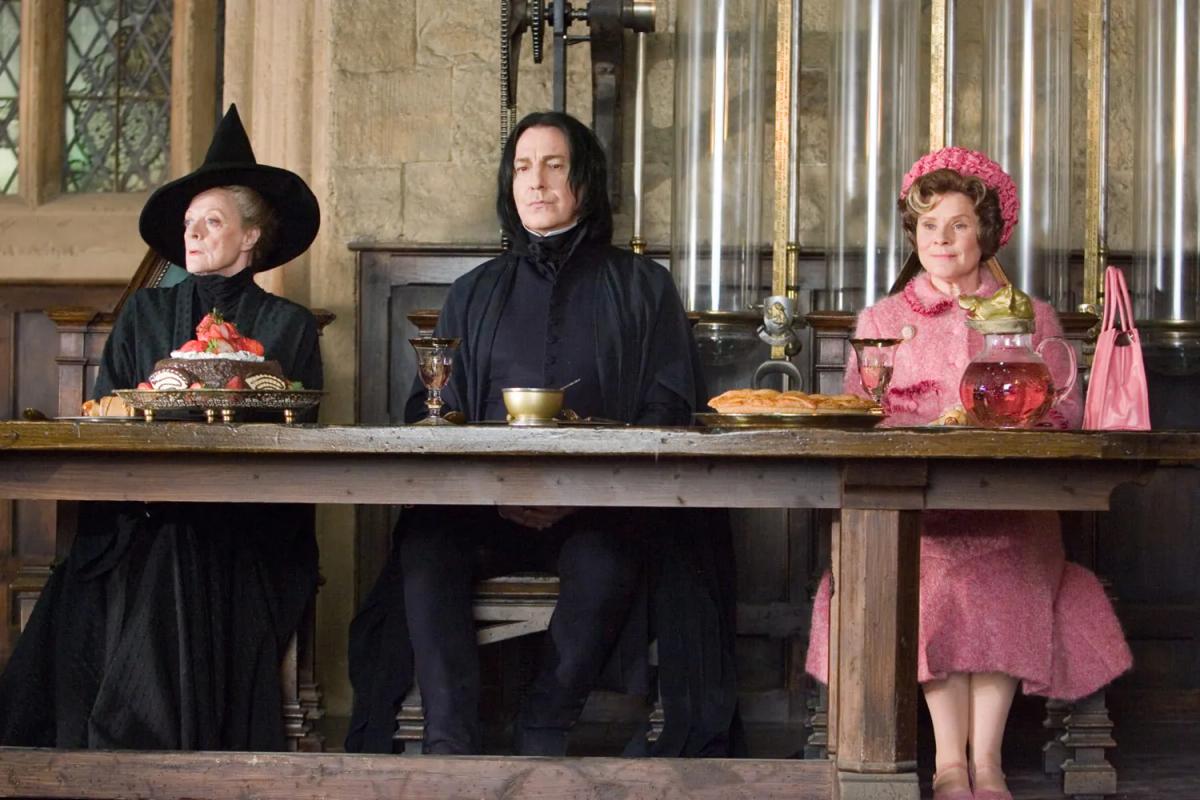
Cornelius Fudge (Robert Hardy), the Minister for Magic, will not accept that Voldemort is back, so he uses his influence over the Daily Prophet to smear anyone who says otherwise. The paper turns Harry into a liar and asks in print whether Albus Dumbledore (Michael Gambon) is daft or dangerous. Students repeat it in the corridors, and the mother of Seamus Finnigan (Devon Murray) nearly keeps him at home.
Then the Ministry moves into the school itself: lessons become theory only, Umbridge is appointed High Inquisitor, student groups are banned, and the caretaker, Argus Filch (David Bradley), becomes her enforcer. The Ministry also sits on what it knows, blaming a string of disappearances on the escaped prisoner Sirius Black (Gary Oldman) rather than admit what the signs point to. The pattern is familiar from real governments, and David Yates, who came to the series from political television such as State of Play, clearly knew it.
Dumbledore's Army
Barred from practical magic, the students ask Harry to teach them. Hermione Granger (Emma Watson) makes the plan, a crowd turns up in a grubby pub to sign on, and Neville Longbottom (Matthew Lewis) stumbles into the Room of Requirement, which becomes their classroom.
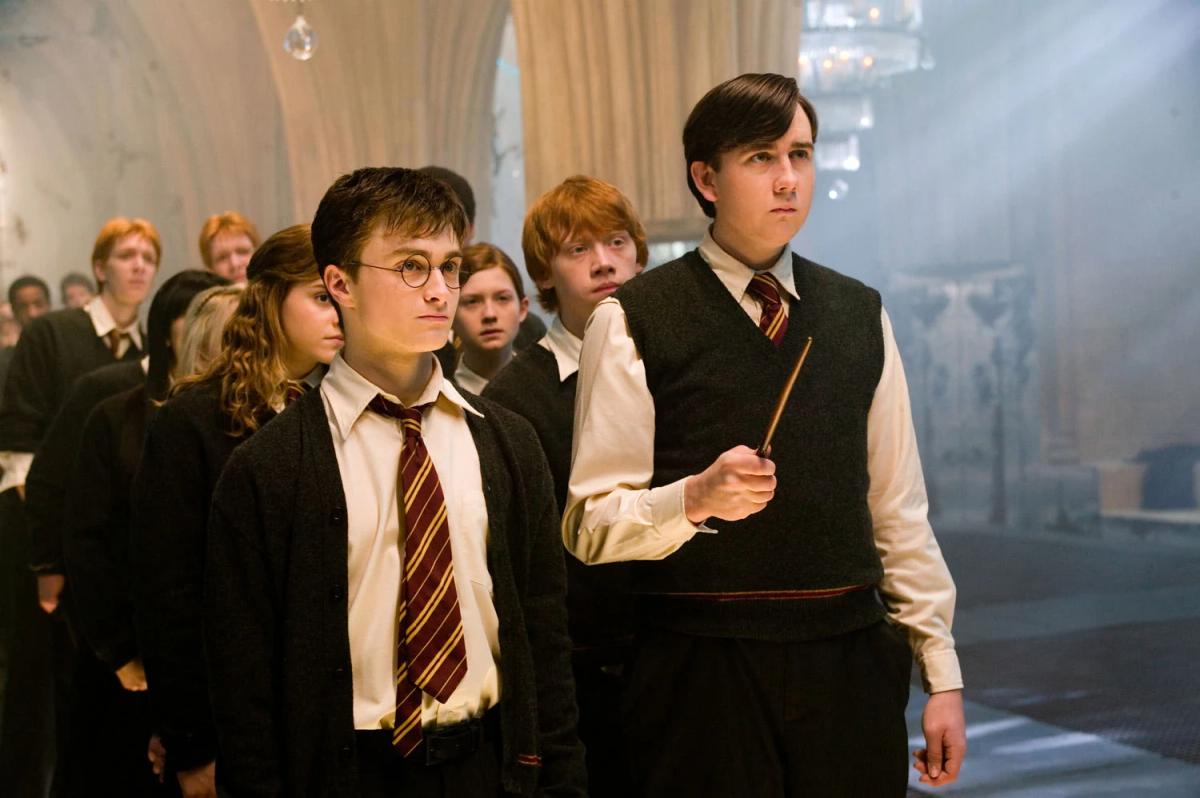
These are the warmest scenes in the film. Students who start out uncertain and clumsy work up to disarming each other, then stunning, then casting Patronuses, and for once the film lets them enjoy themselves. Ron Weasley (Rupert Grint) and Hermione get more to do here than usual, and Hermione says Voldemort's name out loud to a room of frightened teenagers, which in this world takes nerve.
Umbridge answers with a squad of her own: students who watch other students for extra credit.
Harry, Sirius and family
Under the politics sits a smaller story about belonging. Sirius is Harry's godfather and his closest living link to his father, and at Christmas he promises that when all this is over they will be a proper family. Being near Sirius is the best part of Harry's year.
His bond with Ron and Hermione is as close as friendship gets, and he still does not think of them as family. Family, to Harry, means blood, or a godfather. It is a very teenage kind of blindness: you have something and you do not know you have it.
Molly and Arthur Weasley (Julie Walters and Mark Williams) fold him into their Christmas without hesitation. His letter to Sirius still says he feels more alone than ever, and that loneliness is why he takes to Luna Lovegood (Evanna Lynch), who sees what he sees and tells him he is not going mad.
Performances and craft
Daniel Radcliffe is very good here, particularly when the film asks him to show grief rather than explain it. Evanna Lynch makes Luna the standout newcomer in a cast that has been growing since Prisoner of Azkaban, and the trade-off is that a lot of familiar faces get a scene or two and little else. Sybill Trelawney (Emma Thompson) is a small part played with real character and humour, and her inspection starts as comedy and turns cruel.
Bellatrix Lestrange (Helena Bonham Carter) turns up late and is out of this world, the madness sitting right on the surface. The other big change is Dumbledore himself: Richard Harris played him as slow and wise in the first two films, and Michael Gambon makes him a man of action who is given room to prove it. Severus Snape (Alan Rickman) is ordered to teach Harry how to shut Voldemort out of his mind, and he keeps you guessing about whose side he is on.
Sławomir Idziak's photography drains most of the colour out of Hogwarts, which is why Umbridge's pink office looks like an infection. Nicholas Hooper takes over the score from Patrick Doyle and gives Umbridge a sickly little theme of her own, and it tells you more about her than any line of dialogue does.
Magic in Muggle London
The film opens up a whole hidden world under London and never answers the obvious question: how does nobody notice? The Order of the Phoenix flies Harry along the Thames on broomsticks, in the open, past a boat. Visitors to the Ministry step into a red phone box on a public street and sink underground.
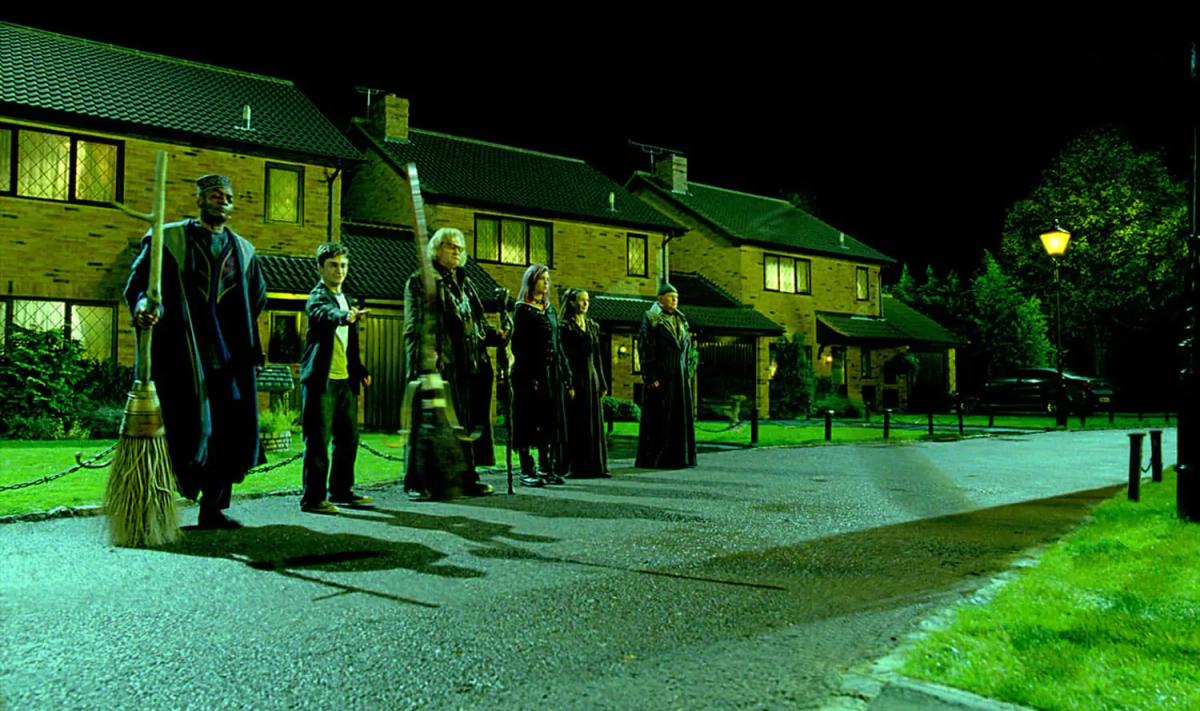
With that many witches and wizards about, the secret should have leaked years ago. The book at least covers the flight, where Harry is hidden by a Disillusionment Charm that makes him blend into whatever is behind him. The film drops the charm and puts nothing in its place.
What the film leaves out
At 766 pages in the UK edition, the longest book in the series became its second-shortest film. At 138 minutes the ideas about the press and the school land clearly enough, but there is little room to show the machinery behind them.
Quidditch is cut completely, and screenwriter Michael Goldenberg has said that any version keeping it would have been a lesser film. It is not the only casualty. The hospital sequence is gone, the journalist who would have given Harry a reply to the Daily Prophet never appears, and several threads survive only as a single conversation.
The final battle
The last act sends teenagers into a fight with grown Death Eaters, and it is hard not to ask what anyone was thinking. The staging is clumsy, and the film is weakest exactly where it should be strongest. Most of the effects hold up well, from the broom flight to the Patronuses, but the bigger set pieces here show their age.
One note for families: the detention scenes show a quill cutting words into a child's hand, and this is a much darker film than the early ones.
That adds up to a 3.5, which on the bulb scale is Glowing: good, and a worthy night in. Watch it for Imelda Staunton, and for how quickly a frightened government can teach a school to stop asking questions.
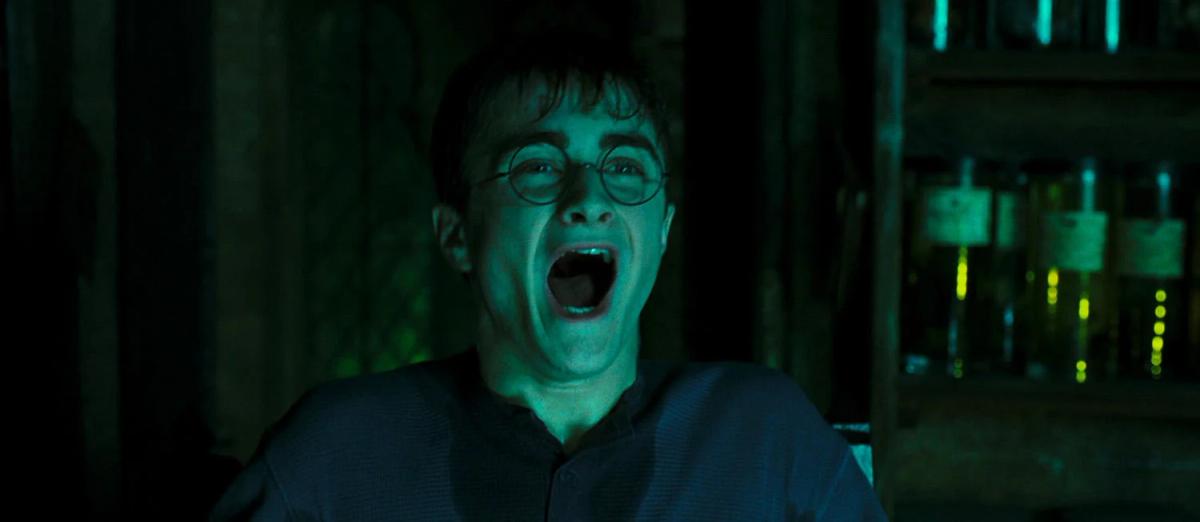
The snake. Harry Potter (Daniel Radcliffe) dreams the attack on Arthur Weasley (Mark Williams) from inside the snake doing it, and wakes knowing it has really happened. It is the first time the link to Lord Voldemort's (Ralph Fiennes) mind is useful and the first time it frightens everyone around him, including Harry. The Weasleys' Christmas toast to him afterwards is the warmest moment in the film.
Snape being Snape. When Dumbledore's Army is caught, Harry is sure Cho Chang (Katie Leung) informed on them. The relief is immediate when Severus Snape (Alan Rickman) later mentions that Dolores Umbridge (Imelda Staunton) used the last of his truth potion on Cho, which clears her of choosing to betray anyone. The deliberate intervention comes moments later in the same scene: he claims to have no idea what Harry's coded warning about Padfoot means, and the Order still reaches the Ministry, with Umbridge treated throughout as an inconvenience.
Dumbledore leaves in style. Charged with conspiracy and sedition, Albus Dumbledore (Michael Gambon) declines to come quietly and vanishes in a burst of phoenix fire. Even Kingsley Shacklebolt (George Harris) has to admit to Cornelius Fudge (Robert Hardy) that, like him or not, Dumbledore has style.
Umbridge reaches for the Cruciatus Curse. Caught at her fireplace, Harry will not say who he was trying to reach, so Umbridge decides to torture a student, and when Hermione Granger (Emma Watson) points out that it is illegal she says what the Minister does not know will not hurt him. What kind of place is this? The kind where people will do anything to get what they want, which real institutions manage without any magic at all.
A slow Ministry. Six students fly to London and walk into the Ministry of Magic, where Death Eaters are waiting and a running fight breaks out. Nobody official responds until Dumbledore mentions that the Aurors are on their way, and Fudge and his officials arrive only once the atrium has been wrecked. For the seat of wizarding government, the security is remarkably relaxed.
Kids against killers. These are teenagers fighting grown Death Eaters, and it is hard not to ask what they were thinking. The friends who promised Harry they were in this together mostly end up behind the rocks once the Order of the Phoenix arrives. They are children, which is fair enough, but then why come at all?
Sirius. Mid-fight, Sirius Black (Gary Oldman) cheers Harry on by calling him James, his father's name, and seconds later Bellatrix Lestrange (Helena Bonham Carter) kills him with the Killing Curse. Daniel Radcliffe is at his best here: Harry simply stares, waiting for Sirius to come back. When it does land, he cannot control himself, and Remus Lupin (David Thewlis), who was friends with Sirius, James and Lily, has to hold him.
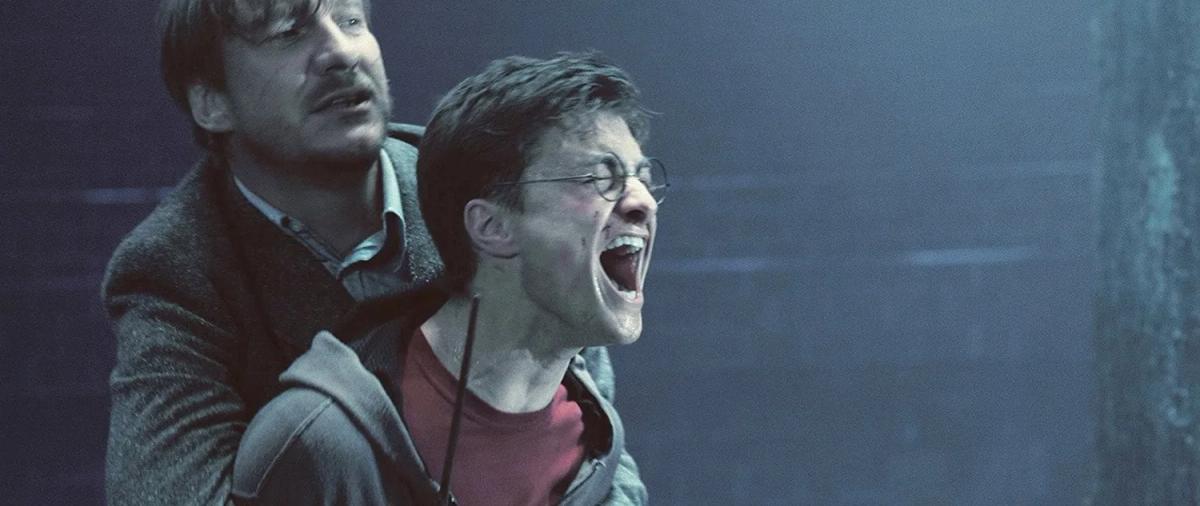
Harry and Bellatrix. Harry breaks free and goes after one of the most dangerous witches alive, alone, while Lupin, who knows exactly what she is, lets him go rather than follow. His Cruciatus Curse knocks her down but cannot hold her, and the voice telling him he has to mean it is not hers: it is Voldemort, goading a teenager into an Unforgivable Curse before stepping out behind him to call him weak.
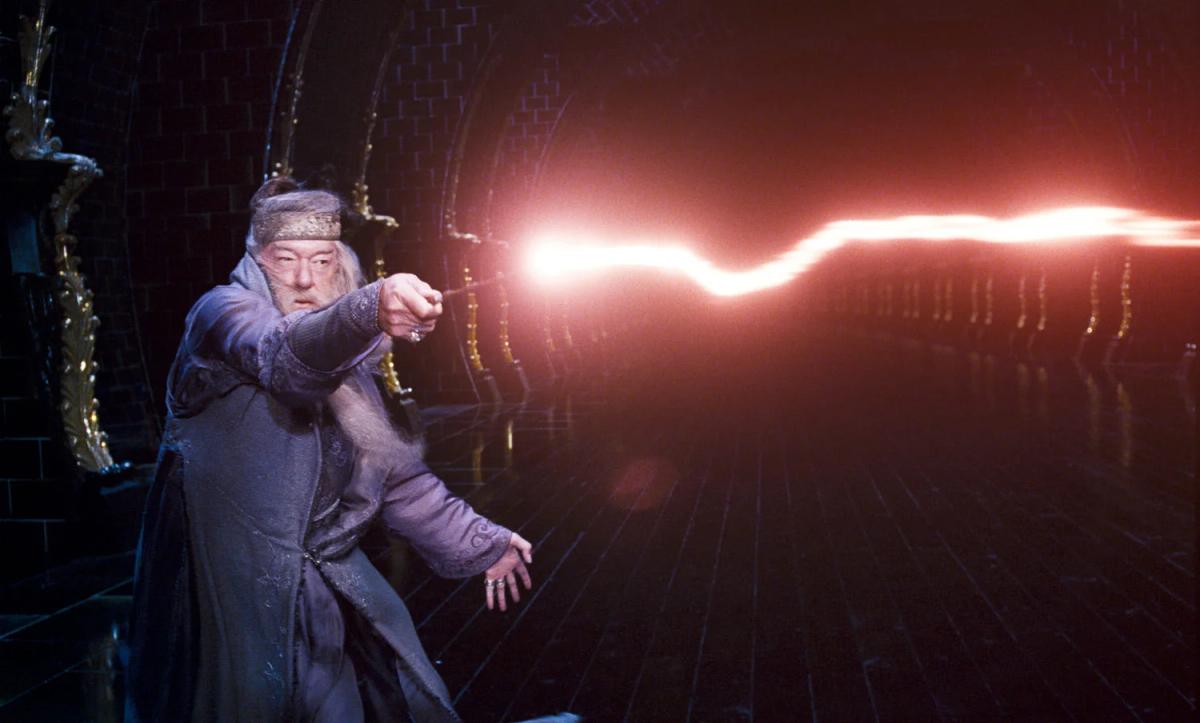
Dumbledore against Voldemort. Dumbledore arrives, Bellatrix runs, and the duel is a genuinely tough fight. This is the man of action the film has been building towards, and he delivers. The film also plays the two of them as near equals, which is generous to Voldemort and makes Dumbledore smaller than the books ever allow.
What saves Harry. Voldemort gets inside Harry's head, and Harry forces him out with memories of Ron Weasley (Rupert Grint) and Hermione. It is the moment he finally recognises what he has had all year. The odd part is where Ron and Hermione are while it happens: standing at the far end of the atrium rather than next to him.
Voldemort's exit. Thrown out of Harry's mind, Voldemort has Harry on the floor in front of him and chooses to threaten him instead of finishing it. Dumbledore is still standing and the Aurors have already been announced as on their way, so the scene does give him a reason to go. After a year of being told how ruthless he is, the retreat still feels convenient.
The truth gets out. The Ministry spent a year calling Harry a liar, pinned first the disappearances and then the Azkaban breakout on Sirius, and kept the signs quiet to avoid a panic. None of it survives one look at Voldemort standing in the atrium. Fudge says the words at last, and a year of official denial dies in a sentence.
Bright Bulbs
- Albus Dumbledore (Michael Gambon) walks into a rigged hearing three hours early, by a happy mistake, and it is the best entrance in the film.
- Imelda Staunton rarely needs to raise her voice, and the little cough Umbridge uses to interrupt people is funnier and nastier than any speech could be.
- Wizarding London finally feels lived in, from the paper-plane memos flitting round the Ministry to a house that shoulders its way out between two Muggle homes.
- Fred and George Weasley (James and Oliver Phelps) supply the film's one burst of pure mischief, and it arrives exactly when the gloom needs breaking.
- Thestrals, the skeletal horses only visible to people who have watched someone die, are the best new idea here and quietly the saddest.
Dull Bulbs
- Far less comedy than the earlier films, and Sirius Black (Gary Oldman) and Severus Snape (Alan Rickman) get just one sharp exchange that makes them sound like schoolboys.
- Harry Potter (Daniel Radcliffe) and Cho Chang (Katie Leung) get hints, one kiss and very little else, so the romance barely registers.
- Rubeus Hagrid (Robbie Coltrane) gets far too little to do, and the film cannot make much of the subplot it leaves him.
Shattered Bulbs
- For the seat of a government, the Ministry of Magic is astonishingly easy to walk into, and nobody official responds until the fighting is nearly over.
Cast
- Daniel Radcliffe as Harry Potter
- Rupert Grint as Ron Weasley
- Emma Watson as Hermione Granger
- Imelda Staunton as Dolores Umbridge
- Gary Oldman as Sirius Black
- Michael Gambon as Albus Dumbledore
- Alan Rickman as Severus Snape
- Helena Bonham Carter as Bellatrix Lestrange
- Ralph Fiennes as Lord Voldemort
- Maggie Smith as Minerva McGonagall
- Emma Thompson as Sybill Trelawney
- Evanna Lynch as Luna Lovegood
- Robbie Coltrane as Rubeus Hagrid
- Brendan Gleeson as Alastor "Mad-Eye" Moody
- David Thewlis as Remus Lupin
- Jason Isaacs as Lucius Malfoy
- Julie Walters as Molly Weasley
- Mark Williams as Arthur Weasley
- Robert Hardy as Cornelius Fudge
- Natalia Tena as Nymphadora Tonks
- George Harris as Kingsley Shacklebolt
- Matthew Lewis as Neville Longbottom
- Bonnie Wright as Ginny Weasley
- Katie Leung as Cho Chang
- James and Oliver Phelps as Fred and George Weasley
- Chris Rankin as Percy Weasley
- Tom Felton as Draco Malfoy
- David Bradley as Argus Filch
- Warwick Davis as Filius Flitwick
- Richard Griffiths as Vernon Dursley
- Fiona Shaw as Petunia Dursley
- Harry Melling as Dudley Dursley
- Kathryn Hunter as Arabella Figg
- Devon Murray as Seamus Finnigan
- Alfred Enoch as Dean Thomas
- Timothy Bateson as Kreacher (voice)
- Tony Maudsley as Grawp
Related
- Why can Harry see the Thestrals in Order of the Phoenix?Harry sees Thestrals after Cedric’s death. Luna understands the creatures, while an earlier death leaves an awkward question about Harry’s sight.
- Dumbledore’s funniest moments and boss moves in Harry PotterDumbledore is funny when he dodges questions and a boss when he refuses arrest, duels Voldemort and saves Harry in the cave.
More from Harry Potter
Which Death Eater Are You?Ten questions put you at Voldemort's table. Find out which of seven Death Eaters, from Bellatrix to Regulus, shares your reasons.- Which Hogwarts Professor?Ten teaching dilemmas at Hogwarts. Find out which professor you'd be: Dumbledore, McGonagall, Snape, Hagrid, Lupin or Trelawney.
- Which Hogwarts House?What would you do with a locked chest and no key? Answer ten questions as yourself at school and find your Hogwarts house.
- Chamber of Secrets explained: who opened it and why Hogwarts blamed HagridLucius supplies the diary, Riddle controls Ginny and Hagrid takes the blame. Hogwarts’ old mistake becomes cover for a new attack.
More from Harry Potter
 Sorcerer's Stone
 Chamber of Secrets
 Prisoner of Azkaban
 Goblet of Fire
 Order of the Phoenix
 Half-Blood Prince
 Deathly Hallows: Part 1
 Deathly Hallows: Part 2
Also on Harry Potter: Explainer · Chamber of Secrets explained: who opened it and why Hogwarts blamed Hagrid (+12)
Everything on Harry Potter (24) →