Before you press play
Watch if
You like horror that works on your body — damp rooms, bad teeth, small spaces — more than horror that makes you jump.
Wait if
You want a villain whose threat actually lands, or you were hoping to be scared of the dark afterwards.
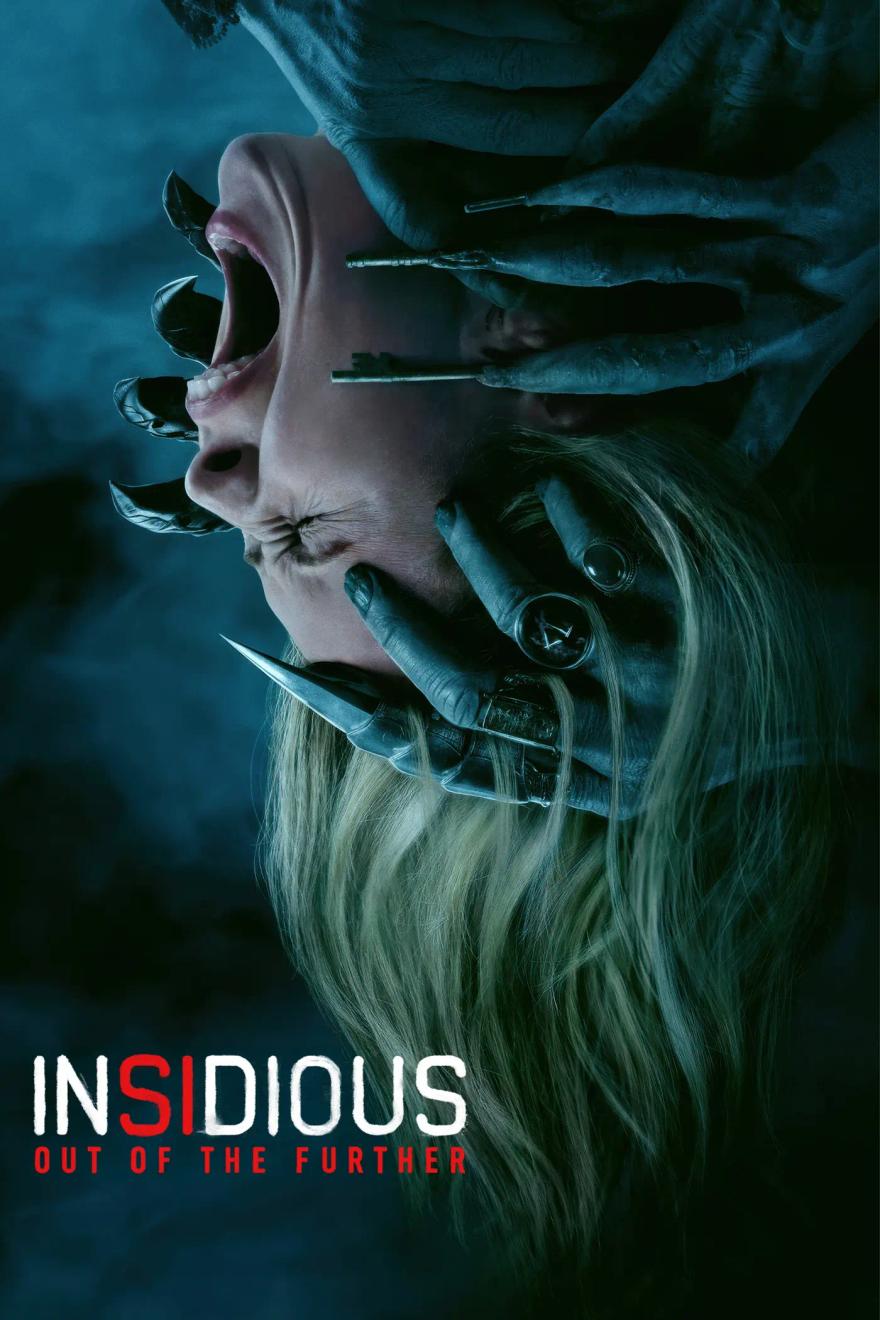
Is Insidious: Out of the Further worth watching?
Yes, with your expectations turned down. This is a competent, watchable horror film that has decided it would rather make you uncomfortable than frighten you — and it is better at discomfort than most films that try. What it never does is pay off the threat it spends two hours building. You will not be scared walking to your car afterwards.
It opens in 1999. Gemma is a child, coming home to a mother, Ingrid, who shouts at things that are not there and tells her daughter to stay in her room. To a child that is not a mystery. It is simply what her mother is like, and it is why she grows up resenting her. Ingrid takes her own life in front of her.
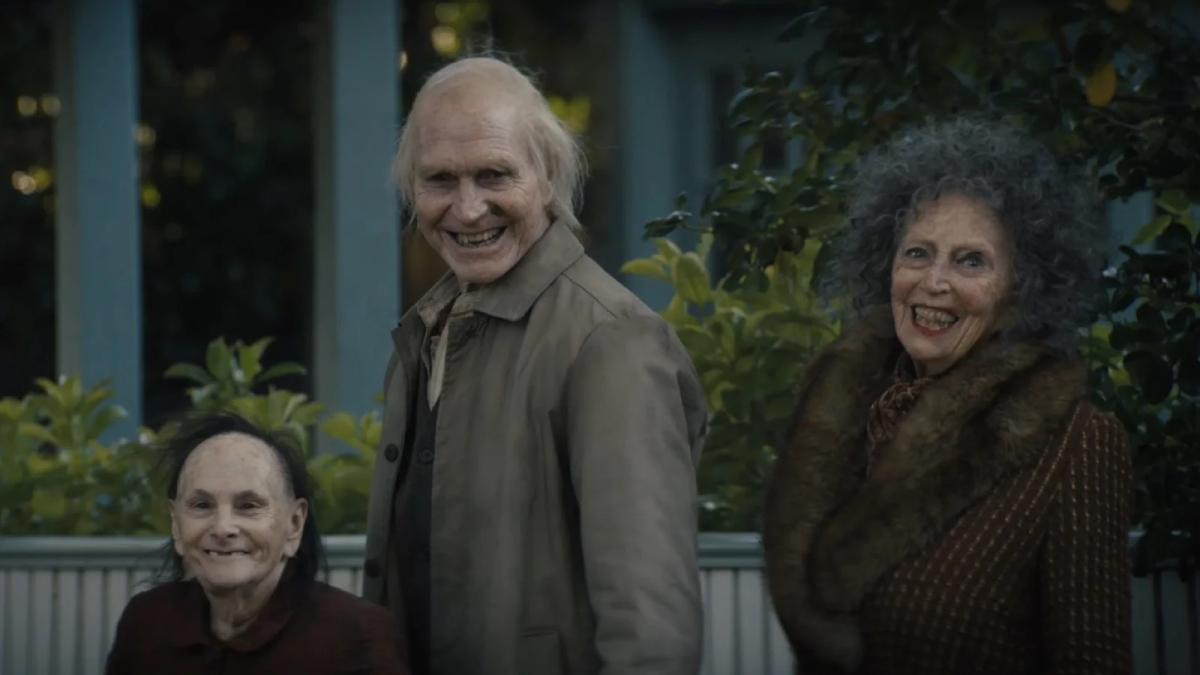
Twenty years later, Gemma is raising her own nine-year-old, Maya, in the same house, working as a dental hygienist, and doing it with real warmth — partly because she has decided not to become her mother. Then she starts seeing three people on the street who should not be walking around.
I came to this without having seen the rest of the series and had no trouble following it. There is a line early on that connects it to earlier events, but nothing you need to have watched.
Teeth, damp and close quarters
The film's best decision is textural. From the first scene it feels humid — sticky, close, unpleasant on purpose — while the colour stays cold. That combination should not work and does, and it holds all the way through.
Then there are the teeth. Gemma's job puts her hands inside strangers' mouths, and the film understands something most horror ignores: toothache is a pain people take for granted until it arrives and ruins their week, and plenty of adults are quietly frightened of the dentist. An X-ray scene here is harder to sit through than anything with a demon in it.
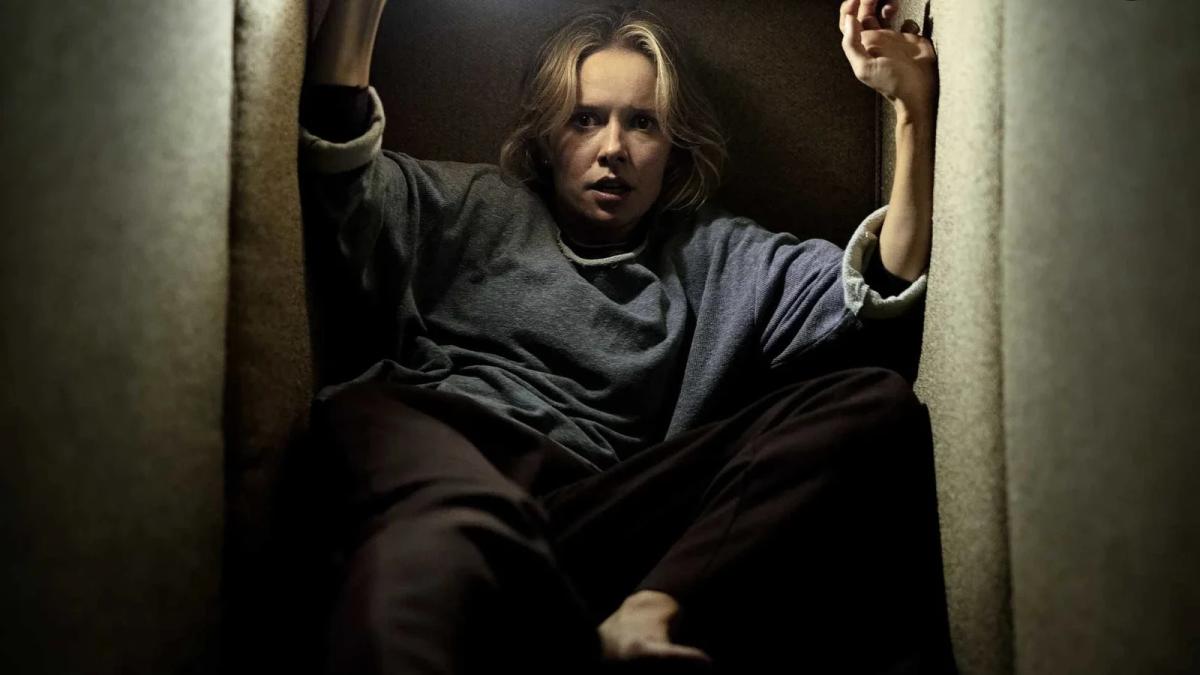
The camera stays close, and mostly that earns its keep. A sequence where Gemma is trapped inside a maze of sofa cushions is genuinely airless. A few close-ups read as television framing rather than cinema — this is not a film that needs the biggest screen available — but on an ordinary one it looks good.
Amelia Eve and Island Austin
Eve carries it. Gemma is exhausted, disbelieved and slowly coming apart, and Eve plays all three without tipping into hysteria.
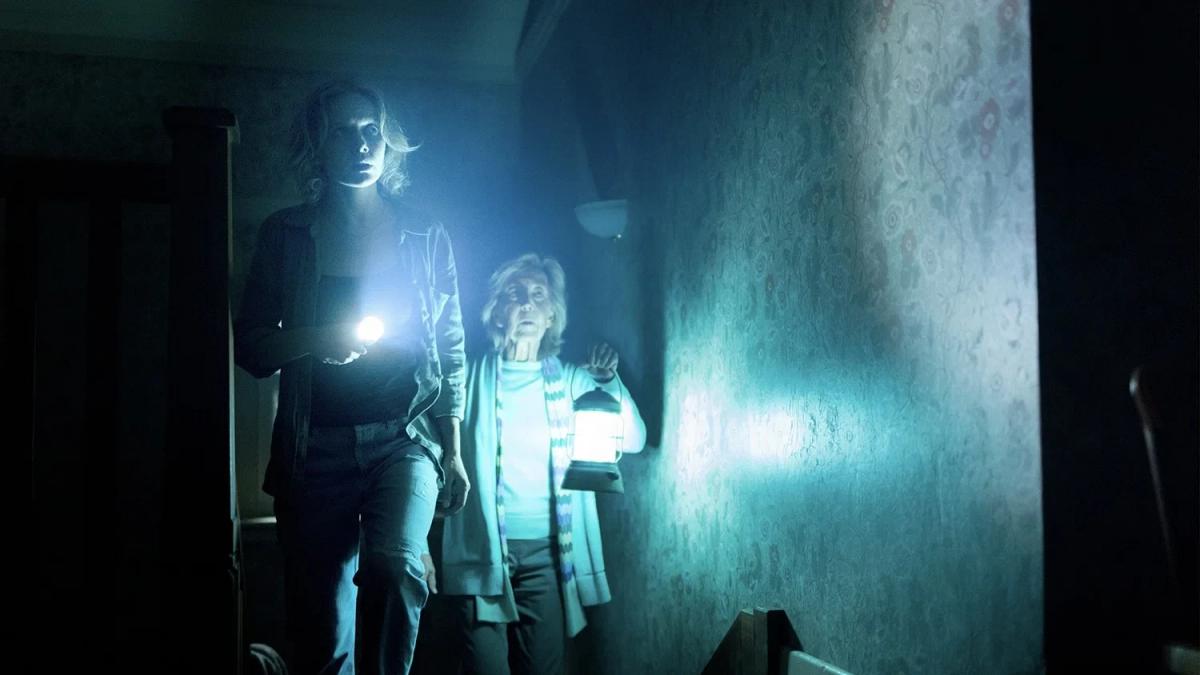
Island Austin's Maya deserves more credit than child roles in horror usually get. She is not a plot device and she is not stupid. She holds her own about as well as a nine-year-old plausibly could, which is a low bar the genre trips over constantly.
Brandon Perea's Nick does the job the script gives him: not believing her, then believing her.
Cyrus and the threat that never arrives
Sam Spruell's Cyrus is set up as someone who intends to tear the world open, and he is a good presence — he talks, he charms, he is more person than monster. But the film never shows the damage. We are told what he wants and shown almost none of it happening. The supernatural gets touched and then left alone. The scale never arrives.
The scares have the same problem in miniature. They are built to creep rather than startle, and that works — but a jump scare that does not make you jump is just an unpleasant image, and there are a lot of unpleasant images.
The third act is where the writing gives up. A plan is announced, in dialogue, at speed, and then carried out. Nobody explains how it is meant to work, which makes it hard to feel much when it starts to wobble.
Does Insidious: Out of the Further have a post-credits scene?
One, and it arrives mid-credits, straight after the main titles. Stay for it. It is the sharpest thing in the film and it takes about forty seconds.
Cinema or home
Fine. Genuinely fine, which is not nothing — it is well made, it is unpleasant by design, and the mother-and-daughter thread is played straight and lands. But skip it at the cinema and you have lost very little. Watch it at home with the lights off and it will do its job.
Ingrid was not unwell. Cyrus had been working on her the way he later works on Gemma, and when he got close enough she took her own life to shut him out. Gemma only learns this by going into her mother's memories, and it reframes the entire opening: the woman who frightened her was protecting her.
The ability runs in the family. Ingrid had it, Gemma has it, Maya has it. They are Couriers — they do not merely travel into the Further, they can carry things across in both directions. That is what Cyrus needs. He was a cult leader who died to prove death was not the end, got stuck, and has been promising the entities around him a way out ever since.
The three figures on the street are his acolytes. They killed the Sullivans across the road, took their house, and keep themselves sedated so they can stay on the other side and work on Gemma every night. Nick finds two of them and ties them up. He misses Lester.
Lester takes Maya. She falls asleep, crosses over, and brings Cyrus through — the reveal that she has the same ability lands only minutes before it matters. What follows is the film's most uncomfortable stretch, with a child used as a door.
Gemma's answer is to move the entire house into the Further. The demons, realising they are trapped again and that Cyrus has not delivered, turn on him, and Gemma and Maya get out.
Almost everyone lives. Cyrus is beaten back rather than destroyed. After the main credits he is strapped into the chair of the dead dentist he had earlier steered Gemma towards — teeth first, this time. He is still in there, which leaves the door open.
One scene does break. During the climax Nick is outside with a nine-year-old who will not leave her mother, and he cannot get her to move. He is an adult and a police officer. Pick her up and go.
Bright Bulbs
- Amelia Eve holds the film together as Gemma, especially once the exhaustion sets in.
- Island Austin's Maya behaves like a child rather than a plot device.
- The cold-but-clammy look is sustained from the first scene to the last.
- The dental sequences find real discomfort in something most horror ignores.
- The couch-cushion maze is the one set piece that genuinely closes in on you.
Dull Bulbs
- Cyrus is described as world-ending and never allowed to be it.
- The scares unsettle rather than startle, so they read as creepy instead of frightening.
- The third-act plan is announced and executed with no explanation of how it works.
- Some close-ups are framed for a smaller screen than the one you are watching on.
Cast
- Amelia Eve as Gemma Hall
- Island Austin as Maya Hall
- Sam Spruell as Cyrus Lam
- Lin Shaye as Elise Rainier
- Brandon Perea as Nick Mendoza
- Maisie Richardson-Sellers as Clare
- Laura Gordon as Ingrid Lilith Hall
- Charli Penton as Young Gemma
- Joseph Lopez as Lester