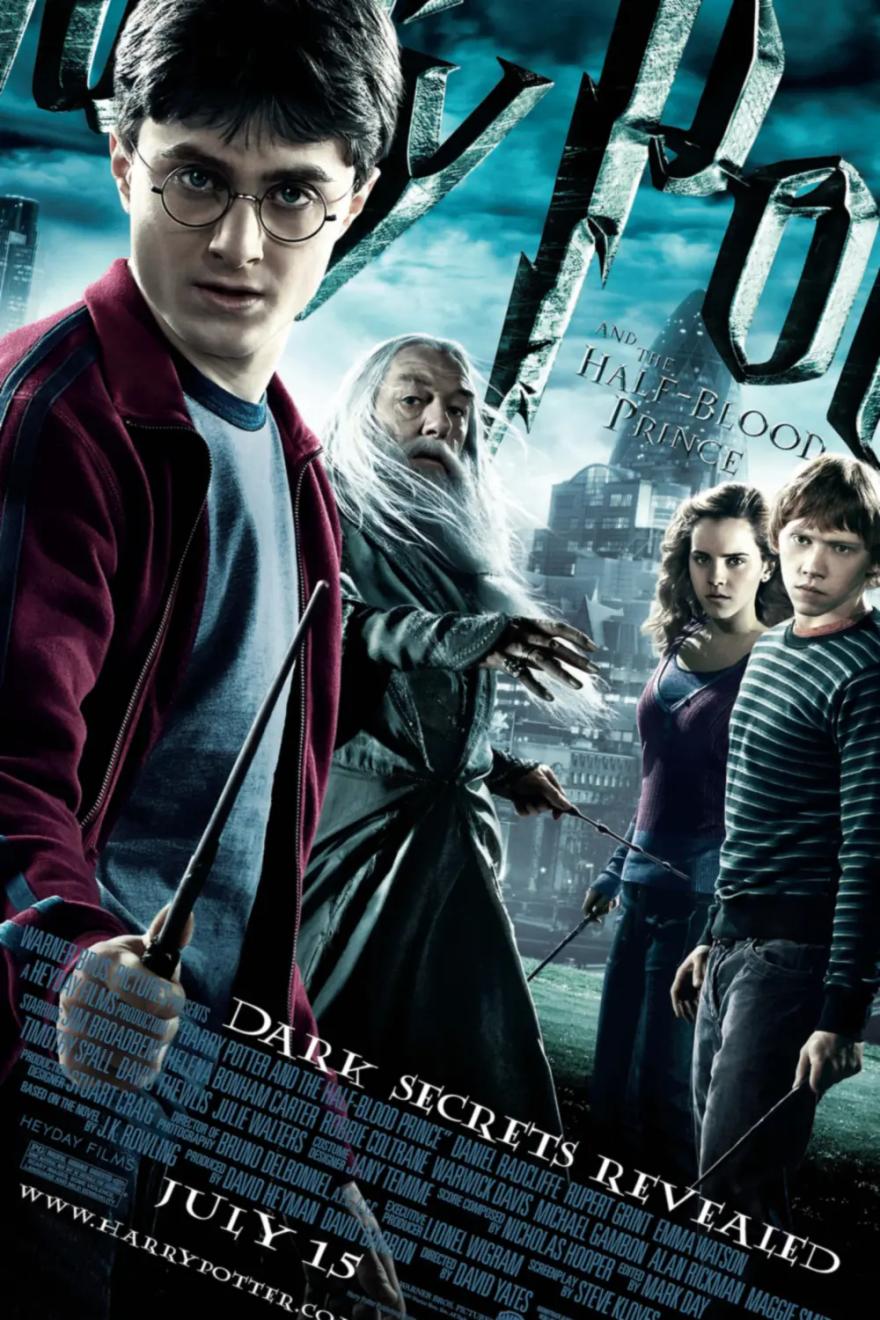
Before you press play
Watch if
You are working through the series and want the entry where Draco Malfoy finally becomes a person, in the best-shot film of the eight.
Wait if
You want a story that finishes on its own terms, or you come to these films for the plot rather than the weather.
Bruno Delbonnel's cinematography
The sixth film opens on flashbulbs and a ruined street, and it stays in that mood for two and a half hours. Bruno Delbonnel shot it, and his work here earned the only Academy Award nomination for cinematography in the eight films. That is not a matter of taste. He drained the colour out of Hogwarts and lit the place like a wet November, and on a technical level it is the most controlled the series ever looked.
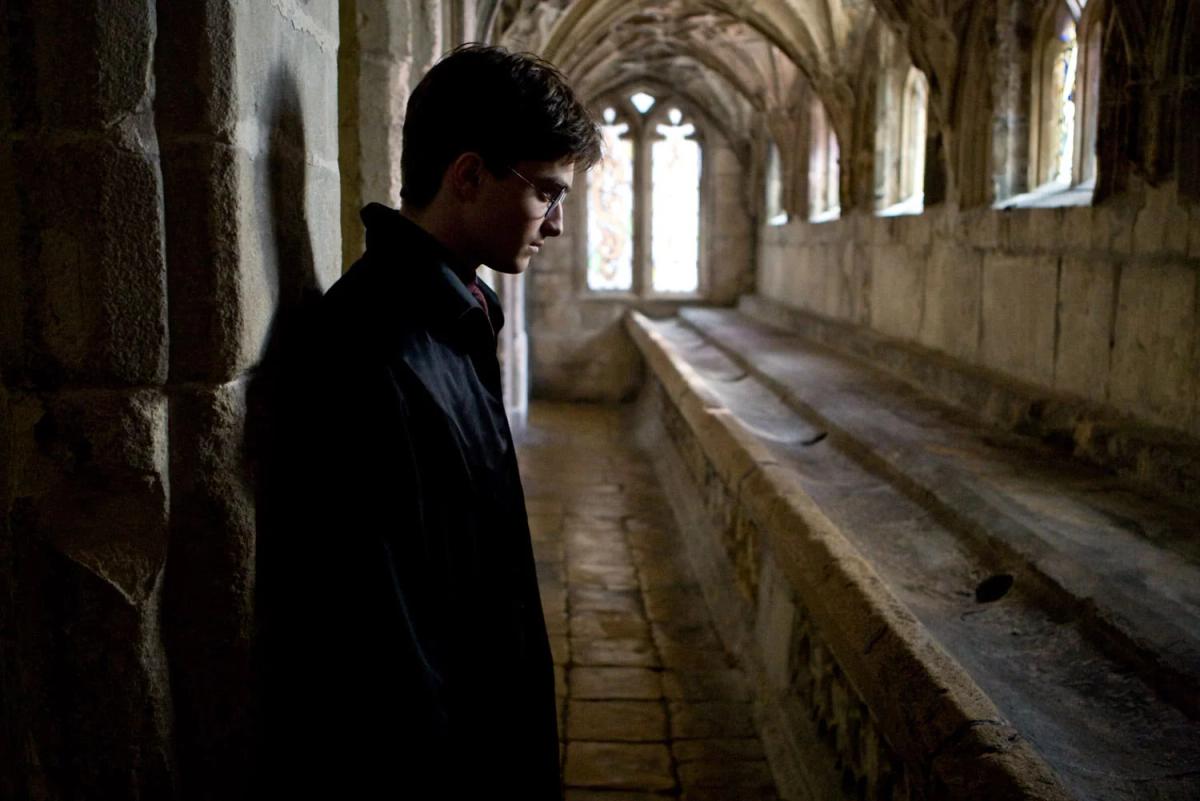
The objection is not to the gloom. A dark film about a school under threat is the right instinct, and the fifth film had already started down that road. The objection is that in places you cannot make out what is in the frame.
The film's biggest set piece happens somewhere you can barely see. The scale of it, the water, the architecture of a place built to frighten people, all of that is the world building this series runs on, and a lot of it is sitting in a blackness you have to go and fetch. You should not need Lumos Maxima on the brightness slider to see the set. The weight of the scene is there. Some of the work that made it is not reaching the screen.
The Great Hall is the other casualty. For five films the feast was the reliable bit of wonder, the shot that said this world is bigger than the one outside the cinema. Here it looks half empty and underlit, closer to a school dinner than a banquet. It reads as a money problem, which is odd for a film with a reported budget of $250 million. It was not a money problem. It was a choice, and the film does not get back what the choice costs.
Adult Voldemort's absence and the central threat
The film gives Ralph Fiennes's adult Voldemort no new dramatic scene. The new Voldemort material comes through boyhood memories Albus Dumbledore (Michael Gambon) shows Harry Potter (Daniel Radcliffe), while the threat in the present belongs to Draco Malfoy (Tom Felton), who has been handed a job by Voldemort's people and is visibly buckling under it.
That is not automatically a fault. Plenty of good films keep the villain off screen, because a strong story or a real mystery carries the weight instead. The trouble is that Draco's subplot never fully occupies the space Voldemort leaves. Felton is excellent in it, and a frightened sixth-year buckling under what he has been told to do generates dread rather than pressure. Nothing in this film is coming for Harry.
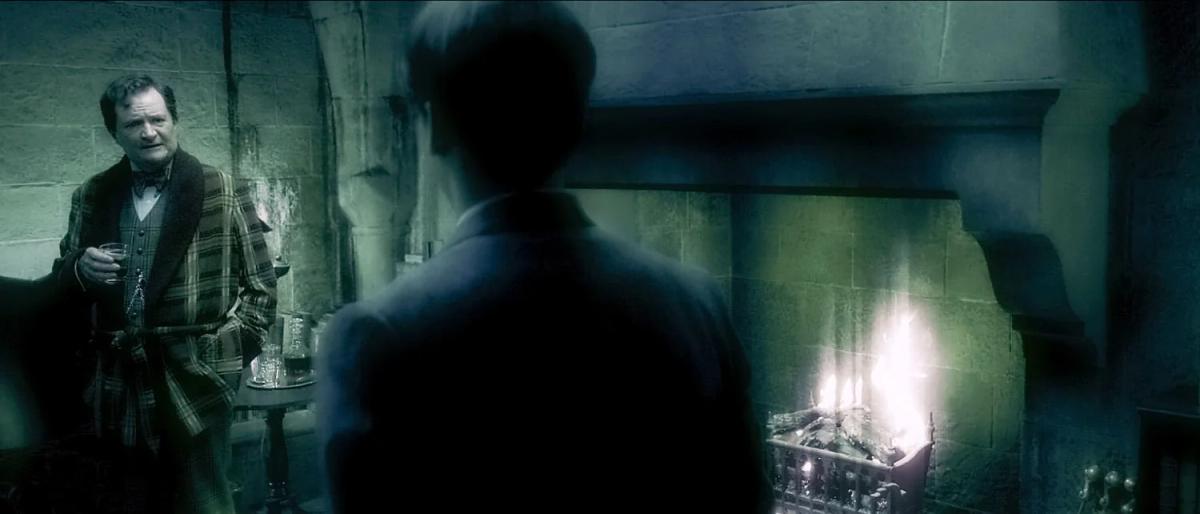
There is a mystery on paper. It is not treated like one. For most of the running time Harry's job is an errand: Dumbledore wants a memory that Horace Slughorn (Jim Broadbent) has altered, and Harry is sent to charm the real version out of him. Two apparently unrelated threats pass through Hogwarts in the meantime, but the film never develops them into a sustained investigation. Compare the five films before it, where a stone was protected, a chamber was opened, a hunted man was found, a tournament was run and a school was taken over. This one collects materials.
The Half-Blood Prince and what the title never explains
Someone once owned Harry's second-hand potions book and signed the margins as the Half-Blood Prince. The film supplies that person's name in one line near the end and never explains the name itself.
So a film named after somebody spends two and a half hours never saying what the name means. Not who, which it does eventually produce, but why those words, and why they were worth putting above the title. The answer is in the book, in his parents and his mother's maiden name, and none of it is in any of the eight films. Not this one, and not the two that follow.
Set that against the others and the gap shows. Voldemort wanted the Sorcerer's Stone and the film is about keeping it from him. The Chamber of Secrets is opened, entered and closed. The prisoner of Azkaban is Sirius Black, and the film is the business of working out who he really is. The Goblet of Fire starts the tournament, and the tournament ends badly. The Order of the Phoenix is a group of people in the film doing what the group exists to do. Five titles, five films that deliver on them, and then this.
Ron Weasley and Hermione Granger
For five films these two were beside Harry for everything that mattered. They remain prominent here and have almost nothing to do with the main plot.
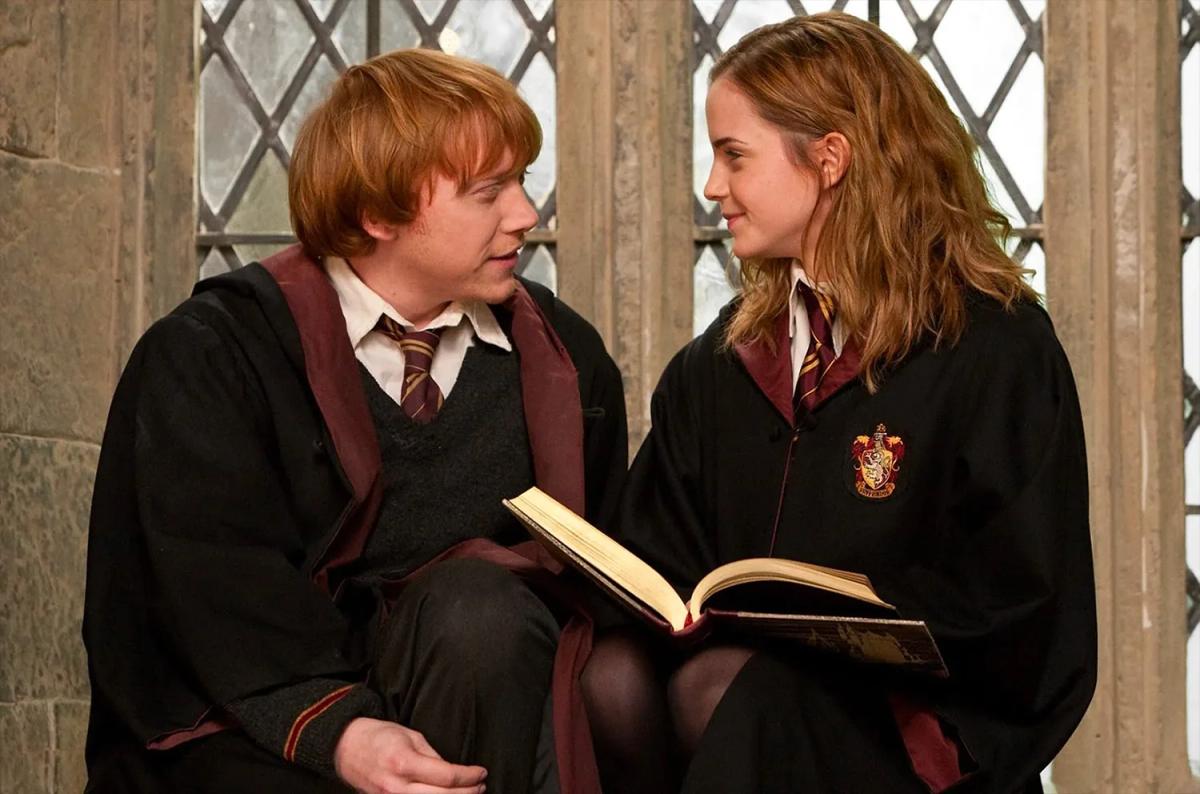
Hermione Granger (Emma Watson) is the loss. She was the research, the working out, the one who went and found the answer while the other two argued. Here she gets one investigation, a library search for the identity of the Prince, and the film builds it as a dead end so she comes back with nothing. She stays highly visible and is given almost no plot-driving work. On top of that the writing hands her a lack of composure the rest of the series contradicts, and comic beats that were never hers, and Watson is left reaching for laughs the character would not go for. The material is wrong and the performance cannot rescue it.
Ron Weasley (Rupert Grint) reads better, because Grint is funny and because the film understands him. He is not in love with anybody. He is enjoying attention he has never had, after five films standing next to the famous one. But look at what he actually achieves. His place on the Quidditch team is the one thing he wins, and the film shows Hermione secretly Confunding his rival during the deciding save, tipping the tryout his way.
The romance subplots
The earlier films kept romance subordinate to the larger mystery, even when Goblet of Fire gave the Yule Ball a substantial subplot of its own. The sixth turns it up and leaves it there, and plays as though the whole cast woke up on the same morning and discovered the opposite sex.
Lavender Brown (Jessie Cave) is the clearest problem. She takes a real share of the running time and pays off nothing at all. Cave is good and the joke works for a while, and then she is dismissed and the story is exactly where it was. Her scenes also sit at a different pitch from the film around them, closer to farce, so they feel imported from another production.
Harry's interest in Ginny Weasley (Bonnie Wright) arrives unbuilt, and the obstacle the film invents is that Ron has a rule about his sister. That is a sitcom engine. Ginny's side is thinner, because the film never decides what she feels: love, attraction, or the last of the hero worship of a girl raised on stories about him. When the two of them finally get a moment, the line the film reaches for is about his nice skin.
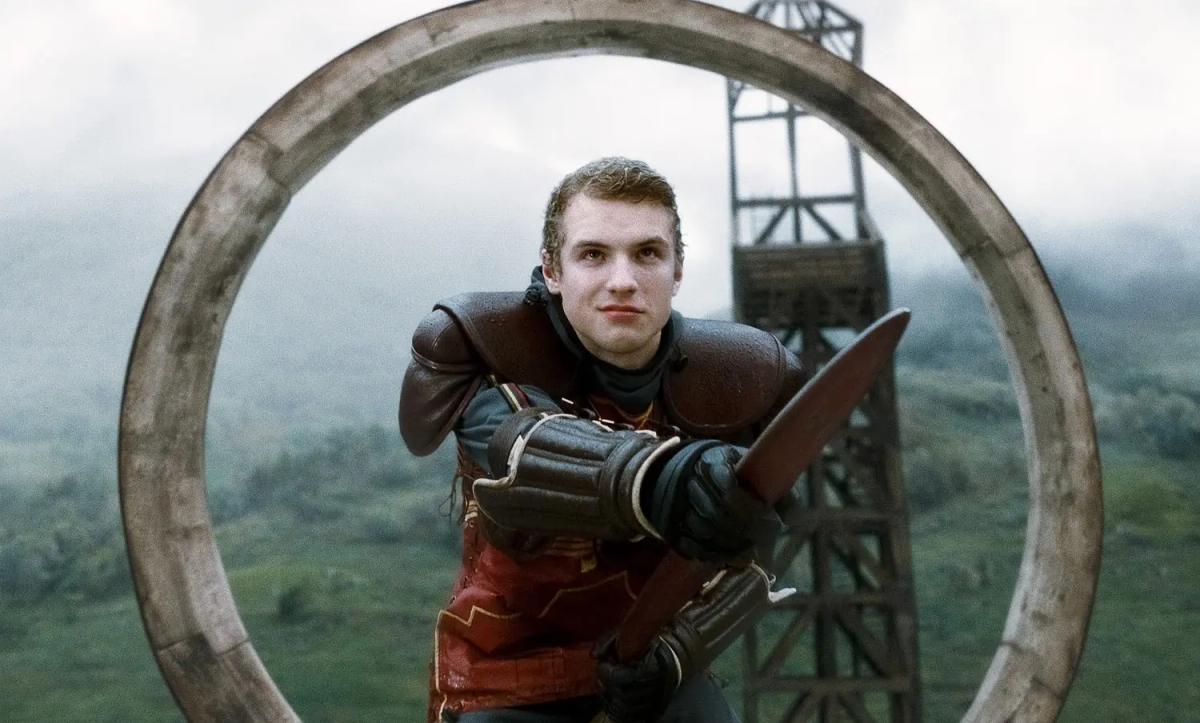
These are sixth-years, and the film writes and shoots them older, which makes some of the pursuing sit oddly. Cormac McLaggen (Freddie Stroma) is the clearest case, written as comic and playing as unpleasant.
Tom Felton as Draco Malfoy
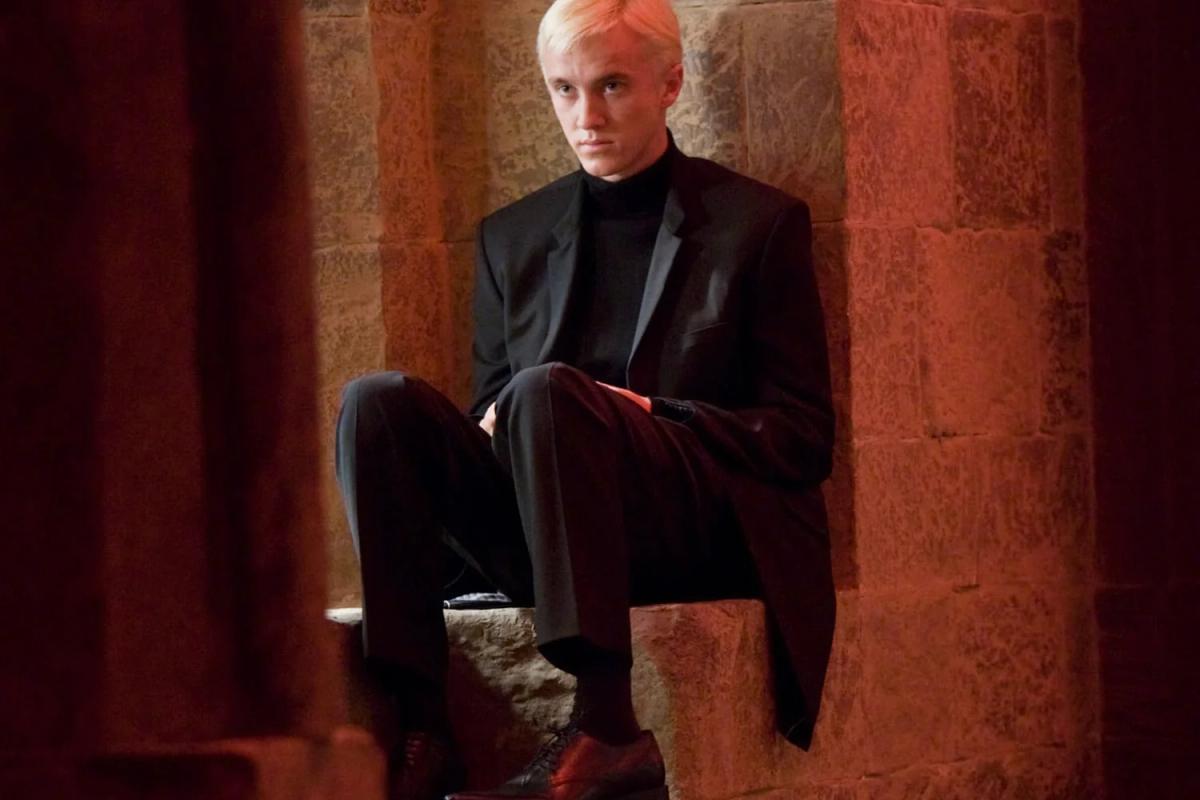
Draco gets everything the others do not. This is Tom Felton's film, and it is comfortably his best work in the series. Nothing showy. He plays a boy who spent five films boasting about wanting power, and who discovers what the boasting costs once the assignment is real. The shaking hands, the crying in a bathroom, the long stretches where he simply looks ill. In a film where everybody else is worrying about parties, he is the only student carrying real weight.
The adult cast and Daniel Radcliffe as Harry Potter
The adults stay the series' quiet advantage. They get small portions and they are reliably better than the parts deserve. Severus Snape (Alan Rickman) has more to do here than usual. Gambon, Broadbent, Maggie Smith as Minerva McGonagall and Helena Bonham Carter as Bellatrix Lestrange each get a handful of scenes and make something of them. Six films in, that consistency has stopped being remarkable, which is a compliment of a kind.
A word for Radcliffe, who gets marked down for this sort of performance. Harry is written and played as recessive. He waits at the back, he is called forward rather than stepping forward, and when he is asked to do something he does it without wanting the room to watch. Read as a leading turn that looks flat. Read as the character it is right, and a Harry who pushed to the front of every scene would be somebody else.
Quidditch and the world of the film
The tryout establishes Ginny as one of the strongest Chasers, and the match itself does work the rest of the film needs. This is a world with its own rules and rituals and a stupid dangerous sport, and that texture is a large part of why anyone cares about it. The film spends most of its time on a boarding-school romance that could happen anywhere. For ten minutes it remembers where it is set.
Is Harry Potter and the Half-Blood Prince worth watching?
Yes, and not for good reasons. You cannot skip it, because the last two films start from where this one stops, and there is real craft in it: Felton, the photography, and a short late scene between Maggie Smith and Daniel Radcliffe that is better than anything in the films either side of it.
But it does not stand up on its own. Adult Voldemort's absence leaves Draco carrying more pressure than his subplot can sustain, the central story is an errand, the title goes unexplained, and two of the three central characters stay prominent while losing every job that made them matter. Three out of five, and a frustrated three rather than a comfortable one. The material here was good enough to be a film. It was used to build a bridge.
The poisonings. Two attempts on Dumbledore go wrong in a row. A cursed necklace meant for him nearly kills a student, and a bottle of mead meant for him is drunk by Ron Weasley (Rupert Grint) instead. Harry Potter (Daniel Radcliffe) saves him with a bezoar. Minerva McGonagall (Maggie Smith) gets the sharpest line of the sequence, allowing that Harry's actions were heroic and then asking why they were necessary, but the film never turns the two incidents into a sustained investigation.
The memory. Harry gets it out of Horace Slughorn (Jim Broadbent) by using his mother. The doctored version has Slughorn refuse to discuss Horcruxes at all and throw the boy out. The real one has him explain what a Horcrux is and how it works, and recoil when the older Tom Riddle (Frank Dillane) asks about splitting a soul seven times, and then retreat into asking whether this is all hypothetical, all academic. Riddle gives him the reassurance he is fishing for and calls it their little secret, and Slughorn takes it. So the lie removes both things: the explanation, and the moment he accepts the academic cover. His shame belongs to both halves. He supplied dangerous knowledge, and then chose not to press the question. The film gives that second beat a few seconds, which is why it plays thin first time through.
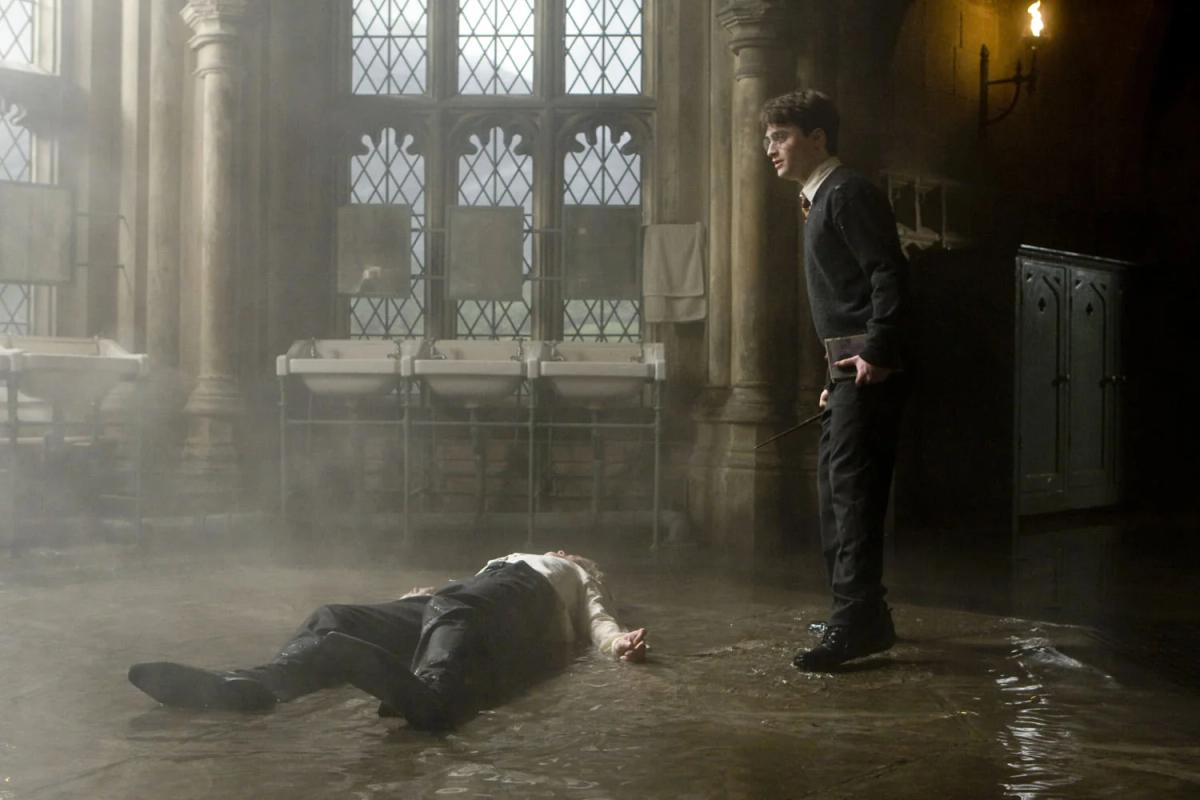
Sectumsempra. Harry has been working out of a second-hand potions book annotated by someone who signed himself the Half-Blood Prince. One margin note reads Sectumsempra, for enemies, underlined. He does not know what it does, uses it on Draco Malfoy (Tom Felton) in a flooded bathroom, and opens him up. Severus Snape (Alan Rickman) arrives and saves the boy's life, one of the film's clearest moments of decency from a character who is given no credit for it.
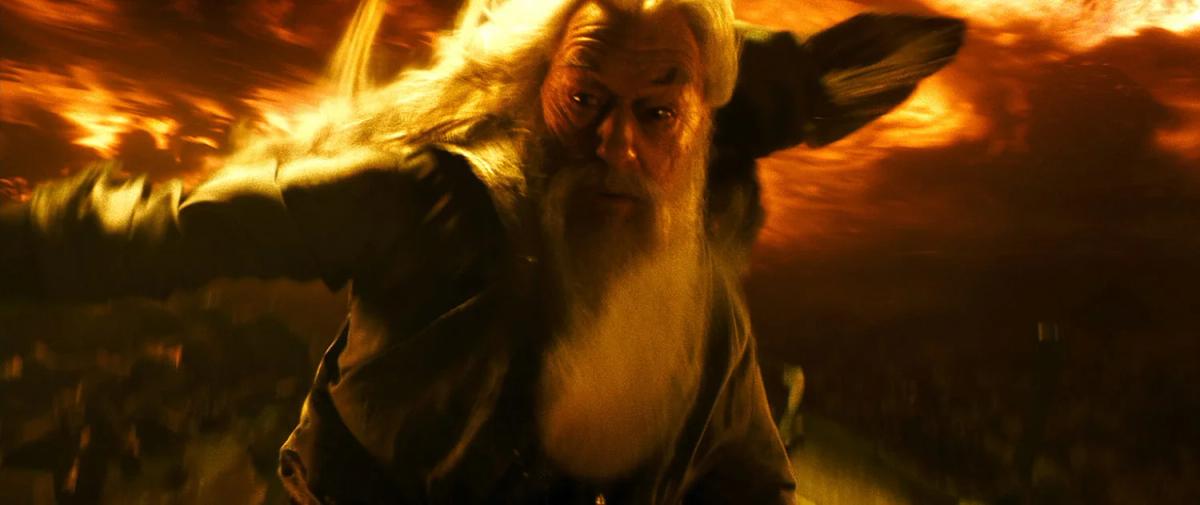
The cave. This is the film at its best. Albus Dumbledore (Michael Gambon) reads the place from the traces dark magic leaves behind, opens the entrance with his own blood, and drinks a whole basin of a potion built to break whoever swallows it, making Harry keep pouring. The locket is not there. Somebody with the initials R.A.B. has taken it, and the film never says who. When the dead rise from the water and pull Harry under, Dumbledore, barely able to stand, turns the cavern into a ring of fire and clears it. What lands is not the spectacle, it is the distance. Two hours of teenagers flailing at each other, and then one old man doing something none of them will manage for years.
Dumbledore's hand. Worth being precise, because the film gives you less than it looks like. The hand is blackened from his first appearance, Harry notices, and Dumbledore turns the question aside and promises the story another time. Later he identifies the diary and the ring as destroyed Horcruxes, and says the ring was difficult to find and even more difficult to destroy. What never arrives is the curse itself: what it is doing to him, how long he has, or whether anything was done to slow it. That comes two films later, in Deathly Hallows Part 2, where Snape treats the injury and gives him a year.
The tower. Draco has repaired the Vanishing Cabinet and let the Death Eaters in. He disarms Dumbledore and then cannot finish it, and Felton gets the best minute of his career there. Snape arrives, Dumbledore says his name and the word please, and Snape kills him.
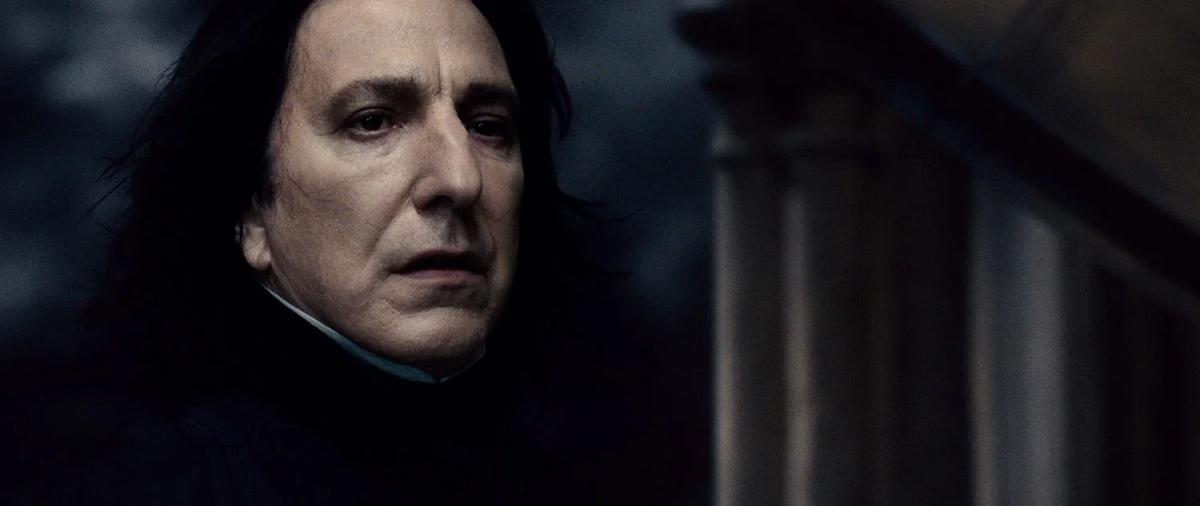
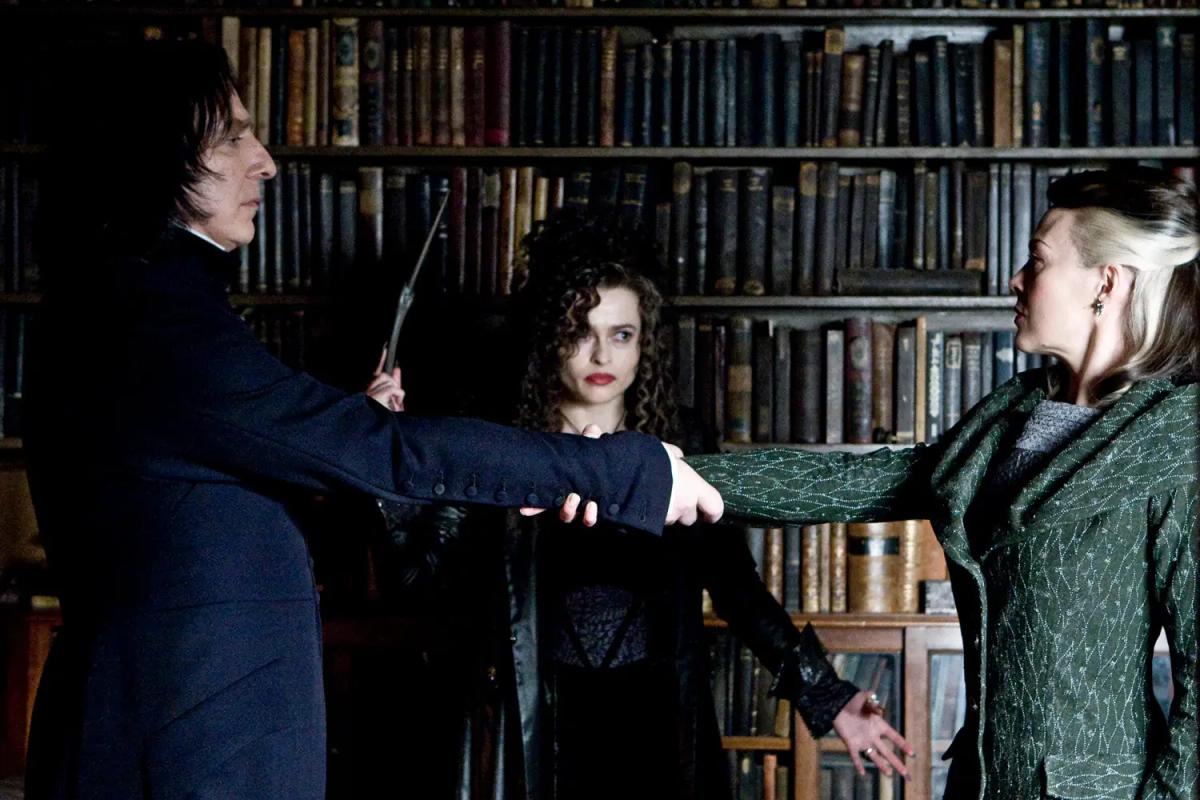
What the film lets you think. Watch it cold and Dumbledore is begging for his life and Snape was a Death Eater all along. The film encourages that hard. It is not quite true that nothing complicates it, though. Near the start of the film Snape swears an Unbreakable Vow to Narcissa Malfoy to help Draco with his task and to carry it out himself if Draco fails. The promise is planted early and paid off here, and what it actually meant is withheld for two more films. On a first viewing the betrayal reading is the one the film hands you, while the agreement that would complicate it sits in plain sight.
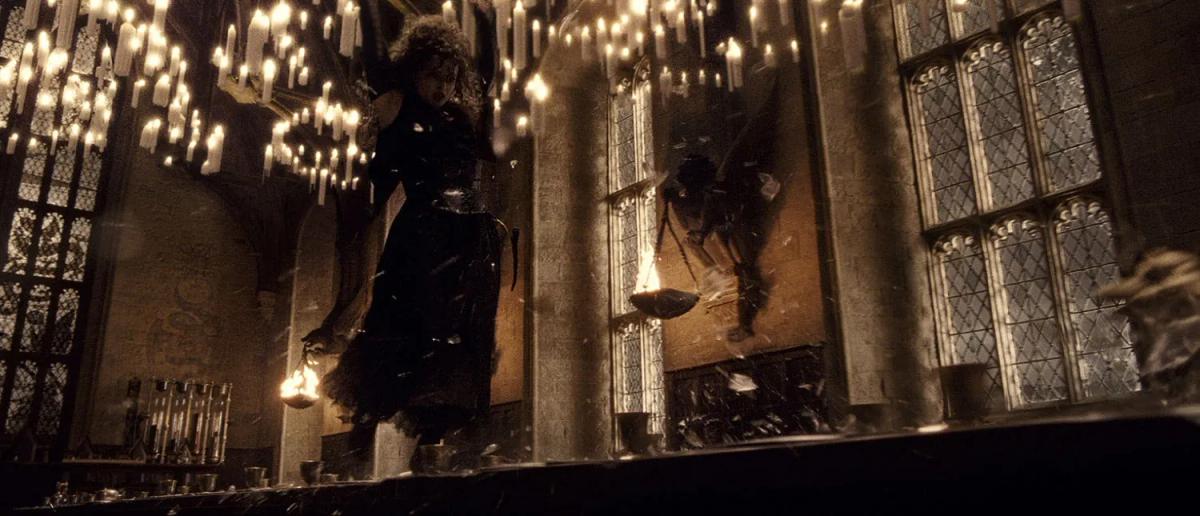
Nobody defends the castle. Death Eaters walk into Hogwarts, walk through it, and walk out. Bellatrix Lestrange (Helena Bonham Carter) smashes up the Great Hall and burns Hagrid's hut on the way, and nothing stops any of it, in a building full of the most capable witches and wizards in the country with Aurors posted there because everyone expects an attack. The reason is not in the film, it is in what was taken out. The book ends with a battle inside the castle, staff and students and the Order fighting room by room. It was cut, on the grounds that a full-scale fight at Hogwarts was coming in the finale and doing one here would repeat it. Dumbledore's funeral went too, on the separate grounds that it did not fit the rhythm of the film. By cutting the battle to protect the finale and the funeral for reasons of rhythm, the film loses both its climax and its closure. What remains is the shape of an invasion with the resistance removed and a vandalism scene in the gap.
McGonagall. The best brief scene in the film. She finds Harry afterwards and says: "Potter. In light of what has happened... if you should have the need to talk to someone... You should know... Professor Dumbledore... you meant a great deal to him." She never finishes the offer. She starts it, stops, and ends on what Harry meant to Dumbledore rather than what he means to her. Harry says nothing back. It also quietly settles something the series never states. Two older women look after this boy across eight films, Molly Weasley (Julie Walters) and McGonagall, and Molly is warm by nature while McGonagall is not, which is what makes her version count. She was at Privet Drive in the first film arguing that leaving him with the Dursleys was wrong because they were the worst sort of Muggles imaginable. She put him on the Quidditch team as a first year. Six films of looking out for him with affection held behind discipline. Grandmother is closer than teacher. There is a joke in the design too: McGonagall turns into a cat and is the kindest adult in the series, and Dolores Umbridge decorated her office with kitten plates and is the cruellest person in it.
The ending. The locket is a fake. Harry says he is not coming back to school, and Hermione Granger (Emma Watson) tells him he is not doing it alone, which reassembles in one scene a trio the film spent two and a half hours keeping apart.
Bright Bulbs
- Tom Felton finally has something to play as Draco Malfoy, and turns in the best work of his eight films.
- Bruno Delbonnel's photography earned the only Academy Award cinematography nomination in the series, and earned it.
- Maggie Smith finds an extraordinary amount of feeling in one short late scene with Daniel Radcliffe's Harry Potter.
- Comedy so dry it is nearly invisible, most of it from Severus Snape (Alan Rickman) keeping a blank face.
- The adult cast get small portions as usual and are reliably better than the parts deserve.
- The Quidditch match remembers this is a world with its own rules, rituals and one stupid dangerous sport.
Dull Bulbs
- Long stretches are too dark to read, and the film's biggest set piece is the worst affected.
- The Great Hall feast looks half empty and underlit, thinner than in any earlier film.
- The long build to the liquid luck cashes out far more quietly than the setup promises.
- Ginny's feelings are never defined as love, attraction or the last of her hero worship.
- Lavender Brown (Jessie Cave) takes a real share of the running time and pays off nothing.
- Cormac McLaggen (Freddie Stroma) is written as comic relief and plays as unpleasant.
- Neville Longbottom (Matthew Lewis) is reduced to carrying trays at a party.
Shattered Bulbs
- The film is named after the Half-Blood Prince and never explains what the name means. No later film does either.
- Ralph Fiennes's adult Voldemort gets no new scene, and Draco cannot supply the pressure his absence leaves.
- Hermione Granger (Emma Watson) loses the research and the working out, the jobs that defined her for five films.
- Ron Weasley (Rupert Grint) and Hermione stay prominent throughout and contribute remarkably little to the central mystery.
- Threads remain incomplete: the meaning of the Prince's name, the identity behind R.A.B., and the curse on Dumbledore's hand.
Cast
- Daniel Radcliffe as Harry Potter
- Rupert Grint as Ron Weasley
- Emma Watson as Hermione Granger
- Michael Gambon as Albus Dumbledore
- Alan Rickman as Severus Snape
- Jim Broadbent as Horace Slughorn
- Tom Felton as Draco Malfoy
- Maggie Smith as Minerva McGonagall
- Helena Bonham Carter as Bellatrix Lestrange
- Helen McCrory as Narcissa Malfoy
- Bonnie Wright as Ginny Weasley
- Jessie Cave as Lavender Brown
- Freddie Stroma as Cormac McLaggen
- Matthew Lewis as Neville Longbottom
- Evanna Lynch as Luna Lovegood
- Julie Walters as Molly Weasley
- Mark Williams as Arthur Weasley
- James Phelps as Fred Weasley
- Oliver Phelps as George Weasley
- Robbie Coltrane as Rubeus Hagrid
- David Thewlis as Remus Lupin
- Natalia Tena as Nymphadora Tonks
- Timothy Spall as Peter Pettigrew
- Warwick Davis as Filius Flitwick
- David Bradley as Argus Filch
- Gemma Jones as Poppy Pomfrey
- Katie Leung as Cho Chang
- Georgina Leonidas as Katie Bell
- Frank Dillane as Tom Riddle
- Hero Fiennes Tiffin as Young Tom Riddle
- Dave Legeno as Fenrir Greyback
- Devon Murray as Seamus Finnigan
- Alfred Enoch as Dean Thomas
- Jamie Waylett as Vincent Crabbe
- Joshua Herdman as Gregory Goyle
- Anna Shaffer as Romilda Vane
- Rob Knox as Marcus Belby
- Louis Cordice as Blaise Zabini
- Scarlett Byrne as Pansy Parkinson
Related
- Why is Snape the Half-Blood Prince?Snape joins his half-blood status to his mother’s surname, Prince. The novel explains it. On screen, Harry only ever hears the reveal.
More from Harry Potter
Which Death Eater Are You?Ten questions put you at Voldemort's table. Find out which of seven Death Eaters, from Bellatrix to Regulus, shares your reasons.- Which Hogwarts Professor?Ten teaching dilemmas at Hogwarts. Find out which professor you'd be: Dumbledore, McGonagall, Snape, Hagrid, Lupin or Trelawney.
- Which Hogwarts House?What would you do with a locked chest and no key? Answer ten questions as yourself at school and find your Hogwarts house.
- Chamber of Secrets explained: who opened it and why Hogwarts blamed HagridLucius supplies the diary, Riddle controls Ginny and Hagrid takes the blame. Hogwarts’ old mistake becomes cover for a new attack.
- Sorcerer’s Stone ending explained: how Harry gets the Stone and beats QuirrellHarry’s intentions unlock the mirror and Lily’s love stops Quirrell. Hogwarts has a clever safeguard and a troubling habit of leaving children exposed.
More from Harry Potter
 Sorcerer's Stone
 Chamber of Secrets
 Prisoner of Azkaban
 Goblet of Fire
 Order of the Phoenix
 Half-Blood Prince
 Deathly Hallows: Part 1
 Deathly Hallows: Part 2
Also on Harry Potter: Explainer · Chamber of Secrets explained: who opened it and why Hogwarts blamed Hagrid (+12)
Everything on Harry Potter (24) →