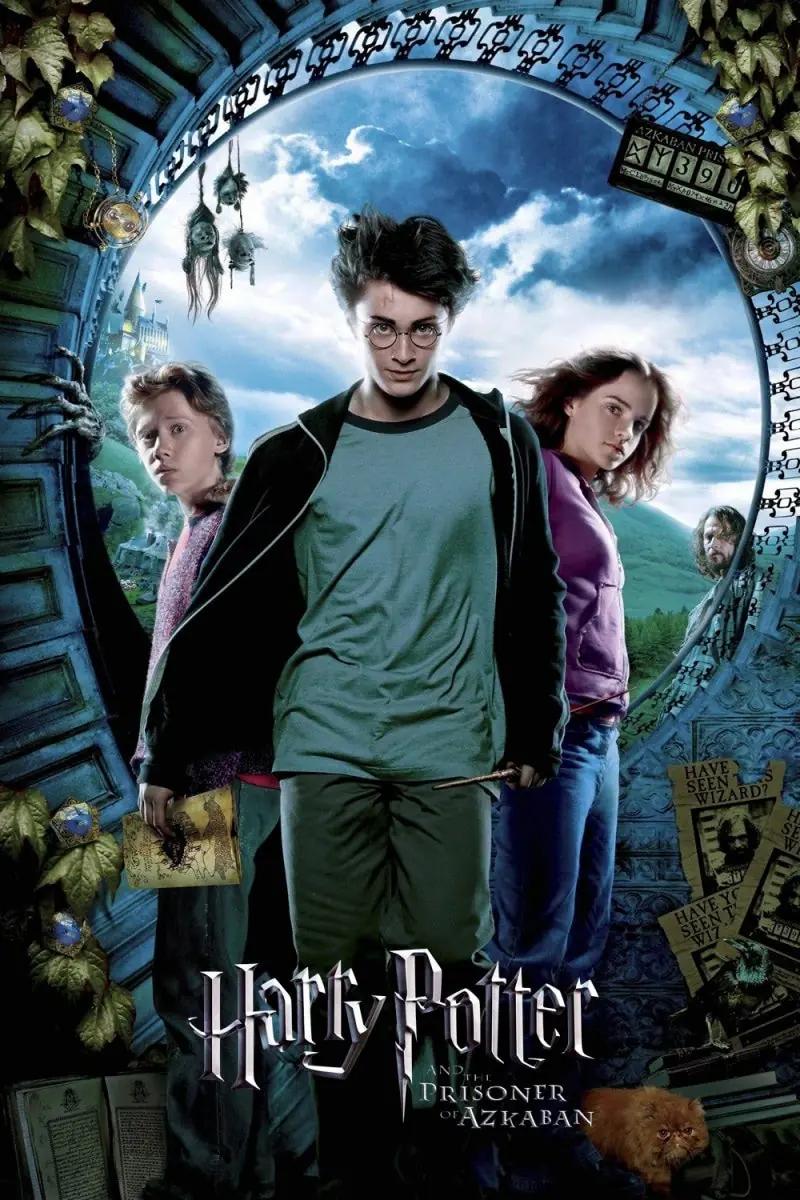
Before you press play
Watch if
You are a Harry Potter fan who wants the wizarding world to feel bigger and stranger.
Wait if
You want a self-contained ending, or you are watching on a phone in daylight.
The third Harry Potter film is where the series stops feeling like a school story. It also plays better the second time, because almost every odd little detail turns out to be evidence. First time through it is a 3.5. On a rewatch it is a 4, and the difference is entirely the film's own doing.
What Alfonso Cuarón changed
Alfonso Cuarón took over from Chris Columbus and rebuilt the look of the series in one go. Hogwarts stopped being lit like a television set and started being lit like a place, the students began wearing their own clothes, and the castle gained a clock tower and a hillside. A bus that should not fit between two lanes of traffic is stranger and funnier when the street around it looks real.
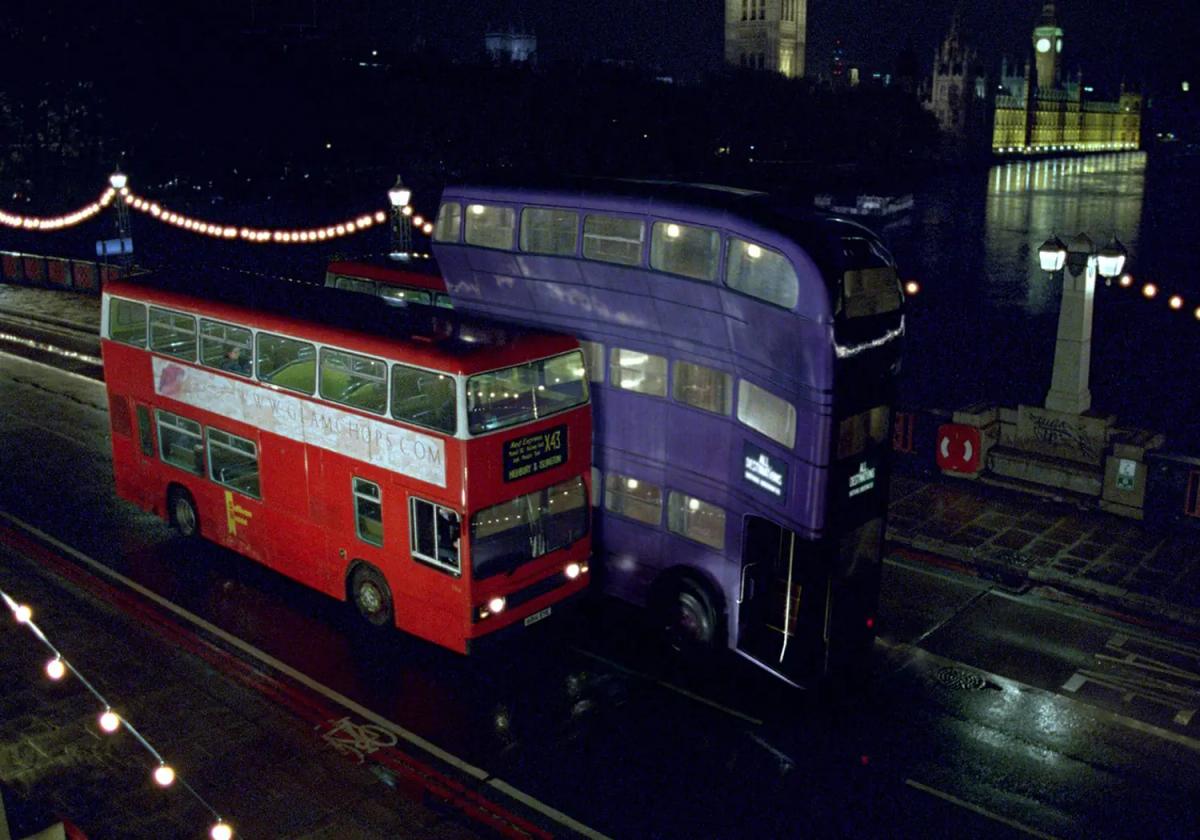
Aunt Marge inflating over the garden and the Knight Bus ride that follows do little for the central mystery.
Cut either and the mystery survives intact. They exist to tell you the wizarding world is bigger and odder than Chris Columbus let on, and at that job they both work. The Knight Bus is where the horror technique running under this film first becomes obvious: its conductor and driver are shot like something out of a different genre, and they land harder than the werewolf does later.
Albus Dumbledore, Remus Lupin and Sybill Trelawney
Albus Dumbledore (Michael Gambon) is the biggest change, and it is a writing change before it is anything else. He is arch now, and plainly enjoying himself, dismissing an executioner with thanks, announcing that he will be having a large brandy, whacking a patient's broken leg on his way past. The costume follows the script rather than the other way round: tie-dyed silk that floats behind him, instead of heavy ceremonial robes.
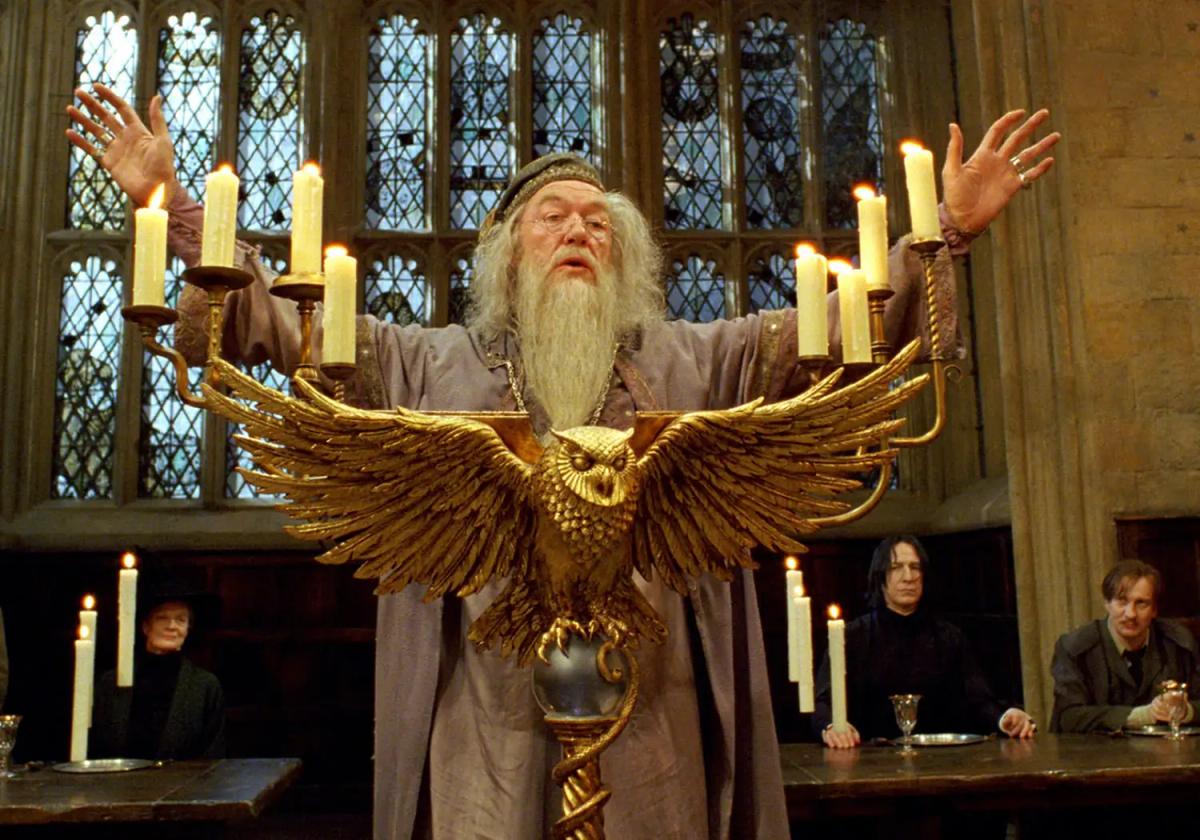
What that buys in charm it spends in gravitas. The script hands this headmaster jokes where the earlier films handed him authority, and the aura of a man the whole room defers to goes with them.
Sybill Trelawney (Emma Thompson) is the one worth the ticket. Emma Thompson sketched the look herself, from the idea of a woman who has not checked a mirror in years, and she is genuinely hard to recognise underneath it. Remus Lupin (David Thewlis) turns up looking like he has not slept in a week and proves to be the best teacher Harry Potter (Daniel Radcliffe) has had, and the one who gives him somewhere to put the sound of his mother screaming.
The Dementors and the Patronus
The Dementors are where the growing-up idea stops being a lighting change. They make Harry hear his mother die, which turns grief into something with weight and a temperature. Remus Lupin's answer is to teach him a spell strong enough to stand against them, and the Patronus lessons hand an old wound back to Harry as something he can use.
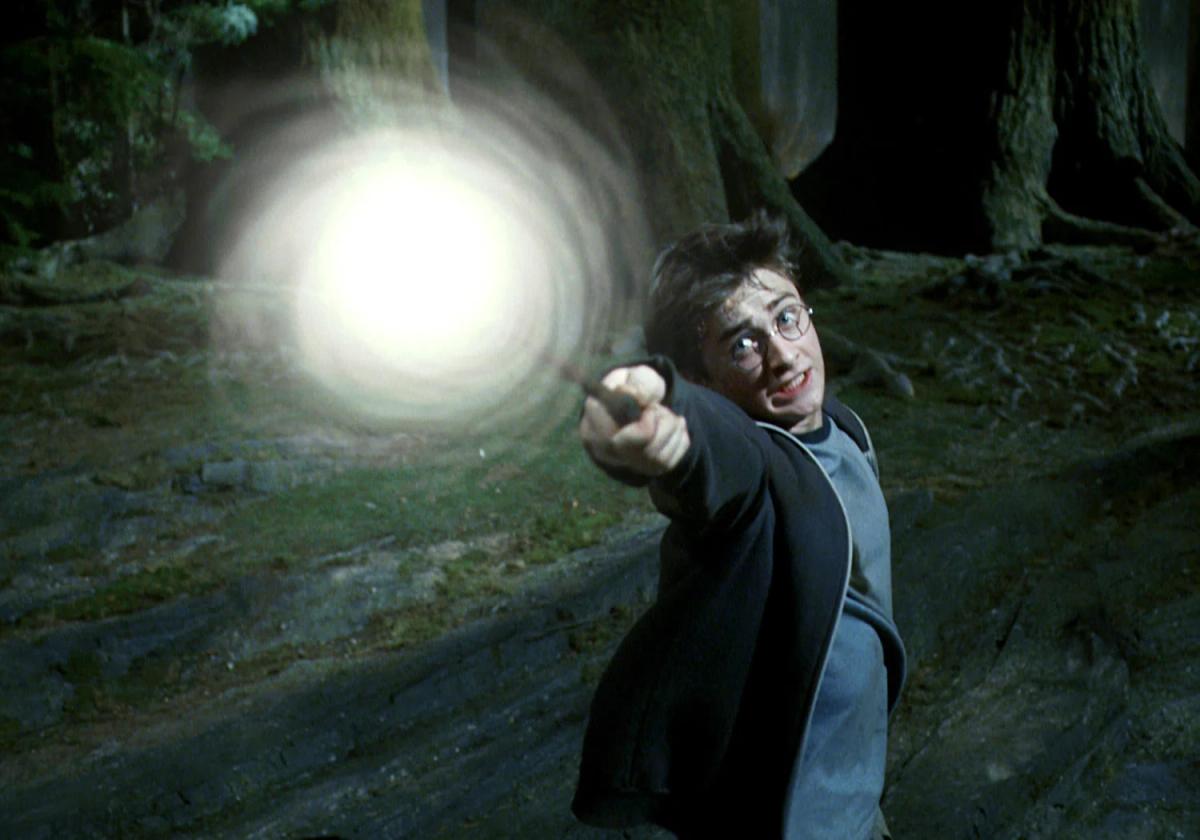
Is Prisoner of Azkaban worth watching twice?
More than its predecessors are. The film plants its evidence in plain sight and lets you feel clever about it later. Hermione Granger (Emma Watson) keeps materialising in classes she cannot possibly have reached in time, and Ron Weasley (Rupert Grint) keeps complaining that her cat is hunting his rat. Both read as running gags on a first viewing. Both are the answer.
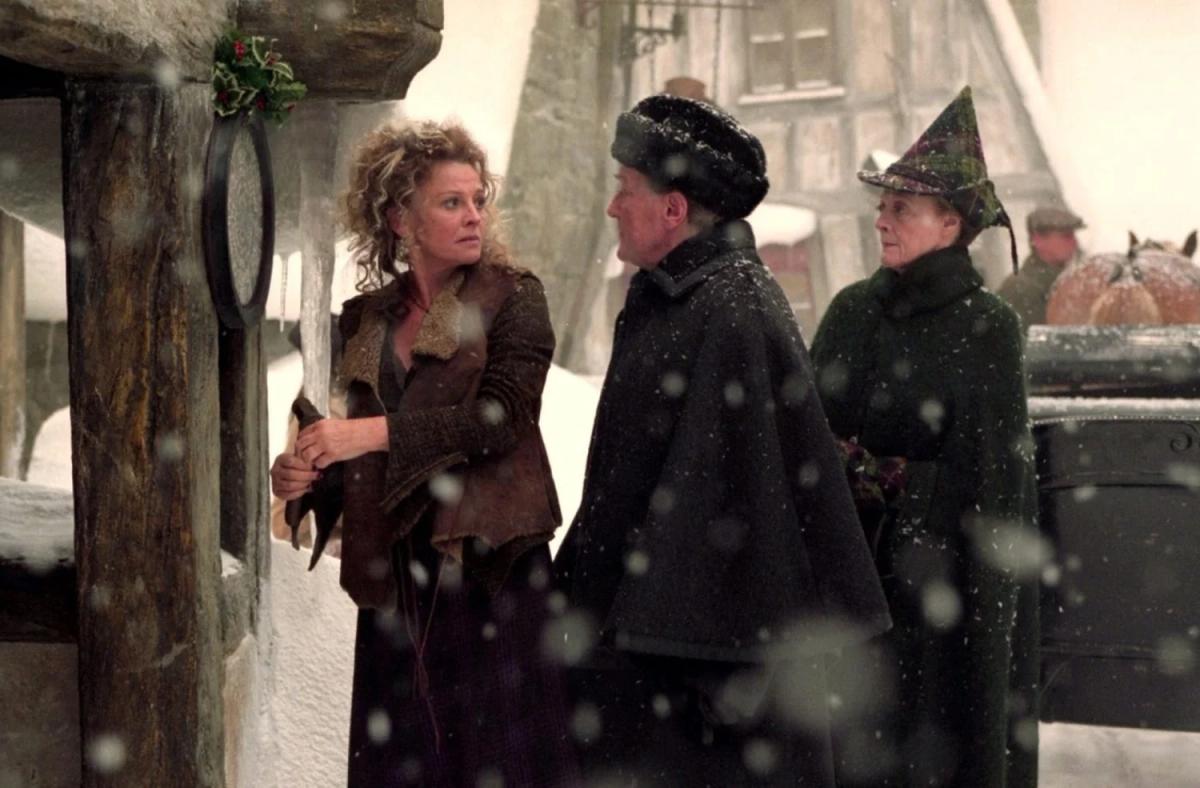
The Hogsmeade sequence does the heavy lifting. Harry sneaks in under a cloak and overhears three adults explaining his own history to a barmaid. It is the film's biggest block of exposition outside the Shrieking Shack, and the one it stages as eavesdropping rather than delivering straight to Harry.
What the film leaves out
It tells you Peter Pettigrew betrayed James and Lily, and never explains how he was in a position to. The Secret-Keeper switch that handed him their location is gone, and with it any account of why everyone spent twelve years certain it was Sirius Black. The Marauder's Map loses its history the same way, since the film never says that Harry's father and his friends drew it, or that Moony, Wormtail, Padfoot and Prongs are those four men. Both are gaps the film has to answer for.
The Quidditch is the other cut and it costs nothing. One match survives out of a season's worth, and its job is to put Harry in the air in a storm with Dementors underneath him. That is why the sport is in this film at all, and it is a better reason than a trophy.
The ending is a bridge more than a climax. It introduces people and opens doors where the two films before it tied themselves off, and this is where it feels least finished.
Why Prisoner of Azkaban is so dark to look at
Here is the real fault. Michael Seresin threw out the bright, even lighting of the earlier films and lit the castle from whatever light source was in the room, which is a defensible choice and a beautiful one wherever a Patronus is involved. It also goes far enough that whole stretches are hard to read: faces you cannot make out, action you lose track of, scenes where you are working out the geography instead of watching it.
Harry's flight on Buckbeak over the lake is the counter-argument, and the prettiest thing the series has managed. You can see all of it. The other counter-argument is John Williams, on his third and last score for these films. The main theme still carries the whole picture, and the score took one of the film's two Oscar nominations.
Four bulbs, and BLAZING. It is the best-looking and the funniest film in the series to date, and the one that most rewards paying attention; what stands between it and a higher score is how often you cannot see it. Watch it twice.
Scabbers. Ron Weasley's (Rupert Grint) rat spends the film being hunted by Hermione Granger's (Emma Watson) cat, and the joke curdles the moment you learn why. Peter Pettigrew (Timothy Spall) has spent twelve years as a Weasley family pet, three of them in a boys' dormitory. Every earlier scene reorganises itself around that.
The Shrieking Shack. The film's biggest revelation is also its funniest scene. Severus Snape (Alan Rickman), Remus Lupin (David Thewlis) and Sirius Black (Gary Oldman) spend it needling each other like men who have been having the same argument since school, which is exactly what they are. Playing a reveal partly for laughs should not work and does. Gary Oldman has very little time to turn a film's worth of suspicion around, and does it by letting the mania drain out of Sirius rather than asking anyone to trust him at once.
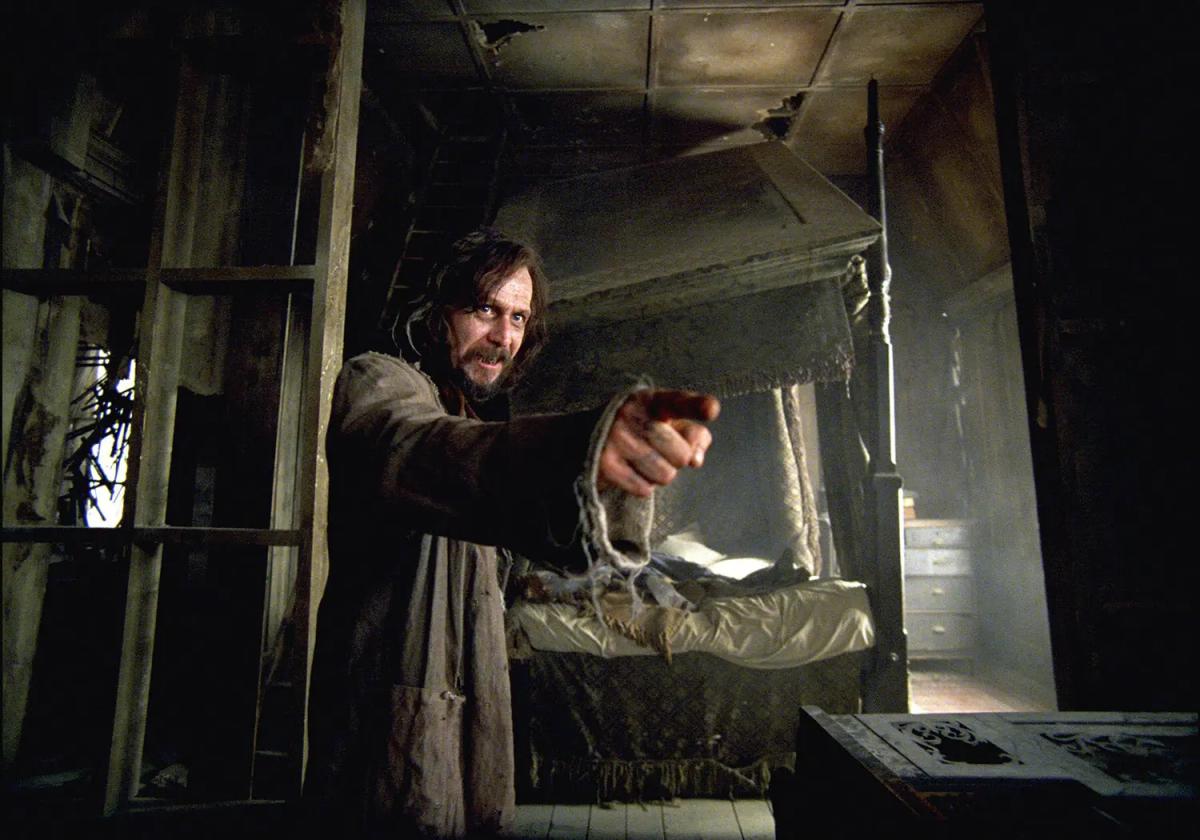
Trelawney's second reading. Sybill Trelawney's (Emma Thompson) tea-leaf lesson is a joke. Her trance is not, and the film gives you no help telling them apart at the time. It starts paying off the same night when Pettigrew runs, and finishes in the next film.
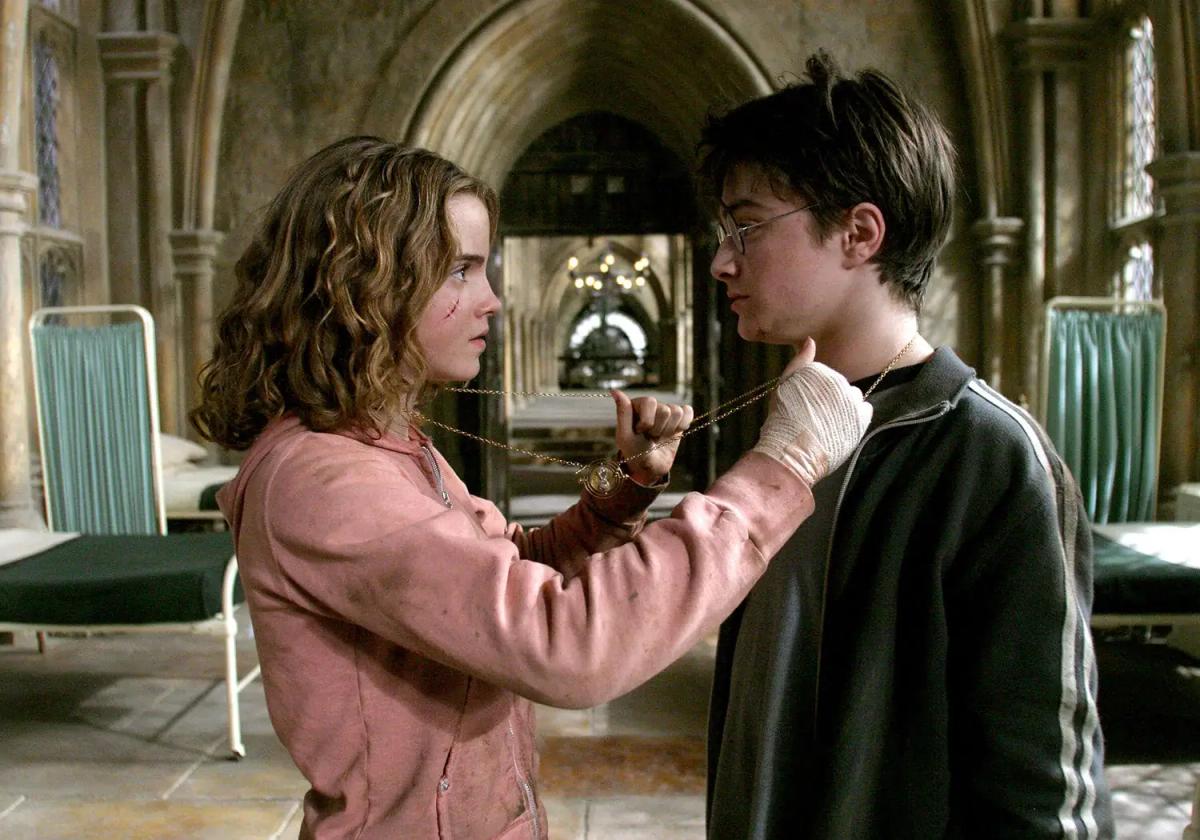
The Time-Turner. The rules are deliberately thin, do not be seen and be back before the last chime, and the loop turns out to be closed rather than open. Harry Potter (Daniel Radcliffe) was always the one who cast the Patronus. Nothing is changed, only completed. Inside this story time travel fulfils events instead of rewriting them, which is a neater trick than it first looks.
The ending. Sirius Black gets away, Remus Lupin resigns, Peter Pettigrew runs. The mystery closes; almost none of its consequences do. After two films that tied themselves off, this one hands you a broomstick and a set of open questions.
Bright Bulbs
- Warwick Davis conducts a choir of students holding live toads, and the toads keep time. The plot does not need it and the film is better for it.
- The production moved Hagrid's hut onto a hillside and gave it a pumpkin patch and a chimney. Rubeus Hagrid (Robbie Coltrane) finally looks like he lives somewhere.
- Ron Weasley (Rupert Grint) milks a broken leg for most of the third act, and it is the best running joke the series has managed so far.
- Draco Malfoy (Tom Felton) gets punched in the face by Hermione Granger (Emma Watson), and the film lets the moment be as satisfying as it sounds.
Shattered Bulbs
- Long stretches are underlit to the point of illegibility. You lose faces, and sometimes you lose the shape of a scene entirely.
Cast
- Daniel Radcliffe as Harry Potter
- Rupert Grint as Ron Weasley
- Emma Watson as Hermione Granger
- Michael Gambon as Albus Dumbledore
- Robbie Coltrane as Rubeus Hagrid
- Gary Oldman as Sirius Black
- David Thewlis as Remus Lupin
- Emma Thompson as Sybill Trelawney
- Alan Rickman as Severus Snape
- Maggie Smith as Minerva McGonagall
- Timothy Spall as Peter Pettigrew
- Robert Hardy as Cornelius Fudge
- Tom Felton as Draco Malfoy
- Pam Ferris as Marge Dursley
- Richard Griffiths as Vernon Dursley
- Julie Christie as Madam Rosmerta
Related quizzes
More from Harry Potter
Which Harry Potter Death Eater Are You?Ten questions on why you took the Mark. Seven Harry Potter villains, from the books and the films.- Which Hogwarts Professor Are You?Which Hogwarts professor are you? Ten questions, six professors: Dumbledore, McGonagall, Snape, Hagrid, Lupin or Trelawney. From the books and the films.
- Which House Would You Belong To at Hogwarts?Ten questions about how you handle things, and the Sorting Hat asks where you’d put yourself.