In this piece
Full spoilers for the seven Harry Potter novels and the eight films.
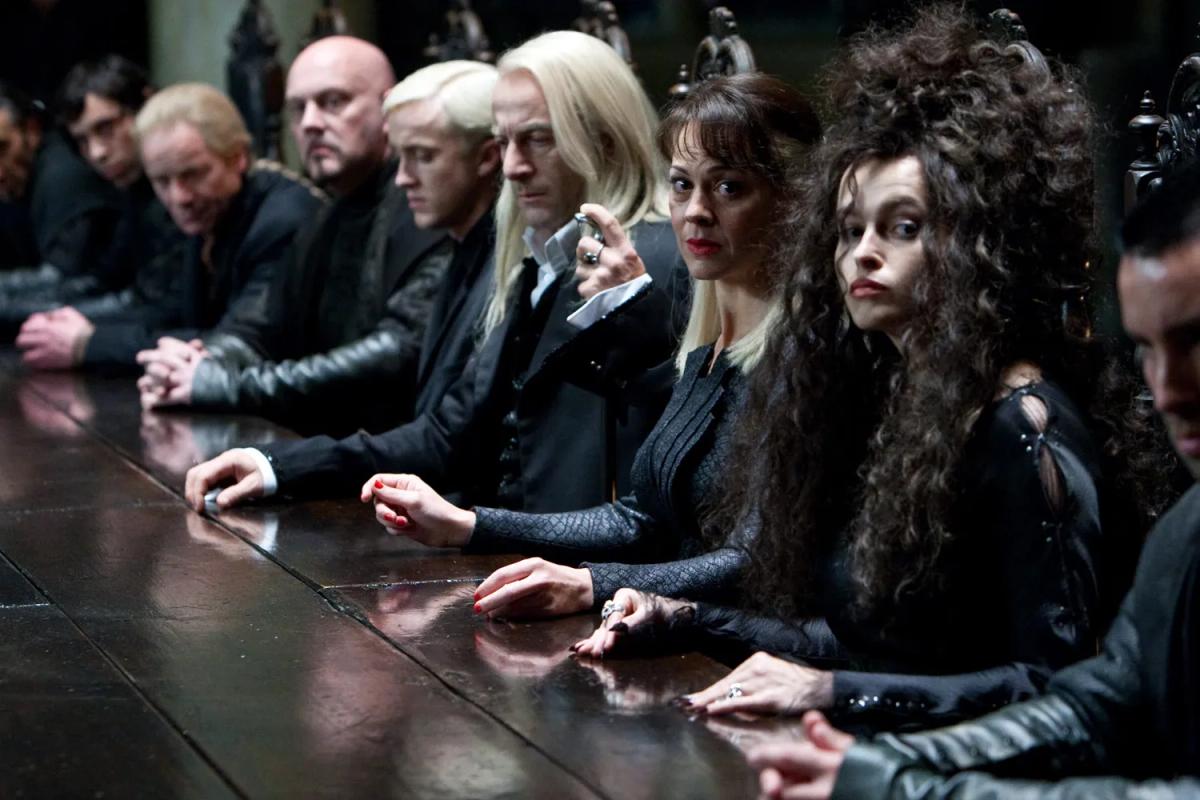
Lucius Malfoy (Jason Isaacs) spends a good deal of the series looking like the person in charge. He has the money, the connections and, for a while, the confidence of Lord Voldemort (Ralph Fiennes). None of that settles how good he is once somebody starts firing spells back.
Influence, cruelty and magical ability are easily confused among the Death Eaters. Bellatrix Lestrange (Helena Bonham Carter) has the clearest fighting case. Barty Crouch Jr (David Tennant, with Brendan Gleeson as his Moody disguise) carries out a much more elaborate magical operation. Severus Snape (Alan Rickman) does things neither is shown doing, which gives him the lead across the four measures.
Who qualifies
Confirmed current or former Death Eaters qualify, so Snape remains in scope despite where his loyalty really lay. He changes sides before the Potters are killed, as Deathly Hallows chapter 33 establishes. Voldemort is excluded as the organisation's leader. Fenrir Greyback (Dave Legeno) is an affiliated werewolf without a Dark Mark, and not a confirmed marked member. The seven novels and eight Harry Potter films supply the evidence. The adult ratings remain identical wherever a character also appears in the overall ranking.
How this was scored
Combat accounts for 35% of each score. It covers results against opponents who resist, weighed for surprise, outside help and the calibre of the opposition. Power accounts for 25%, covering the force or scale on display, protective and coercive magic included.
Range, a further 25%, credits magic that is difficult and varied, plus new invention, from potions, transfiguration and charms to mental magic and practical Herbology. Control takes the final 15%: precision, reliability, adaptability. Working a plant or creature well is credited as handling skill; the plant's or creature's own strength does not pass wholesale to its handler.
Each rating is out of 100 and moves in fives. Reaching 90 or more takes exceptional evidence, measured against the strongest in this group. A rating from 75 to 85 marks advanced ability; 60 to 70, a solid record that is limited or uneven; 40 to 55, evidence that is narrow or heavily assisted. A thin record holds a rating down without showing that a Death Eater lacks the skill.
Weighted and added together, the four ratings give the total: 0.35 of Combat, 0.25 each of Power and Range, and 0.15 of Control. The headline rounds it to a whole number, and the exact figure decides the order. These comparisons are editorial judgement and make no claim to be canonical statistics.
Anything under two points apart counts as a close call, and a band marks each tight cluster or equal total. Exact ties are settled by Combat, then by Range, Control and Power in turn; if every rating matches, alphabetical order decides. Within an equal-score band, sitting higher on the list says nothing about greater overall strength.
Shown twice, a feat is still counted once. Action the films add can count as evidence, with the medium named. Victories won together stay joint, and an ambush is never scored as a fair duel. Creature help and the Elder Wand are recorded, but no number is added or subtracted for them.

Severus Snape
The broadest command of magic in Voldemort's circle, hidden from Voldemort himself.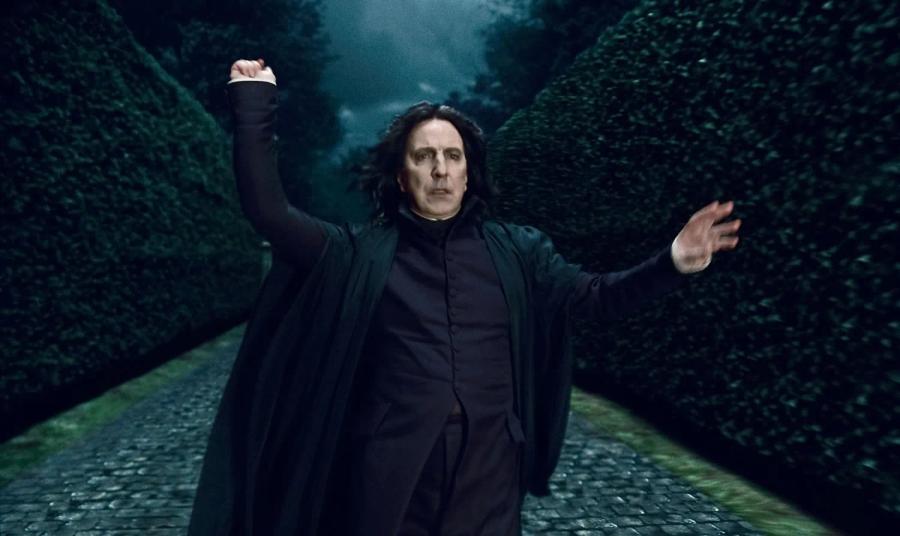
Warner Bros. Pictures - Combat35% of score80Holds Harry off time after time. Completed wins over elite adult opponents are scarce.
- Power25% of score75Sectumsempra does terrible damage; evidence of magic on a large scale is thinner.
- Range25% of score95Writes new spells, refines established potions, practises mental magic and flies unaided.
- Control15% of score95Keeps his true loyalty hidden from Voldemort, and his defensive spells stay exact under attack.
Snape finishes first for the things that happen before a duel as much as for what he does during one. He understands how spells and potions are made well enough to improve them, and sometimes to create his own. Sectumsempra and the Half-Blood Prince's annotations are practical results of that knowledge.
His mental defence is just as important. Surviving as a spy requires him to conceal an allegiance Voldemort would kill him for discovering. That takes nerve, but there is a magical skill underneath the nerve. Add the way he counters Harry Potter (Daniel Radcliffe) during the flight from Hogwarts and the later evidence of unsupported flight, and the range becomes difficult for another Death Eater to match.
Bellatrix has the stronger fighting record. Snape's inventions, potions and mental defence give him the more complete command of magic, earning the two-point advantage.
On screen
- The Half-Blood Prince film keeps the annotated potions book and Harry's failed chase. When Minerva McGonagall (Maggie Smith) attacks him in Deathly Hallows Part 2, the spells Snape deflects hit the Carrows. Reading every move as a planned rescue claims more than those hits show.
In the books
The sixth novel gives the most detail on his inventions and on how he fends off Harry. The seventh accounts for his flight and the secret work he did for Albus Dumbledore (Richard Harris and Michael Gambon in Harry Potter, Jude Law in Fantastic Beasts). Killing Dumbledore was arranged in advance, so it does not count as winning a duel.
References: Half-Blood Prince chapters 9, 24, 28. Deathly Hallows chapters 30, 33. Films: Half-Blood Prince, pursuit. Deathly Hallows Part 2, Great Hall.
The case against
He cannot be credited with defeating Dumbledore in a fair fight. The killing is arranged. Bellatrix overtakes him if ten percentage points shift from Range to Combat.

Bellatrix Lestrange
No Death Eater has a clearer fighting record, until she meets Molly Weasley.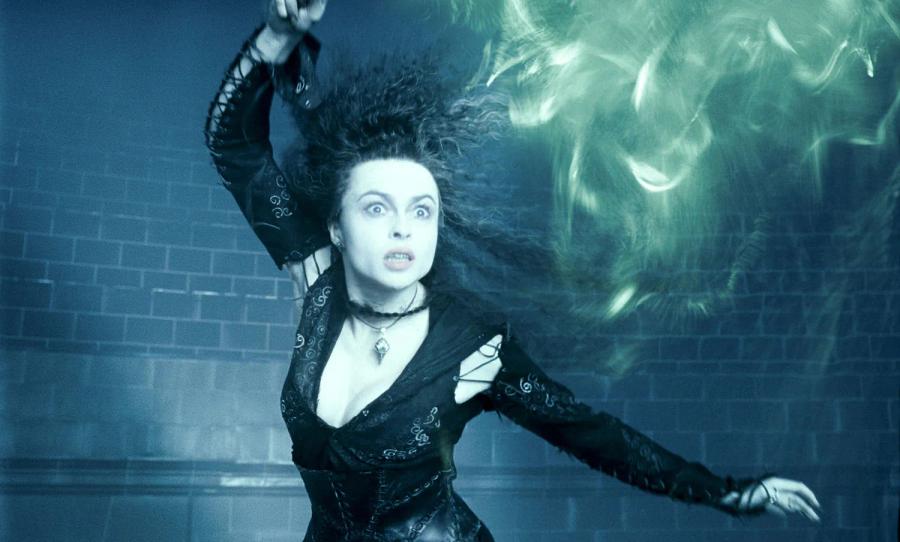
Warner Bros. Pictures - Combat35% of score90Beats Nymphadora Tonks (Natalia Tena) and Sirius Black (Gary Oldman) in the books, then takes on Hermione Granger (Emma Watson), Ginny Weasley (Bonnie Wright) and Luna Lovegood (Evanna Lynch) at once, until Molly Weasley (Julie Walters) takes over.
- Power25% of score85Lethal attack after lethal attack, along with the film's raid on the Burrow, shows considerable force.
- Range25% of score75Teaching Occlumency broadens a record otherwise made up mostly of offensive Dark magic.
- Control15% of score75She is effective against several opponents, though carelessness and one completed defeat hold the score down.
A combat-only ranking puts Bellatrix first. The Order of the Phoenix novel gives her victories over Tonks and Sirius. In the last book, Hermione, Ginny and Luna take her on together before Molly steps in. Her threat is backed by opponents who are trying to resist her.
Her Combat score is ten points higher than Snape's. She loses the overall comparison because the evidence of equally exceptional work across other branches of magic is thinner. Teaching Draco Malfoy (Tom Felton) Occlumency helps, but it does not give her Snape's inventions or potion expertise.
Losing to Molly does not erase the earlier record, and it needs no excuse. The win still belongs to Molly.
On screen
- The Order of the Phoenix film turns the blow that kills Sirius into an unmistakable Killing Curse, and shows Kingsley Shacklebolt (George Harris) duelling Bellatrix where the book has Tonks. For Half-Blood Prince, the film adds a raid on the Burrow, with Bellatrix beside Greyback, and Deathly Hallows Part 2 keeps Molly's win.
In the books
She beats Tonks in chapter 35 of Order of the Phoenix, and that battle ends when Sirius falls through the veil. Chapter 36 of Deathly Hallows has her fighting Hermione, Ginny and Luna until Molly replaces them.
References: Order of the Phoenix chapters 35 to 36. Half-Blood Prince chapter 15. Deathly Hallows chapter 36. Films: veil, Burrow attack, Molly duel.
The case against
Her confidence becomes dangerous carelessness, and she dies in a completed fight. Her Combat score rewards the whole record and does not treat one defeat as proof she was always overrated.
- Ranks 3–4 · within 1.50 points · effectively tied

Barty Crouch Jr
Fools the Goblet of Fire, and a whole school, for a year.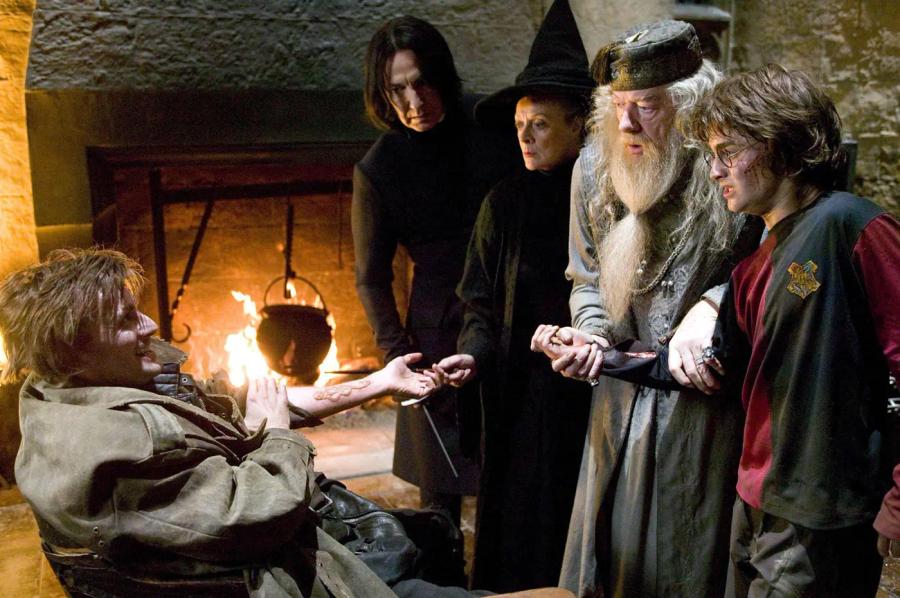
Warner Bros. Pictures - Combat35% of score65Captures Alastor Moody (Brendan Gleeson) with the help of Peter Pettigrew (Timothy Spall). Sustained solo duelling evidence is limited.
- Power25% of score75Overcomes the Goblet of Fire’s selection mechanism with a powerful Confundus Charm.
- Range25% of score85Confundus, transfiguration, Unforgivable Curses and a Portkey show advanced variety, without the breadth of McGonagall or Gellert Grindelwald (Johnny Depp and Mads Mikkelsen, with Colin Farrell as his Graves disguise).
- Control15% of score85Maintains a demanding deception and manipulates tournament events across an entire school year.
The Goblet of Fire is meant to choose the tournament's champions. Barty makes it choose within a false arrangement of his own construction. Doing so is a more useful measure of his ability than the fact that he is one of Voldemort's most devoted followers.
The rest of the year gives him plenty to maintain: a borrowed identity, a continuing supply of Polyjuice, a teaching role and a tournament that needs steering towards one particular outcome. Some of this is planning, which falls outside spell power, so the scheme's political success does not receive a separate bonus. The individual magical tasks still show an unusually capable operator.
Antonin Dolohov (Arben Bajraktaraj) has the superior open-combat evidence. Barty's Confundus Charm, transformation, curse work and Portkey give him the broader technical record. Range 85 recognises that variety without putting him alongside Grindelwald or McGonagall.
On screen
- Goblet of Fire retains the ferret transformation, curse lesson and reveal. The magic performed by the false Moody belongs to Barty, although Brendan Gleeson plays the disguise.
In the books
The novel explains more of the Goblet tampering, Portkey and cover-up. Chapter 35 makes clear that Pettigrew helped him subdue Moody. The deception does not prove a solo victory over every person fooled.
References: Goblet of Fire chapters 13 to 15, 17, 35. Film: curse lesson, ferret transformation, reveal.
The case against
A successful infiltration is not a duel won against every person deceived. His low Combat score relative to Bellatrix and Dolohov reflects how little unrestricted adult fighting can be attributed to him alone.
Antonin Dolohov
Takes down Moody and badly injures Hermione without speaking a spell.- Combat35% of score85Defeats Moody at the Ministry and repeatedly threatens experienced opposition.
- Power25% of score80His purple-flame curse badly injures Hermione even after he has been silenced.
- Range25% of score55The demonstrated record is heavily concentrated in offensive curses.
- Control15% of score70Dangerous in chaotic fights, but suffers reversals at the café and against Filius Flitwick (Warwick Davis).
Dolohov's Ministry fight is the reason to take him seriously. His curse injures Hermione after she has silenced him, and he subsequently brings down Moody. These are concrete results. He does not need a large amount of dialogue or an important seat at Voldemort's table to establish the threat.
The purple flame is especially useful evidence because the story distinguishes the strength of the spell from its circumstances. Hermione survives. The silencing reduces what the curse would otherwise have done. The feat shows potency under a limitation, not an invented ability to kill anybody without speaking.
Fourth reflects the narrowness of his demonstrated magic. Barty's record reaches into several complicated tasks. Dolohov's strongest evidence concerns hurting and disabling opponents. His Combat score captures that strength, while the smaller technical record keeps his total lower.
On screen
- Deathly Hallows Part 1 gives him a recognisable role in the café attack, which ends with the attackers subdued. It does not supply his book's full Ministry record.
In the books
Order of the Phoenix chapter 35 supplies the injuries and Moody result. Chapter 38 explains that silencing him reduced the curse's effect on Hermione. Flitwick defeats him in Deathly Hallows chapter 36.
References: Order of the Phoenix chapters 35, 38. Deathly Hallows chapters 9, 36. Film: Deathly Hallows Part 1, café.
The case against
Flitwick defeats him at Hogwarts. The text does not clearly establish that Flitwick kills him. The café encounter also ends in Dolohov being subdued, so his record contains real reversals.
Yaxley
Keeps a senior Ministry official under the Imperius Curse.- Combat35% of score60Takes part in pursuit and battle, but has few clear individual victories.
- Power25% of score65Successfully subjects Pius Thicknesse (Guy Henry) to the Imperius Curse.
- Range25% of score65Sustained coercion and combat establish a useful, relatively narrow skill set.
- Control15% of score75Maintains control over an adult official who continues to function in public.
The strongest feat of Yaxley (Peter Mullan) happens before the Ministry falls. He places Pius Thicknesse under the Imperius Curse, giving Voldemort's organisation access through a powerful official. The political consequences are enormous. For this ranking, the relevant achievement is more specific: successfully controlling an adult wizard over time.
That gives him a stronger magical case than his bureaucratic menace might suggest. The Ministry scenes make him frightening partly because of the institution behind him, and that authority cannot be converted into extra spell power. His fifth place depends on the actual curse, alongside his documented fighting and pursuit.
Fifth is the least secure place in the five. Pettigrew has an Animagus transformation, a destructive explosion and a role in Voldemort's restoration. Yaxley's advantage is the more dependable control demonstrated by his strongest feat. Only 1.25 points separate their totals.
On screen
- Deathly Hallows Part 1 shows his role in the Ministry escape and pursuit. Institutional authority makes him dangerous without earning a separate magical score.
In the books
Deathly Hallows chapter 1 establishes his control of Thicknesse. George Weasley (Oliver Phelps) and Lee Jordan (Luke Youngblood) defeat him together in chapter 36. Both have already left Hogwarts, and the result is shared.
References: Deathly Hallows chapters 1, 13 to 14, 36. Film: Deathly Hallows Part 1, Ministry escape.
The case against
The record holds much less direct fighting evidence than political consequence. Readers who place more weight on transformation and ritual work have a reasonable case for Pettigrew instead.
Why five
Below this group, the evidence becomes much thinner. The Lestrange brothers and other named followers have too little individually described magic to fill another five places with comparable confidence.

Why Hagrid is the closest thing Harry has to a parent
Hagrid bakes Harry’s birthday cake, buys his owl and gives him his parents’ photographs. He also carries Harry at the story’s beginning and again at its close.Pettigrew and Lucius
Pettigrew scores 63.50, against Yaxley's 64.75. His ratings are Combat 45, Power 75, Range 80 and Control 60. Becoming an Animagus, causing the explosion that kills twelve Muggles and taking part in Voldemort's restoration all count. The ritual follows Voldemort's instructions, and the murder of Cedric Diggory (Robert Pattinson) is a surprise attack. Lucius scores 61.25, from ratings of 60, 60, 65 and 60. His status exceeds his individually demonstrated magical record. Book references: Prisoner of Azkaban chapters 18 and 19, Goblet of Fire chapters 32 and 33, and Order of the Phoenix chapter 35.
If fighting matters most
Move ten percentage points from Range to Combat and Bellatrix reaches 84.25 against Snape's 83.25. The default weighting gives invention and technical control enough room to put Snape first. Draco's cabinet repair and Occlumency make him a more convincing contender among students than among these experienced adults.
Cast
- Jason Isaacs as Lucius Malfoy
- Ralph Fiennes as Lord Voldemort
- Helena Bonham Carter as Bellatrix Lestrange
- David Tennant as Barty Crouch Jr
- Brendan Gleeson as Alastor Moody
- Alan Rickman as Severus Snape
- Dave Legeno as Fenrir Greyback
- Daniel Radcliffe as Harry Potter
- Maggie Smith as Minerva McGonagall
- Richard Harris as Albus Dumbledore
- Michael Gambon as Albus Dumbledore
- Jude Law as Albus Dumbledore (Fantastic Beasts)
- Natalia Tena as Nymphadora Tonks
- Gary Oldman as Sirius Black
- Emma Watson as Hermione Granger
- Bonnie Wright as Ginny Weasley
- Evanna Lynch as Luna Lovegood
- Julie Walters as Molly Weasley
- Tom Felton as Draco Malfoy
- George Harris as Kingsley Shacklebolt
- Timothy Spall as Peter Pettigrew
- Johnny Depp as Gellert Grindelwald
- Mads Mikkelsen as Gellert Grindelwald
- Colin Farrell as Percival Graves (Gellert Grindelwald in disguise)
- Arben Bajraktaraj as Antonin Dolohov
- Warwick Davis as Filius Flitwick
- Guy Henry as Pius Thicknesse
- Peter Mullan as Yaxley
- Oliver Phelps as George Weasley
- Luke Youngblood as Lee Jordan
- Robert Pattinson as Cedric Diggory
Reviews in this piece
Read next

Who Is Severus Snape in Harry Potter? His Full Arc, Explained
Snape protects Harry from the first film to the last, yet treats him with contempt. His memories explain why, and why he killed Dumbledore.Read it →In this world
Also on Harry Potter: Review · Deathly Hallows: Part 2 (+7) Quiz · Which Death Eater Are You? (+2) List · The 10 best Ron, Hermione, Neville, McGonagall and Dumbledore moments, ranked (+2)
Everything on Harry Potter
8 reviews · 7 Unscrewed · 3 quizzesRelated quizzes
More from Harry Potter
Which Death Eater Are You?Ten questions put you at Voldemort's table. Find out which of seven Death Eaters, from Bellatrix to Regulus, shares your reasons.- Which Hogwarts Professor?Ten teaching dilemmas at Hogwarts. Find out which professor you'd be: Dumbledore, McGonagall, Snape, Hagrid, Lupin or Trelawney.
- Which Hogwarts House?What would you do with a locked chest and no key? Answer ten questions as yourself at school and find your Hogwarts house.