Before you press play
Watch if
You want the Yule Ball, McGonagall at her driest, Snape doing a great deal with very little, and a mystery whose clues reward a rewatch.
Wait if
You need relationships built before they are tested, or a second task that explains why real people are sitting on the lake floor.
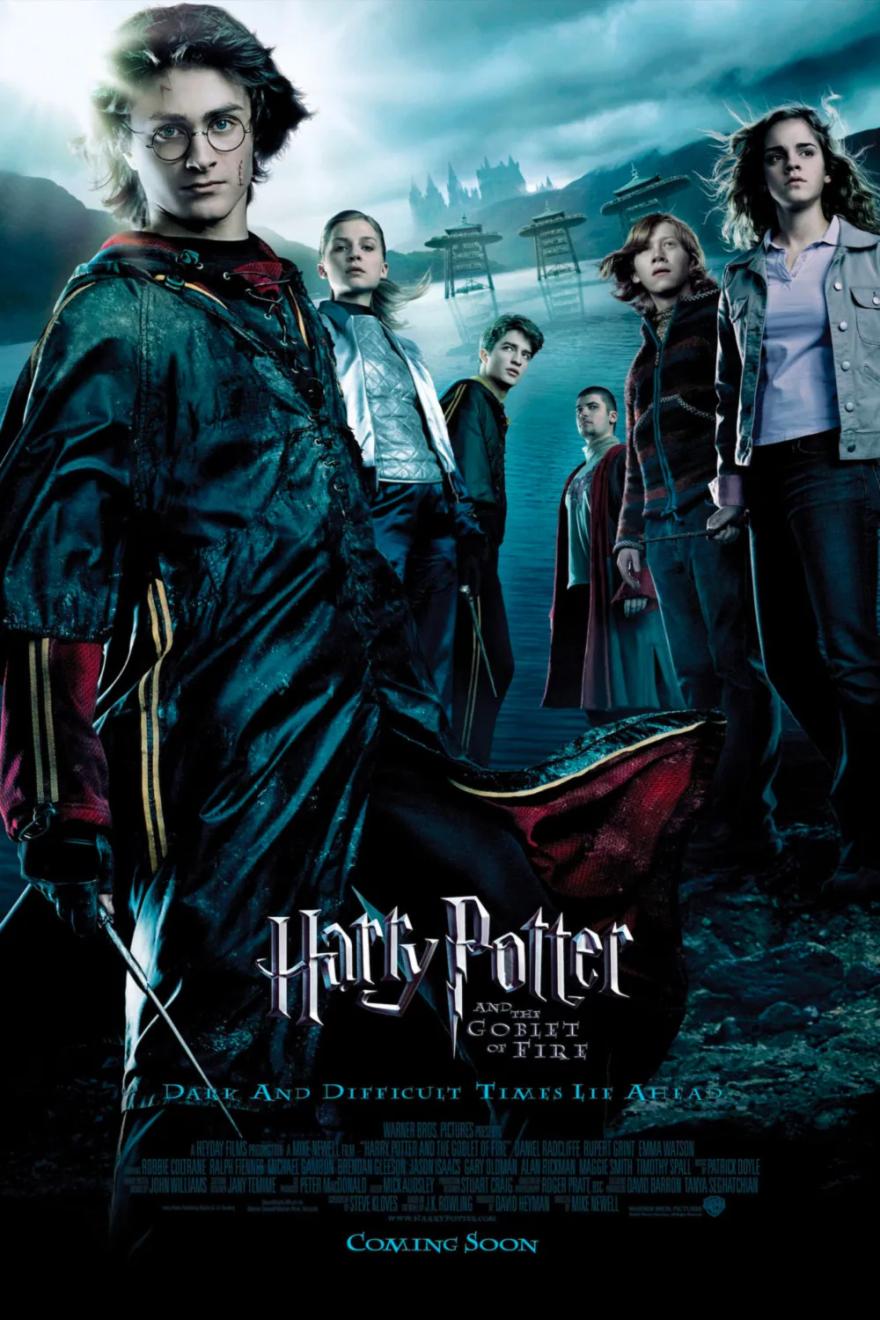
Here the series picks up. The kids have become half adults, things are about to get serious, and it is also the first of the films to be rated PG-13. Harry Potter and the Goblet of Fire is good overall, and its cast is top notch. But too many of its interactions are never set up.
Hogwarts is hosting the Triwizard Tournament, which brings together three schools, with the Goblet of Fire choosing one champion from each. Then a fourth name comes out: Harry Potter (Daniel Radcliffe), who is fourteen, three years under the age limit, and swears he never entered. The Goblet counts as a binding magical contract, so he cannot back out. A new Defence teacher, Alastor "Mad-Eye" Moody (Brendan Gleeson), arrives in a thunderclap. Many of the students do not believe Harry. More painfully, neither does Ron Weasley (Rupert Grint).
The Quidditch World Cup and the Ministry
The film opens on Harry's nightmare at the Riddle House. Then it does something this series does well: it shows you another part of how wizards live. This time it is the Quidditch World Cup. You get a campsite the size of a town, a tent that is a flat on the inside, and an old boot in a field that turns out to be a Portkey. Its job is to make you curious about everything else going on out there, and it works.
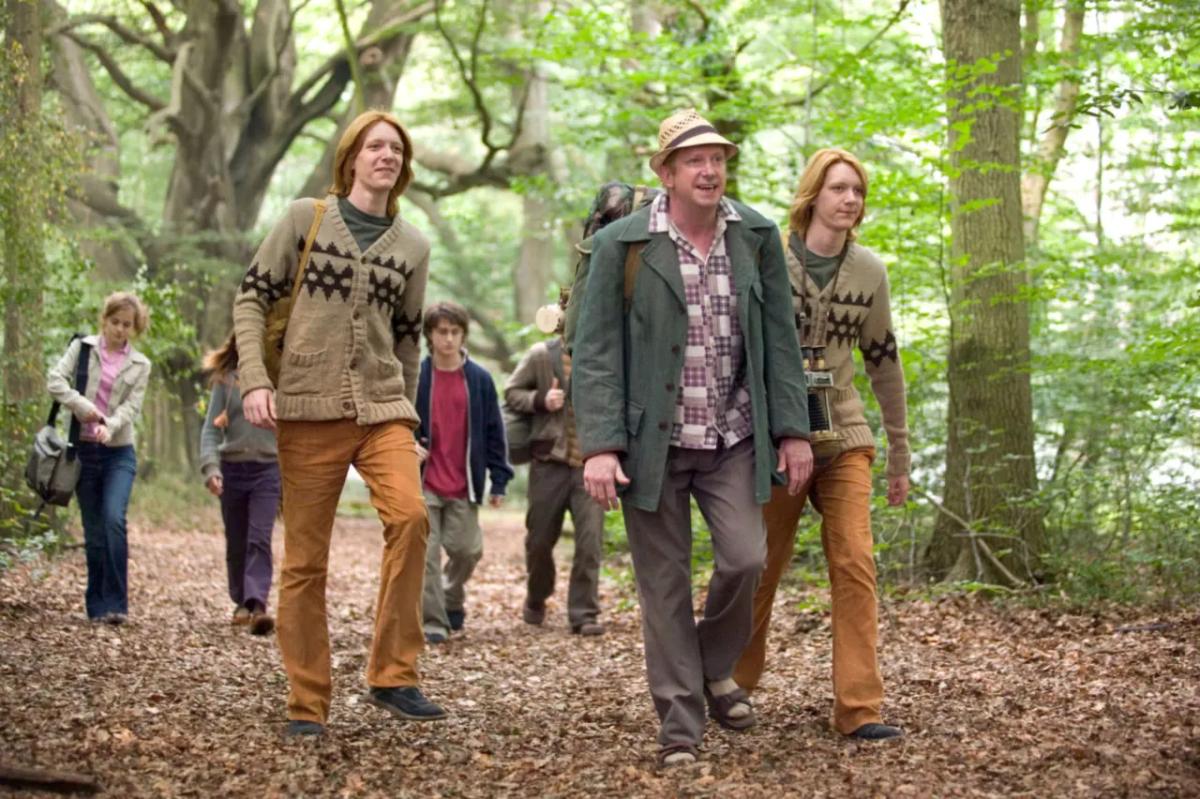
You also get to see how the wizarding world is run. Cornelius Fudge (Robert Hardy) is Minister for Magic. Bartemius Crouch (Roger Lloyd-Pack) heads the Department of International Magical Cooperation. Aurors are explained as dark wizard catchers. All of it comes with a hierarchy, with orders, and with an international side.
And it never goes plain. Whenever the story is not moving forward, the film puts something in anyway: another piece of how this world works, or something funny.
The comedy and the Yule Ball
The fun bits are there, even if not all of them are strong. Rubeus Hagrid (Robbie Coltrane) stands on the grounds with signalling wands, waving the Beauxbatons carriage down out of the sky, and gets knocked flat when it comes down. Argus Filch (David Bradley) comes running up the Great Hall to interrupt a speech by Albus Dumbledore (Michael Gambon). Later, Hagrid is so busy staring at Madame Olympe Maxime (Frances de la Tour) that he plants his fork straight into the hand of Filius Flitwick (Warwick Davis). A throwaway joke, and a very funny one. Maxime calls the headmaster Dumbly-dorr, and her romance with Hagrid stays cute all the way to the Yule Ball.
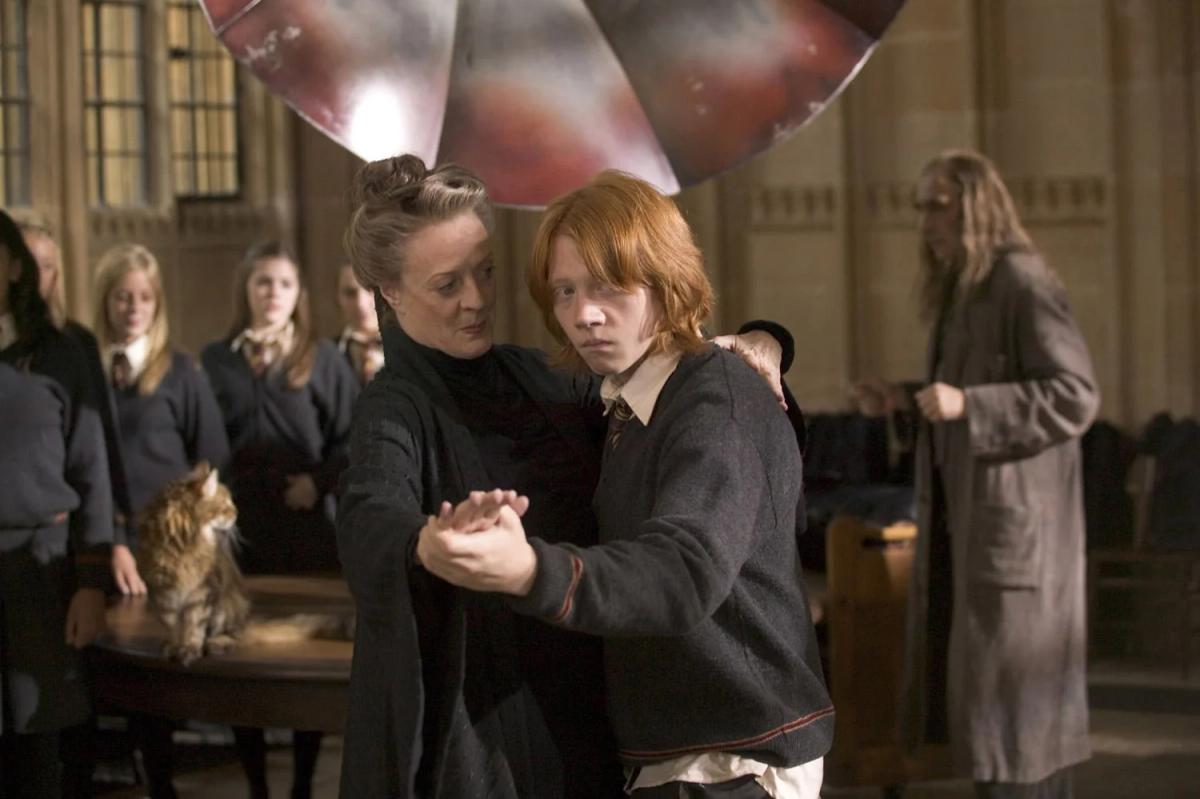
Minerva McGonagall (Maggie Smith) has a sense of humour, and the film proves it. Teaching Gryffindor to dance, she warns them not to spend the evening behaving like a babbling, bumbling band of baboons. That line is the high point of the comedy, in this film and in the series. Then she picks Ron out of the whole room to demonstrate the waltz. Even her ordinary reactions, the concern and the alarm, play funny from the outside.
More follows. Hermione Granger (Emma Watson) tells Ron to get dressed and not go back to sleep. When he points out that she is a girl, she says it is very well spotted. And twice, Filch fires the starting cannon before Dumbledore can finish announcing the task. As a running joke, it gets its laugh both times.
Alan Rickman as Severus Snape
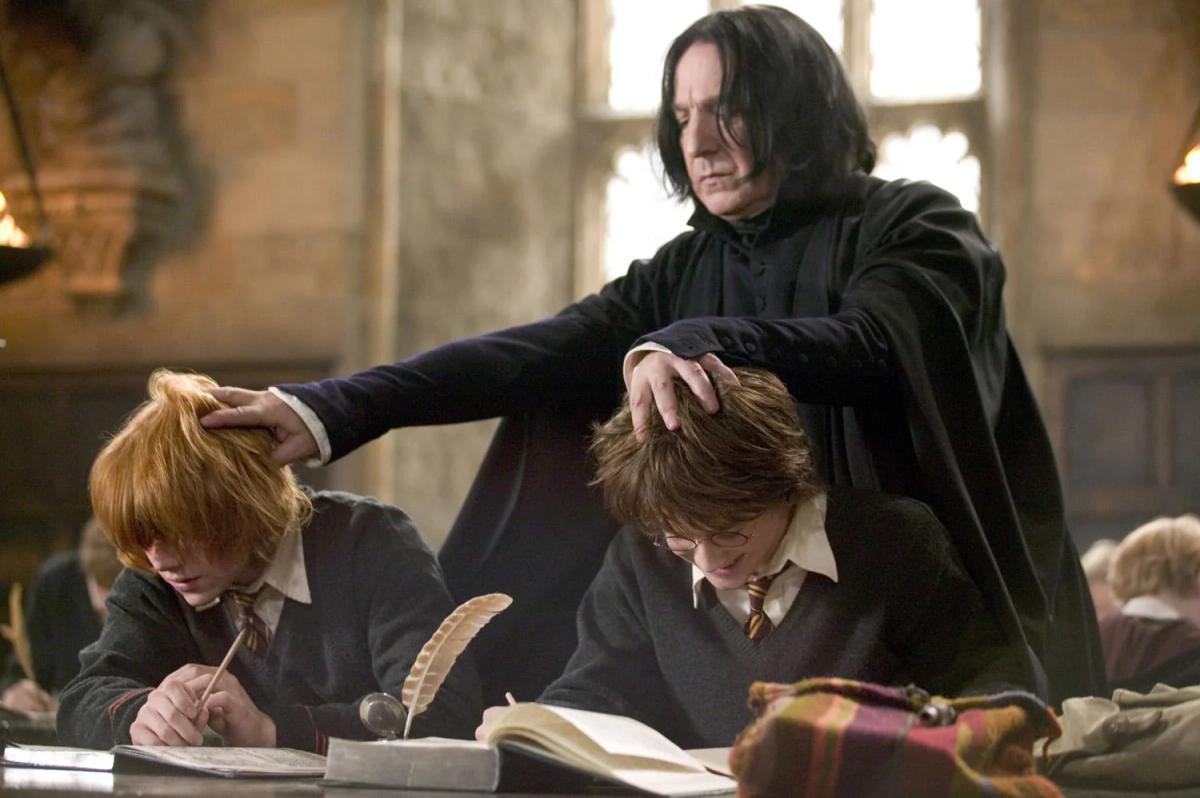
Watch Severus Snape (Alan Rickman) in the study hall and he barely says a word. He collects Hermione's work, pushes Harry's and Ron's heads down onto the desk, and walks on. Every movement is so clipped and deliberate that it looks almost robotic, and the scene gets funnier once you stop watching the boys and start watching him. You might not notice it the first time. On a rewatch you see how carefully Rickman has built this. He is in a class of his own.
He is funny when he talks, too. Cornering Harry about stolen potion ingredients, boomslang skin and lacewing flies, the makings of Polyjuice Potion, he threatens to slip a truth potion into Harry's pumpkin juice. Then he shuts the door in his face.
Beauxbatons, Durmstrang and Hogwarts
The two visiting schools are exact opposites, with nothing else to them. The film presents Beauxbatons, from France, as ultra-feminine: an all-female delegation of silk, butterflies and synchronised cartwheels. Durmstrang, from somewhere up north, is its ultra-masculine opposite: boys in fur cloaks, carrying staffs and spitting fire into the air, as though they have come to burn the place down. The whole thing is silly, and it is funny. In the novel both schools take boys and girls, so the film chose this.
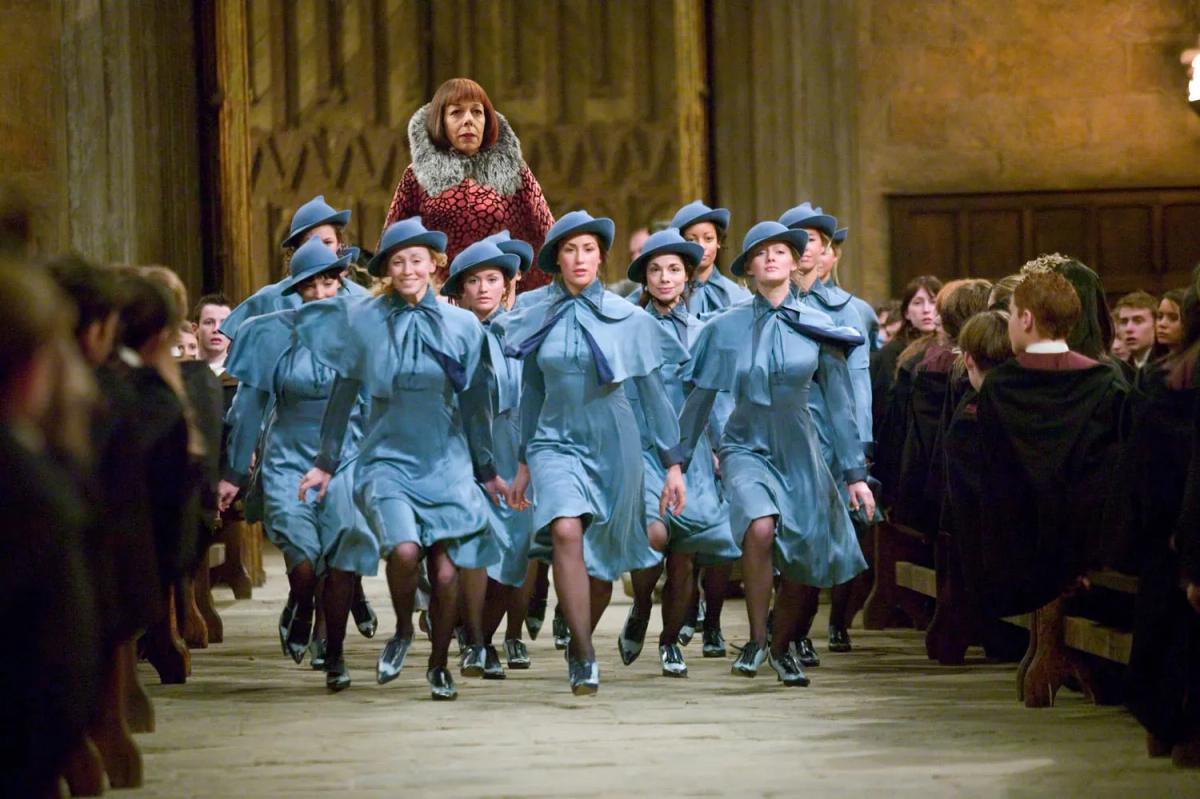
Against them, Hogwarts has no personality at all. It did not have to be that way. A deleted scene gave the school a reply, with the whole student body singing its anthem back at the visitors. The finished film drops that reply. The anthem survives only as a snatch of song much later, in a scene that has nothing to do with the visitors, so when it matters, Hogwarts stands there with nothing to say for itself.
Rita Skeeter and the Daily Prophet
Rita Skeeter (Miranda Richardson) is a character in her own right, and a funny one. She is the scooper type, catty in how she reports and always fishing for something nasty she can run as a headline. In her first scene she calls Harry a twelve-year-old. He tells her he is fourteen. She calls him twelve again.
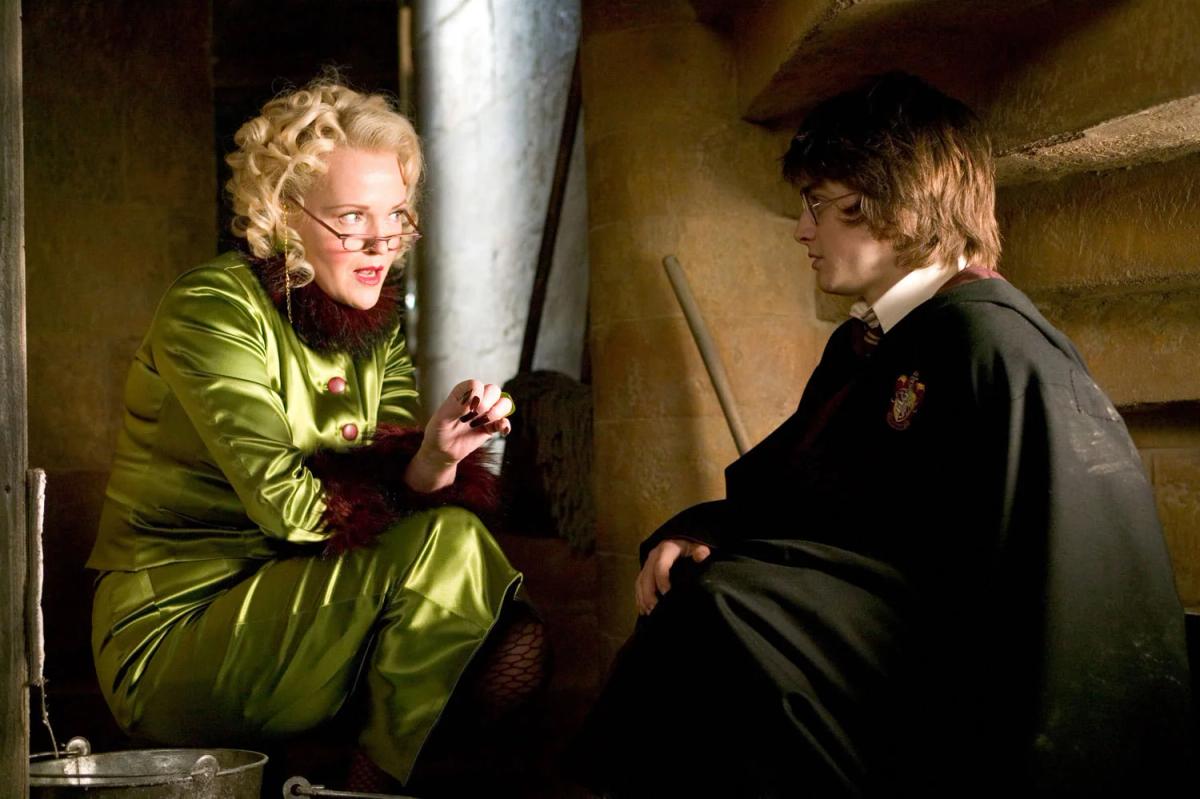
The interview itself is uncomfortable. She pulls him into a broom cupboard alone, stands far too close, and corners him with weird questions about his dead parents. The film plays it as awkward, but an adult shutting a fourteen-year-old in a cupboard to get quotes out of him is not easy to watch.
The article still calls him twelve and gives him tears he never shed. Harry corrected her twice. Rita did not get the facts wrong; she threw them out because the invented version made a better story. What kind of newspaper is this?
The friendships and the romances
The film's biggest problem is here. The central focus is Harry, which is fine, but you never learn much about the people around him or what they are to him. So when those relationships are tested, the fighting does not land at the level it is pitched at.
Ron's fall-out with Harry is the clearest case. After three films you know these two are ride or die, and suddenly Ron will not speak to him. It feels off brand, and the film does not pick it up well. Harry drifts towards Neville Longbottom (Matthew Lewis), and Hermione spends her time with Ginny Weasley (Bonnie Wright).
Ron uses Hermione to pass Harry a message. Harry starts to answer through her, and she snaps that she is not an owl. The situation is believable, because that is exactly how friends behave when two of them are not talking. Her irritation is not. The film shows too little of her stuck in the middle to justify it, and it undercuts a bit that should have worked.
The reconciliation does work. After the first task the two of them have it out, and Hermione's whole response is one word: boys. You understand then why they are best friends. You also understand that, by now, Hermione is the third wheel. When the next task takes from each champion the person they value most, Harry's is Ron, and Hermione is tied to Viktor Krum (Stanislav Ianevski).
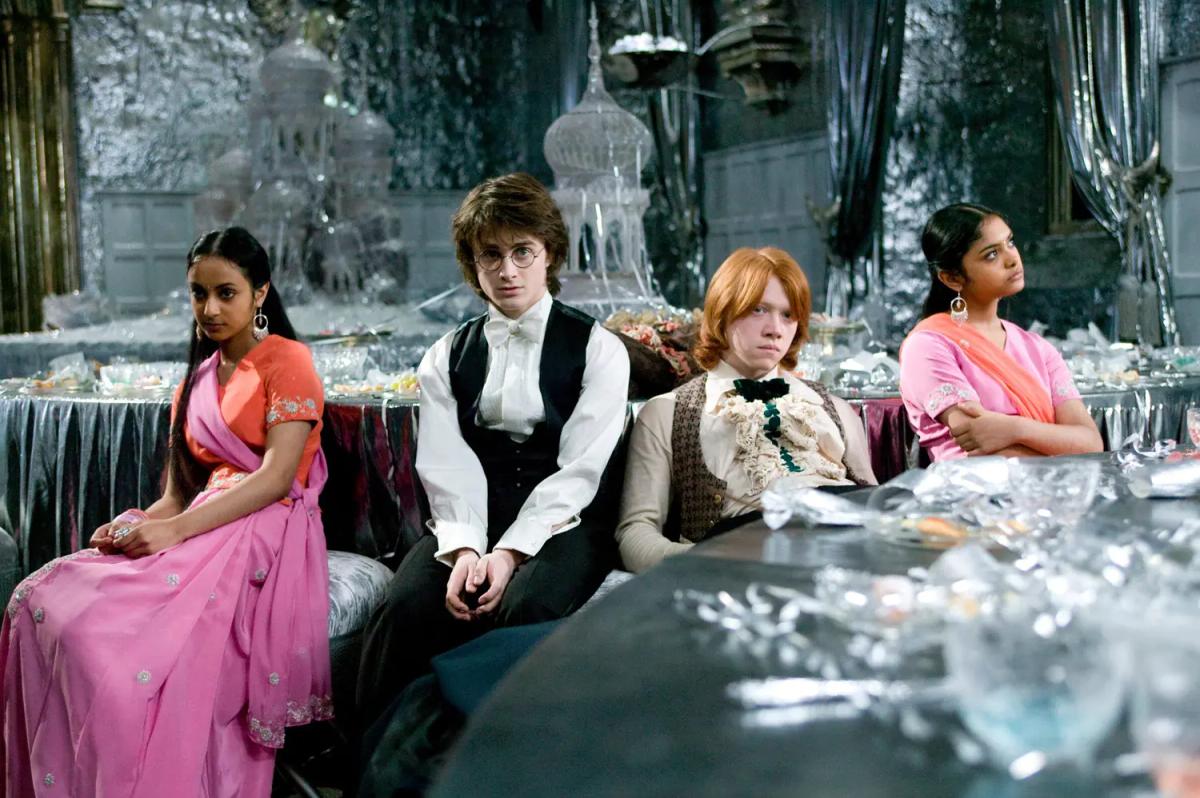
The romances all arrive at once, and none of them is set up. Harry's crush on Cho Chang (Katie Leung) is one-sided, though she gives him some hints. The Patil sisters are taken to the ball and then abandoned. And Krum and Hermione is the awkward one. The film never states either of their ages, but its own rule makes Krum at least seventeen, and Hermione is a fourth-year. Ron says Krum is way too old for her. He is jealous, but he is also right. The shift from the previous film is dramatic, and it comes out of nowhere.
Draco Malfoy (Tom Felton), meanwhile, has been reduced to a bully with nothing to do.
The second task and the Black Lake
This task is where the logic breaks. The tournament is a binding contract nobody can back out of, which is fine. But then the organisers put real people at the bottom of a lake, give the champions one hour, and announce that after that no magic will save them. If you do not get them out, they are gone. Nobody ever makes clear why this is allowed, who put them there, or whether anyone asked them.
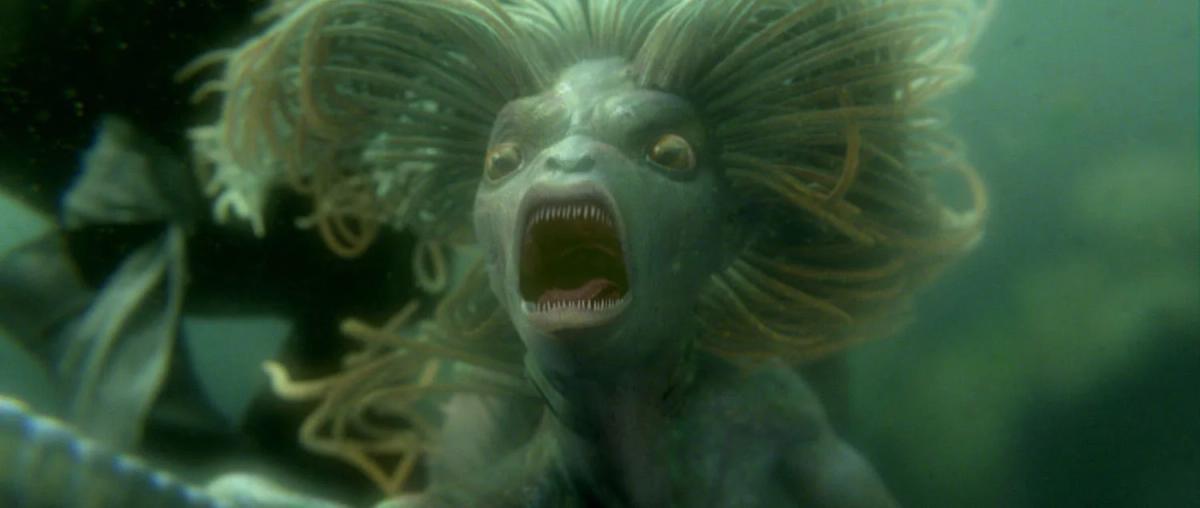
The judging makes it stranger still. The film has just told Harry that nothing can save the hostages after an hour, and then it treats his rescue of an extra child as admirable instead of necessary. If the warning was real, saving her was the least he could do. If it was not, the film should have said so. Harry comes back behind Cedric Diggory (Robert Pattinson) and Krum, with Fleur Delacour (Clémence Poésy) never finishing, and is placed second for moral fibre.
The coincidences pile up too. In a single stretch Harry stumbles on a body, walks into Dumbledore's office, gets bitten by the sweets, and falls into a memory that identifies the man from his dream. There has to be a cap on how much coincidence a film can spend in one day. And at about two and a half hours, with a great deal happening, some of it plot and some of it world-building, nobody will catch everything the first time.
At its best, Goblet of Fire always finds something worth watching when the plot pauses: another corner of wizarding life, an unexpected joke, or a clue that looks different the second time. Its weakness is what connects those moments. It asks Ron, Hermione, Krum and the rest to carry emotional turns it has barely prepared, and that is what keeps a good film from becoming a great one.
Corrected 3 Nov 2026: this review cited an April 2004 draft of Steve Kloves’s screenplay for Hogwarts’ reply to the visitors. That draft could not be traced. The reply was filmed and then cut, and the review now says so.
The reveal is actually good. Barty Crouch Jr (David Tennant) put the name of Harry Potter (Daniel Radcliffe) in the Goblet. He spent the year teaching as Alastor "Mad-Eye" Moody (Brendan Gleeson), wearing Moody's face on Polyjuice Potion, with the real Moody locked inside his own trunk. He even explains the trick to the staff without giving himself away: only an exceptionally powerful Confundus Charm could have fooled the Goblet, magic far beyond a fourth-year. The novel adds that he entered Harry under a fourth school, as its only candidate (chapters 17 and 35).
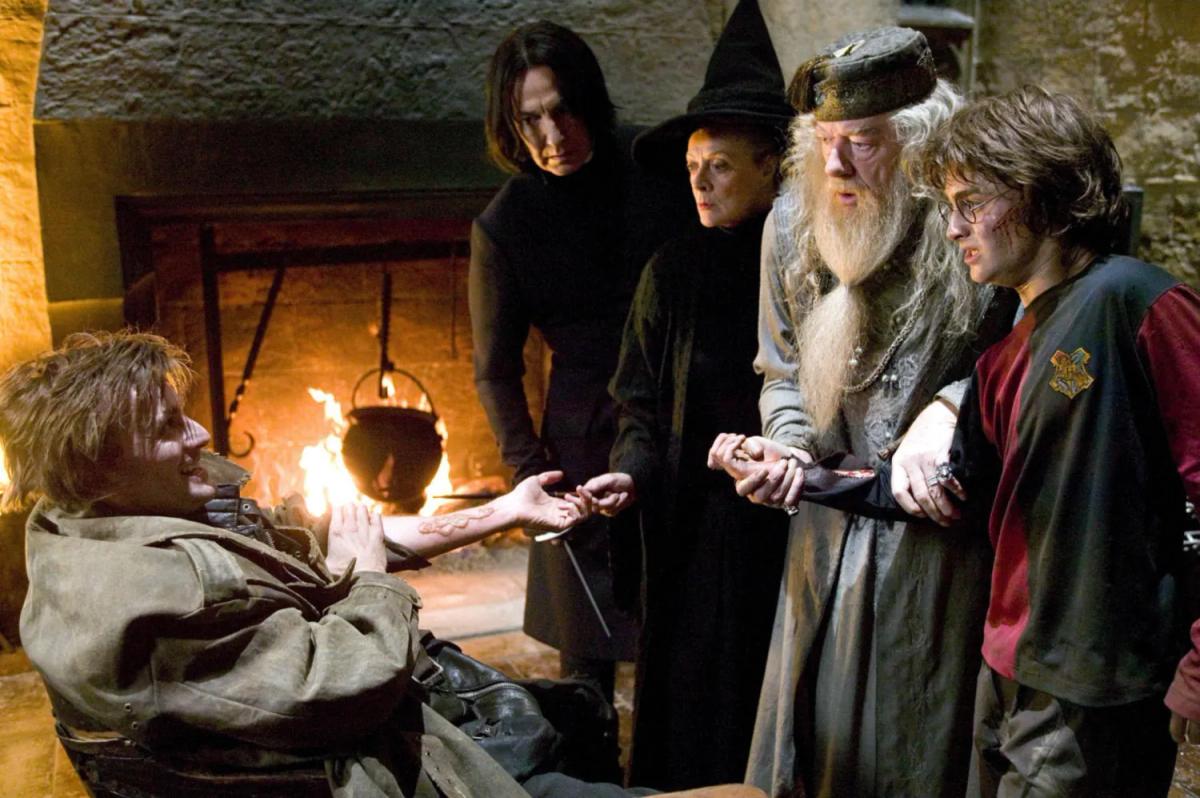
The clues were there. Moaning Myrtle (Shirley Henderson) mentions spotting Polyjuice Potion in a drain. Severus Snape (Alan Rickman) accuses Harry of stealing the ingredients. The trunk in Moody's office shakes and moans. Moody keeps flicking his tongue, the tic the young Crouch shows at his trial in Dumbledore's Pensieve. When it comes out who was really stealing from Snape's stores, the look Harry gives Snape is very funny.
The irony is Dumbledore's. Albus Dumbledore (Michael Gambon) asks Moody, of all people, to keep an eye on Harry, which gives Crouch Jr official cover to stay close to him. Dumbledore is a fine wizard, and there may be a reason he missed an impostor teaching in his own castle for a whole year, but the film never covers it.
The help was his. Crouch steers Harry through the tournament with people Harry trusts. He has Rubeus Hagrid (Robbie Coltrane) show him the dragons, tells Cedric Diggory (Robert Pattinson) how to open the egg, hands Neville Longbottom (Matthew Lewis) the book that leads to the gillyweed, and bewitches Viktor Krum (Stanislav Ianevski) in the maze. Keeping Harry alive is how he delivers him.
Karkaroff is an unexplained red herring. The film makes a point of showing Igor Karkaroff (Predrag Bjelac), head of Durmstrang and a former Death Eater, at the Goblet of Fire, and never gives him a reason for being there.
Cedric dies. Harry and Cedric take the cup together. Crouch made it a Portkey, and it carries them to a graveyard where Lord Voldemort (Ralph Fiennes) has Cedric killed because he is not needed. Peter Pettigrew (Timothy Spall) rebuilds Voldemort's body from his father's bone, Pettigrew's own hand and Harry's blood, and with Harry's blood in him Voldemort can touch Harry. Then he frees him, tells him to pick up his wand, and stages a duel for the Death Eaters he has summoned.
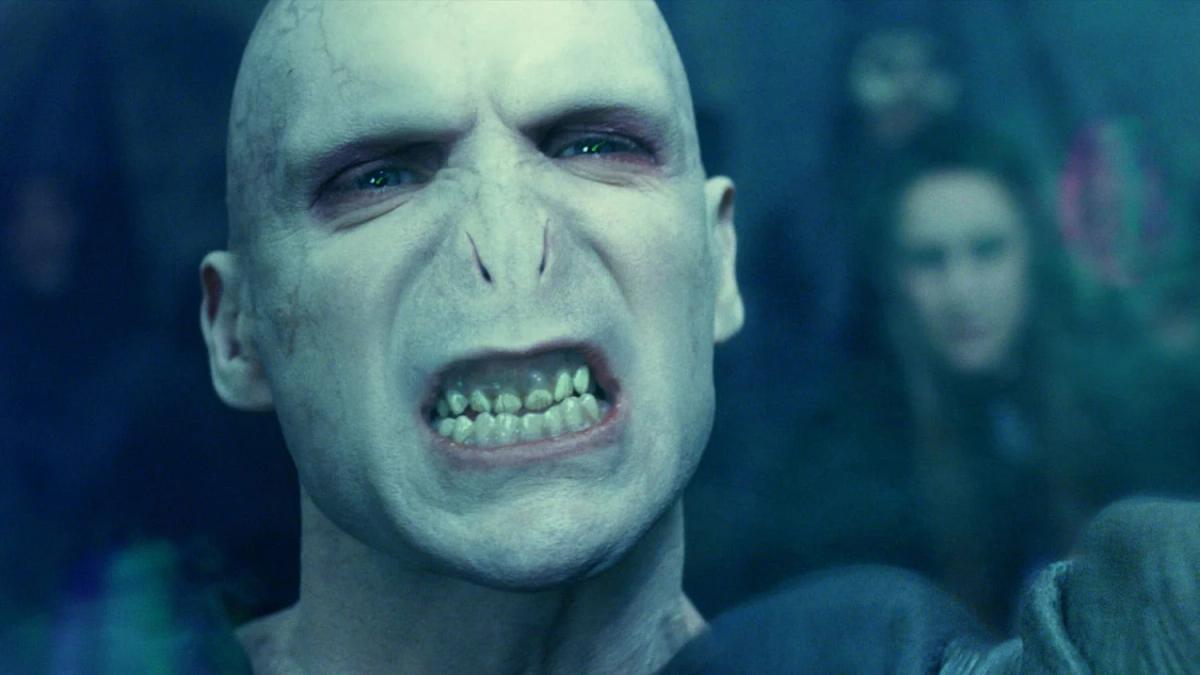
The wands lock. Their spells meet, and the figures of Voldemort's victims come out of his wand and give Harry the seconds he needs to grab Cedric's body and summon the cup. Dumbledore later names the effect, Priori Incantatem, and warns that no spell can reawaken the dead. In the novel (chapters 34 and 36), the wands are brothers, each holding a tail feather from Fawkes, and when brothers are forced to fight, one makes the other bring back its spells, newest first.
The dream was real. Harry asks Dumbledore whether his dreams mean anything, and Dumbledore tells him it is best to cast them away. The film then proves them real: the third man in the room is Crouch Jr, and the graveyard is the one from the opening. What it never explains is why Harry can see any of it.
The slip. The crowd greets Harry's return as the end of a competition, until Amos Diggory (Jeff Rawle) reaches his son. The false Moody takes Harry to his office and asks about a graveyard Harry never mentioned. Dumbledore, Snape and Minerva McGonagall (Maggie Smith) break in before Crouch can kill him.
The ending turns too fast. Dumbledore tells the school that Cedric was murdered by Voldemort, and people mourn. Then come warm goodbyes and a joke about dragons, followed straight away by the admission that everything is going to change, so the film has not forgotten what happened. Even so, the swing from a memorial to a cheerful send-off is really bad. A student has just been murdered. Out of respect, the school could have let the visitors leave without any fuss.
Bright Bulbs
- Minerva McGonagall (Maggie Smith) warning Gryffindor against behaving like "a babbling, bumbling band of baboons" is the funniest line in the film.
- Severus Snape (Alan Rickman) barely speaks during the study-hall scene, and every clipped gesture in it is worth watching twice.
- The whole cast is excellent, and there is not a weak performance in it.
- The Quidditch World Cup and the Ministry show you how wizards live and how their world is run.
Dull Bulbs
- You never learn enough about the new faces, or what they are to Harry, for the fighting between them to land.
- Ron Weasley (Rupert Grint) and Harry Potter (Daniel Radcliffe) fall out in a way that feels off brand, which the film handles poorly.
- The romances arrive all at once with nothing set up, and Viktor Krum (Stanislav Ianevski) with Hermione Granger (Emma Watson) is weird.
- Beauxbatons and Durmstrang are exact opposites and nothing more, and Hogwarts is given nothing to answer them with.
- Draco Malfoy (Tom Felton) is cut down to a bully, with no part to play.
Shattered Bulbs
- The Black Lake task leaves real people underwater and never makes clear why, or what happens if nobody gets them out.
Cast
- Daniel Radcliffe as Harry Potter
- Rupert Grint as Ron Weasley
- Emma Watson as Hermione Granger
- Brendan Gleeson as Alastor "Mad-Eye" Moody
- David Tennant as Barty Crouch Jr
- Ralph Fiennes as Lord Voldemort
- Miranda Richardson as Rita Skeeter
- Michael Gambon as Albus Dumbledore
- Alan Rickman as Severus Snape
- Maggie Smith as Minerva McGonagall
- Robbie Coltrane as Rubeus Hagrid
- Robert Pattinson as Cedric Diggory
- Stanislav Ianevski as Viktor Krum
- Clémence Poésy as Fleur Delacour
- Predrag Bjelac as Igor Karkaroff
- Frances de la Tour as Madame Olympe Maxime
- Tom Felton as Draco Malfoy
- Gary Oldman as Sirius Black
- Timothy Spall as Wormtail
- Roger Lloyd-Pack as Barty Crouch
- Robert Hardy as Cornelius Fudge
- Katie Leung as Cho Chang
- Matthew Lewis as Neville Longbottom
- Bonnie Wright as Ginny Weasley
- David Bradley as Argus Filch
- Warwick Davis as Filius Flitwick
- Shirley Henderson as Moaning Myrtle
- Shefali Chowdhury as Parvati Patil
- Afshan Azad as Padma Patil
- Mark Williams as Arthur Weasley
- James Phelps as Fred Weasley
- Oliver Phelps as George Weasley
- Eric Sykes as Frank Bryce
Related
More from Harry Potter
Which Death Eater Are You?Ten questions put you at Voldemort's table. Find out which of seven Death Eaters, from Bellatrix to Regulus, shares your reasons.- Which Hogwarts Professor?Ten teaching dilemmas at Hogwarts. Find out which professor you'd be: Dumbledore, McGonagall, Snape, Hagrid, Lupin or Trelawney.
- Which Hogwarts House?What would you do with a locked chest and no key? Answer ten questions as yourself at school and find your Hogwarts house.
- The 10 best Ron, Hermione, Neville, McGonagall and Dumbledore moments, rankedNeville’s sword stroke tops ten moments from five characters, judged on what each scene reveals about who they are and how fully the films pay it off later.
- Who Is Severus Snape in Harry Potter? His Full Arc, ExplainedSnape protects Harry from the first film to the last, yet treats him with contempt. His memories explain why, and why he killed Dumbledore.
- The 5 most powerful Death Eaters in Harry Potter, rankedSnape leads, Bellatrix has the fighting record, and fifth is a close call. Five Death Eaters scored using book and film evidence.
More from Harry Potter
 Sorcerer's Stone
 Chamber of Secrets
 Prisoner of Azkaban
 Goblet of Fire
 Order of the Phoenix
 Half-Blood Prince
 Deathly Hallows: Part 1
 Deathly Hallows: Part 2
Also on Harry Potter: Explainer · Who Is Severus Snape in Harry Potter? His Full Arc, Explained (+2) List · The 10 best Ron, Hermione, Neville, McGonagall and Dumbledore moments, ranked (+3)
Everything on Harry Potter (18) →