
Before you press play
Watch if
You want something loud and undemanding running while you do something else.
Wait if
You want a thriller whose stakes survive any amount of attention.
Maia Marten (Gal Gadot) is a London prosecutor with a murder trial about to start and a diabetic son to drop at school. The film opens on her running through a park, and the first thing it brings to mind is that this must be how Wonder Woman keeps in shape these days. Then a stranger rings to say the boy has been taken. Keep moving, follow every instruction, tell nobody. A gun arrives in the park. She has an hour to cross London and kill the witness who is about to put his employer away.
That is a good premise, and thrillers built on a voice in an ear and a clock have been made before and made better. The trouble here is that incident is not the same as tension, and The Runner never learns the difference.
Is The Runner worth watching?
If you want something loud playing while you do something else, yes. Ask more of it than that and no. Things happen constantly. She is clipped by a car, her phone is stolen on the Underground, she is chased out of a station, and each of those does push the plot somewhere. What they never do is build. The car, the theft and the chase land with much the same weight, and after only a few of them the film has run out of ways to make you worry about her.
The escalation makes that worse rather than better. At one point she jumps from a bridge onto a boat and the film carries straight on. Thrillers are allowed the impossible, but they have to sell it, and nothing in how this is staged or cut asks you to believe it.
Where The Runner stops making sense
The Caller has hacked her phone and hacked her colleague, and the film is clear enough about that much. What it never makes believable is the reach. He knows where she is, what is around her and who she is standing near, continuously, from wherever he is, and naming the method is not the same as making it credible. It holds while you are watching and dissolves as soon as you think about it.

Then there is the city. She crosses London with blood drying on her forehead and her clothes soaked through, and most of the people she passes do not look up. A few stop and help her. The film means something by this and says so out loud more than once, with a great deal of talk about everyone being buried in a phone with no attention left over for anyone else. The idea never lands. It plays as people behaving oddly rather than as an observation about how anyone actually lives.
Smaller things stack up behind it. She steals a phone, starts typing a message, is interrupted, and drops it into a canal. Panic covers some of that. It does not cover the pattern, and the film keeps asking you to read as desperation what looks like a character written badly. None of which is on Gadot. She is playing what is on the page.
Gal Gadot as Maia Marten
Gadot has taken years of criticism for her acting and this is not the film to settle that argument, because it barely lets her act. She is introduced as the sharpest person in the room, telling someone in a panic to stop talking and control the story. She does start working against the Caller early, and keeps at it — but the film holds that work at the edge of the frame, so what you spend the middle hour watching is a woman being moved around a city.

The dialogue is where it thins. Lines arrive without the weight the moment needs, and a good deal of the second half is shouting in a register that plays as irritating rather than desperate.
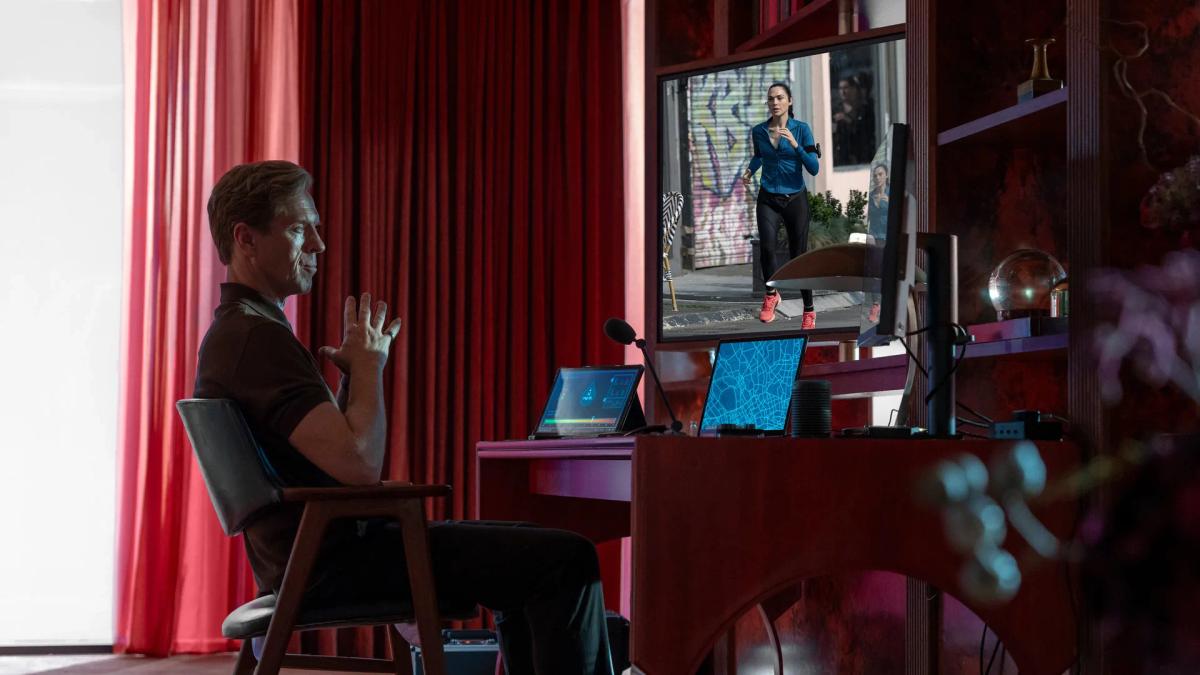
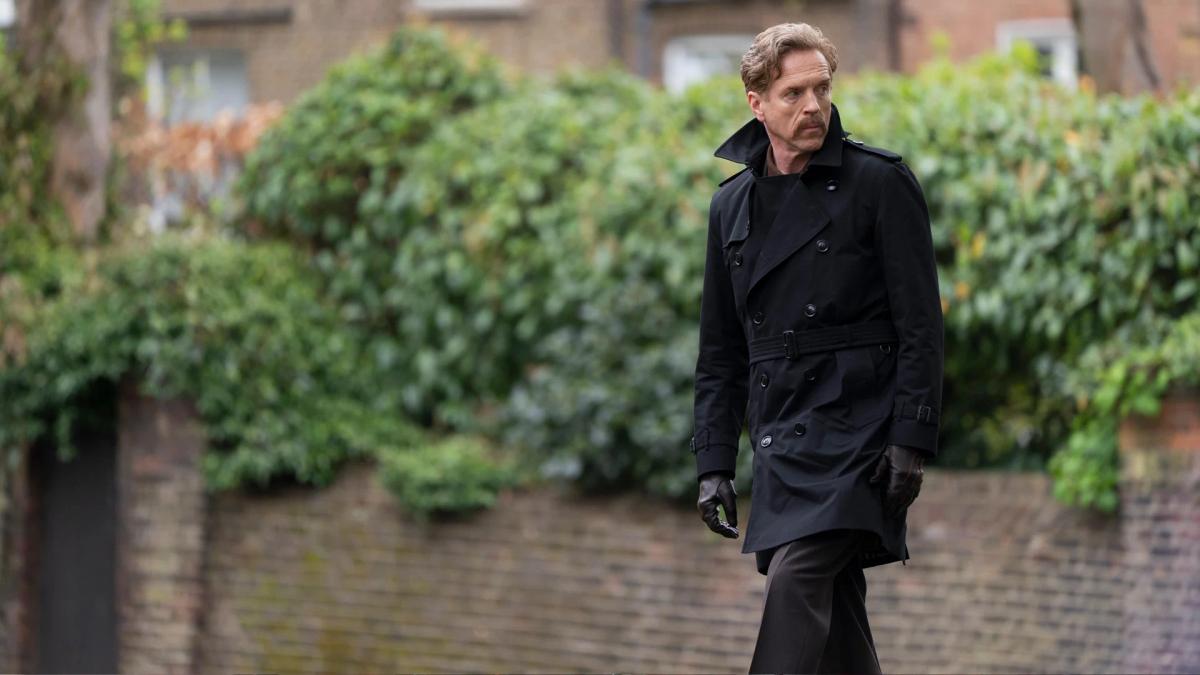
The company around her is thin. The Caller (Damian Lewis) is her only real scene partner and he is a voice on a phone for nearly all of it, which is the film's own choice and works on its own terms. Ted (Alfred Enoch) and Noah (Rory Wilmot) are the problem. Both are written so lightly that the two people she is running for barely register, and the stakes rest on relationships the film never bothers to build.
How The Runner is shot
Anthony Dod Mantle shot it. The frame is narrow and boxy, the grade is warm and unflattering, and the whole thing looks cheaper than a film with this cast and this director ought to.
The coverage is the stranger problem. During the runs the camera stays off her face and on her body, from the front and from behind, running, standing, bending, over and over, cutting away constantly to the streets around her. It is offered as her point of view and does not read as one. You end up watching a city instead of a person, and the film loses her face at the moments it most needs it.
The transitions
The running sequences are joined with speed ramps and heavy motion blur, objects smearing across one another as everything slows down. It happens repeatedly and it looks bad in a way that is difficult to defend, and because it arrives between the only passages with any momentum, it drains them every time.
Gadot's reputation is worse than anything she does here, though the film gives her so little to work with that this barely counts as a defence. If she is the reason you were going to watch, eighty-four minutes on a service you already pay for is a low bar and this clears it. Ask for anything past that and it comes apart in your hands.
The plan. Maia Marten (Gal Gadot) never intends to kill anyone. On the Underground she steals a phone, types a message and hands it to a stranger. Later she writes the real instructions in lipstick on a window: blanks and blood packs. The police stage the shooting with her.
You can see both halves coming. You watch her pass the phone over and watch the man take it on, and by the time she raises the gun in the hotel room you already know what is about to happen. The film then presents both as revelations, replaying them in flashback as though you had not been looking, and that stretch has the quality of a student production that has not noticed what it already showed you.
What is actually withheld. Not her resistance, which is visible the whole way through, but the logistics. How a stolen phone and a note on a window become police coordination, blanks, blood packs and a witness willing to stand there and be shot at is the part that needed showing, and it is the part held back and then explained in a montage. Clues left where a stranger might find one and wonder whether they were meant to act at all would at least have cost her something.
Noah. He is being held in the same building, in diabetic shock, and she reaches him in time. This is the thing the whole film has been running towards, and it is settled in the space the reveal takes to unfold around it.

The father. She tells the Caller (Damian Lewis) that she shot her abusive father and that her mother went to prison in her place. Later she says she is not a killer. The film leaves it open, and given what she is doing to him at that moment, the confession is most likely the story she knew he wanted to hear.
The ending. The Caller is arrested, the bomb is defused, and Tafa lives to testify. Driving home, Maia gets another call from an unknown number and throws the phone out of the car. It reads like a sequel hook and works better as a joke about refusing one more intrusion.
Bright Bulbs
- Gal Gadot is better here than her reputation suggests, though the film gives her far too little to prove either side of the argument.
- The premise keeps something happening at all times, enough to carry an undemanding eighty-four minutes if nothing more is asked of it.
Dull Bulbs
- Ted (Alfred Enoch) and Noah (Rory Wilmot) are sketched so lightly that the stakes rest on two people the film never troubles to build.
- The incidents push the plot along without ever accumulating, so the fourth crisis lands with much the weight of the first.
- The camera stays off her face during the runs, cutting to the streets around her in a point of view that never reads as hers.
- A city that will not look up at a bloodied, sprinting woman is meant as a point about phones and never becomes one.
Shattered Bulbs
- Maia Marten (Gal Gadot) jumps from a bridge onto a boat and the film carries on, with nothing in the staging asking you to believe the survival.
- The Caller's reach, seeing everything around her continuously from anywhere, is named rather than made credible.
- The speed-ramp transitions smear the frame into mush, and they arrive between the only passages that had any momentum.
- The lottery scam calls are written so badly that nobody could plausibly be taken in by them.
Cast
- Gal Gadot as Maia Marten
- Damian Lewis as The Caller
- Alfred Enoch as Ted
- Rory Wilmot as Noah Marten
- Phoenix Di Sebastiani as Tafa