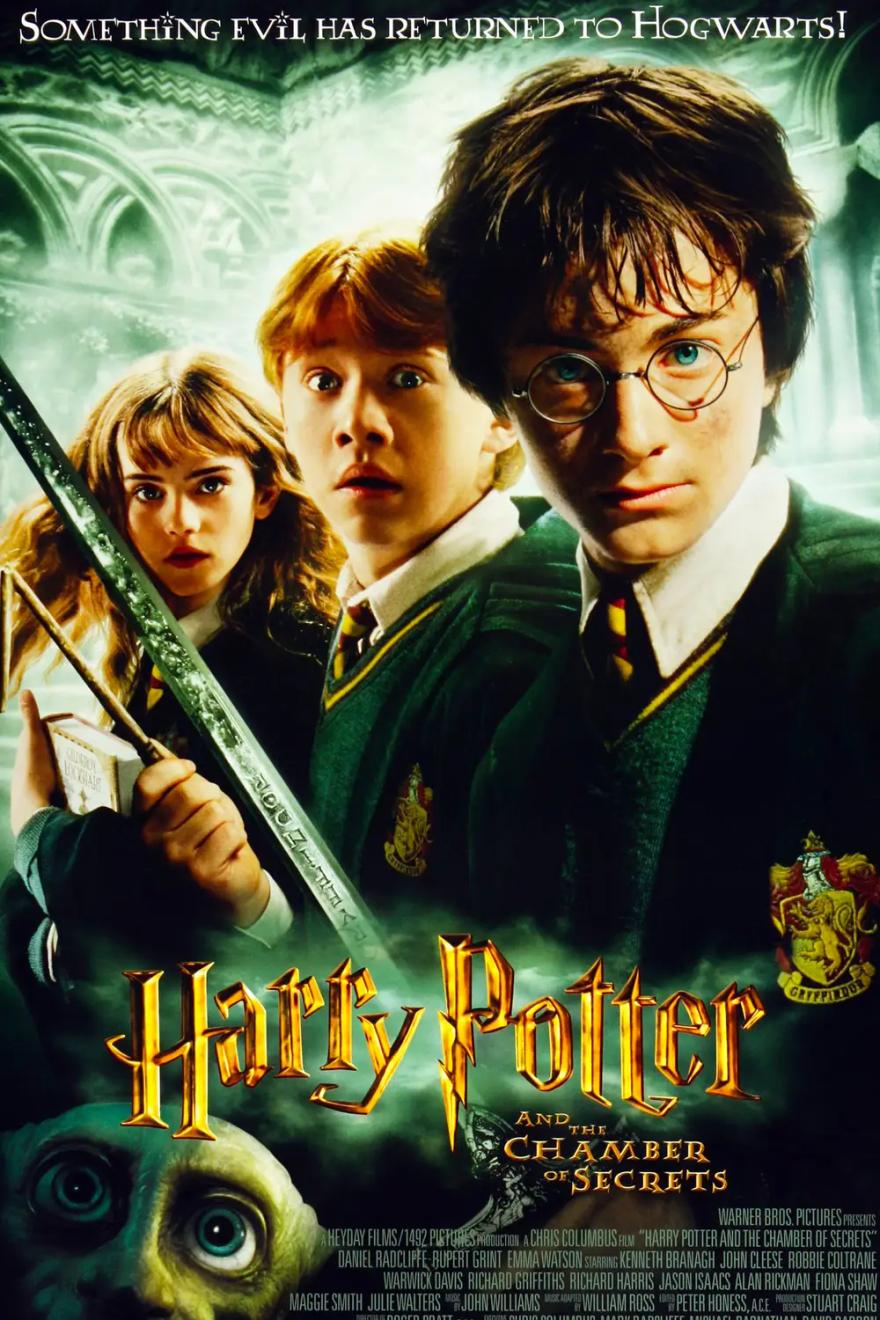
Before you press play
Watch if
You have any affection for the wizarding world. And if you love the books and resent what the films did to them, come and hate-watch it, because the film-making is strong enough to argue with.
Wait if
You have a standing rule against adaptations of books you love, or against this kind of fantasy generally. This will not change your mind.
The second Harry Potter film is the one people call bloated, and it earns every one of its 161 minutes. Two decades on the creature work still lands, the comedy is sharper than its reputation, and the castle has stopped explaining itself and started behaving like somewhere people live. What is wrong with it is small, and most of it sits in the mystery.
Where Chamber of Secrets picks up from the first film
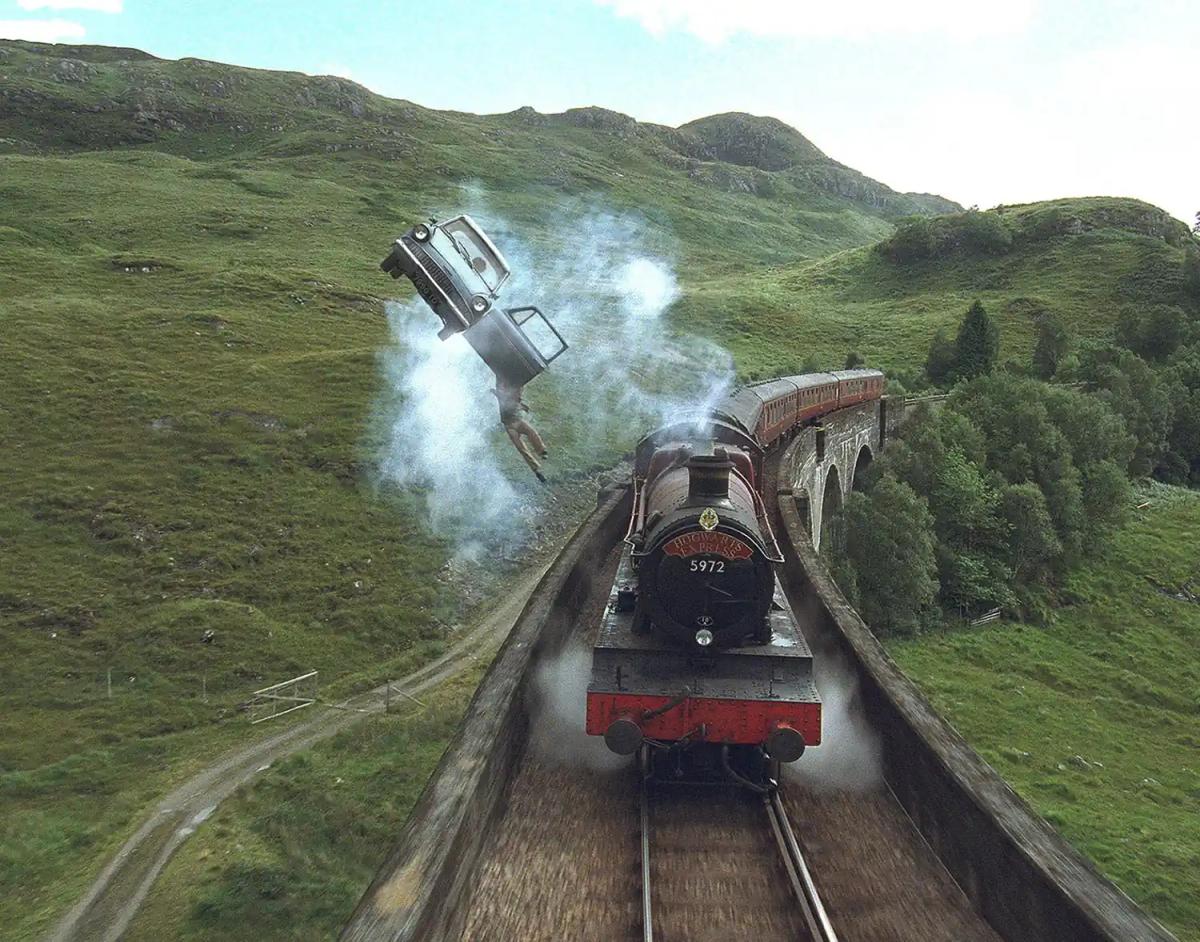
Harry Potter and the Philosopher's Stone had to introduce a school. This one arrives with that job done and spends the surplus on texture: a flying Ford Anglia, a tree that fights back, a greenhouse of screaming plants, a cage of pixies that takes a classroom apart.
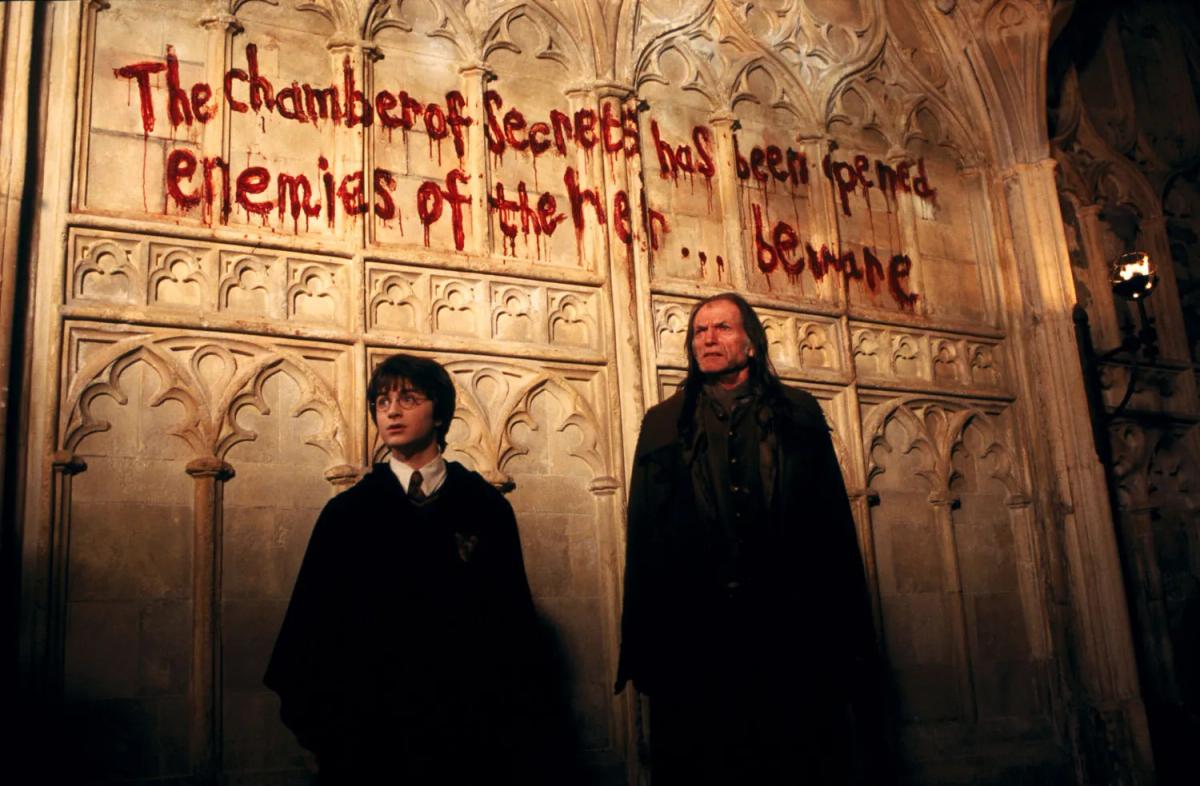
Harry Potter (Daniel Radcliffe) is warned by a house-elf called Dobby (voiced by Toby Jones) that going back will put him in danger. He goes back. Within weeks there is a message daubed on a corridor wall, students are turning up petrified, and most of the school has decided he is the one doing it.
What the attacks in Chamber of Secrets are about
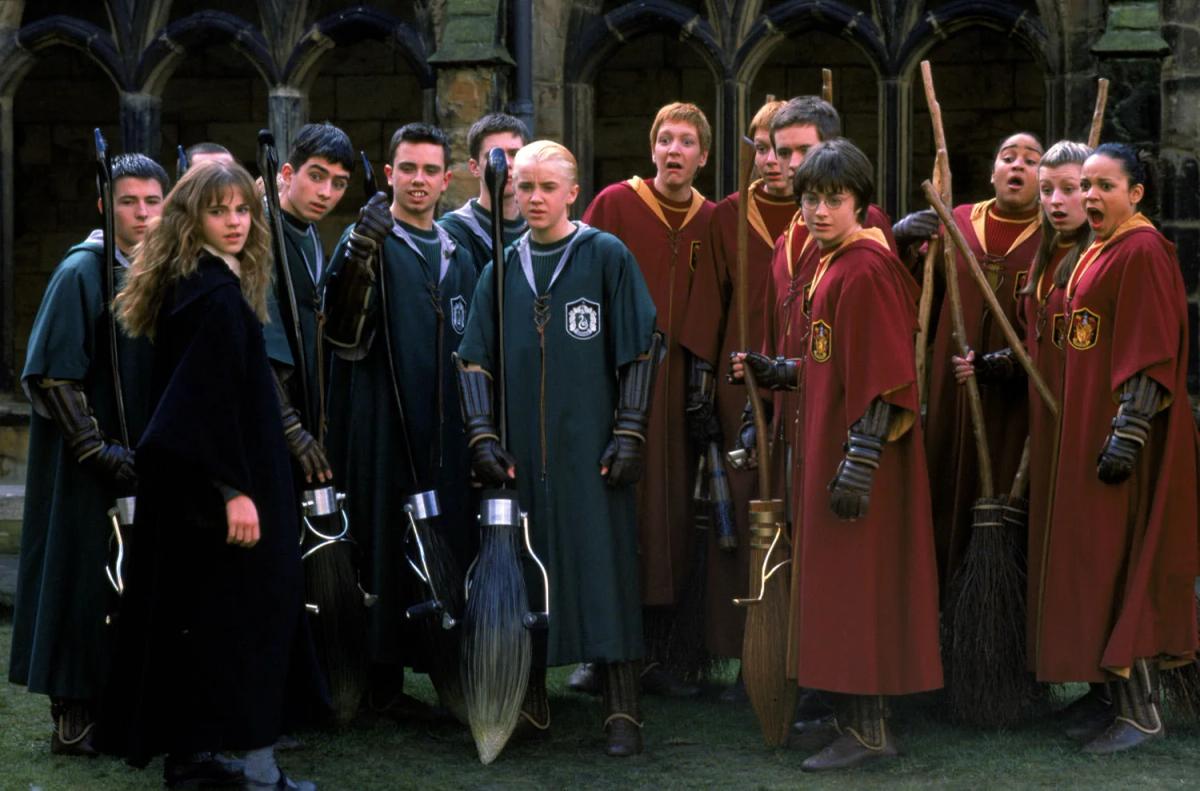
The students being attacked are Muggle-born, and the film is clearer about that prejudice than it is about its own mystery. Draco Malfoy (Tom Felton) calls Hermione Granger (Emma Watson) a Mudblood on the Quidditch pitch, and the scene afterwards divides the explanation among three people. Hermione Granger defines the word, because she is the one it was aimed at. Rubeus Hagrid (Robbie Coltrane) explains the thinking behind it and calls that thinking codswallop.
Not one of the three is a teacher doing anything about it.
Is Chamber of Secrets too long?
At 161 minutes this is the longest film in the series, and the charge that follows it around is bloat. The runtime is doing more work than that. This story has to build a thousand years of history behind the castle, run a string of attacks rather than one, and give three children time to piece them together.
Ginny Weasley (Bonnie Wright) cannot be dragged into a chamber nobody has heard of, and one petrified student is an incident rather than a siege. The middle hour is what makes the last half hour mean anything.
Which leaves a better complaint than bloat. The film cuts plenty, and Nearly Headless Nick's deathday party goes without being missed. What went with it was the one line explaining how Gilderoy Lockhart came to be teaching here at all.
Rupert Grint, Kenneth Branagh and the rest of the cast
The standing complaint about these films is that they flattened Ron Weasley (Rupert Grint) into comic relief. This one makes that harder to hold, because Rupert Grint keeps turning the comedy into character. He plays it into other people's faces rather than out to the audience, whether he is telling Severus Snape (Alan Rickman) that the Whomping Willow did more damage to them than the other way round, or sitting through a Howler from his mother in front of the entire Great Hall.
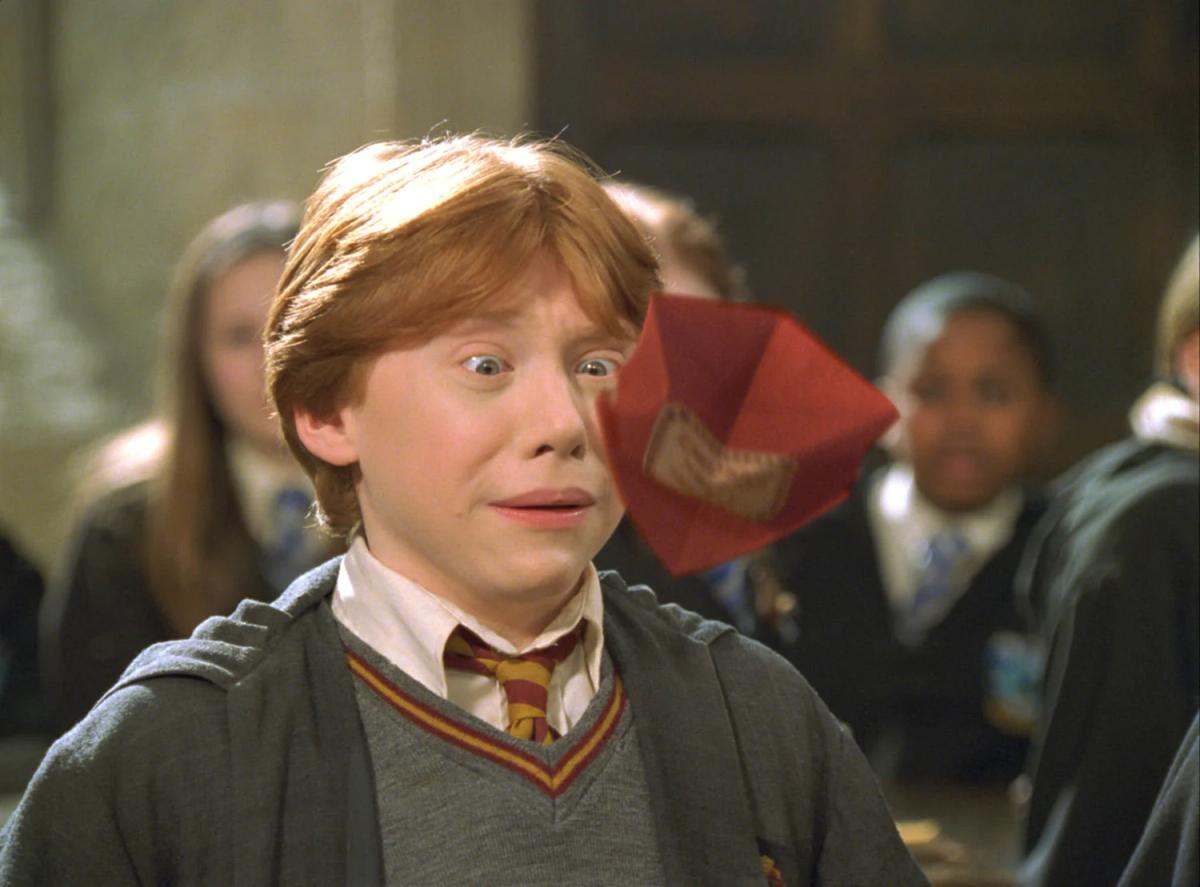
The Howler is a joke. It is also the scene that shows you his family and his humiliation in the same beat. His wand snaps in the first act and keeps paying out for the rest of the picture, comic and otherwise.
Gilderoy Lockhart (Kenneth Branagh) is the other engine, and the joke survives even as the story darkens. Kenneth Branagh plays him as a man who has fully believed his own publicity, so every scene he walks into arrives with the punchline already loaded.
The film never accounts for him, though. He cannot control a cage of pixies in front of second-years, and nobody in the castle ever asks how he got the job. They may genuinely have had no other applicant. Nobody checks.
Judging the three leads against adult performers like Alan Rickman and Maggie Smith is the wrong test. They are children, and the film needs them to behave like children. On those terms all three are good, and Daniel Radcliffe is the one most often sold short, because Harry Potter's reserve suits a boy raised in a cupboard and Daniel Radcliffe never reaches for a spark the character has no reason to have.
The creature work, the score and how frightening it is
The effects have aged unevenly and it is worth saying which half. The climactic creature still reads as a real threat, helped by how little of it the film shows. Dobby is the half that dates, remarkable in 2002 and now plainly a digital character standing beside a real boy.
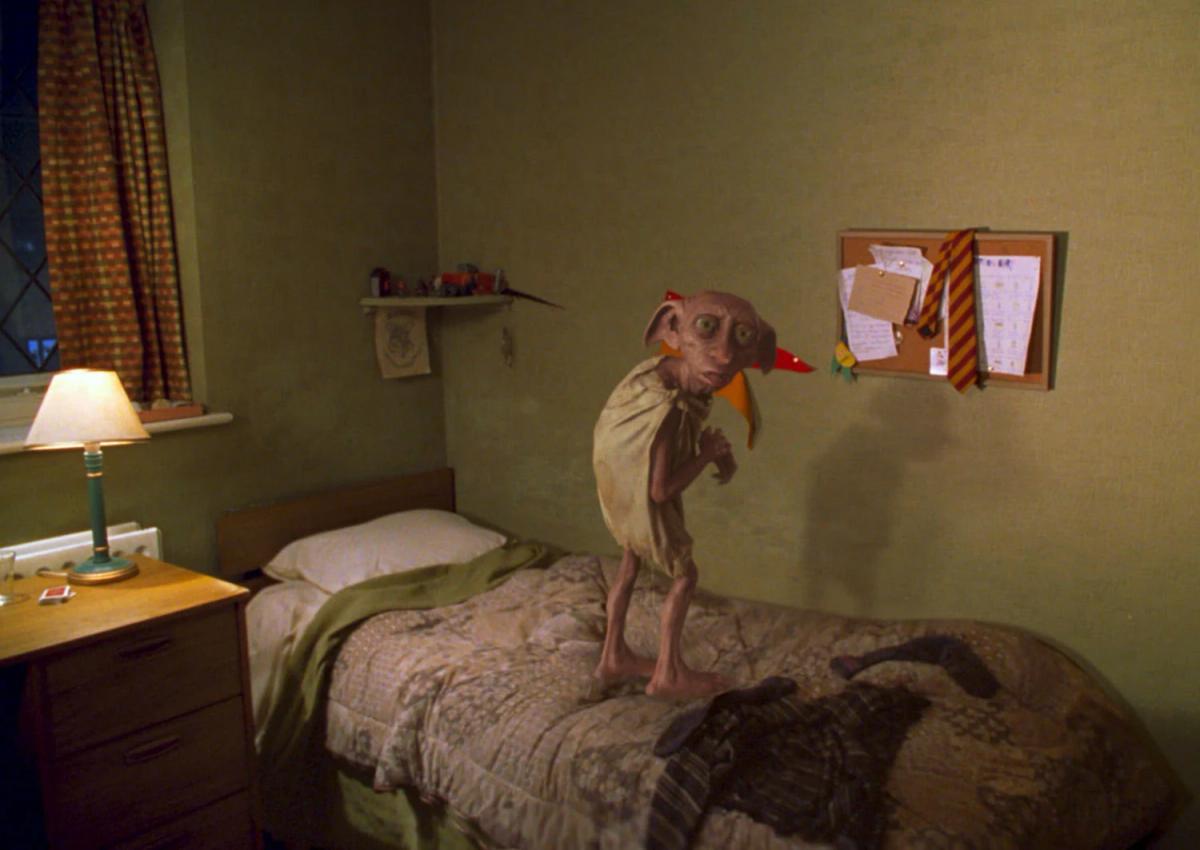
It is also a good deal more frightening than the first film. The corridors, the voice in the walls and the spiders reach further into horror than Philosopher's Stone attempted, though the effect stays atmospheric rather than graphic.
Chris Columbus directs it without fuss, and John Williams's score, adapted and conducted by William Ross, does the quiet work of making the castle feel inhabited.
A 4, and BLAZING. The script is the loose part: a teacher nobody checks, a villain with no room to become one, a house-elf whose reasons arrive long after his actions. None of it costs the film much, because what surrounds it is three leads visibly becoming friends instead of being told they are, and comedy doing character work rather than filling space. Two decades on, it still plays.
Dobby. The film tells you why he does it in the hospital wing, long after he started doing it, and plays the telling for laughs while he beats himself with a bottle. That is why people leave thinking it was never explained. The information is there. What the staging buries is a character defying the family that owns him with almost nothing to defy them with, which is what makes the sock at the end land.
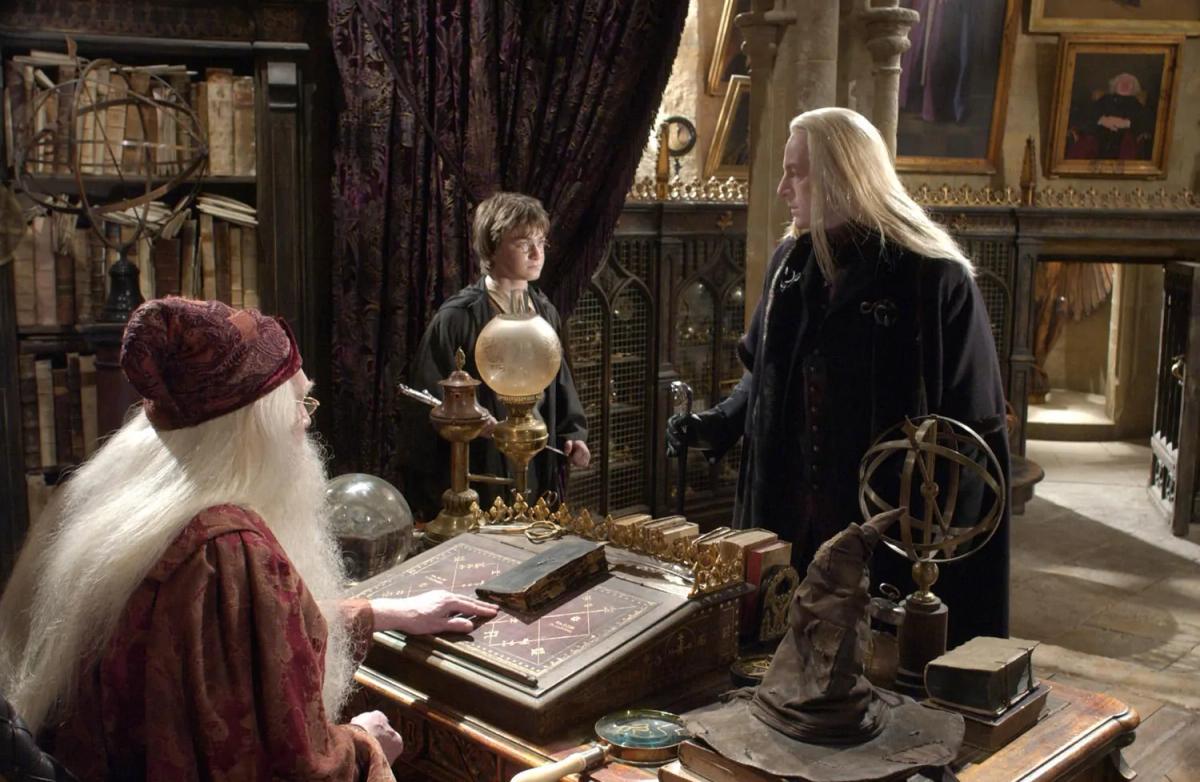
Dumbledore. His power is never demonstrated, it is subtracted, and the subtraction is the demonstration. Rubeus Hagrid (Robbie Coltrane) warns that the Muggle-born students will not stand a chance without him, and Ginny Weasley (Bonnie Wright) is taken not long after. What Albus Dumbledore (Richard Harris) actually leaves behind is a line about help always being given to those who ask for it.
The basilisk. The best structural idea in the film is that you barely see it. Colin Creevey (Hugh Mitchell) catches it through a camera, Justin Finch-Fletchley (Edward Randell) through Nearly Headless Nick (John Cleese), Hermione Granger (Emma Watson) through a mirror. The threat holds because the film keeps refusing to show you the thing.
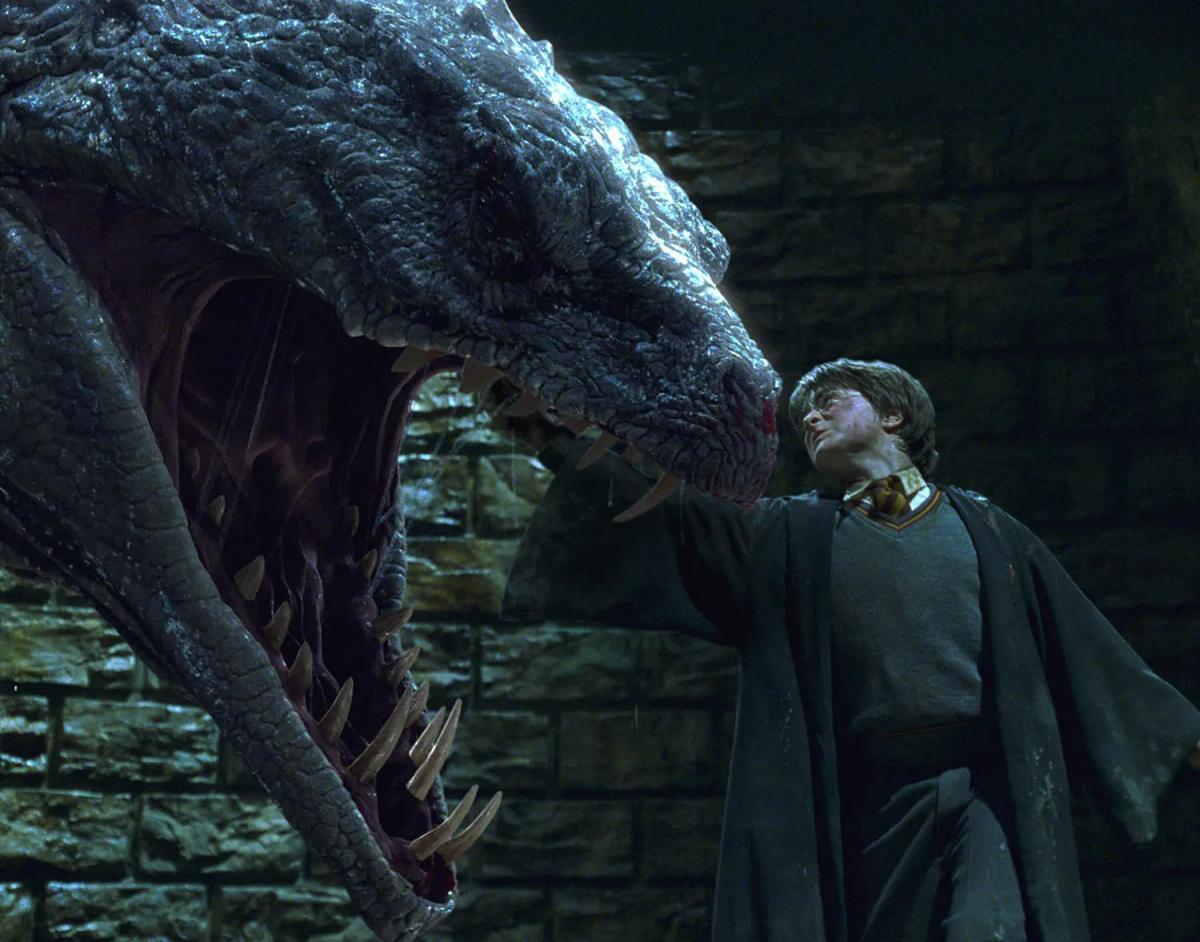
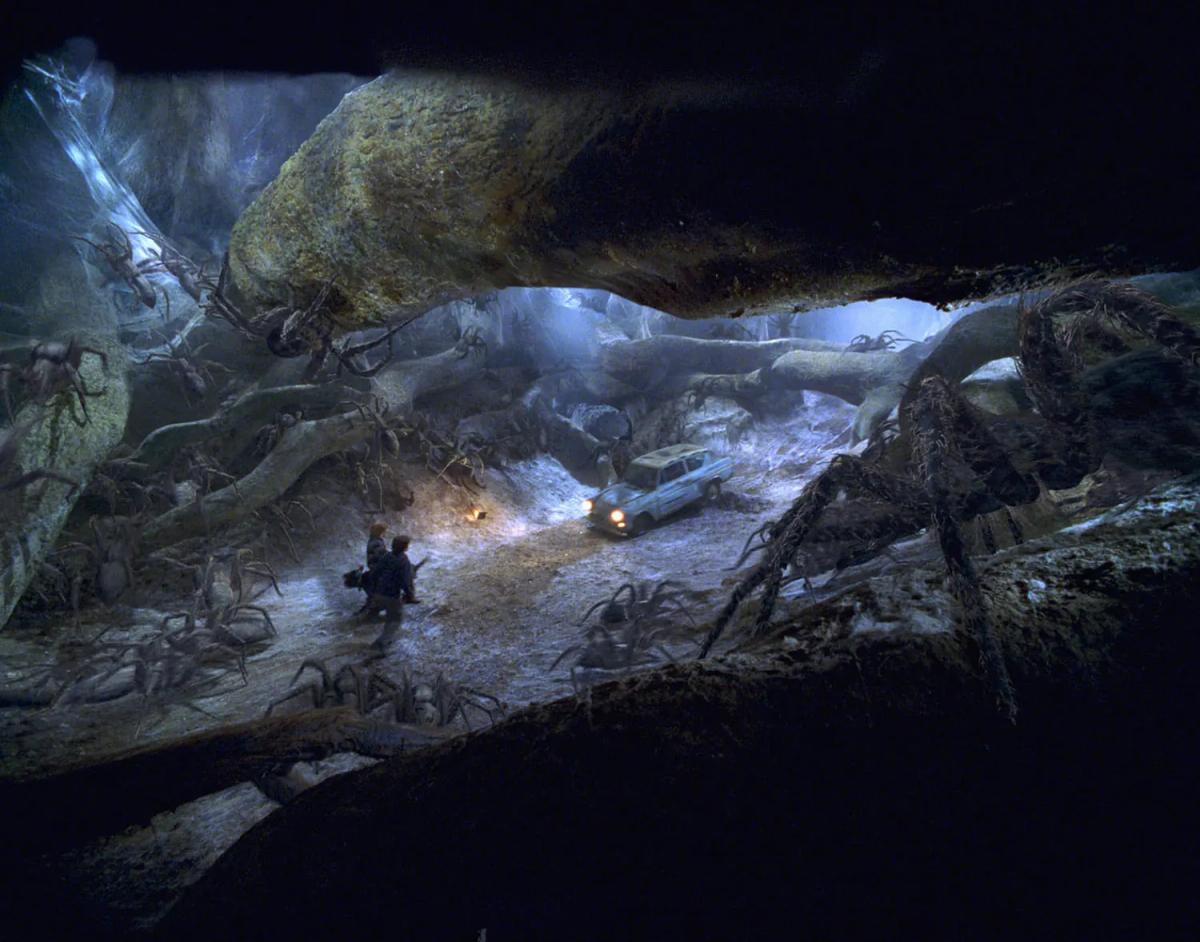
Ron and the spiders. The bravest act in the film belongs to the comic character, and it costs him something nobody else is being asked to pay. Ron Weasley (Rupert Grint) is terrified of spiders. He goes in anyway, and the joke he makes afterwards about killing Rubeus Hagrid is funny because he earned the right to make it.
Bright Bulbs
- Neville Longbottom (Matthew Lewis) faints during the Mandrake lesson and Professor Sprout (Miriam Margolyes) simply carries on, which is the driest joke in the film.
- Hermione Granger (Emma Watson) freezes a classroom of loose pixies with one charm after the teacher has fled, and the film never stops to congratulate her for it.
Dull Bulbs
- Lucius Malfoy (Jason Isaacs) is positioned as a second villain and given too little screen time to become one, so he stays a presence at the edges.
- Dobby (voiced by Toby Jones) drives the opening and then vanishes until the hospital wing, which leaves the first act feeling like a different film.
Cast
- Daniel Radcliffe as Harry Potter
- Rupert Grint as Ron Weasley
- Emma Watson as Hermione Granger
- Kenneth Branagh as Gilderoy Lockhart
- Alan Rickman as Severus Snape
- Maggie Smith as Minerva McGonagall
- Richard Harris as Albus Dumbledore
- Robbie Coltrane as Rubeus Hagrid
- Jason Isaacs as Lucius Malfoy
- Tom Felton as Draco Malfoy
- Matthew Lewis as Neville Longbottom
- Bonnie Wright as Ginny Weasley
- Toby Jones as Dobby
- Miriam Margolyes as Pomona Sprout
- John Cleese as Nearly Headless Nick
- Hugh Mitchell as Colin Creevey
- Edward Randell as Justin Finch-Fletchley
Related quizzes
More from Harry Potter
Which Harry Potter Death Eater Are You?Ten questions on why you took the Mark. Seven Harry Potter villains, from the books and the films.- Which Hogwarts Professor Are You?Which Hogwarts professor are you? Ten questions, six professors: Dumbledore, McGonagall, Snape, Hagrid, Lupin or Trelawney. From the books and the films.
- Which House Would You Belong To at Hogwarts?Ten questions about how you handle things, and the Sorting Hat asks where you’d put yourself.