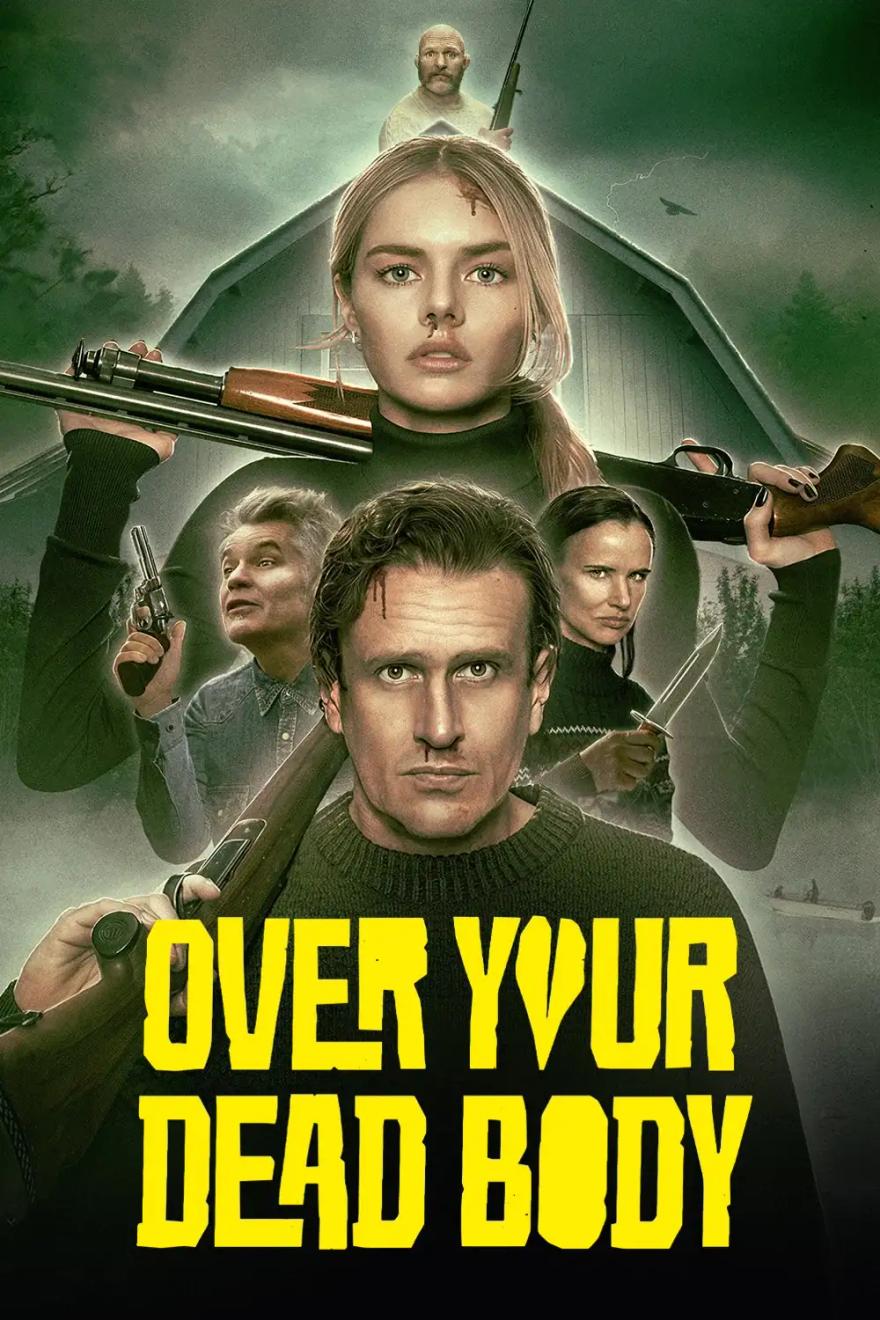
Before you press play
Watch if
You want a fast, nasty comedy where nobody is competent and every fight is played as slapstick.
Wait if
Jokes about a marriage ending in murder sound like hard work, or you'd rather not sit through a rape threat played for laughs. ---
The setup: one cabin, two murder plans
Dan Burton made one feature film a long time ago and now shoots pop-up ads. His wife Lisa is an actress whose career never really started. The marriage is finished in every way except the paperwork, and both of them have privately decided to end it at a weekend in his father's lakeside cabin.

Neither has mentioned this to the other.
That is the whole engine, and the film gets to it quickly. Before they leave, Dan visits his father Michael at a nursing home and gets told that his generation has never struggled a day, and that what they need is a war. Hold on to that line. It is the first joke in the film that is also the film's argument.
The cabin in the woods then does what a cabin in the woods has always done, which is fill up with people who should not be there. Three of them arrive: two escaped killers and the prison officer who ran with them.
Jason Segel and Samara Weaving as Dan and Lisa
Weaving is the reason this works. She has built a run of horror comedies — The Babysitter, Ready or Not, Guns Akimbo — where violence sits naturally on her, sometimes as the one being hunted and sometimes as the one doing it. Lisa belongs in that line without repeating any of them. She has already decided her husband is going to die, and she plays the logistics as an irritation rather than a crisis of conscience.
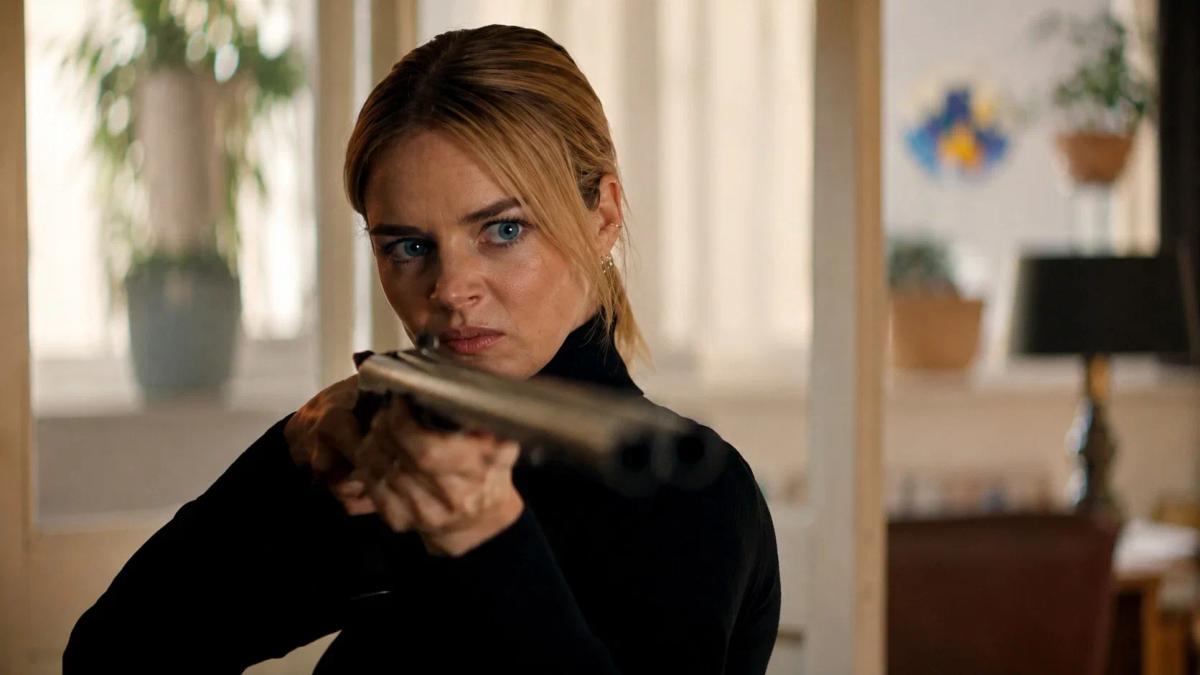
Weaving also keeps her own Australian accent. It can be jarring, and it works, because the edge in it belongs to Lisa. Dan brings it up constantly and never kindly, which says more about this marriage than any of the flashbacks manage.
Segel is fine. That is the ceiling. He hits the jokes and he sells the panic, and he still ends up the least interesting person in his own film, which matters when the film starts inside his head.
Timothy Olyphant, Juliette Lewis and Keith Jardine as the intruders
Juliette Lewis walks off with the picture. Allegra is not frightening in the way she carries herself — she is frightening in what she says and in how little she needs to think about doing the worst available thing. The problem is being in a room with her, and the film understands that and keeps putting people in rooms with her.
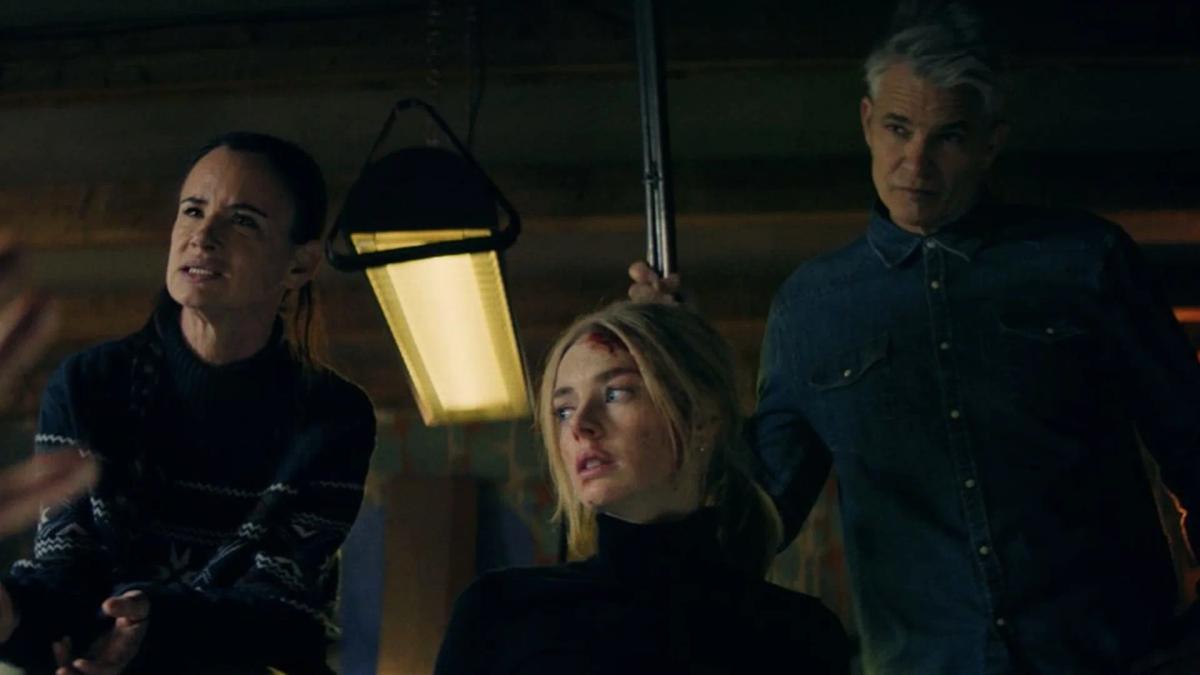
Olyphant's Pete runs the group and is the only one there with a plan. Keith Jardine's Todd is the muscle and the best running gag in the film: he cannot hold a name in his head for ten seconds, he calls the couple Ron and Hermione, and he will not stay down no matter what is done to him.
How Over Your Dead Body is put together
Every time somebody new arrives, the film rewinds and shows what they were doing while the previous stretch was playing. It starts inside Dan's plan, doubles back into Lisa's, and keeps going well past the pair of them. Details that looked like throwaways come back as setup.
It is the most interesting choice in the film, and it is also cover for a script that will not do the harder work.
Almost nothing here happens because a character made it happen. A shot fired at a ceiling during a struggle lands in one of the intruders, who happened to be hiding above it. Somebody arrives at the exact second somebody else is about to die, and then it happens again, and then again. Nobody in Over Your Dead Body survives by being good at anything. They survive because the next scene needs them.
Is Over Your Dead Body worth watching?
Once, yes. The middle hour is a real grip — the fighting is well staged, the house is used properly, and there is a long stretch where it is genuinely unclear who walks out.
The gore is the best thing the film builds. It is practical, it is inventive, and it commits: a shotgun takes a man's head off and leaves the rest of him standing exactly where he was. If that sentence put you off, this is not your film.
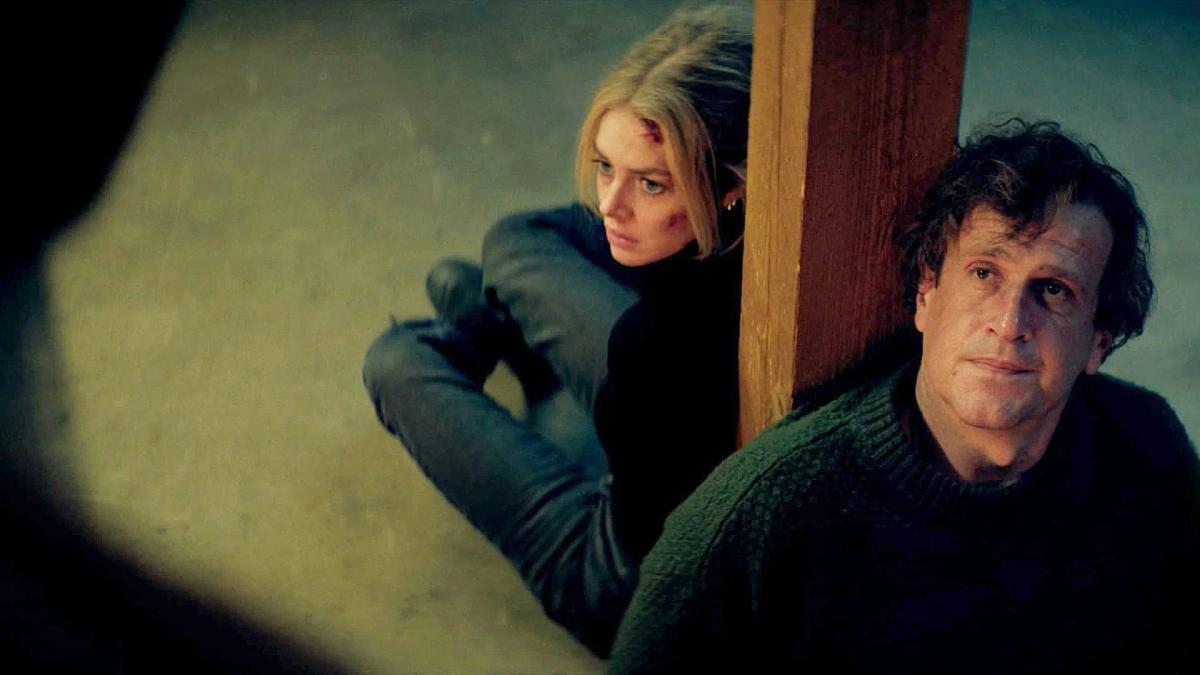
The comedy is the part that will split people. It is mean by design, and it is at its funniest when it is at its most petty: two failed creatives trading insults about each other's talent while tied up in a basement, and both of them turning out to be right. Some of the jokes land hard. Some sit there.
One extended sequence threatens Dan with rape and plays it for laughs, and it goes on a long time — worth knowing before pressing play, because it is the point where a good number of viewers will stop finding the film funny.
The ending, without spoiling it, pays off the father's line about the war. That is a better piece of construction than a film this scattered has any right to.
Two and a half bulbs. Fun while it runs and gone by morning. Worth the night, not worth the recommendation.
Why the comedy works when it works. The insurance scene is the film at full strength. Henry was promised half of a $100,000 policy; Lisa's move is not to talk him down but to tell him she and Dan each carry a million, so he is being underpaid. Her instinct under pressure is to negotiate. That is the film's real joke about these two — they are only sharp about money and cruelty, never about anything that would save them. The same instinct produces the twelve-week pregnancy she invents to stall Todd, and Allegra's outrage at being tackled landing entirely on her handbag.
Nobody wins on purpose, and that is the design. Dan never lays a hand on Lisa. Henry dies because the gun goes off while two people who cannot fight are fighting over it. The pregnancy buys three seconds. Every single victory in this film is luck or a lie, which is funny for about an hour and is also why there is nowhere left to go.
The ceiling shot is where it tips. A round fired upward in a scuffle finds one of the three hiding in the attic. Until that moment the accidents are jokes. After it they are how the plot moves, and the film never gets that distinction back.
The father is the argument, and it kills him. Michael wishes a war on a generation he thinks has never struggled, then turns up and has the best night of his life in one, then dies in it. A film this scattered did not have to follow its own thesis all the way to the man who said it. It does, and that is the most serious thing in it.
The fingers are the whole marriage. Lisa drowns Pete and then goes back for Dan's severed fingers and his wedding ring. No dialogue, no speech about second chances. One gesture does what the previous ninety minutes of insults were setting up.
The ending tells you what the film thinks of itself. Two failed creatives survive, sell the story, and Dan finally gets to direct Lisa — in a straight-to-streaming version of their own worst night, pitched on a talk show as the exciting new frontier. It is a joke about monetising trauma, and the film is not especially interested in judging them for it.
Bright Bulbs
- Samara Weaving is the most capable person on screen, and the film is smart enough to know it.
- Allegra is the only one here enjoying herself, which is exactly what makes her unbearable to be near.
- Todd is allowed to be genuinely stupid rather than secretly clever, and gets the steadiest laughs for it.
- The practical effects team is the most committed unit here, and the gore is the one department working with no half-measures.
- The fights are short, ugly and close-quarters, which is right for two people who have never been in one.
Dull Bulbs
- Jason Segel does everything the part asks and leaves no impression. Competent is as far as it goes.
Shattered Bulbs
- Coincidence does the plotting. Characters are saved by timing rather than by anything they decide to do.
Cast
- Jason Segel as Dan
- Samara Weaving as Lisa
- Timothy Olyphant as Pete
- Juliette Lewis as Allegra
- Keith Jardine as Todd
- Paul Guilfoyle as Michael