In this piece
⚠️ Spoilers for Lanterns through Episode 4. Comics history is a separate continuity and is named as such.
Four episodes in and Lanterns has explained surprisingly little about the organisation its two leads work for. That is a deliberate choice and mostly a good one, but it leaves a gap.
Here is what the Corps actually is, and how its competing methods of choosing a successor shape Hal and John's story.
What is the Green Lantern Corps?
Traditionally, an intergalactic police force more than three billion years old, based on Oa and overseen by the Guardians of the Universe. That is DC's standard reference model, and the structure Lanterns appears to be using.

Current mainline comics have changed the chain of command. The Corps has its own council, the Guardians serve as advisers, and Jessica Cruz is identified as Corps Leader.
The numbers are the part worth holding onto. DC's standard overview describes a force of 7,200 Lanterns patrolling 3,600 sectors, nominally two per sector. Earlier versions used one per sector.
That is a reference figure rather than a live headcount. The Corps has been destroyed, rebuilt and reorganised repeatedly.
Earth sits in Sector 2814, which has carried more Lanterns than the nominal allocation.
How does a Green Lantern ring work?
It converts willpower into solid light, and it runs on a supply chain.
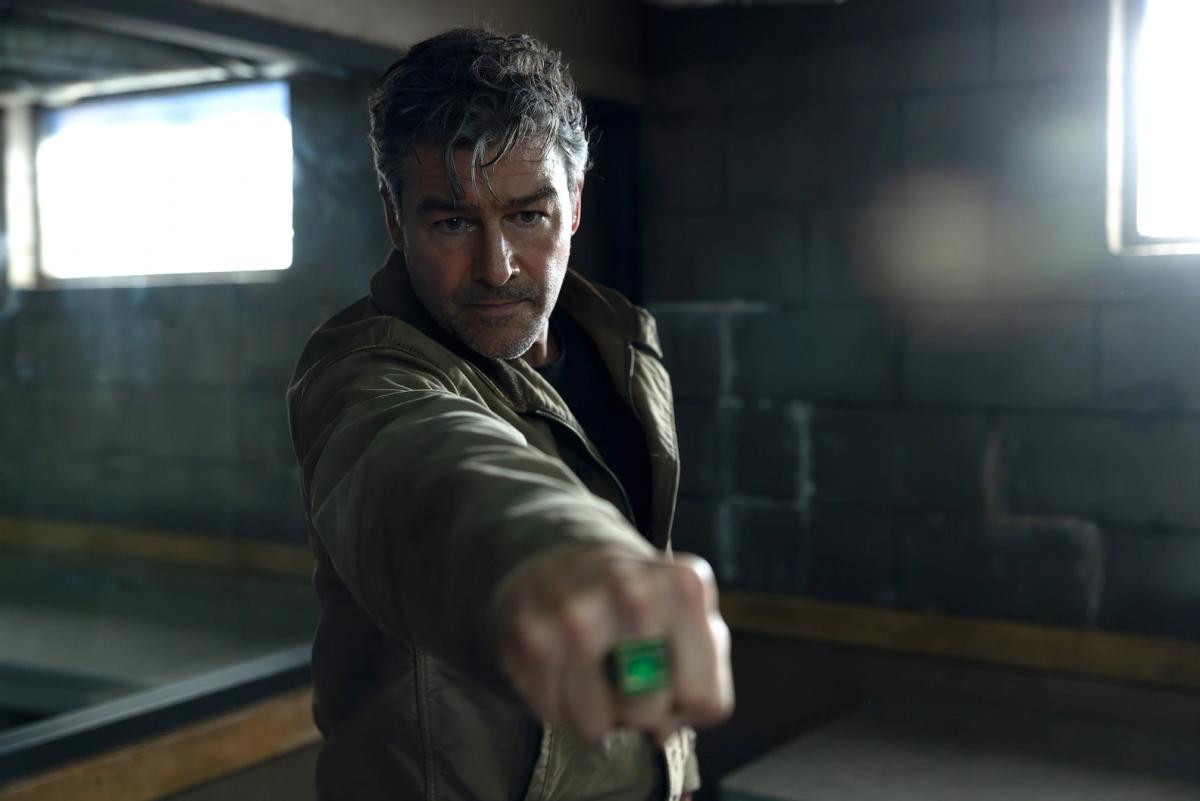
A power ring stores a finite charge supplied by its bearer's personal battery, the lantern-shaped object the show has already put on screen. In the traditional Corps system that battery is linked to the Central Power Battery on Oa, which gives the organisation's governing authority control of the supply chain. Lanterns has not yet shown whether its batteries draw from the same source.
Older comics commonly used a 24-hour recharge cycle. Later stories have tied depletion more directly to how much power the wearer spends. Lanterns has established only that the ring stores a finite charge and must be recharged using the lantern.
The ring supplies the power. Using it well requires willpower, imagination and concentration, which is why two Lanterns with identical equipment produce visibly different work.
Constructs are only part of the comics toolkit. The ring also supplies flight, space travel, force fields, a uniform, translation, Corps communications and access to stored information. The show has concentrated on constructs, charge and the consciousness backup rather than the full feature list.
Is the Green Lantern oath required?
DC has not treated this consistently across every era, and the show has now given it two apparent jobs.

Who Are the Guardians of the Universe? Powers, Origin and Why They Keep Failing
The Guardians of the Universe run the Green Lantern Corps. Here is who they are, what they can do, and why they keep getting it wrong.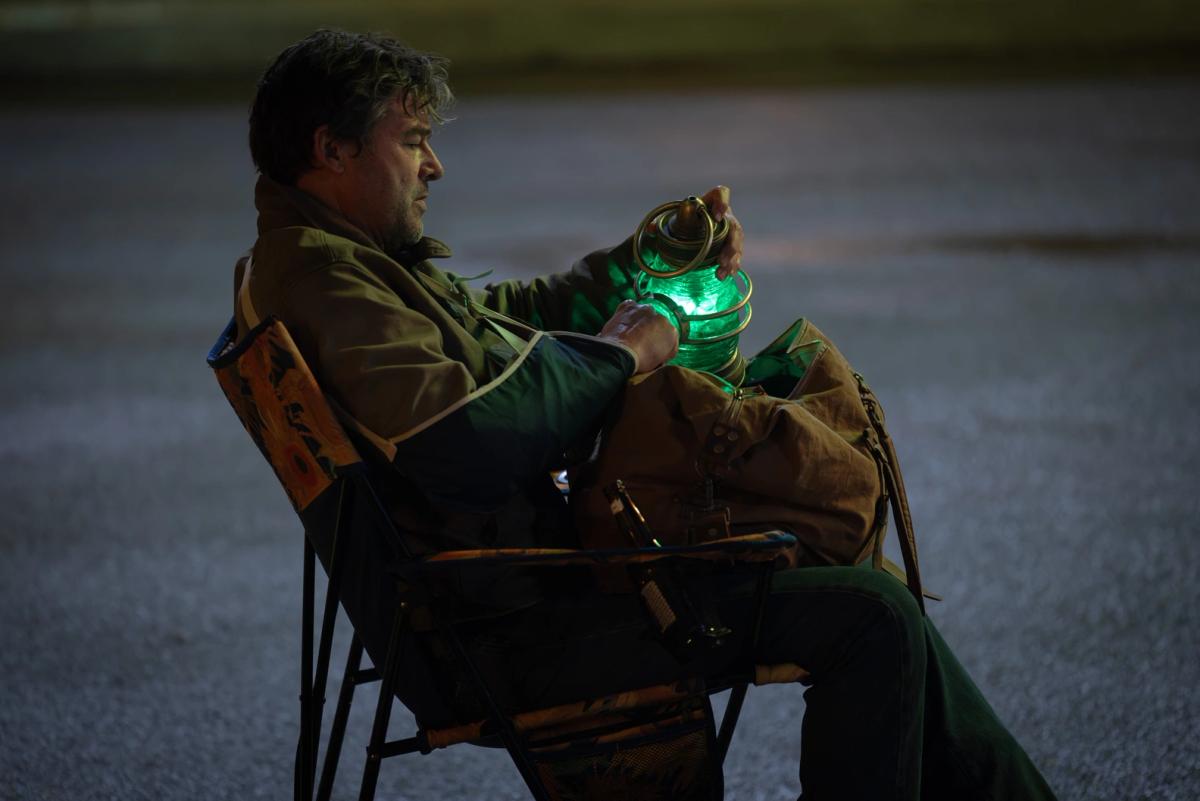
Hal recites it while recharging in Episode 2. In Episode 4, Lianna orders John to recite it the next time Hal hands him the ring, saying that doing so will make John the Green Lantern.
John gets the chance and leaves the oath unsaid. So the show has not established whether it is a technical trigger, a formal claim to the office, or both.
Comics continuity is less tidy. DC's general description says Corps members recite an oath while charging, individual Lanterns have used different versions, and how strictly it is enforced has changed across eras.
How does someone become a Green Lantern?
For the purposes of Lanterns, two routes matter.
A ring can select a bearer. In Lanterns it tests a candidate's relationship with fear and makes its choice without the candidate applying.
The Guardians can appoint a candidate directly. They have done this repeatedly rather than only in emergencies.
Hal Jordan got the job the first way. John Stewart is being given it the second.
The qualification has also changed. Early Hal Jordan stories looked for someone without fear. Modern comics define worthiness as the ability to feel great fear and overcome it. The show uses the older question while testing whether the idea underneath it holds.
How does the Corps choose a replacement?
Comic continuity does not have one immutable procedure, and the variety is the interesting part.
A dying Lantern can send their ring to seek a new bearer, and a ring can also search for a successor after its wearer dies. Abin Sur sent his ring to find Hal Jordan. The Guardians can also appoint substitutes and replacements directly: Guy Gardner was designated as Hal's backup, and John Stewart was selected after Guy became unavailable.
Lanterns combines those precedents in its own way. The ring tested John Stewart Sr. before choosing Hal. The Guardians later interviewed his son and told him he was there to replace Hal rather than support him.
So the series turns on a conflict between a ring choosing for itself and the Guardians managing the choice, rather than on one established procedure failing.
Episode 4 makes that conflict explicit. Lianna tells John to claim Hal's position by reciting the oath the next time Hal lends him the ring. John gets the chance and does not take it.
Which means the season is now about something sharper than succession. The Guardians are trying to transfer a living Lantern's office without his consent, and whether the oath can actually do that is unanswered.
Who runs the Green Lantern Corps?
In Lanterns, the Guardians. In the classic comics structure, also the Guardians. Current mainline continuity is different: the Corps has its own council and the Guardians act as advisers.
For the purposes of Lanterns, the useful constant is that the Guardians are not merely neutral administrators.
They founded the Corps after the Manhunters, their first interstellar police force, massacred almost all life in Sector 666. They have repeatedly concealed dangers and past failures from their own officers, and the show has already put one of them on screen arranging Hal's replacement. Their history has its own page.
How many Green Lanterns come from Earth?
More than the nominal allocation, which is worth knowing.
Mainline continuity has produced seven long-term human Corps Lanterns associated with Sector 2814: Hal Jordan, Guy Gardner, John Stewart, Kyle Rayner, Simon Baz, Jessica Cruz and Jo Mullein. DC has also counted Jade and Keli Quintela among its human Green Lantern legacy, so totals vary depending on continuity and on whether temporary or non-standard bearers are included.
The DCU has already shown Guy Gardner carrying a ring in Superman, while Lanterns presents Hal as Earth's Lantern in 2016 and shows him dead without the ring in 2026. How Guy acquired that ring is an open part of the chronology rather than proof that this version of Sector 2814 runs several Lanterns at once.
What Lanterns has shown of the Corps
Very little, deliberately, and the omissions are informative.
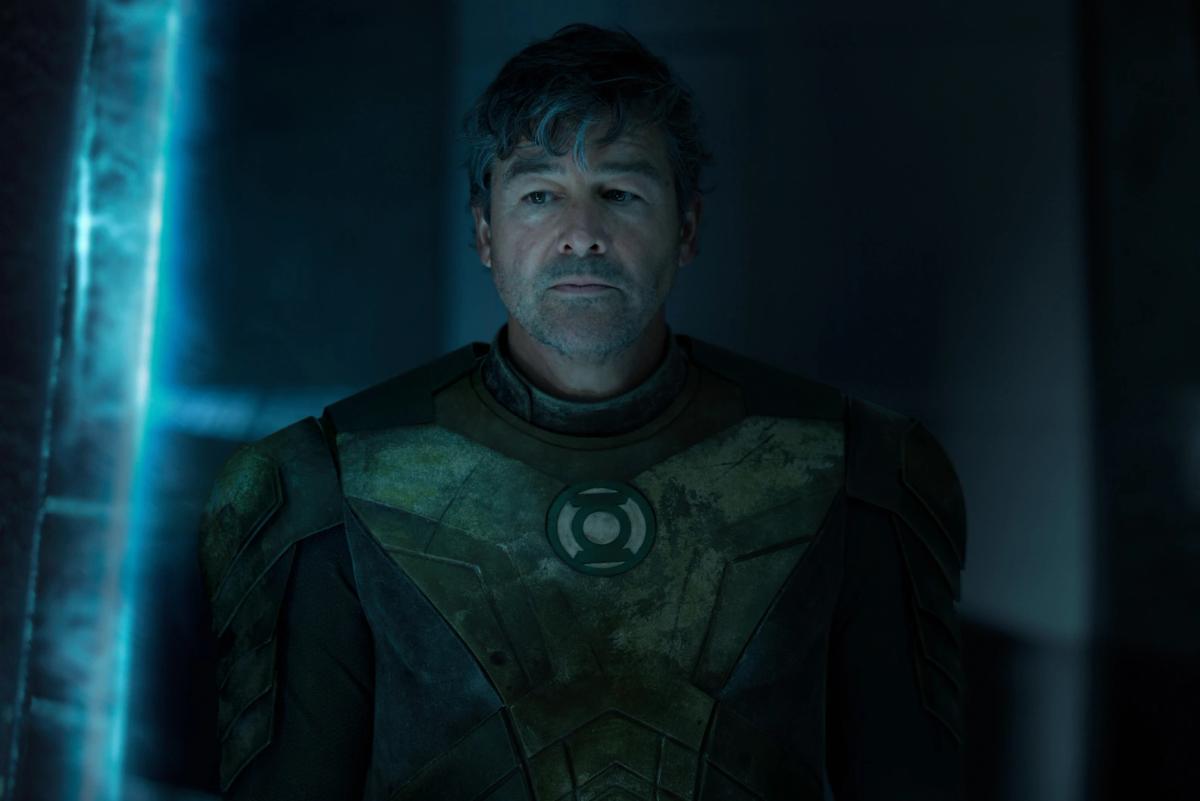
There has been no Oa, no active alien Green Lantern and no Kilowog. Beyond Lianna, the Guardian who interviews John, and the Guardians' off-world prison, almost none of the Corps' institutional machinery has appeared. What the show has given instead is a lantern stored in a bag, a ring with a finite charge, a weekly consciousness backup Hal stopped updating, and an employer who communicates by turning up unannounced.
That is the Corps as an employer rather than an army, which makes for a smaller and stranger show.
We are tracking every open question in the series on the Lanterns Mystery Board, updated after each episode.
Reviews in this piece
Read next

Who Is Abin Sur? The Green Lantern Whose Death Started Everything
Abin Sur crashed, gave Hal Jordan his ring, and died. In the comics a buried prophecy led him there, and Lanterns has moved the crash site.Read it →Who’s who in Green Lantern
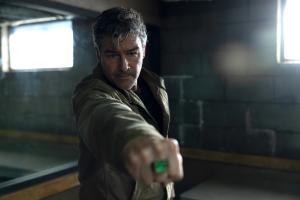
Abin Sur
Abin Sur crashed, gave Hal Jordan his ring, and died. In the comics a buried prophecy led him there, and Lanterns has moved the crash site.
The Guardians of the Universe
The Guardians of the Universe run the Green Lantern Corps. Here is who they are, what they can do, and why they keep getting it wrong.
Hal Jordan
Hal Jordan is the Corps' first human Green Lantern, and Lanterns found the one version of him nobody had filmed. Here is who he is.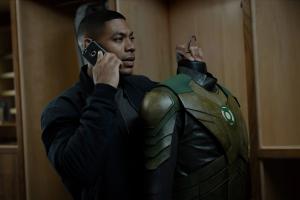
John Stewart
John Stewart has been reinvented across comics, animation and television. Here are the major versions, and what HBO's Lanterns changed.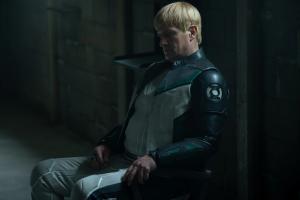
Guy Gardner
Guy Gardner qualified for the ring on the same day Hal Jordan did, and lost it on distance. Here is who he is and what he can do.
Sinestro
Sinestro was the greatest Green Lantern who ever lived, and then he became the Corps' worst enemy. Here is who he is and what turned him.


In this world
 TV review
Lanterns Season 1 Episode 5
Lanterns delivers its biggest hour yet, clearing four episodes of setup while exposing how little weight some of its payoffs carry.
How Lanterns Connects to the DCU
Lanterns' main investigation begins nine years before Superman, but Guy Gardner and John Stewart place its mystery firmly inside the wider DCU.

Everything on Green Lantern
5 reviews · 14 UnscrewedRelated reviews
More from Green Lantern
Lanterns Season 1 Episode 5Lanterns delivers its biggest hour yet, clearing four episodes of setup while exposing how little weight some of its payoffs carry.- Lanterns Season 1 Episode 2A half-step up on the premiere: sharper craft, a genuinely good final ten minutes, and a highway chase that breaks the show's own rules.
- Lanterns Season 1 Episode 1HBO's Green Lantern series opens on a murder in small-town Nebraska, two Lanterns who can't stand each other, and almost no ring at all.