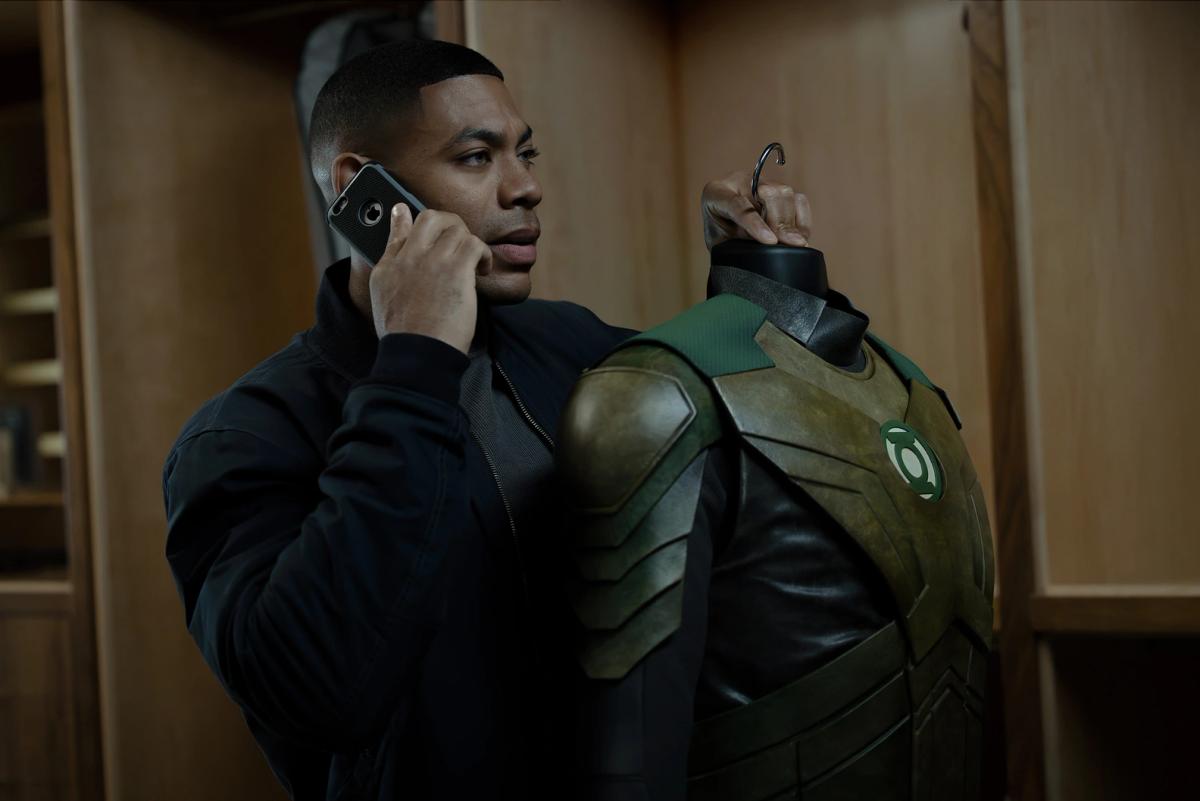
In this piece
⚠️ Spoilers for Lanterns through Episode 3. Comics history is a separate continuity and is named as such.
To the audience that met John Stewart through Justice League, he is not a Green Lantern. He is the Green Lantern, and Hal Jordan came later.
Episode 3 of Lanterns rewrote where he came from. To know what that changed, you need to know what he was.
Who is John Stewart?
In the comics, John Marshall Stewart is a Green Lantern of Sector 2814, from Detroit. He is regarded as one of the finest strategic minds in the Corps and eventually becomes one of its leaders.
He is also a Green Lantern whose origin has been rewritten repeatedly, and each rewrite says something about what its era wanted from him.
What was John Stewart's original 1971 origin?
He first appeared in Green Lantern #87, cover-dated December 1971 to January 1972, created by Denny O'Neil and Neal Adams.
That version differs sharply from the one later popularised by animation. He was an unemployed, college-educated architect: politically outspoken, race-conscious and openly suspicious of authority.
Adams insisted that John be a college-educated Black professional rather than a stereotype. O'Neil made him an unemployed architect, turning the profession into part of the character rather than a decorative detail.
The Guardians chose him as Hal's alternate after Guy Gardner was injured. And here is the part worth sitting with: Hal objected to him, on the grounds that he had a bad attitude to authority. The Guardians dismissed the objection as rooted in Earth's petty bigotries.
Fifty-five years later, HBO is making a show about the friction between those two men. It was there in the first issue.
Why did John Stewart become a Marine?
Because of a cartoon.

Who Are the Guardians of the Universe? Powers, Origin and Why They Keep Failing
The Guardians of the Universe run the Green Lantern Corps. Here is who they are, what they can do, and why they keep getting it wrong.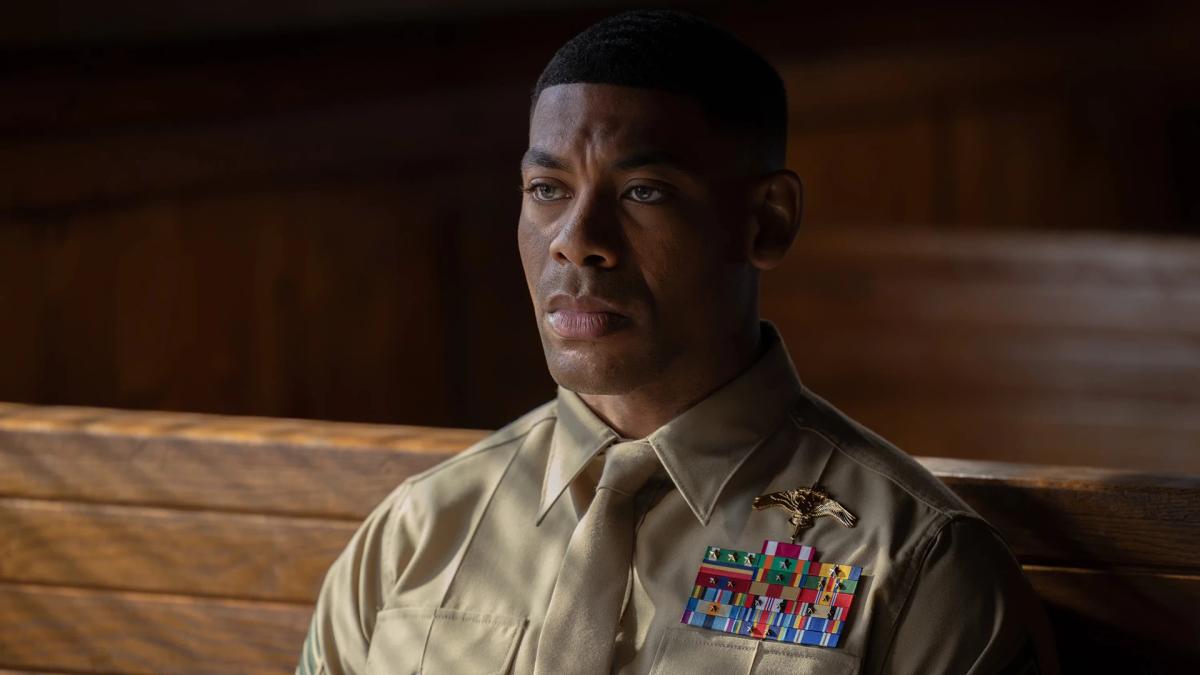
When Bruce Timm's Justice League launched in 2001, the producers made John a former Marine. Timm said they chose John partly for ethnic diversity and the team's group dynamic. They wanted to keep some of his original edge without reproducing the 1971 character exactly, and they saw the Corps as a paramilitary force. The Marine background followed from that.
It worked. That version ran for years, reached an enormous audience, and became the definitive John Stewart for a generation. At the end of 2007, Green Lantern volume 4 issue 26 folded the Marine background into comics continuity.
But look at what the change actually did. The 1971 character was angry, educated and suspicious of institutions. The 2001 version was calm, disciplined and worked for one. He got more popular by becoming easier to place next to Superman.
Modern comics eventually split the difference: Marine first, architect afterwards. That is the version Lanterns inherited.
How does John Stewart's ring work differently?
The architect never really left, and it shows in what he builds.
Every Green Lantern makes constructs out of willpower, so what a Lantern produces says something about who they are. Hal improvises. John builds.
His constructs are never hollow. He assembles them from the inside out, down to the last bolt, because that is how someone trained to design buildings thinks about a structure. Hal has said outright that everything John builds is solid.
He has also been called the best flyer among Earth's Green Lanterns, and he famously chose not to wear a mask.
What did Lanterns change about John Stewart?
More fundamentally than the major screen adaptations before it, because the change is at the root rather than the surface.
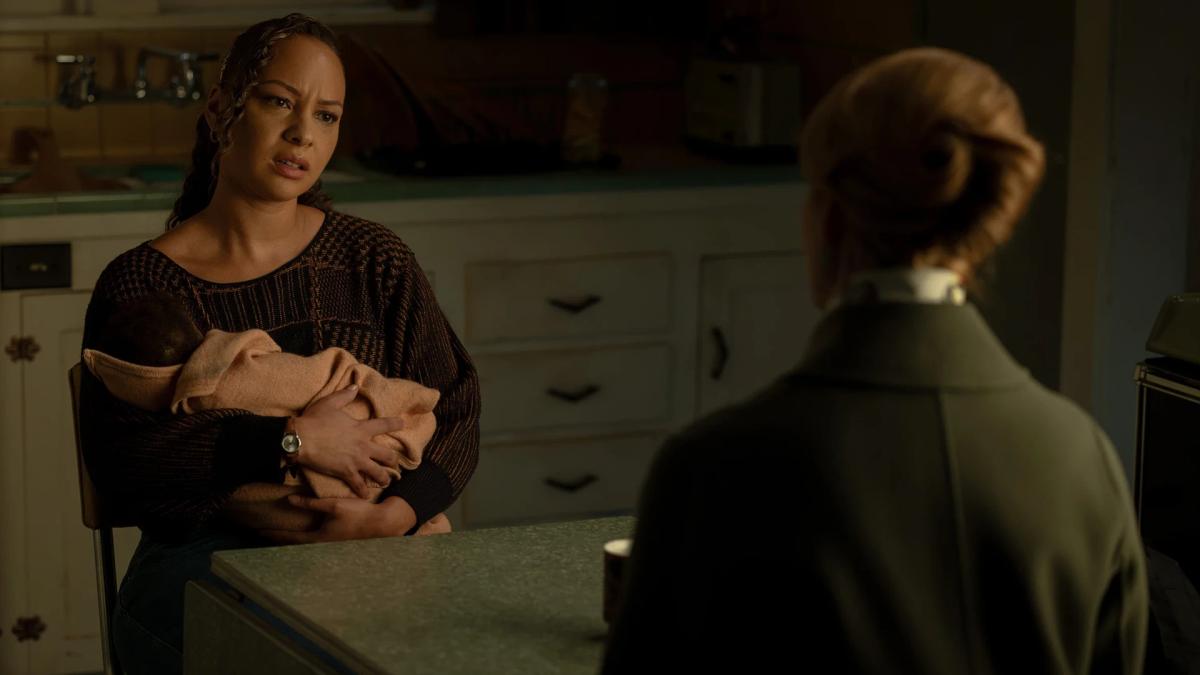
In the best-known earlier versions, John was chosen as an adult. The Guardians select him, or a ring finds him. He already has a life when the job arrives.
In Lanterns, he was made. His father was tested first and failed. A Guardian told his mother the quality might be inheritable. She raised her son for the role his father was denied. The Guardians marked him out from infancy and later said they had been watching his progress.
Three smaller changes follow from it:
- He has two older brothers. A prominent 2002 comics backstory instead gave him two younger siblings, Damon and Rose. Here he is the one singled out while the others are left alone, which creates a different childhood entirely.
- The military comes first, and the show places it inside the path his parents engineered. What had once been a later comics retcon becomes part of his preparation.
- The creative mind behind the architect version is still there, but the show routes it through art school. His mother enrols him after his discharge, the only moment in the hour when anybody directly asks what he wants.
Is the Lanterns version a betrayal of John Stewart?
The strongest objection is serious rather than reflexive: the show reduces John's agency. His qualification is no longer something discovered unexpectedly in adulthood; it is the result of a childhood constructed around that outcome.
I do not think that is a betrayal, for two reasons.
The first is that the show knows it is a tragedy rather than an origin. The conditioning is presented as harm. The birds were a lie. The apple was his own idea, which is worse than if it had been theirs.
The second is that his original 1971 origin gave him no childhood. Later comics supplied fragments and retcons, including the story of his younger sister Rose, but none made his upbringing the machinery of his selection the way Lanterns does. The show is not filling an untouched gap. It is making that gap central to the origin for the first time.
What John Stewart's rewrites say about each era
Line the versions up and the pattern is hard to miss.
1971: an angry, educated Black man who distrusts institutions, written when that was the argument being had.
2001: the anger sanded off and replaced with military discipline, which made him a better teammate and a much bigger star.
2026: the discipline explained, and the explanation is that his family put it there because they believed the world would not give him anything otherwise.
Each version answers the same question differently: what does a Black superhero have to be, for the audience of the moment? The newest answer is the least comfortable, and it treats the question itself as the subject more explicitly than the versions before it.
We are tracking every open question in the series on the Lanterns Mystery Board, updated after each episode.
Reviews in this piece
Read next

Who Is Abin Sur? The Green Lantern Whose Death Started Everything
Abin Sur crashed, gave Hal Jordan his ring, and died. In the comics a buried prophecy led him there, and Lanterns has moved the crash site.Read it →Who’s who in Green Lantern

Abin Sur
Abin Sur crashed, gave Hal Jordan his ring, and died. In the comics a buried prophecy led him there, and Lanterns has moved the crash site.
The Guardians of the Universe
The Guardians of the Universe run the Green Lantern Corps. Here is who they are, what they can do, and why they keep getting it wrong.
Hal Jordan
Hal Jordan is the Corps' first human Green Lantern, and Lanterns found the one version of him nobody had filmed. Here is who he is.
Guy Gardner
Guy Gardner qualified for the ring on the same day Hal Jordan did, and lost it on distance. Here is who he is and what he can do.
Sinestro
Sinestro was the greatest Green Lantern who ever lived, and then he became the Corps' worst enemy. Here is who he is and what turned him.


In this world
 TV review
Lanterns Season 1 Episode 5
Lanterns delivers its biggest hour yet, clearing four episodes of setup while exposing how little weight some of its payoffs carry.
The Green Lantern Corps, Explained
Lanterns barely explains its own organisation. Here is what the Corps is, how the ring works, and how someone gets handed one.

Everything on Green Lantern
5 reviews · 14 UnscrewedRelated reviews
More from Green Lantern
Lanterns Season 1 Episode 5Lanterns delivers its biggest hour yet, clearing four episodes of setup while exposing how little weight some of its payoffs carry.- Lanterns Season 1 Episode 4The Manhunter is finally identified, and Sinestro and the Guardians spend the hour pressing the same fault line between Hal and John.
- Lanterns Season 1 Episode 1HBO's Green Lantern series opens on a murder in small-town Nebraska, two Lanterns who can't stand each other, and almost no ring at all.