In this piece
- Who is Sinestro?
- How did Sinestro become a Green Lantern?
- What did Sinestro do to Korugar?
- Why does Sinestro believe in fear?
- What powers does Sinestro have?
- How dangerous is Sinestro?
- Sinestro's most notable moments
- How Sinestro is connected to Abin Sur
- Sinestro on screen: Mark Strong and Ulrich Thomsen
- What Lanterns has shown of Sinestro so far
⚠️ Spoilers for Episode 2 of Lanterns. Comics history is a separate continuity from the show, and is named as such throughout.
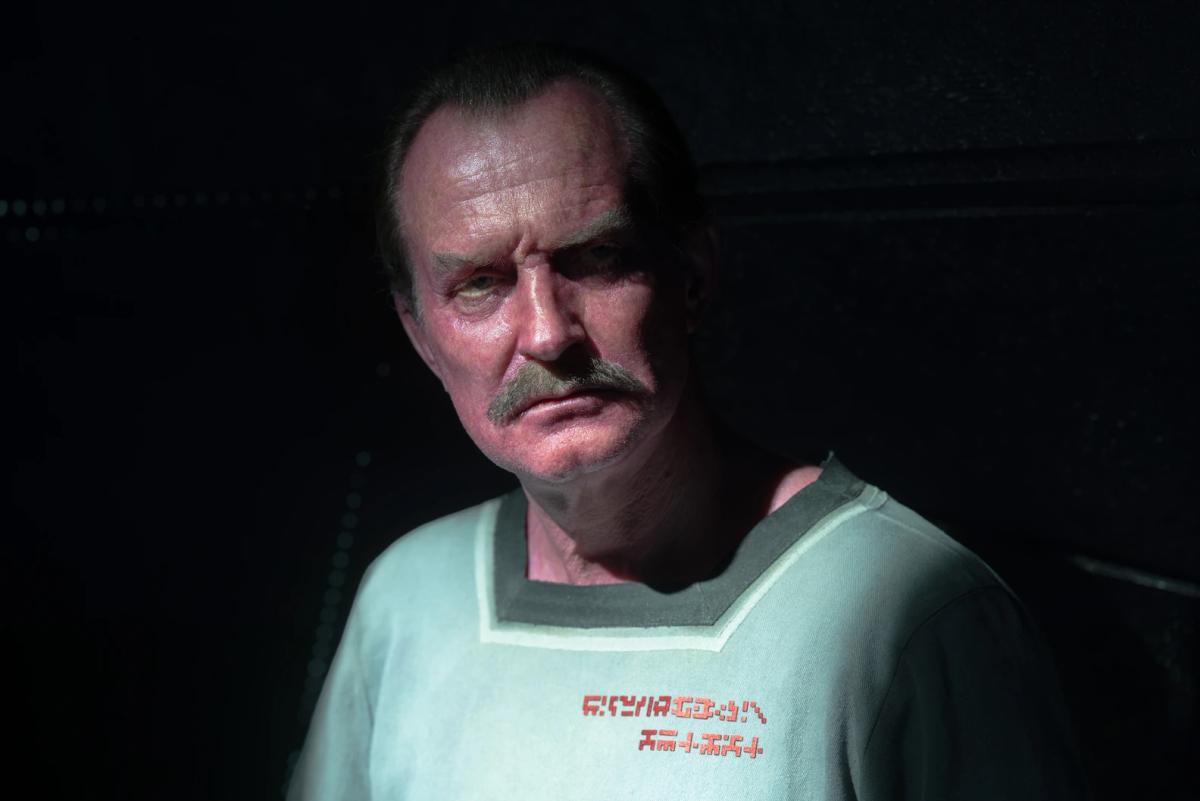
At the end of Episode 2 of Lanterns, Hal Jordan leaves Earth for a prison, to ask a man in a cell about the Manhunters. That man is Sinestro, played by Ulrich Thomsen.
The show tells you almost nothing about him. Here is what you're looking at.
Who is Sinestro?
In the comics, Thaal Sinestro of the planet Korugar. He was the Green Lantern of Sector 1417, and for a long stretch he was regarded as the finest member the Corps had.
He was also the man who trained Hal Jordan.
Then he was stripped of his ring, thrown out, and became the most dangerous enemy the Green Lanterns have.
How did Sinestro become a Green Lantern?
The Guardians selected him for his honour and fearlessness. They weren't wrong about his ability either. He became one of the finest Lanterns the Corps ever produced: precise, disciplined, and by most accounts better with a ring than anyone else wearing one.
When Hal Jordan received his own ring, Sinestro was the man assigned to teach him how to use it.
That relationship is the spine of the whole character. Hal becomes the Lantern he is partly because Sinestro trained him.
What did Sinestro do to Korugar?
In the comics, he took over his own planet.

Who Are the Guardians of the Universe? Powers, Origin and Why They Keep Failing
The Guardians of the Universe run the Green Lantern Corps. Here is who they are, what they can do, and why they keep getting it wrong.He used the ring to make Korugar the most orderly world in the sector. Crime nearly disappeared. Nobody stepped out of line. He ran it as a dictatorship and he ran it well, and for years the Guardians had no idea, because from the outside a quiet planet looks like a job being done properly.
Hal Jordan found out and reported him. There was a trial. Sinestro was stripped of his ring and banished to Qward, in the antimatter universe.
The damage outlasted him. On Korugar a green ring is not a symbol of hope. It's the thing that enslaved them, and later Korugarian Lanterns have been hated at home for wearing one.
That's the comics version. The show tells it differently, and the difference is worth knowing before you assume the two match. More on that at the end.
Why does Sinestro believe in fear?
This is the part that makes him worth reading about rather than just watching.
Sinestro isn't chaos. He's the opposite. He wants a universe that works, where nobody gets hurt because nobody dares cause harm, and he thinks the Guardians picked the weaker tool.
Willpower makes an individual strong, but it doesn't make a population behave. Fear does that. His argument, roughly, is that Korugar under him was safe, and that safety was worth what it cost. He isn't a man who lost his principles. He found a power source that agreed with them.
The uncomfortable part is that he can make the case out loud, and it isn't stupid.
What powers does Sinestro have?
In exile, the Weaponers of Qward built Sinestro a yellow ring designed to exploit the Green Lanterns' old weakness to that colour. Later continuity tied yellow energy to fear, which became the basis of his own Corps.
- Most of what a Green Lantern ring does. Constructs, flight, force fields, energy blasts and protection in space.
- The yellow advantage. For most of the Corps' history green rings couldn't affect yellow. His ring was built to exploit that blind spot.
- He reads fear. He has an unusual instinct for what frightens a person, and he uses it before he uses the ring.
- Strategy. He is a tactician first. Most of his wins come from planning rather than force.
The ring is not the dangerous part. He is.
How dangerous is Sinestro?
In the comics, dangerous enough to build his own army.
He founded the Sinestro Corps, handing out yellow rings across the universe on exactly the same principle the Guardians use, except reversed. A green ring goes to someone capable of overcoming great fear. A yellow one goes to someone capable of causing it. The recruits were murderers, torturers and worse, and that was the point.
Then he attacked the Green Lantern Corps directly. That storyline is where he stopped being a recurring enemy and became the one they genuinely fear.
Sinestro's most notable moments
A few that tell you who he is:
- Training Hal Jordan. Everything Hal can do, he learned partly from a man who would later try to destroy his organisation.
- Building the Sinestro Corps. Not one villain with a grudge, an institution built to compete with the one that expelled him.
- Sparing his daughter. During the war he returned to Korugar and fought Soranik Natu, the planet's Green Lantern. He beat her easily, then let the planet believe she had won, because it made his people safer to think so. He never told her he was her father until much later.
That last one is the whole character in one scene. He doesn't stop caring about Korugar. He just decides what's good for it without asking.
How Sinestro is connected to Abin Sur
Here's the detail most people don't know.
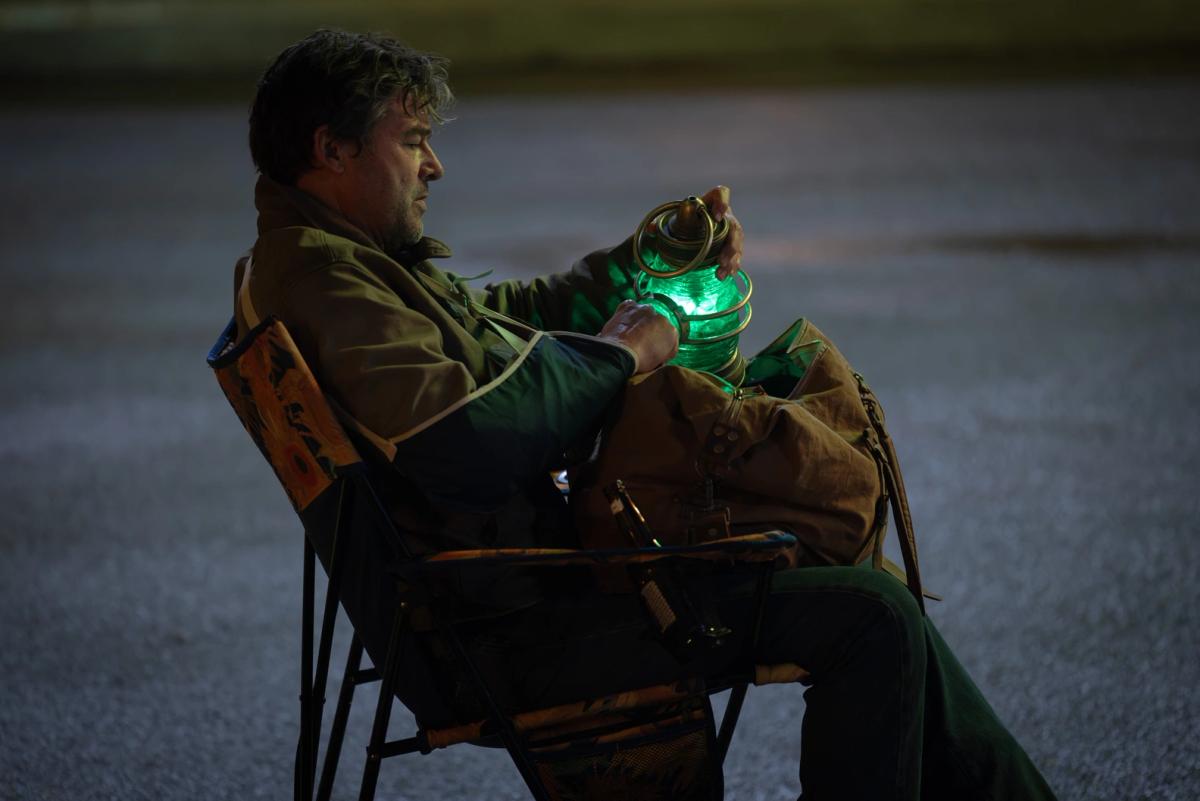
Sinestro was married to Arin Sur. Arin Sur was Abin Sur's sister. Sinestro is Abin Sur's brother-in-law, and Abin Sur is the Lantern whose crash put the ring on Hal Jordan's hand.
So the man in the cell isn't a stranger to any of this. He's family to the Lantern who died, mentor to the man who replaced him, and father to a Green Lantern in his own right.
Lanterns has moved Abin Sur's crash to Rushville and had Hal say plainly that he never believed it was an accident. The show has drawn no line between those two things. It's worth knowing the line exists.
Sinestro on screen: Mark Strong and Ulrich Thomsen
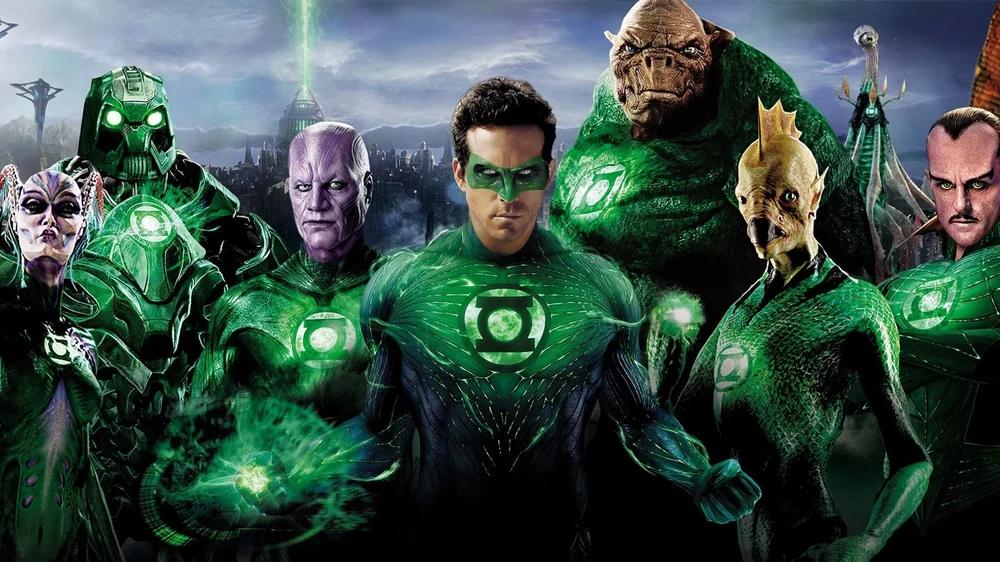
Mark Strong played Sinestro in 2011's Green Lantern. That version catches him at the opposite end of his career: a commanding officer still at the height of his authority.
Ulrich Thomsen's is a prisoner being visited by somebody who needs something. He isn't the slender, theatrical figure of the comics either. He plays the seriousness rather than the sneer, which is what stops the character puncturing the show's tone.
Same man, opposite position, and no overlap to invite the comparison.
What Lanterns has shown of Sinestro so far
In Episode 2 he's imprisoned on a world the Corps uses to hold what it captures. He has information Hal wants about the Manhunters, and Hal is willing to make the trip to get it. Nothing in the scene suggests these two will ever work together as friends. A bargain looks far more likely, and Hal is plainly willing to make one.
The episode also sketches how he ended up there, and this is where the show departs from the comics. Sinestro attempted a coup against the Guardians and killed one of them. Hal is the one who turned on him and brought him down.
That's a different crime from the one in the comics. There, he quietly runs his own planet and Hal reports him to his superiors. Here he moves against the Guardians themselves, kills one, and the man who stops him is his own student. Same ending, far bigger crime, and a much more personal betrayal between the two of them.
The detail is deliberately thin. No account of when it happened, how long it took, or what stopping him cost Hal.
Promotional material has Sinestro pushing Hal to admit that John isn't really his backup. He's his replacement.
The show is using him as a source before it uses him as a villain. Chronologically Sinestro's story runs mentor, fall, enemy. Lanterns gives you the outcome, skips the middle, then puts the two men in a room and lets the history sit there unspoken.
What he wants in exchange is the near-term question. What it cost Hal to stop him is the one being held back.
We're tracking every open question in the series on the Lanterns Mystery Board, updated after each episode.
Reviews in this piece
Read next

Who Is Abin Sur? The Green Lantern Whose Death Started Everything
Abin Sur crashed, gave Hal Jordan his ring, and died. In the comics a buried prophecy led him there, and Lanterns has moved the crash site.Read it →Who’s who in Green Lantern
Abin Sur
Abin Sur crashed, gave Hal Jordan his ring, and died. In the comics a buried prophecy led him there, and Lanterns has moved the crash site.
The Guardians of the Universe
The Guardians of the Universe run the Green Lantern Corps. Here is who they are, what they can do, and why they keep getting it wrong.
Hal Jordan
Hal Jordan is the Corps' first human Green Lantern, and Lanterns found the one version of him nobody had filmed. Here is who he is.
John Stewart
John Stewart has been reinvented across comics, animation and television. Here are the major versions, and what HBO's Lanterns changed.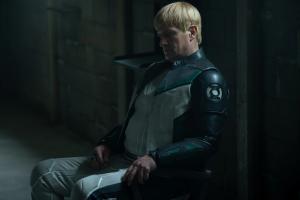
Guy Gardner
Guy Gardner qualified for the ring on the same day Hal Jordan did, and lost it on distance. Here is who he is and what he can do.


In this world
- The Green Lantern Corps, Explained
- How Lanterns Connects to the DCU
- Will Lanterns Get a Season 2? What HBO Has and Hasn't Said
- What Is Parallax?
- Yellow Lanterns Explained: The Sinestro Corps and the Yellow Impurity
- What Are the Manhunters?
2 more explainers on the world page
Also on Green Lantern: Review · Lanterns Season 1 (+8)