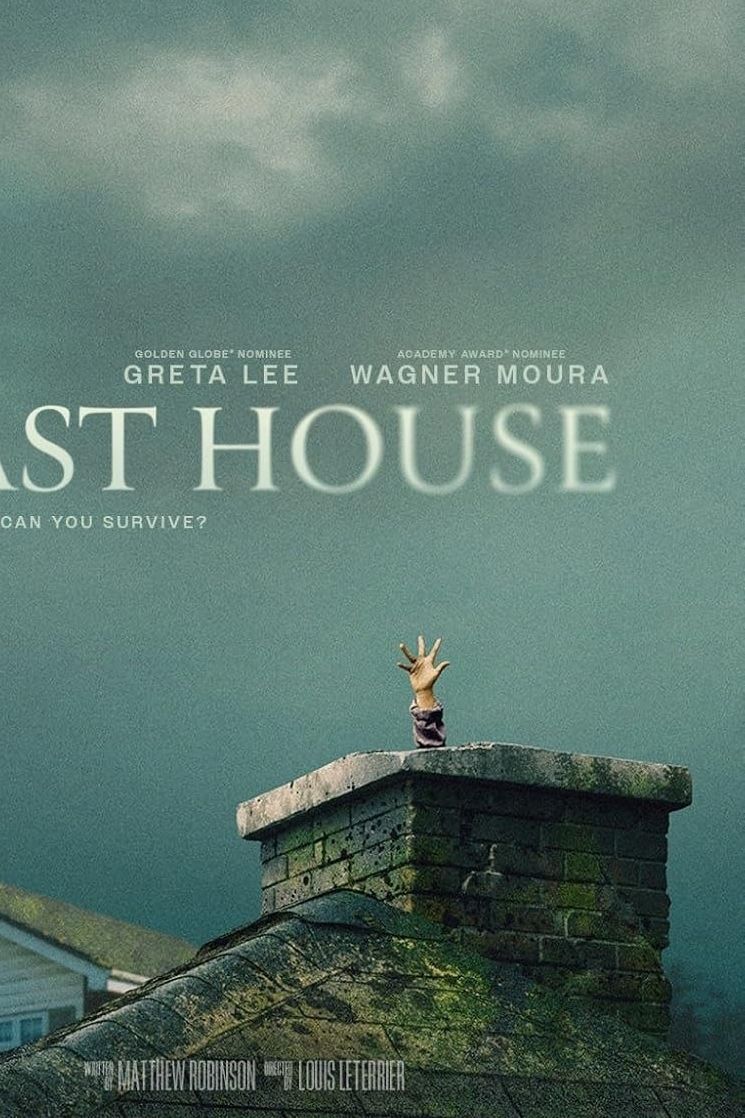
The Last House opens beautifully and then spends the next hundred minutes failing to justify it. A family of four wakes to find their suburban home sealed shut, doors immovable, windows unbreakable, every connection to the outside severed overnight. It is a premise that buys enormous goodwill. The film is still spending that goodwill when the credits arrive.
Two minutes of family, then the doors stop working
Most horror opens with twenty minutes of teaching you to care. Louis Leterrier gives it about two, and the impatience is the smartest decision in the film. Something is wrong in the opening frames before any dialogue explains it, and the wrongness is domestic rather than grotesque. A Christmas Santa on a neighbour's lawn, read at distance through a drifting camera, does more work here than most creature reveals manage in a full runtime.
It is reaching for A Quiet Place and gets perhaps a third of the way there.
What is The Last House actually about?
The sharpest idea in the film arrives early and then gets abandoned. Jason (Wagner Moura) is an engineer who has been out of work for some time, and the seal is the first event in years that renders his unemployment meaningless. Nobody is collecting the bills. Nobody else is working either, so the apocalypse turns out to be the best thing that ever happened to this man's sense of himself.
Ann (Greta Lee) eventually supplies the counter-argument, and it is the one exchange with real teeth in it. Whether this family survived because Jason engineered their survival or because the house they happened to live in was built a certain way is a genuinely interesting question about how survival stories flatter the people telling them. The film asks it, holds it for about ninety seconds, and then floods the house instead.
Two very good performances in separate films
Greta Lee and Wagner Moura are why this is watchable at all. Both play intelligent adults losing their grip at a credible rate, and both are stuck saying lines written by someone who has never overheard a family. Ann is handed a question about who might be responsible that no frightened adult would ask aloud in a sealed house containing three other people. The children are written worse, with an exchange about what a nightstand is and another about candy that land like placeholder text nobody replaced before the shoot.
What neither performer can manufacture is a marriage. Thirty years of shared history is asked for and never arrives, so the arguments play as arguments between two strangers with the same mortgage.
The house is the other real achievement. A two-storey suburban box has to carry an entire world and decay at a measurable rate across years of confinement, and the design work sells every month of it.
What the ending refuses to pay for
One note for anyone who needs it: the family dog does not survive, and the film stays in the room for it rather than cutting away. That scene is the only genuinely unsparing thing here, which is part of the problem, because nothing afterwards costs this family anything close.
By the final stretch the film has stopped being a survival story and turned into a delivery system for a sequel it has not earned. A film willing to shoot a dog in its first act will not charge its family a single thing across years of siege, and the ending arrives on a hopeful shrug the preceding hundred minutes did nothing to justify.
Two out of five. DIMMED. Watchable almost entirely because of the two people at the centre of it, and gone from memory before the next thing autoplays. It is one click away on Netflix, which is about the effort it deserves.
Everything below assumes you have finished it.
The moment the film changes shape
The turn comes when the family work out that the water responds to them, that a hand on the glass makes it move. Up to then the dread was unexplained and they were reacting to it. Once there are rules, the film owes you a payoff, and it never settles that debt.
Every discovery from here is free. Nobody is ever charged for learning anything.
Ann in the drains
Five years pass. The creature gets inside, ruins the stored food and fouls the water, then leaves without finishing anyone off. Ruth is bitten by a ferret, the infection sets in, and Ann (Greta Lee) goes out through the connected drains to a neighbour's house for the medication.
She finds it, and then stands in the open waving and shouting at her family with the thing in plain view. The script keeps solving its own problems by making her loud at exactly the moments quiet would save her. The push she gives Ruth during the flood is a separate failure, a piece of staging that reads as choreography rather than panic.
What the trap actually buys them
They rig the house, they catch it, and Jason (Wagner Moura) has it at his mercy. He remembers something Ruth once said about it being kind, and he lets it go. It spares them in return, calls the others off, and dissolves the seal on the front door.
They step out onto an ocean. Every house is under it. They take a boat, and a voice answers them on the radio.
Nobody dies, and that is the whole problem. This is a film that shot a dog on screen in its first act to tell you it was serious, then held four people through five years of siege and charged them nothing. The mercy is unearned because the relationship it rests on was never built, and the radio is a sequel hook standing where an ending should be.
Bright Bulbs
- Neighbours stay visible and permanently unreachable. It is a sharper idea about isolation than anything the film says out loud.
- Nobody here behaves like a horror character. They ration, they plan, and they argue about money.
Shattered Bulbs
- The dialogue. Grown adults ask questions no grown adult would ask, and the children are written as plot devices rather than people.
- Nothing is explained. Not the rain, not the seal, not the creatures. Mystery is used as a substitute for having an answer.
- The film keeps discovering rules about its own situation and never once makes a discovery cost anything.