In this piece
Full spoilers for the seven Harry Potter novels and the eight films.
Hermione Granger (Emma Watson) knows more magic than Harry Potter (Daniel Radcliffe). Harry teaches the defence class she helps organise. Fred Weasley (James Phelps) and George Weasley (Oliver Phelps) leave with disappointing exam results and inventions that make Filius Flitwick (Warwick Davis) stop to admire their work. School marks tell only part of this story.
The films add useful evidence. The Reducto cast by Ginny Weasley (Bonnie Wright) makes her offensive force visible. Luna Lovegood (Evanna Lynch) gets a healing spell the book assigns to Nymphadora Tonks (Natalia Tena). The twins' departure becomes a demonstration of enchanted fireworks. Those scenes count alongside the details that never reached the screen.
Harry leads by 0.75. His Patronus supplies the strongest defensive peak, and his later spellwork reaches beyond defence. Hermione retains the broadest technical record. The small gap reflects two different strengths and no clear winner at every kind of magic.
Who qualifies
This list covers students who attended Hogwarts during Harry's 1991 to 1998 school era. Cedric Diggory (Robert Pattinson) and the twins qualify. Young Albus Dumbledore, Tom Riddle and the Marauders do not belong to this generation. Fleur Delacour (Clémence Poésy) and Viktor Krum (Stanislav Yanevski) attended other schools. A student's evidence stops at the earlier of the end of their scheduled seventh year or the Battle of Hogwarts. The trio's year on the run counts. The twins' later adult work does not. These ratings are relative to this student cohort, so an 80 here is not interchangeable with an adult 80. The same four weights still apply.
How this was scored
Four measures make up each score. Combat is worth 35% and asks how well a student does against someone fighting back, allowing for surprise, help from others and the strength of the opposition. Power is worth 25%: the force or scale a student has shown, with protective and coercive magic included.
Range, also worth 25%, rewards breadth, difficulty and invention in fields such as potions, transfiguration, charms, mental magic and practical Herbology. Control makes up the last 15% and is about precision, reliability and the ability to adapt. A student who handles a plant or creature well gets credit for the handling, though not for all of that plant's or creature's own power.
Every measure is marked out of 100 in steps of five. A 90 or above needs exceptional evidence, judged against the best in this cohort. Advanced ability runs from 75 to 85. A rating of 60 to 70 means a solid record with limits or unevenness, and 40 to 55 means evidence that is narrow or leans heavily on help. Thin evidence caps the rating that can be defended; it does not prove the student lacks the skill.
For the total, Combat is multiplied by 0.35, Power and Range by 0.25 each, and Control by 0.15, and the four results are added. The headline number rounds that total to a whole number, while the unrounded total sets the order. The figures are editorial comparisons, and none of them is a canonical statistic.
A gap of less than two points is a close call. Bands mark tight clusters and level totals. When totals match exactly, Combat breaks the tie first, then Range, then Control, then Power, and if all four ratings match, the names go in alphabetical order. Inside a band of equal scores, a higher row does not mean a stronger student.
The same feat, told twice, counts once. An action new to the films can add evidence, and it is labelled as film. A win shared with others stays shared, and an ambush does not count as a fair duel. The Elder Wand is noted, and so is help from creatures, with no numerical bonus or penalty invented for either.
- Ranks 1–2 · within 0.75 points · effectively tied

Harry Potter
At thirteen, casts a Patronus that drives off a crowd of Dementors.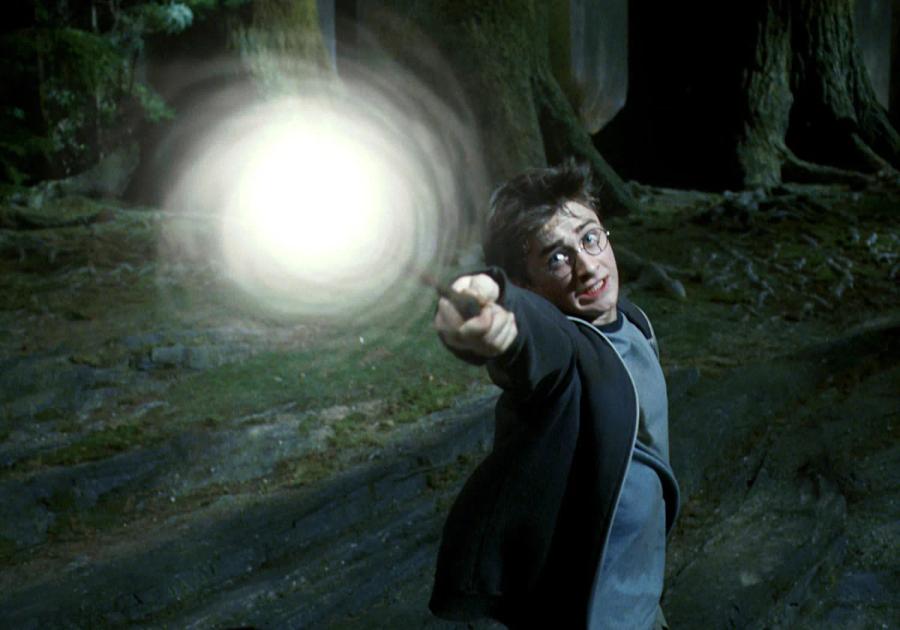
Warner Bros. Pictures - Combat35% of score90Repeatedly casts under lethal threat and has enough practical expertise to teach the DA.
- Power25% of score90At thirteen, repels a large group of Dementors with a corporeal Patronus.
- Range25% of score75Adds long-distance Summoning, Imperius and Cruciatus to his defence skills. Hermione still demonstrates substantially wider technical magic.
- Control15% of score80Resists the Imperius Curse, but struggles with Occlumency and aspects of nonverbal magic.
Harry's strongest defensive result comes at the lake in Prisoner of Azkaban. He produces the Patronus that drives the Dementors away from Sirius Black (Gary Oldman) and his earlier self. He is thirteen. The Patronus is difficult magic that he has learned and performs himself, without the wand-allegiance explanation needed for his final victory over Lord Voldemort (Ralph Fiennes).
The rest of his record reaches further than defensive spells. He summons his Firebolt over a substantial distance in the first tournament task. In the Deathly Hallows novel, he uses Imperius on the goblin Bogrod (Jon Key) and the Death Eater Travers at Gringotts, then successfully uses Cruciatus on Amycus Carrow (Ralph Ineson) at Hogwarts. Those actions establish additional abilities, however ugly their purpose. The Imperius Curse cast by Draco Malfoy (Tom Felton) counts, so Harry's must count too.
Together with resisting Imperius and teaching the DA, those feats support Range 75. Hermione remains much higher on that measure, but Harry's lead in Combat and Power now carries him to first overall.
On screen
- Prisoner of Azkaban retains the lakeside Patronus. Goblet of Fire shows the Summoning Charm in the opening task. Order of the Phoenix retains his DA teaching, and Deathly Hallows Part 2 shows Imperius at Gringotts.
In the books
Goblet of Fire chapter 15 supplies his resistance to Imperius, and chapter 20 the Firebolt summons. Deathly Hallows chapter 26 gives Imperius on both Bogrod and Travers. Chapter 30 gives the successful Cruciatus Curse on Amycus, an action omitted from Part 2.
References: Prisoner of Azkaban chapter 21. Goblet of Fire chapters 15 and 20. Order of the Phoenix chapters 18, 21 and 24. Half-Blood Prince chapter 9. Deathly Hallows chapters 26, 30 and 36. Films: lakeside Patronus, first task, DA and Gringotts.
The case against
His survival against Voldemort repeatedly involves exceptional protection and wand relationships. Those outcomes cannot all become ordinary duelling wins. Hermione still has the stronger claim if breadth receives more weight.

Hermione Granger
The widest range of advanced magic of any student, from Polyjuice to the Protean coins.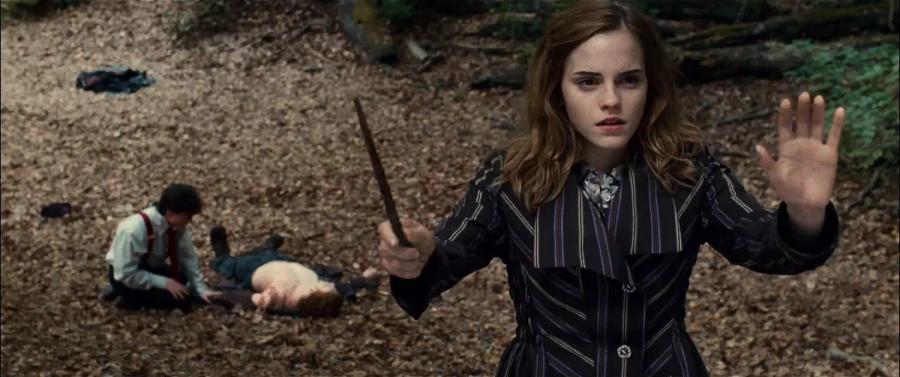
Warner Bros. Pictures - Combat35% of score80Contributes repeatedly in real fights and escapes, though Harry's defensive peak is stronger.
- Power25% of score75Her magic is effective without the same exceptional mass-defence feat as Harry’s Patronus.
- Range25% of score95Polyjuice, Protean coins, an expanded bag, protections and memory work form the broadest record.
- Control15% of score90Sustains precise enchantments and prepares magic that repeatedly works during the hunt.
Hermione's position is not an award for doing her homework. In second year she brews Polyjuice Potion. In fifth, she uses a N.E.W.T.-level Protean Charm for the DA's coins. Before the Horcrux hunt, she expands the inside of a small bag so the group can carry what it needs. Her knowledge keeps becoming something useful.
The memory work and protections widen that record further. She can prepare demanding enchantments, keep equipment working and solve problems that neither of her companions can easily take over. Range 95 is the highest student rating because this breadth is repeatedly demonstrated.
Harry's defensive peak and stronger fighting record give him the narrow lead. Hermione stays well above Cedric because her independent technical work covers more branches of magic at an advanced level.
On screen
- Deathly Hallows Part 1 shows the expanded bag and adds the scene in which she casts Obliviate on her parents. Her memory work also matters after the café fight.
In the books
The DA's Protean coins are a book achievement. Deathly Hallows says she modifies her parents' memories and identities without naming Obliviate for that task. Her preparations for the hunt demonstrate practical advanced magic.
References: Chamber of Secrets chapters 10 to 12. Order of the Phoenix chapter 19. Deathly Hallows chapters 6, 9. Films: Polyjuice sequences. Deathly Hallows Part 1, parents, bag and café.
The case against
Harry teaches the defensive lessons she helps organise, and his lakeside Patronus exceeds her best demonstrated defensive peak. A ranking weighted more heavily towards breadth would put her first.
- Ranks 3–6 · within 1.50 points · effectively tied

Cedric Diggory
Solves the Triwizard tasks with Transfiguration and the Bubble-Head Charm.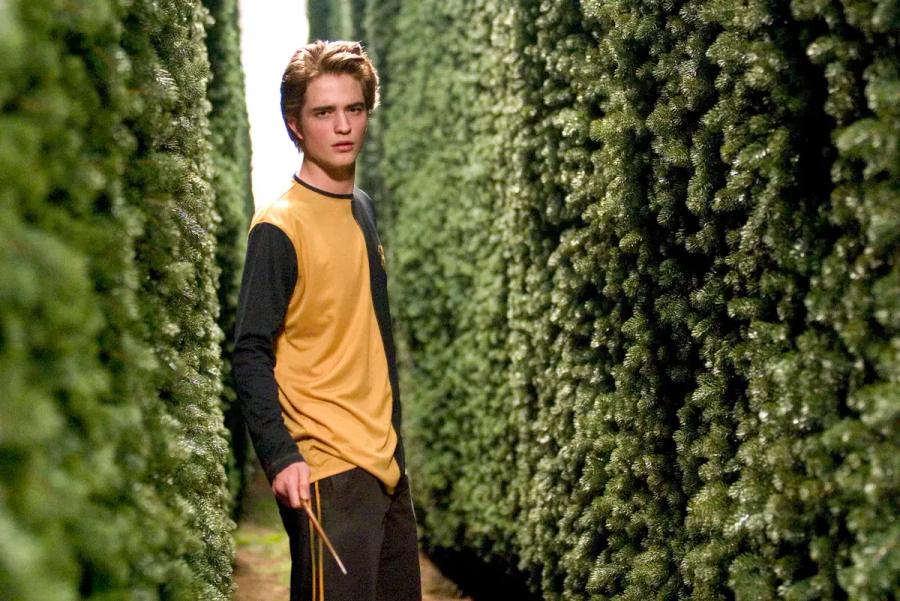
Warner Bros. Pictures - Combat35% of score75Completes dangerous tournament tasks, though assistance and manipulation complicate the record.
- Power25% of score75His spells solve demanding tasks without exceptional demonstrations of destructive scale.
- Range25% of score80Rock-to-dog transfiguration and the Bubble-Head Charm show different advanced applications.
- Control15% of score80Applies difficult magic in timed, hazardous conditions and adapts when the first plan goes wrong.
Cedric justifies his place through what he does after the Goblet selects him. In the first task, he turns a rock into a dog to distract the dragon. The plan does not go perfectly, and he gets burned, but he succeeds through an actual piece of transfiguration.
The Bubble-Head Charm gives him another solution in a different branch of magic. Together, those tasks show somebody who can do more than perform a classroom exercise when the conditions are convenient. Cedric works with a time limit and a real threat in front of him.
That variety keeps him above Ginny and the twins. Ginny's offensive spells are more forceful in the combined portrayal, while the twins are more inventive. Cedric has the stronger balance of varied magic and direct performance under dangerous conditions.
On screen
- Goblet of Fire retains his Bubble-Head Charm in the lake. It does not clearly stage his rock-to-dog solution.
In the books
The transfiguration solution is in chapter 20. Chapter 26 covers the lake, chapter 31 the maze and chapter 35 the help he receives with the egg. Chapter 32 covers his murder without warning in the graveyard.
References: Goblet of Fire chapters 20, 26, 31, 32 and 35. Film: Goblet of Fire, the second task.
The case against
The tournament is manipulated, and Cedric receives help with the egg clue. He does not complete it unaided. His murder in the graveyard is also not a meaningful test of his ability in a prepared duel.

Ginny Weasley
Forceful hexes on screen, and a Bat-Bogey Hex that impresses Slughorn.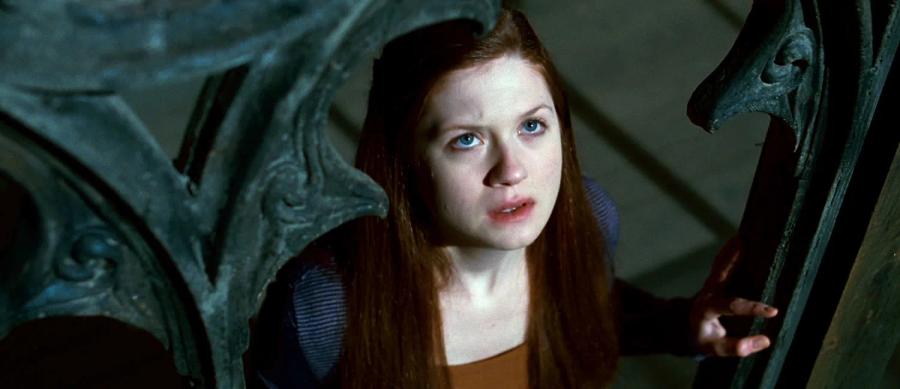
Warner Bros. Pictures - Combat35% of score80Uses effective offensive magic and participates in Ministry and Hogwarts fighting.
- Power25% of score80The film Reducto scenes demonstrate force against objects and shelving. They do not prove equivalent superiority against a resisting wizard.
- Range25% of score65Her known magic is less varied than Cedric’s or the twins’ technical work.
- Control15% of score75Repeats effective hexes and curses, though the films establish force more clearly than fine precision.
Ginny benefits from bringing the films into the argument. Her Reducto in Order of the Phoenix makes the force of her magic obvious, first against a training dummy and later among the prophecy shelves. The scale is striking, even if broken shelving cannot establish that she would defeat every person below her.
The books give that impression a more specific foundation. Her Bat-Bogey Hex helps her escape Draco, and a later use attracts the attention of Horace Slughorn (Jim Broadbent). He is responding to a piece of magic he has seen, not simply repeating the family's opinion that she is talented.
Ginny finishes level with Fred and George on 75.50. The Combat tiebreaker places her first among the three. Their invention is more impressive, but much of it is prepared in advance and carried out together. Her magic has the clearer record against resistance.
On screen
- Order of the Phoenix supplies the Reducto demonstrations against the training dummy and the prophecy shelving. These establish force, not a named solo victory over an elite adult.
In the books
Order of the Phoenix gives the escape from Umbridge's office. Half-Blood Prince records Slughorn's interest in her hex. Deathly Hallows includes her in the group fight against Bellatrix Lestrange (Helena Bonham Carter), which the girls do not win.
References: Order of the Phoenix chapters 33, 35. Half-Blood Prince chapter 7. Deathly Hallows chapter 36. Film: Order of the Phoenix, DA and Hall of Prophecy.
The case against
No clear solo defeat of a named elite Death Eater appears here. Treating the size of the film's explosions as a complete measure of ability would push her further than the evidence supports.

Fred Weasley
Half of the partnership whose swamp Flitwick stops to admire.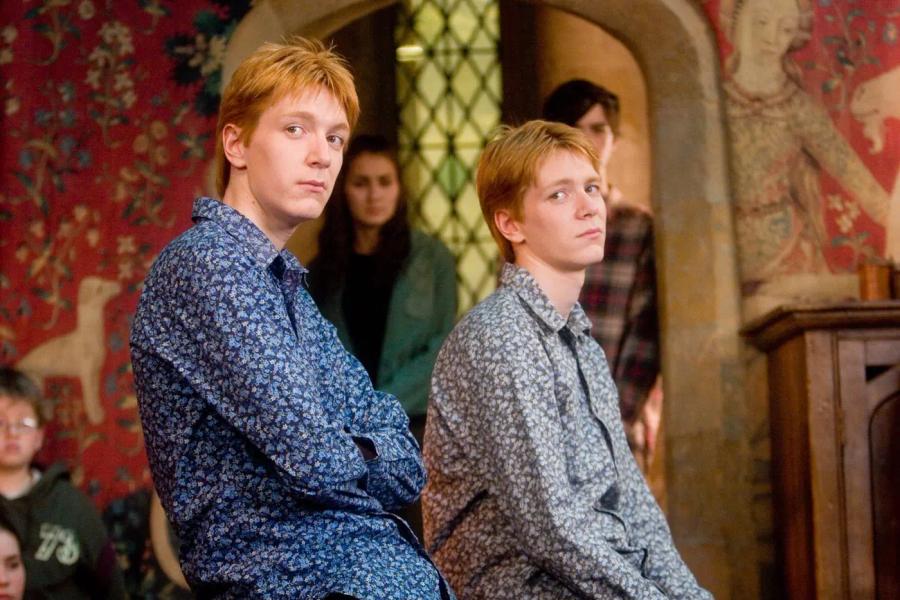
Warner Bros. Pictures - Combat35% of score60School-era evidence is mainly prepared disruption, not open fighting with elite opponents.
- Power25% of score80The swamp and enchanted fireworks affect substantial spaces for sustained periods.
- Range25% of score90Original products create repeatable effects that attract Flitwick’s professional admiration.
- Control15% of score80Their inventions work reliably enough for repeated use, but most are collaborative and prepared.
Fred's strongest magic is shared with George, and that needs to stay visible in a ranking of individuals. The Portable Swamp is an especially useful example. Flitwick removes it but preserves a piece because he admires the work. An accomplished teacher recognises that two pupils with limited interest in exams have made something technically impressive.
The fireworks add sustained, directed effects. The brothers turn ideas into objects that keep working, without relying on one lucky spell. That body of invention puts Fred above Draco and Ron Weasley (Rupert Grint) on Range, even though his qualifying record contains less open fighting.
Fred and George receive identical ratings. Their separate rows represent two students, not two independent claims to every shared invention. Alphabetical order separates their rows only after all four scores tie.
On screen
- Order of the Phoenix centres the brothers' departure on enchanted fireworks and the exam-hall rebellion. The departure is shared work and receives shared credit.
In the books
The swamp and Flitwick's appreciation appear in Order of the Phoenix. Later Shield Hats and adult battle feats fall beyond the school-age cutoff. The teachers' refusal to help Umbridge is not proof they cannot remove the enchantments.
References: Order of the Phoenix chapters 28 to 29, 38. Film: Order of the Phoenix, fireworks and departure.
The case against
Most of the evidence is collaborative and prepared in advance. The teachers refuse to help Umbridge, which does not mean they are unable to remove the magic. Neither brother receives sole credit for the pair's work.

George Weasley
The other half of that partnership, scored exactly as his brother is.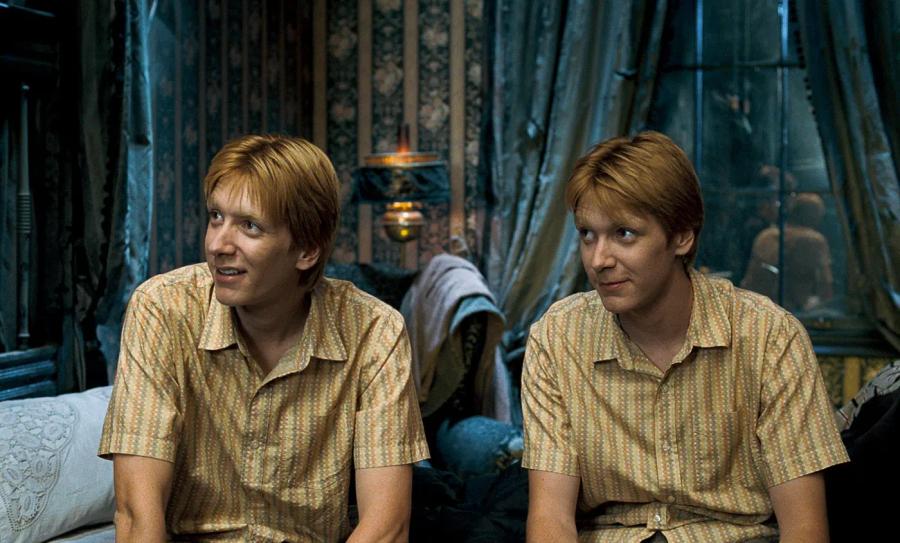
Warner Bros. Pictures - Combat35% of score60Evidence from school is mostly prepared disruption and not open fighting against elite opponents.
- Power25% of score80The swamp affects large spaces for long periods, as do the enchanted fireworks.
- Range25% of score90Flitwick’s professional admiration goes to original products with repeatable effects.
- Control15% of score80Their inventions are dependable enough to be used repeatedly, though most are joint efforts prepared beforehand.
George has the same evidence problem as Fred: the work is recognisably theirs, but the story rarely divides it into individual contributions. A higher score for one brother would require inventing that division. George therefore receives the same ratings for the swamp, fireworks and other school-era products.
Their achievement is the reliability of the effects. The inventions are elaborate enough to disrupt Hogwarts and attract Flitwick's admiration. They also require preparation. That keeps the Combat rating below students with more direct experience of fighting dangerous opponents.
George appears immediately after Fred because their four ratings are equal. His later wartime feats and the shop’s adult achievements are outside the cutoff used for every student here.
On screen
- George participates with Fred in the departure and fireworks of Order of the Phoenix. No reliable division of the spellwork supports different individual scores.
In the books
The Portable Swamp and other inventions are collaborative. His later victory over Yaxley (Peter Mullan) with Lee Jordan (Luke Youngblood) is adult combat, so it is excluded from this student assessment.
References: Order of the Phoenix chapters 28, 29 and 38. Film: Order of the Phoenix, the fireworks and the departure.
The case against
The evidence is largely joint work prepared ahead of time. That the teachers decline to assist Umbridge does not show they could not remove the magic. The pair's work is shared, and neither brother is credited alone.
- Ranks 7–8 · within 0.00 points · effectively tied

Ron Weasley
Stuns a Death Eater from a broom in flight during the escape from Privet Drive.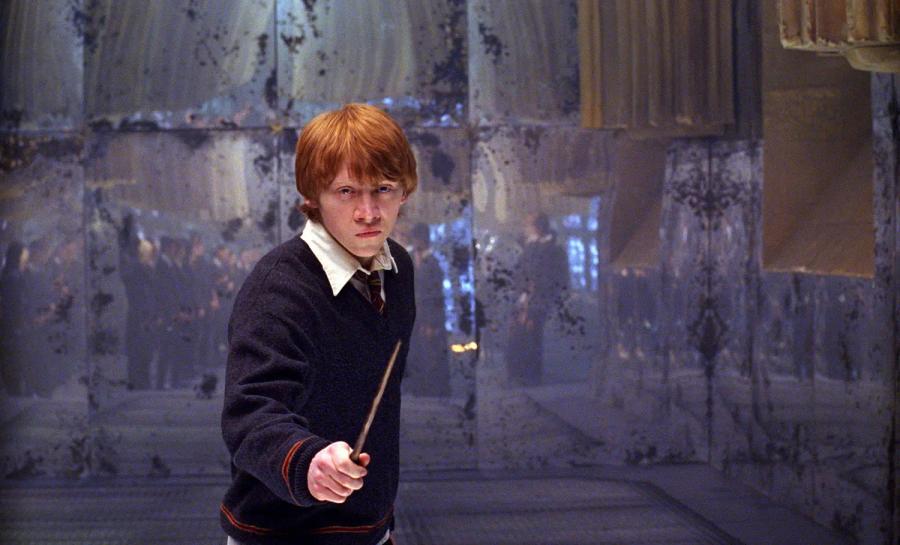
Warner Bros. Pictures - Combat35% of score75Stuns an unnamed pursuing Death Eater while flying and contributes in the Room of Requirement encounter.
- Power25% of score70His strongest evidence concerns effective targeted spells, not large magical effects.
- Range25% of score65Uses a practical fighting repertoire with fewer independent advanced enchantments.
- Control15% of score75Can cast accurately under difficult conditions, despite an uneven confidence level.
Tonks gives Ron one of his best references after the Seven Potters escape: he hits a Death Eater with a Stunning Spell while firing from a moving broom. The opponent is unnamed, but the action and difficult conditions are clear. The hit is a specific example of effective magic under attack.
The Room of Requirement provides another practical test. Ron fights amid the confrontation and helps the others escape the fire. His case does not need an extra café spell that the novel never gives him.
He scores exactly the same total as Draco. Ron's higher Combat rating wins the ordering tiebreaker, while the tie band keeps the equal overall score visible. His fighting offsets a smaller body of independent technical work.
On screen
- Deathly Hallows Part 2 retains his role in the Room of Requirement confrontation and escape. The airborne Stunning Spell is not presented here as a clearly shown film shot.
In the books
Tonks reports the successful hit on an unnamed Death Eater in Deathly Hallows chapter 5. Chapter 31 supplies the Room of Requirement encounter. No additional café spell is credited to Ron.
References: Deathly Hallows chapters 5 and 31. Film: Deathly Hallows Part 2, the Room of Requirement.
The case against
Destroying the locket, imitating Parseltongue and winning the chess game are consequential. They answer different questions from the one being scored here. His magic has to carry his placement.

Draco Malfoy
Repairs the Vanishing Cabinet and keeps Snape out of his mind.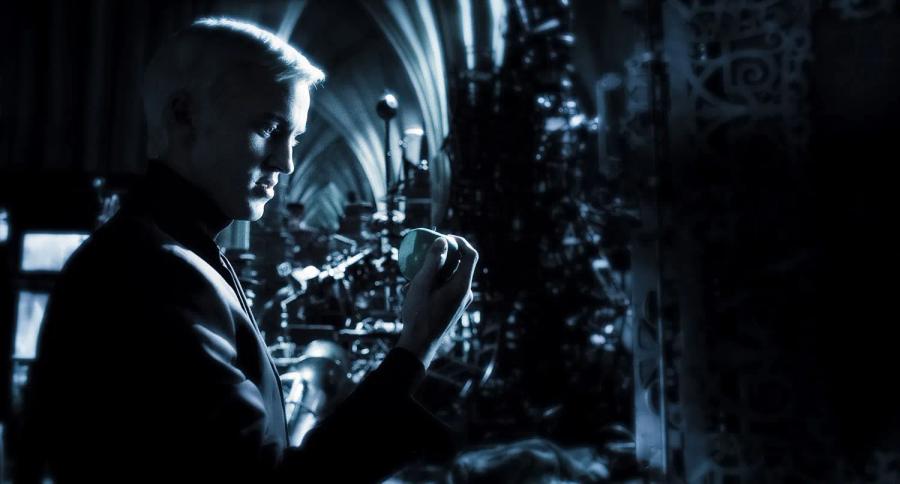
Warner Bros. Pictures - Combat35% of score65Successfully ambushes Harry, but open fighting and decisions under pressure are inconsistent.
- Power25% of score70Controls Madam Rosmerta (Julie Christie) with Imperius. Borrowed cursed objects do not count as his own spell power.
- Range25% of score85Repairs the Vanishing Cabinet and learns Occlumency well enough to frustrate Severus Snape (Alan Rickman).
- Control15% of score65Sustains a difficult project, with failed attempts and uneven performance during confrontation.
The cabinet is the best reason to take Draco seriously. Restoring it takes time, experimentation and help from Borgin, and he eventually makes it work. He has not invented the object. Repairing it still asks considerably more of him than ordinary school mischief.
The book strengthens the technical case with Occlumency and the Imperius Curse on Rosmerta. These are demanding applications with practical results. His attack on Harry aboard the train adds a clear example of alertness and execution, though Harry is unsuspecting and does not meet him in a fair duel.
Draco's technical achievements balance Ron's stronger fighting and control, giving them identical totals. Ron appears first under the Combat tiebreaker. The equal-score band matters more than the difference between their row numbers.
On screen
- Half-Blood Prince shows the cabinet tests, train ambush and tower confrontation. Dumbledore is already gravely weakened at the tower.
In the books
The novel gives more detail about Occlumency and the Imperius Curse on Rosmerta. When Draco disarms Dumbledore, Dumbledore also spends his immediate response immobilising Harry. The outcome does not make Draco his magical equal.
References: Half-Blood Prince chapters 7, 15, 27. Deathly Hallows chapters 23, 31. Film: Half-Blood Prince, train, cabinet and tower.
The case against
He is facing a gravely weakened Dumbledore. That moment cannot be used to rank Draco above adult masters. His frightening assignment also reveals how unreliable his judgement becomes under pressure.
- Ranks 9–10 · within 1.50 points · effectively tied

Luna Lovegood
Stuns, shields and, on screen, heals.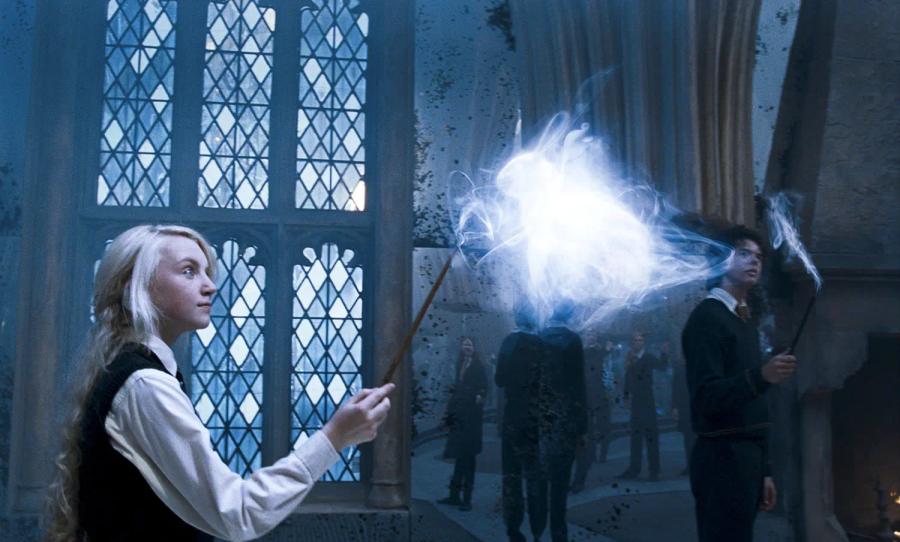
Warner Bros. Pictures - Combat35% of score65Stuns Alecto Carrow (Suzie Toase) by surprise and participates in resistance fighting and the Bellatrix encounter.
- Power25% of score65A corporeal Patronus establishes difficult defence without Harry’s exceptional scale.
- Range25% of score75Offensive spells, a Patronus and film-only healing give her a useful range.
- Control15% of score75Performs the nose repair cleanly and supplies effective defensive help during the battle.
Luna's film addition is small compared with a dragon fight or a castle-wide shield. She repairs Harry's broken nose. But it is exactly the kind of useful piece of magic that should matter when two students have relatively short records.
Add the corporeal Patronus, her Stunning Spell against Alecto and her participation in the fighting, and her abilities become more varied than the vague description of her as eccentric might suggest. She can hurt, defend and, in the film version, heal. The Alecto result is an ambush, so it receives less combat credit than a prepared duel would.
Her mixture of offensive, defensive and healing magic keeps her above Neville Longbottom (Matthew Lewis), even after his Herbology is counted. The difference concerns demonstrated capabilities, not who matters more to the resistance.
On screen
- Order of the Phoenix shows her hare Patronus in DA practice. Half-Blood Prince gives her Harry's train rescue and the subsequent Episkey nose repair.
In the books
Tonks performs the rescue and healing in Half-Blood Prince. Luna's hare Patronus appears in Deathly Hallows chapter 32. Chapter 30 gives her the surprise Stunning Spell on Alecto, and chapter 36 the shared Bellatrix fight.
References: Deathly Hallows chapters 30, 32 and 36. Films: Order of the Phoenix, DA Patronus. Half-Blood Prince, train rescue and Episkey.
The case against
Bellatrix is not defeated by the girls, and Alecto is taken by surprise. Luna's place depends on the breadth of a modest record, not on pretending either encounter is a clean solo triumph.

Neville Longbottom
From his first Disarming Charm in the DA to the Mandrakes at the Battle of Hogwarts.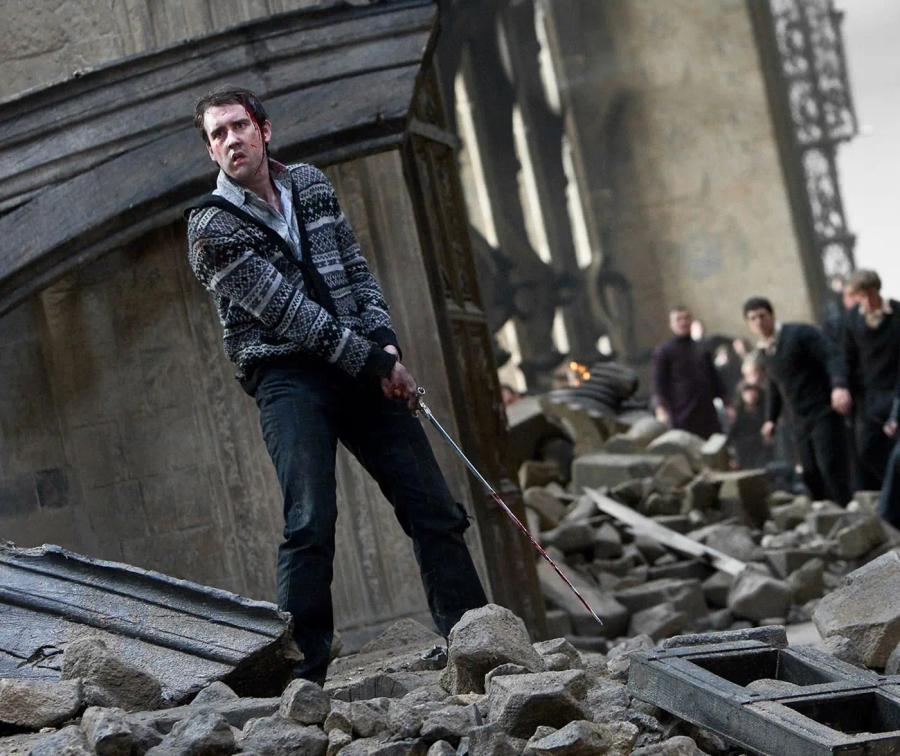
Warner Bros. Pictures - Combat35% of score70Improves sharply in the DA and continues fighting despite injury and intimidation.
- Power25% of score65Effective combat spells are established. His largest triumph uses a sword.
- Range25% of score65Practical Herbology joins his defensive spells. Handling Mandrakes and Venomous Tentacula counts without treating their natural power as his own.
- Control15% of score70Training improves his execution, though the record contains fewer advanced precision feats.
Neville ends the story with one of its most satisfying acts: he kills Nagini. He also helps keep resistance alive inside a school that has become dangerous to its own pupils. Those achievements explain his importance. The sword strike alone cannot settle a ranking of magical ability.
His DA progress supplies more direct spellcasting evidence. He disarms Harry at the first practical meeting, and the next chapter recalls a successful disarming of Hermione. Later training improves his Shield Charm. The improvement has to survive the much less orderly conditions of the Ministry battle.
Herbology broadens the case. During the Battle of Hogwarts, he helps deploy Mandrakes with Pomona Sprout (Miriam Margolyes) and later uses Venomous Tentacula against the attackers. Handling and applying those plants is practical magical knowledge. Their natural force is not added wholesale to his spell power, just as Newt Scamander (Eddie Redmayne) does not receive all the power of his creatures. Range 65 recognises the additional skill without moving him above Luna.
On screen
- Order of the Phoenix gives Expelliarmus a clear training breakthrough. Deathly Hallows Part 2 gives him a prominent role in the shared bridge operation. The killing of Nagini remains a sword strike.
In the books
Order of the Phoenix chapter 18 shows him disarming Harry. Chapter 19 recalls the Hermione disarm, and chapter 25 describes his harder training. Deathly Hallows chapter 31 shows the Mandrake operation, and later in the battle he charges into the Entrance Hall with armfuls of Venomous Tentacula.
References: Order of the Phoenix chapters 18, 19, 25 and 35. Deathly Hallows chapters 29, 31 and 36. Films: DA lessons, the bridge operation and Nagini.
The case against
His strongest later school work is only partly shown. The range of documented advanced spells remains narrower than Luna's, even after his practical Herbology is included.
The equal scores
Ginny, Fred and George finish on 75.50. Ginny appears first because Combat is the first tiebreaker. Every score is equal between the twins, so their row order is alphabetical. Ron and Draco both finish on 71.25, with Ron's stronger Combat rating putting him first. All ten students have a row, and the bands make the equal totals explicit.

Why Hagrid is the closest thing Harry has to a parent
Hagrid bakes Harry’s birthday cake, buys his owl and gives him his parents’ photographs. He also carries Harry at the story’s beginning and again at its close.Cho and Percy
The corporeal Patronus of Cho Chang (Katie Leung) deserves credit, but her broader practical record is thinner. The excellent exam results of Percy Weasley (Chris Rankin) establish academic achievement. His adult Battle of Hogwarts performance comes after the cutoff and cannot settle a student ranking.
The Fiendfyre problem
Vincent Crabbe (Jamie Waylett) creates Fiendfyre in the Deathly Hallows novel. Gregory Goyle (Josh Herdman) takes that role in Part 2. The destructive capacity is enormous, but neither caster controls it, and it kills him. That supports a high Power rating and a very low Control rating, not overall mastery.
Where first place changes
Move five percentage points from Combat to Range and Hermione reaches 84.75 while Harry falls to 84.00. Keep the default weights and Harry's defensive peak, fighting record and wider late-series spellwork put him first. The disagreement is about the balance of skills, not whether Hermione knows more spells.
Cast
- Emma Watson as Hermione Granger
- Daniel Radcliffe as Harry Potter
- James Phelps as Fred Weasley
- Oliver Phelps as George Weasley
- Warwick Davis as Filius Flitwick
- Bonnie Wright as Ginny Weasley
- Evanna Lynch as Luna Lovegood
- Natalia Tena as Nymphadora Tonks
- Robert Pattinson as Cedric Diggory
- Richard Harris as Albus Dumbledore
- Michael Gambon as Albus Dumbledore
- Jude Law as Albus Dumbledore (Fantastic Beasts)
- Clémence Poésy as Fleur Delacour
- Stanislav Yanevski as Viktor Krum
- Gary Oldman as Sirius Black
- Ralph Fiennes as Lord Voldemort
- Jon Key as Bogrod
- Ralph Ineson as Amycus Carrow
- Tom Felton as Draco Malfoy
- Jim Broadbent as Horace Slughorn
- Helena Bonham Carter as Bellatrix Lestrange
- Rupert Grint as Ron Weasley
- Peter Mullan as Yaxley
- Luke Youngblood as Lee Jordan
- Julie Christie as Madam Rosmerta
- Alan Rickman as Severus Snape
- Suzie Toase as Alecto Carrow
- Matthew Lewis as Neville Longbottom
- Miriam Margolyes as Pomona Sprout
- Eddie Redmayne as Newt Scamander
- Katie Leung as Cho Chang
- Chris Rankin as Percy Weasley
- Jamie Waylett as Vincent Crabbe
- Josh Herdman as Gregory Goyle
Reviews in this piece
Read next

Who Is Severus Snape in Harry Potter? His Full Arc, Explained
Snape protects Harry from the first film to the last, yet treats him with contempt. His memories explain why, and why he killed Dumbledore.Read it →In this world
Also on Harry Potter: Review · Deathly Hallows: Part 2 (+7) Quiz · Which Death Eater Are You? (+2) List · The 10 best Ron, Hermione, Neville, McGonagall and Dumbledore moments, ranked (+2)
Everything on Harry Potter
8 reviews · 7 Unscrewed · 3 quizzesRelated quizzes
More from Harry Potter
Which Death Eater Are You?Ten questions put you at Voldemort's table. Find out which of seven Death Eaters, from Bellatrix to Regulus, shares your reasons.- Which Hogwarts Professor?Ten teaching dilemmas at Hogwarts. Find out which professor you'd be: Dumbledore, McGonagall, Snape, Hagrid, Lupin or Trelawney.
- Which Hogwarts House?What would you do with a locked chest and no key? Answer ten questions as yourself at school and find your Hogwarts house.