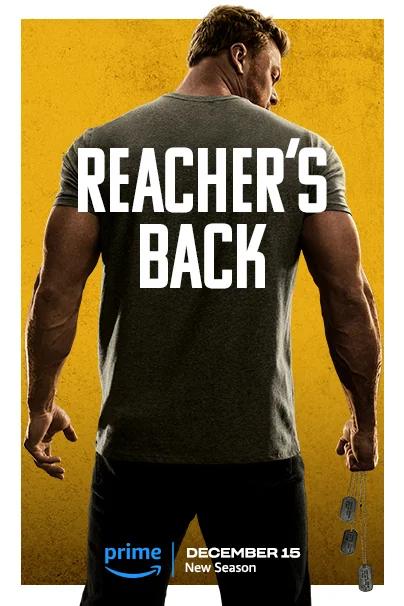
Before you press play
Watch if
You want the flashbacks, the unit, and a friendship the show never has to stop and explain.
Wait if
You want the tight single-town case of the first season, or villains with anything underneath them.
A body falls out of a helicopter over the Catskill Mountains. It is Calvin Franz (Luke Bilyk), who served under Jack Reacher (Alan Ritchson) in the 110th Special Investigations Unit. Frances Neagley (Maria Sten) summons Reacher by putting money into his bank account, the only way to reach a man with no phone and no address.
Members of that unit are being killed. The survivors reassemble to find out why.
Is Reacher Season 2 worth watching?
Yes, though it is the weaker season, and it is weaker in ways that are easy to point at.
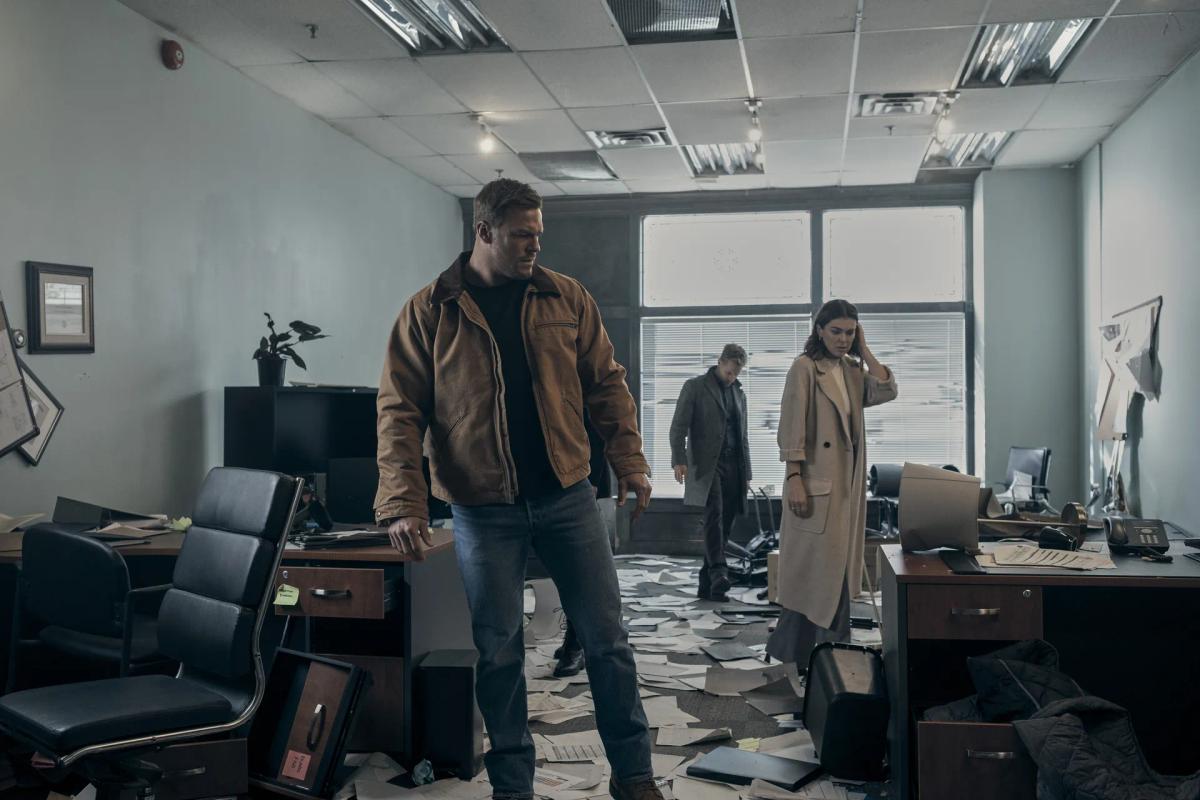
The case itself is sound. Adapted from Lee Child's Bad Luck and Trouble, it gives you a defence contractor, stolen missile technology, and a trail that leads back inside the company. It builds properly and it pays off, and it is never quite the reason to keep watching.
The unit carries the season. It is far better at friendship than it is at jeopardy, and once you accept that trade the eight episodes go down easily.
The 110th, and what the flashbacks are for
Recurring flashbacks show how the unit was assembled, how its members worked, who was good at what, and why the present-day losses are supposed to land. That material is where the season puts its care.
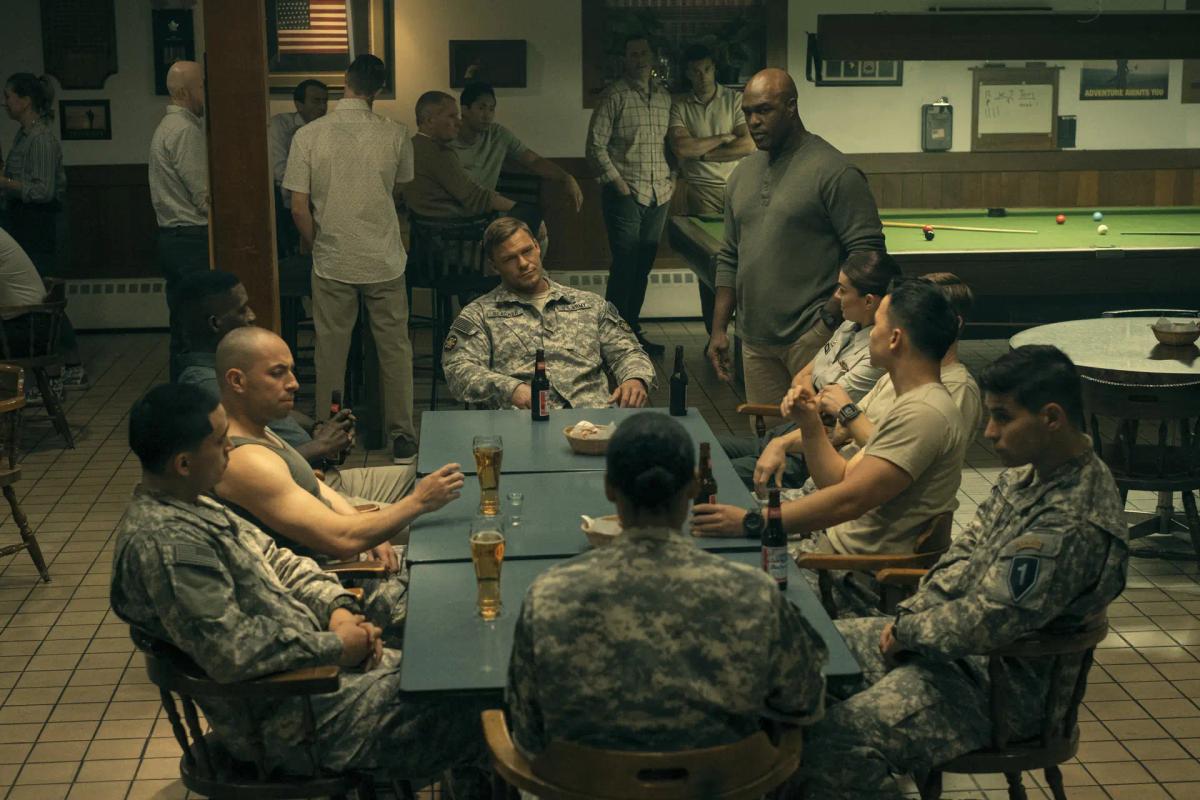
The series dramatises it at length, in missions and arguments and the slow business of a hand-picked team learning to trust each other, and it is consistently more interesting than the case running alongside it.
It is also where the season does its quietest work, filling in habits the first season showed you without ever explaining.
Alan Ritchson as Jack Reacher
It is his show and he carries it. No surprise, and it still needs saying.
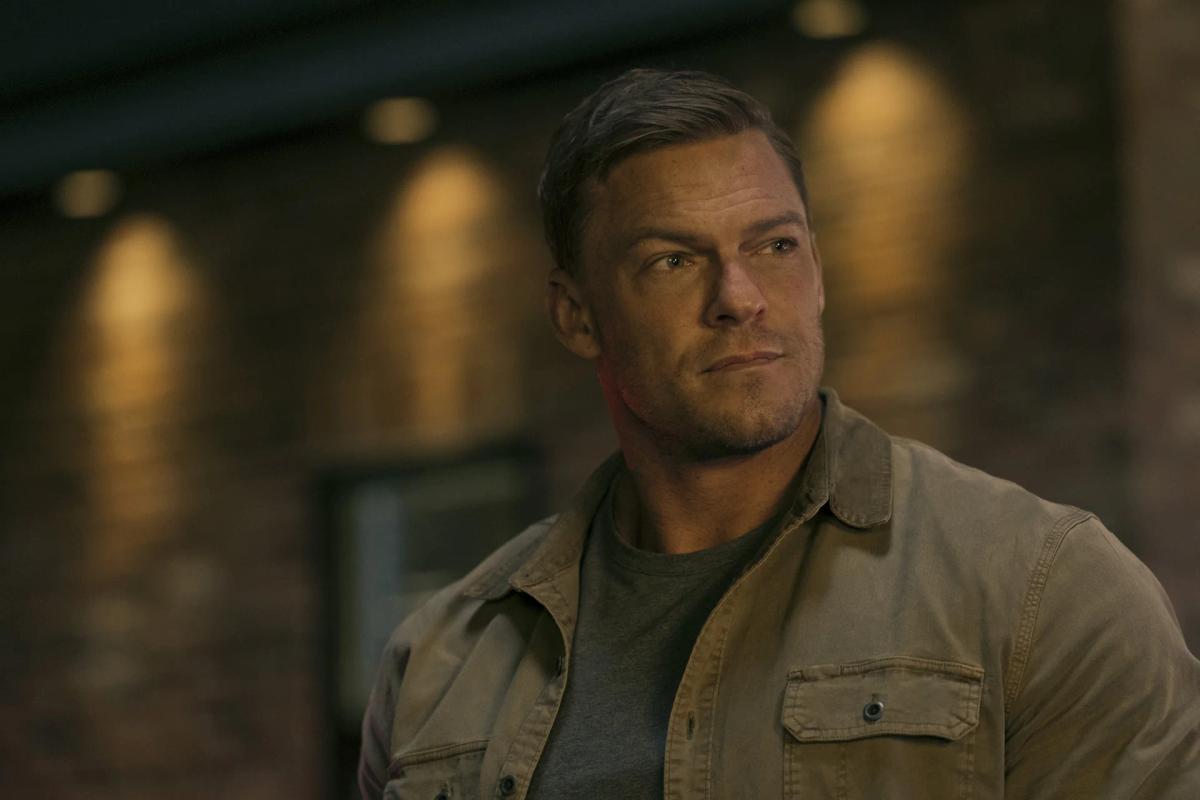
The others are all intelligent and the script is careful to let each of them solve something, but the shape rarely changes: they hand him pieces and he assembles them. Alan Ritchson does the same trick as in the first season, moving like something structural rather than something fast.
Grief is new. He has no vocabulary for it, so the season gives him rooms full of people who knew the dead and lets him stand in them, and the deadpan that used to be only funny starts doing something else.
Frances Neagley and the best thing here
Frances Neagley is the second-best character in the show and the reason this season has a pulse.

There is an exchange the two of them run throughout. He asks whether he has ever mentioned that she is smart, and she says not nearly enough. It arrives every time she cracks something open, and what begins as a joke turns into how two people who do not discuss feelings discuss them.
Maria Sten plays her as someone with her own life and her own business who came anyway. That is a harder note than devotion, and she never oversells it.
Karla Dixon and David O'Donnell
The other two survivors get less, and one of them gets noticeably less.

Karla Dixon (Serinda Swan, who played Medusa in Marvel's Inhumans) is the unit's forensic accountant, and the money is genuinely her territory. She is also introduced and paired off with Jack Reacher on cue, and the season glamorises her more insistently than anyone else. By the end you can see the job she was hired to do.
David O'Donnell (Shaun Sipos) is the comic relief and he is good at it. He has the one-liners, a family at home and a faintly shady edge, and he is also the one of the four you could remove without the plot noticing.
Guy Russo and the season's best supporting performance
Guy Russo (Domenick Lombardozzi) starts as an obstacle. He is a hot-headed NYPD detective who takes a broken nose in his first encounter with the team and spends the early episodes treating Jack Reacher as part of the problem.
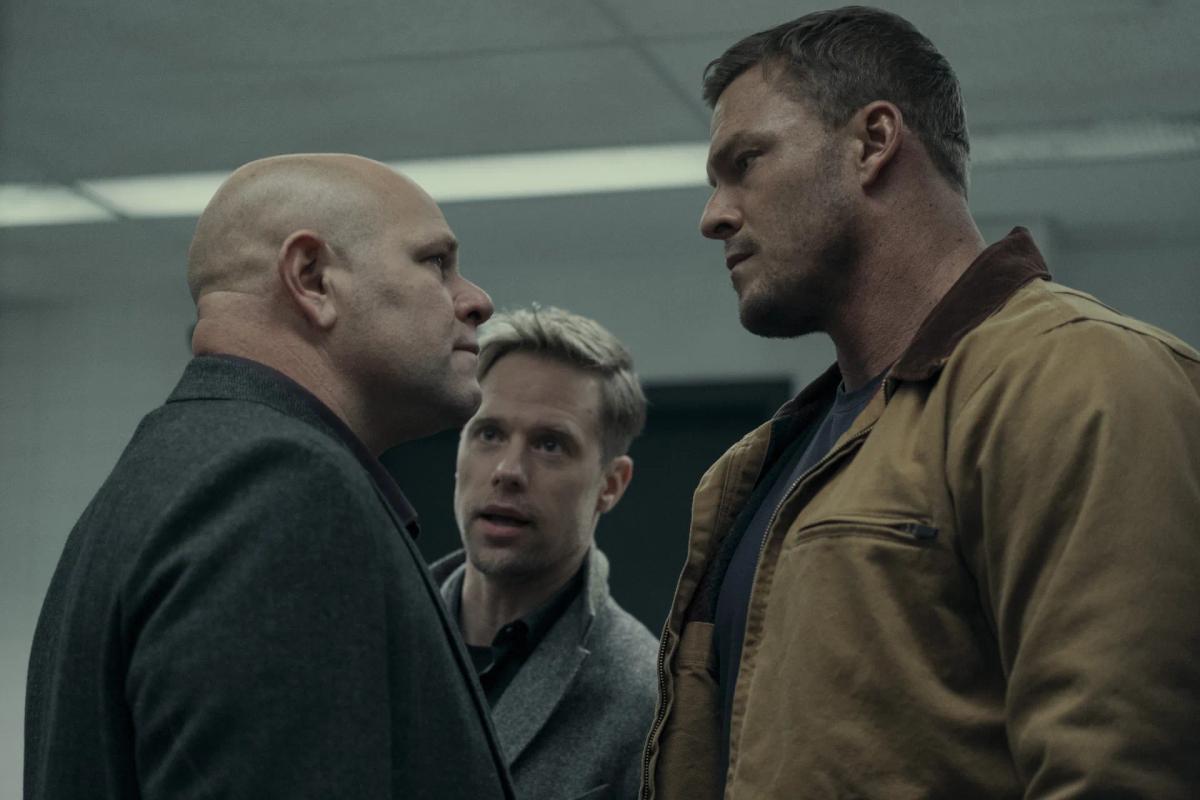
As the case widens, the stubbornness starts to read as integrity rather than obstruction. He is the one person here carrying a badge he has to answer for, and Domenick Lombardozzi plays that weight without ever asking you to feel sorry for him.
Episode six is where the work pays off. It is the best hour the show has made, and the season never gets near it again.
Little Wing, and the institutions that stay offscreen
The thing everyone is dying over is Little Wing, a New Age Technologies defence programme built around missile software. In the right hands it protects aircraft. Diverted, it does the opposite, and the season is right to treat that as serious.
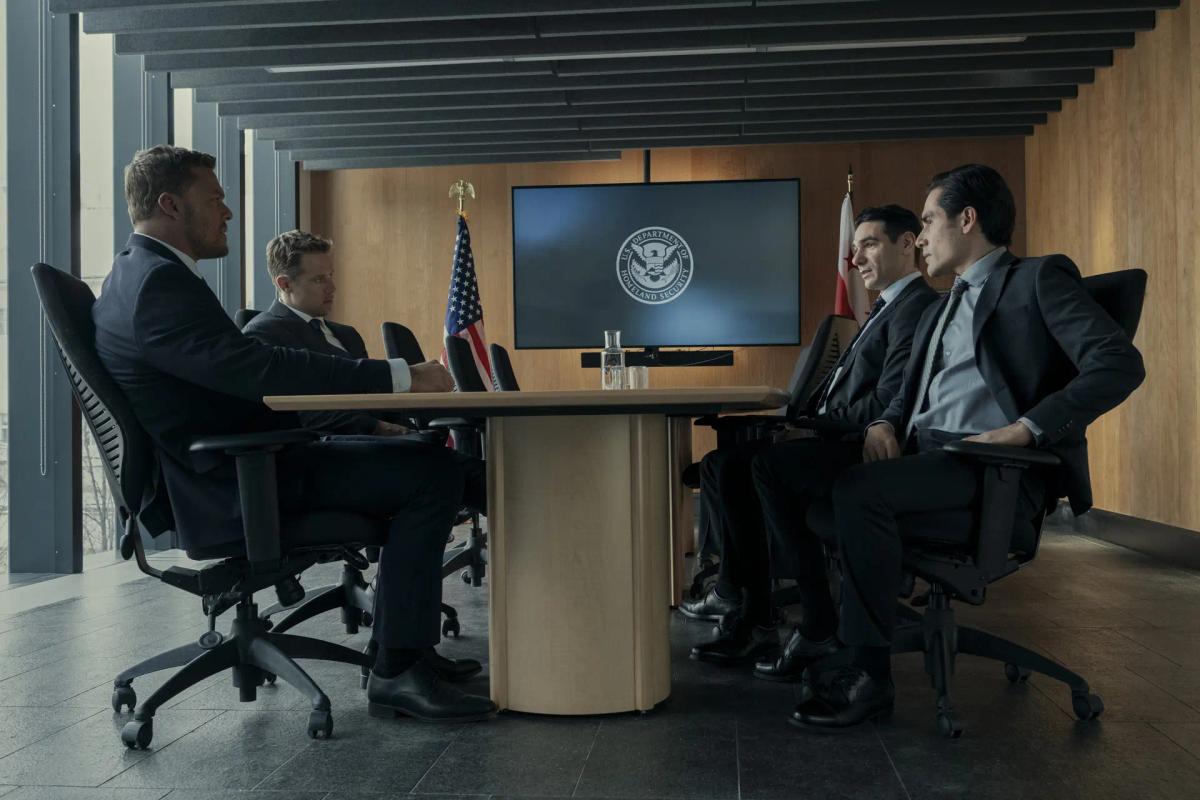
The institutions are not missing. Jack Reacher and David O'Donnell take it to Homeland Security in Washington, and a senator attaches himself to the investigation. The season wastes them. They work as levers the plot pulls when it needs one, rather than as agencies with budgets, rivalries and reasons to obstruct each other.
Technology that defeats an aircraft's countermeasures should make the surrounding machinery feel enormous, with the Pentagon, the FBI and half of NATO climbing over each other to own it. Homeland, the CIA thriller, spent years inside exactly that mess and the mess was the show. Here it still comes down to four people in a rented car.
Where Reacher Season 2 falls short
The villains. This show writes its heroes carefully and its antagonists as types. Shane Langston (Robert Patrick) is a greedy executive with nothing underneath, and the broker on the other side of his deal is a smirk in a good suit. That is two seasons running.
The fights have a credibility problem the first season did not. Alan Ritchson is built to be unstoppable and the staging respects it. The rest of the unit are military-trained investigators rather than brawlers, and the season keeps treating that training as though it cancelled out the difference in size, letting them walk away from men twice their weight with nothing that lasts.
The geography hurts too. The first season had one town with one main street and it sweated. This one moves through New York, Atlantic City, Denver, Washington and Boston without settling anywhere, so it plays as a tour rather than a place.
Why Season 1 still wins
The first season killed one man before you met him, then spent eight episodes making you want him back. This one spreads the same grief across a whole unit and introduces most of its dead in fragments and flashbacks.
That is the arithmetic problem. Grief divided is thinner than grief concentrated, and no amount of well-made flashback fixes it.
The rest of the missing bulb sits with the thin villains, the weightless institutions and the scattered geography. It is still a good season. It is not the one that made people care about this show.
Who was behind it. Shane Langston (Robert Patrick), head of security at New Age Technologies, is a former NYPD detective who staffed the department with corrupt former police officers. Little Wing is New Age's own programme. Langston has 650 of its chips diverted, and separately arranges the hijacking of a matching shipment of missiles out of the company's Denver plant, for a $65 million sale to A.M. (Ferdinand Kingsley), a broker who supplies terrorist clients. Calvin Franz (Luke Bilyk), Jorge Sanchez (Andres Collantes), Manuel Orozco (Edsson Morales) and Tony Swan (Shannon Kook) were tortured and killed to keep it quiet.
Tony Swan. Suspected for most of the season of being the inside man, he was the opposite. Langston murdered him, kept his eyeball and severed his finger, and used both to clear authorisations in his name and frame him for the theft.
Guy Russo (Domenick Lombardozzi). Asked to take Jane Burns (Kate Moyer) somewhere safe while the team uses her mother Marlo Burns (Christina Cox) as bait, he is run off the road. He sends the girl running and holds the gunmen off long enough for her to escape, and is fatally shot doing it. Frances Neagley (Maria Sten) reaches him as he dies and holds his hand, and she is a woman who cannot bear being touched. His last words are about whether she made it. He is the show's heavily rewritten version of a detective from the novel named Mauney.
The catchphrase. Karla Dixon (Serinda Swan) is the one who says that in an investigation, details matter. She says it during an early 110th investigation, after spotting an aviation-fuel discrepancy that turns out to be contraband hidden inside Humvees. Jack Reacher (Alan Ritchson) tells her on the spot that he is taking the line, and then spends the whole of the first season delivering it as his own.
The ending. Reacher surrenders himself to get inside New Age, having arranged Senator Malcolm Lavoy's (Noam Jenkins) private security team as backup. He gets aboard Langston's helicopter, where Karla Dixon and David O'Donnell (Shaun Sipos) are being held. Dixon frees herself, climbs back in and stabs Langston, and Reacher throws him out of the aircraft, exactly as he told him he would over the phone earlier in the season.
The team then lies in wait at the home of the New Age engineer who helped Langston, and shoots A.M. when he arrives carrying the $65 million. They let the engineer and Langston's pilot leave by helicopter, and Frances Neagley shoots it down with a Little Wing missile.
The part the season is smartest about. Reacher works out in advance that Lavoy's people intend to eliminate the 110th once the job is done, and tips off Homeland Security. They arrest Lavoy's team on arrival. He then splits the $65 million between the survivors and the families and associates Langston's scheme left behind.
The last scene. Frances Neagley flips the running line and asks whether she has ever told him he is a good friend. He gives her her own answer back. Then he tells a stranger on a bus that he has been visiting family. It is the closest he comes all season to saying it to the people it is about.
Bright Bulbs
- The flashbacks beat the case they are cut into. The unit is more interesting than the mystery it is solving.
- Frances Neagley (Maria Sten) and Jack Reacher (Alan Ritchson) have a friendship the script never has to explain.
- Guy Russo (Domenick Lombardozzi) travels from obstacle to the best single hour the show has made.
- Alan Ritchson finds a register for grief in a character with no vocabulary for it.
- The humour still works, and still comes from a man who refuses to exaggerate anything.
Dull Bulbs
- Karla Dixon (Serinda Swan) does real work with the money and is still dressed and paired off on cue.
- David O'Donnell (Shaun Sipos) is funny and removable. A fourth lead should not be removable.
- Investigators written as investigators, still walking out of fights with men twice their size.
- Five cities in eight episodes, and the season never stands still long enough to be anywhere.
Shattered Bulbs
- Shane Langston (Robert Patrick) is a greedy executive and nothing else. Second season, same failure.
- The state machinery exists and never once feels like it. Homeland Security is a plot lever, not an institution.
Cast
- Alan Ritchson as Jack Reacher
- Maria Sten as Frances Neagley
- Serinda Swan as Karla Dixon
- Shaun Sipos as David O'Donnell
- Domenick Lombardozzi as Guy Russo
- Robert Patrick as Shane Langston
- Ferdinand Kingsley as A.M.
- Shannon Kook as Tony Swan
- Christina Cox as Marlo Burns
- Kate Moyer as Jane Burns
- Luke Bilyk as Calvin Franz
- Noam Jenkins as Malcolm Lavoy
- Al Sapienza as Drew Marsh
- Lochlyn Munro as David Wright
- Joris Jarsky as Trevor Saropian
- Andres Collantes as Jorge Sanchez
- Edsson Morales as Manuel Orozco
More from Reacher
 Reacher Season 1
 Reacher Season 2
 Reacher Season 3