Before you press play
Watch if
You like horror that's funny without winking at you, and you'll give a show four episodes to show you what it's doing.
Wait if
You want jokes you can point at, or you'd rather not start a story that stops mid-argument and waits for a second season.
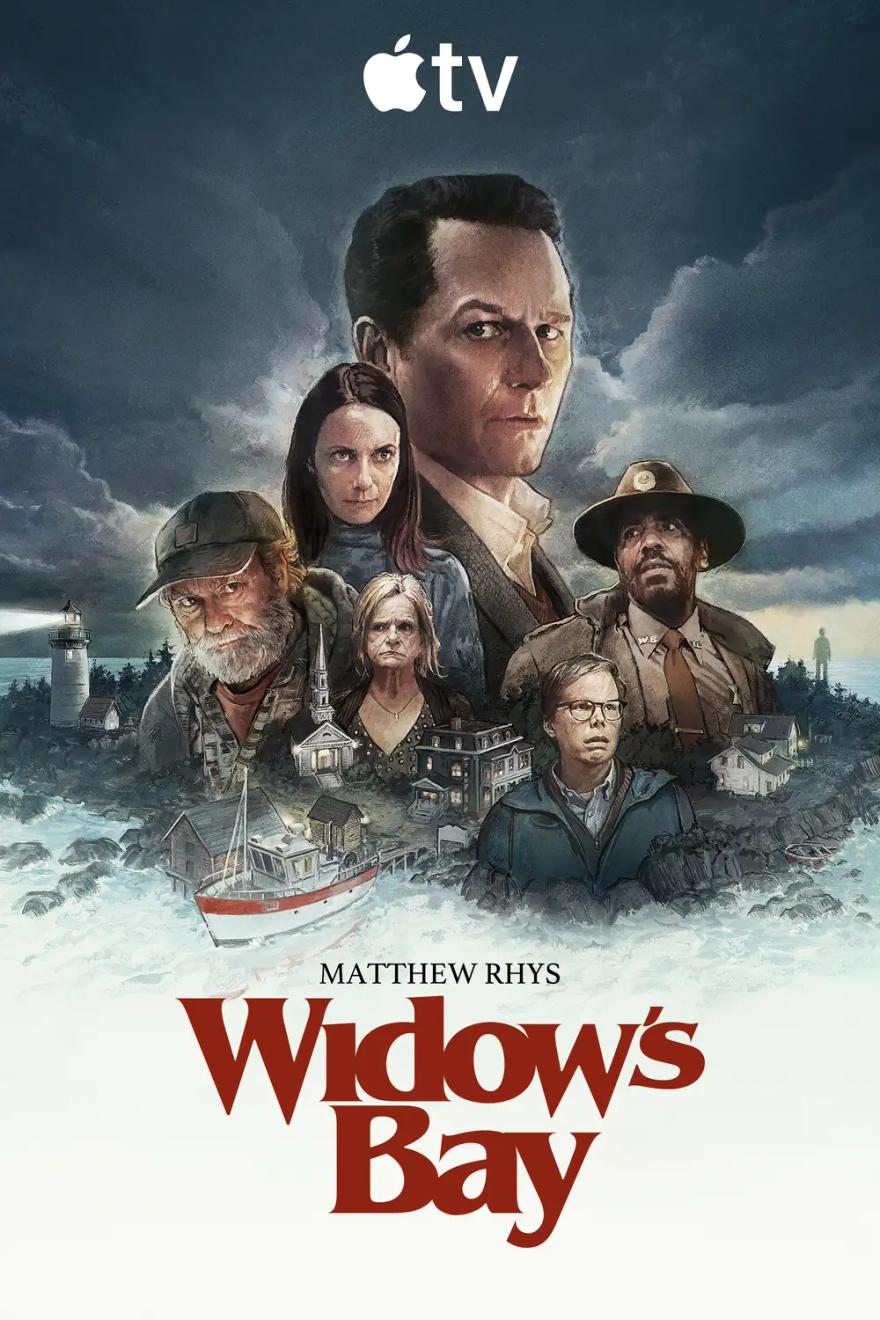
Widow's Bay is a comedy about a mayor trying to save a dying island town, and it works because almost nobody in it behaves as though they are in a comedy. They behave as though they are at work.
Tom Loftis (Matthew Rhys) runs a New England island forty miles offshore. There is no reliable Wi-Fi, the economy is failing, and the people who live there are certain the place is cursed. His plan is tourism. He gets a New York Times writer out to the island, the resulting piece is flattering, and visitors start arriving. That is episode one, and it is close to the last thing that goes to plan.
It is a very good show that gets slightly worse the more it explains, which is a better problem than most first seasons have.
How the comedy in Widow's Bay works
The humour is easy to miss first time through, and that is deliberate. Almost nobody makes a joke. The comedy comes from the distance between how ordinary the island's horrors are to the people who live there and how insane they sound to anyone watching.
A man vanishes in the fog and the town treats it as settled that the fog took him. When he turns up drunk, they explain that he has been sober for years, so it must have been the fog. The most notorious room at the local inn comes with an honour jar. Someone dares Tom to spend a night in it, and the town chips in to cover the bill, because that is a reasonable municipal arrangement between neighbours.
None of that is written as a punchline. It is written as paperwork, and the paperwork is the joke.
The same restraint shows up in how the thing is shot. There is an extended chase later in the season that runs with almost none of the music you would expect, and the pursuer's face never changes throughout. You get neither of the usual cues: no score telling you to be frightened, no expression telling you what to feel. What is left is funny and frightening at once, and you cannot always tell which the show intends.
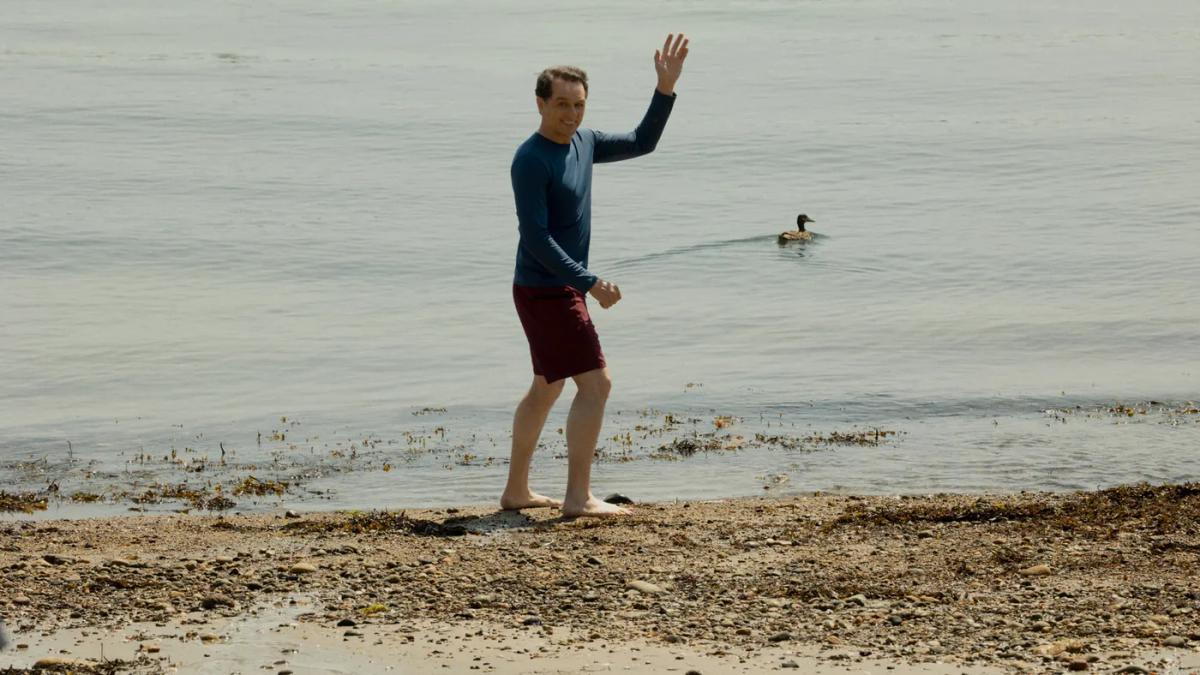
Matthew Rhys as Tom Loftis
Rhys is doing something specific and hard: playing a rational man slowly losing an argument with a place. He spends most of his time talking people out of what they already believe, and the show is honest that this makes him irritating rather than admirable. The town thinks he is soft. The show sides with the town more often than he would like.
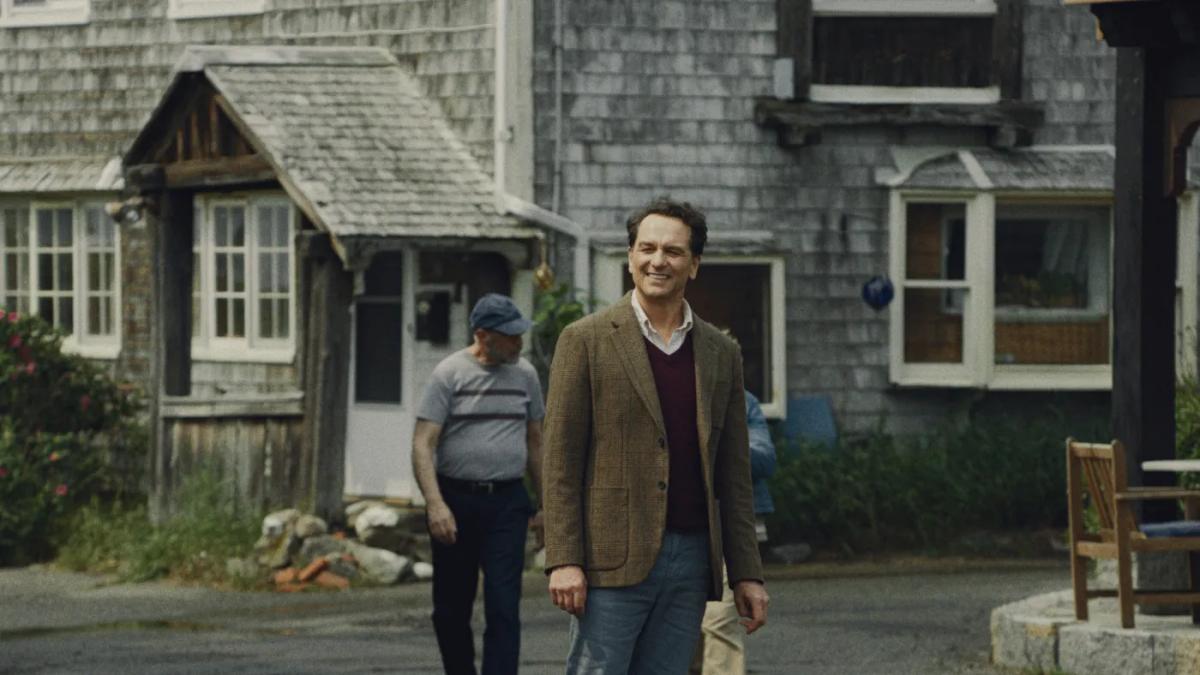
He is also very funny in a way that never announces itself. Much of it is in how he holds his face when someone says something impossible and waits for him to take it in his stride.
Underneath that he is carrying real grief and a bad relationship with his teenage son Evan (Kingston Rumi Southwick), who thinks the island is a prison and is not entirely wrong. The show takes its time with that thread and is rewarded for it.
A different horror subgenre every week
The season cycles through kinds of fear rather than building one. A haunted room. A creature. A drug trip. A flashback to 1702 that drops the comedy completely, narrows the picture to an almost-square frame and hands the hour to Betty Gilpin and Hamish Linklater. A slasher. A storm siege.
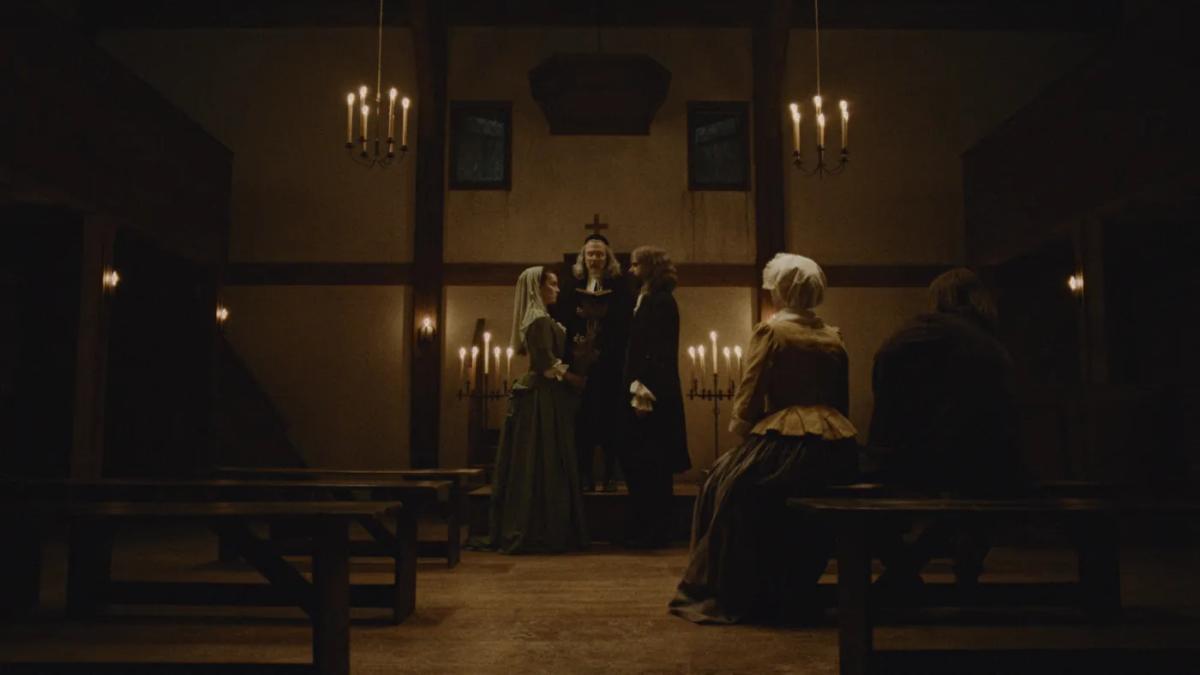
On paper that sounds like a show with no idea what it is. In practice the control is the point. The comedy goes to nothing in one episode and back up in the next, and neither setting weakens it. Episode six is straight horror and among the season's best. Episode seven is one of its funniest. They arrived on the same night.
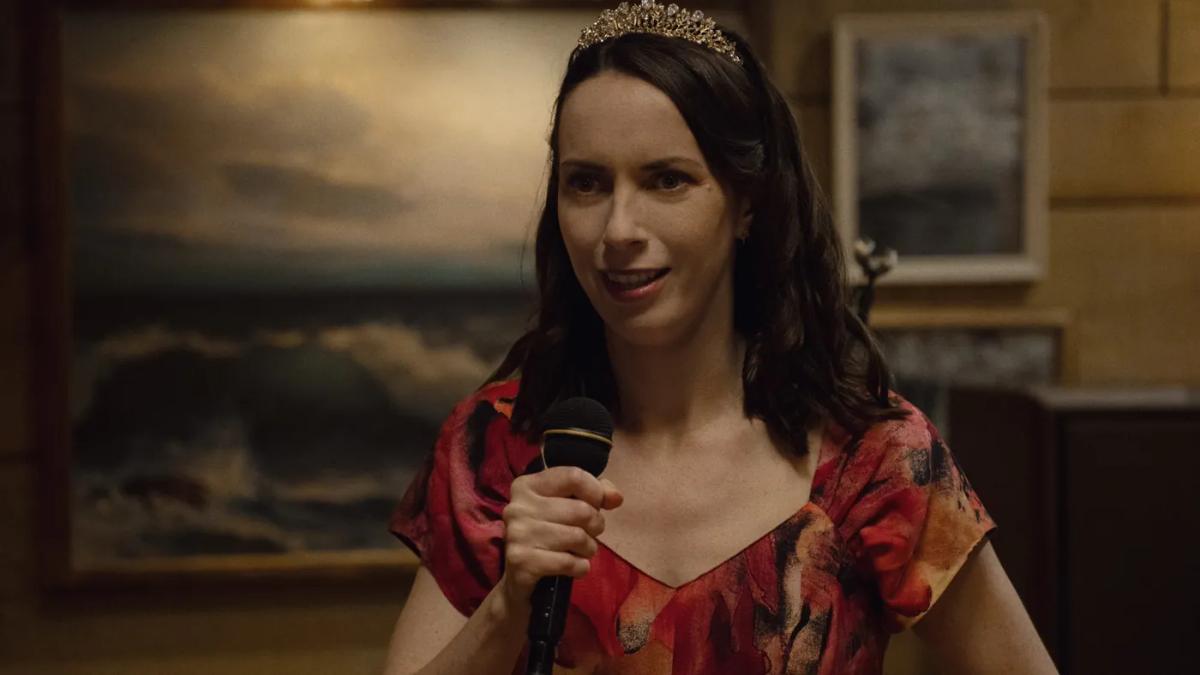
Kate O'Flynn as Patricia
Patricia, Tom's second in the mayor's office, arrives as an awkward and over-eager deputy and turns into the character the season is really about. O'Flynn plays her as someone who has been disbelieved for so long that she has stopped expecting anything else, and who keeps trying anyway. Her big episode is the one that made me sure the show knew what it was doing.
Where the season loses its grip
In the last two episodes the show has to start answering, and the answers cost it something.
There is a long expository scene late on, built as a comic set piece, that leans on a running bit about a character taking offence and refusing to continue. It is played as charming and it is too pleased with itself; the information could have landed in a quarter of the time. To me it is the one moment the show performs its own eccentricity instead of trusting it.
The jokes also thin out across the final two episodes. Not because they get worse, but because the situation grows too heavy to carry them, and a few land against the grain of what is happening.
And the ending is open by design. The stretch from the back half of episode nine into the middle of episode ten is the strongest sustained run of the season. What comes after it does more to set up a second season than to finish the first. That was a real choice rather than an accident: Apple did not announce the renewal until six days before the finale aired, long after the season was written and shot. Even so, the season stops rather than lands.
Is Widow's Bay worth watching?
Yes, with one caution: the first two episodes are good without being representative. The show is doing something quieter than it appears to be doing, and if you arrive expecting a broad horror comedy you may decide early that the jokes are thin. They are not thin. They are unmarked. By episode four you will know whether the register works on you, and if it does, clear time for the back half.
The curse is a covenant. Richard Warren (Hamish Linklater), the island's founder, ate the black mushrooms during the settlement's first winter and made a pact with whatever lives beneath Widow's Bay. The 1702 plague was the island taking its payment. Anyone born there dies if they leave.
The town worked this out three hundred years ago, buried Warren alive, and it did not take.
Episode seven is the season in miniature. Wyck and Patricia dig him up while Tom is unconscious from the mushrooms. Warren is still alive: barely able to stand, skin coming away, mostly wanting to see his children's things, passing notes back and forth with Tom until he speaks and terrifies him.
He proposes his own destruction. He believes he is the last of his line, so sailing him past the buoy should kill him and free the island. It works. He crumbles to bones and dust, Tom and Wyck laugh in relief, and it accomplishes nothing at all, which the show confirms one episode later.
The bloodline never ended. Frances Warren went overboard from Sarah's escape boat in 1702 and made it back to shore. Patricia spots the missing finger in a portrait and the line reopens. Rosemary's genealogy lands on Ruth Livingston, Tom's elderly secretary, who has no idea.
Tom goes through with it. He searches Ruth's medical records for a terminal diagnosis that would let him feel better about what he is planning, finds a drug interaction instead, and poisons her tea.
The drugs fail. She shows him her photograph album, and somewhere in a run of comic asides — one about a man bitten by an animal who became that animal, delivered in the tone you would use for a bad hip — she mentions the child she had at forty by a married man.
That child was Lauren, Tom's late wife. Evan is the last descendant.
Bechir shoots the wrong person. He has pieced it together himself, his wife is in labour, and he cannot let his child be born on the island. He puts a bullet in Ruth's head. Tom tells him he is wrong. The gun swings round, Bechir demands the name, and Tom lies.
The storm stops in that moment and Bechir takes the credit for it.
It stopped for another reason. Under the shelter, Evan and two friends had found a chamber. The custodian sent them back, a door locked behind him, and something took him while Evan was trying to get it open. The covenant was fed on the other side of the island, at the same minute, by three teenagers who will never know.
Ruth survives. The bullet grazed her. She is left confused and badly hurt, and her fate is not shown.
The last scene is Frances Warren's brooch going into the sea, and with it the only proof of what Evan is.
Two things are worth saying about that ending.
- The show puts a mistaken shooting and a real sacrifice inside the same minute, then lets the wrong man believe he caused the result. That is the whole series compressed: people reading pattern into coincidence, on an island where the pattern happens to be real.
- The season's rational man ends it having attempted a murder, failed, and then lied to protect his son from the same logic he was ready to apply to someone else's mother.
That is a strong place to leave a character. It is a weaker place to leave a season. What is still open when the credits roll: whether Ruth lives, what Bechir does with a sheriff's badge and a body, what is behind the vault door, whether Evan ever learns what he is, and what the island does now that it has been fed once and remembered how.
Bright Bulbs
- The comic register: impossible things handled as routine business, never signposted as jokes.
- Matthew Rhys playing a rational man losing to a place, funny without ever asking for the laugh.
- Kate O'Flynn's Patricia, and an arc that pays off properly.
- A different subgenre most weeks, with the comedy dialled to whatever that week needs.
- The 1702 flashback: an almost-square frame, no jokes, Betty Gilpin and Hamish Linklater.
- A chase that withholds the score and lets you work out what you are feeling.
Dull Bulbs
- A late expository set piece that is overplayed and runs several times longer than it needs to.
- Jokes in the last two episodes that land against the weight of the plot.
- The season stops rather than ends.
- Wyck is underused for five episodes before the show works out what he is for.
Cast
- Matthew Rhys as Tom Loftis
- Kate O'Flynn as Patricia
- Stephen Root as Wyck Crawford
- Kevin Carroll as Bechir Clemmons
- Dale Dickey as Rosemary
- Kingston Rumi Southwick as Evan Loftis
- K Callan as Ruth Livingston
- Hamish Linklater as Richard Warren
- Betty Gilpin as Sarah Westcott Warren