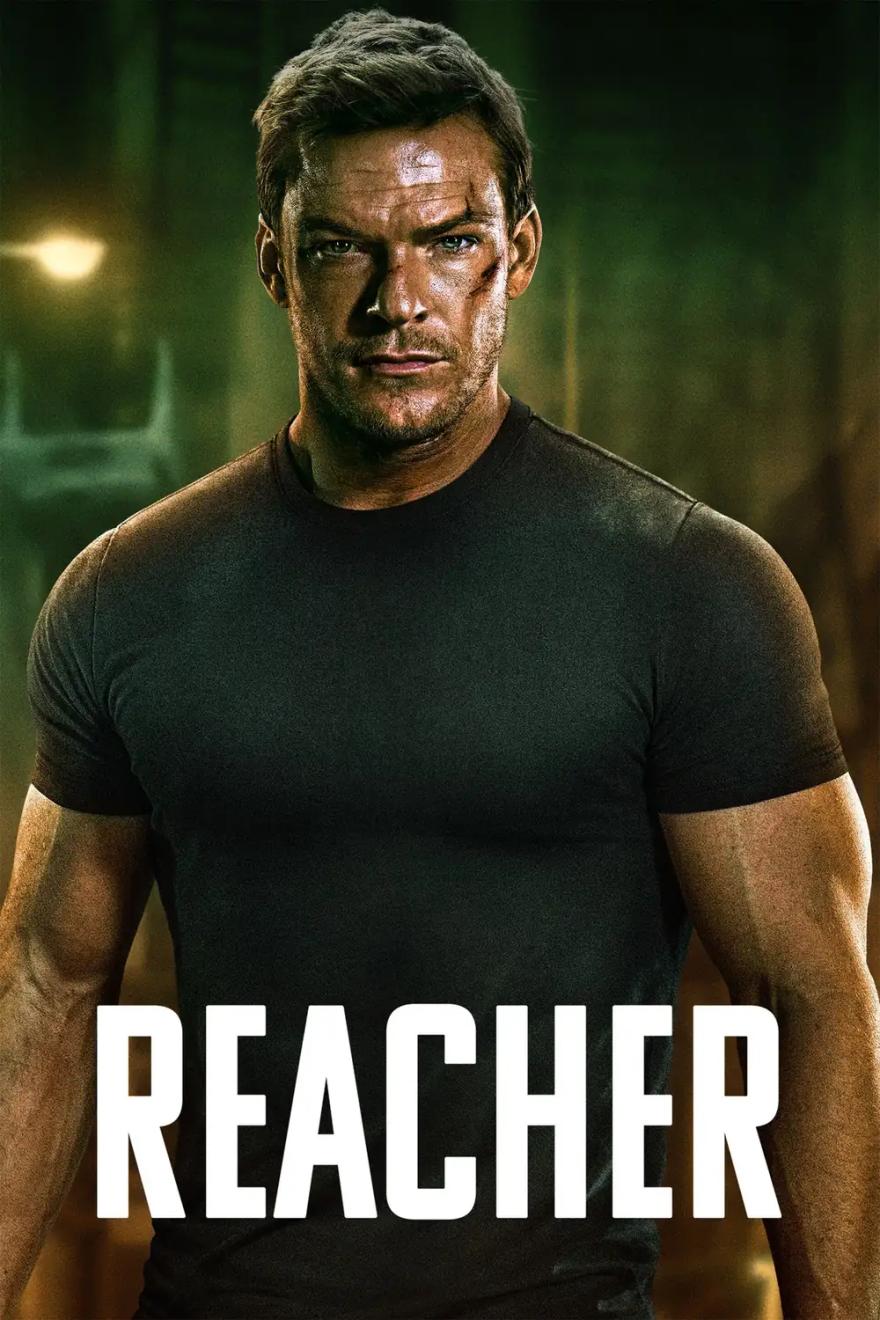
Before you press play
Watch if
You want a thriller you can actually solve, and a lead who fills the doorway before he says a word.
Wait if
You need a thriller where killing people has consequences, or you want a mystery that stays three steps ahead of you.
Jack Reacher (Alan Ritchson) gets off a bus outside Margrave, Georgia, walks into town, orders coffee, and is arrested for murder before he finishes it. He does not resist. He barely speaks. Within the hour the police know he is ex-military police with an exceptional record.
That is the season in miniature. A man several steps ahead, in a place that keeps underestimating him.
Is Reacher Season 1 worth watching?
Yes, and for a more specific reason than good action, although the action is good.
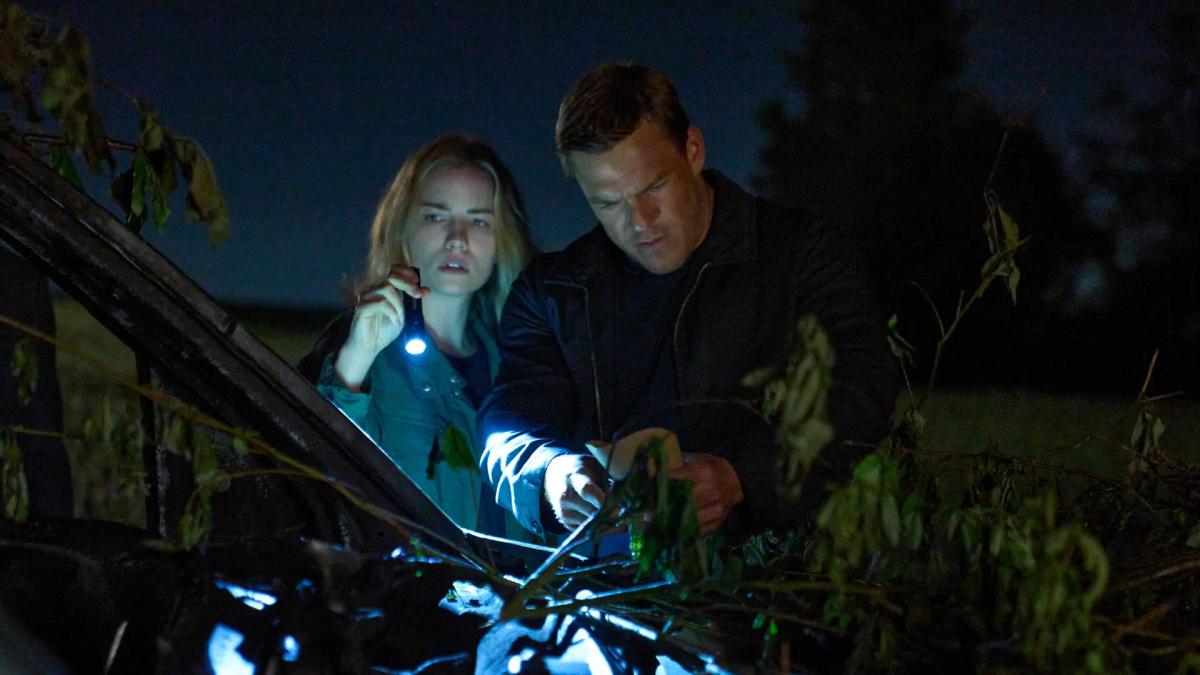
This is a mystery built for someone paying attention but not taking notes. It is not so tangled that you give up, and not so obvious that you feel talked down to. Watch it properly and you will have most of it worked out before the finale confirms it.
The trap is over-thinking it. Hunt for a hidden trick behind the deductions and you will build theories the show never planted, and miss the clue it left sitting in the open.
How the mystery is built
The show does its reasoning out loud every time. When Jack Reacher names a killer's nationality from a wound, he says which wound and why. Nothing arrives from nowhere.
Compare it with Sherlock, the BBC series starring Benedict Cumberbatch. That show stages deduction as a performance you are not meant to follow: you watch him arrive at an answer, and never get to work it out alongside him.
Reacher does the opposite. It lets you keep up. That is a lower ceiling and a far better hit rate.
Margrave, Georgia and the case against Jack Reacher
The town is the first thing the show gets right, starting with the name. Margrave has grave sitting inside it, and the word itself is an old title for the governor of a border province. That is what the place turns out to be, running on its own law a long way outside anyone else's.
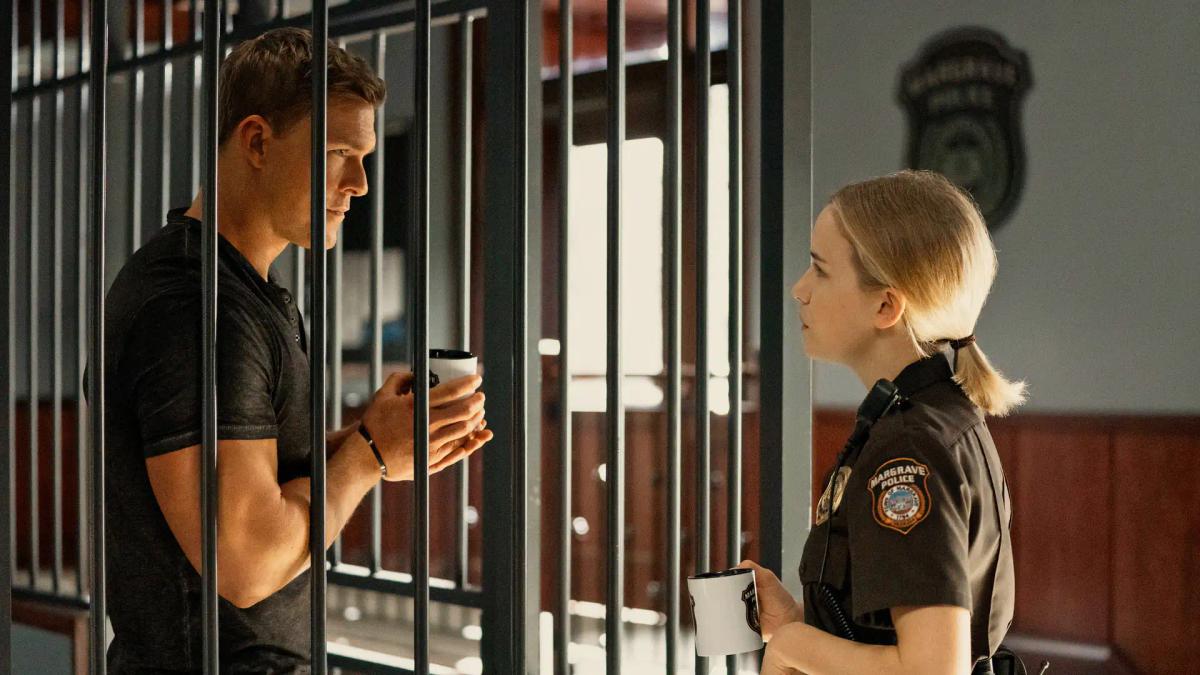
Margrave has a spotless main street, a wealthy family who rebuilt it, and no murders in twenty years. Then there are four in a week. Everything after that runs on one question: who here is bought, and who is only frightened.
The show answers slowly and fairly. Nobody turns out to be corrupt without something earlier having pointed at them.
Alan Ritchson as Jack Reacher
The casting carries the show and Alan Ritchson carries the casting. People make decisions about him based on his outline, before he has said anything.
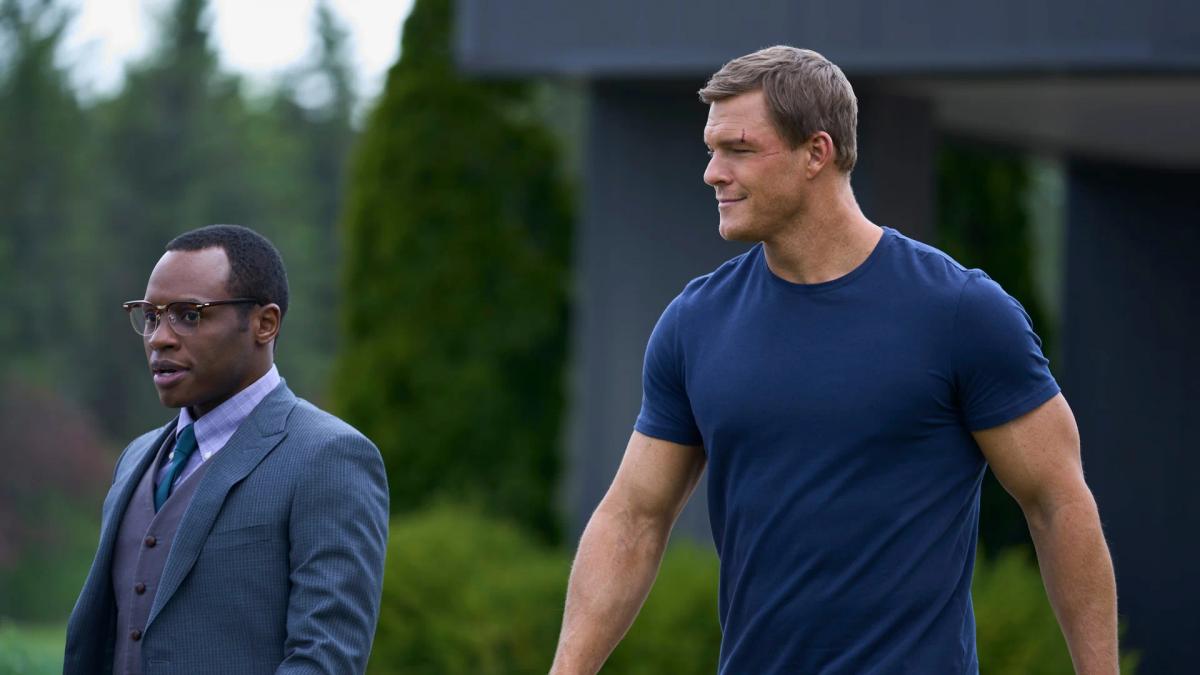
There is a cost and it is visible. He is not agile, and you can see the weight he carries when he runs. The fights are built around that: short, straight-line, almost nothing deflecting him. He is not fast, he is unstoppable, and the body stops being a limitation and becomes the style.
The humour is his too, and it is easy to miss because none of it is delivered as a joke. When Oscar Finlay (Malcolm Goodwin), the town's chief of detectives, says the dung has hit the fan, Jack Reacher tells him to just curse. That is the register.
The supporting cast: Oscar Finlay, Roscoe Conklin and Frances Neagley
Oscar Finlay is the best-written adult here. A Boston detective in a Georgia town, in a tweed suit nobody asked for, carrying a grief he will not discuss.
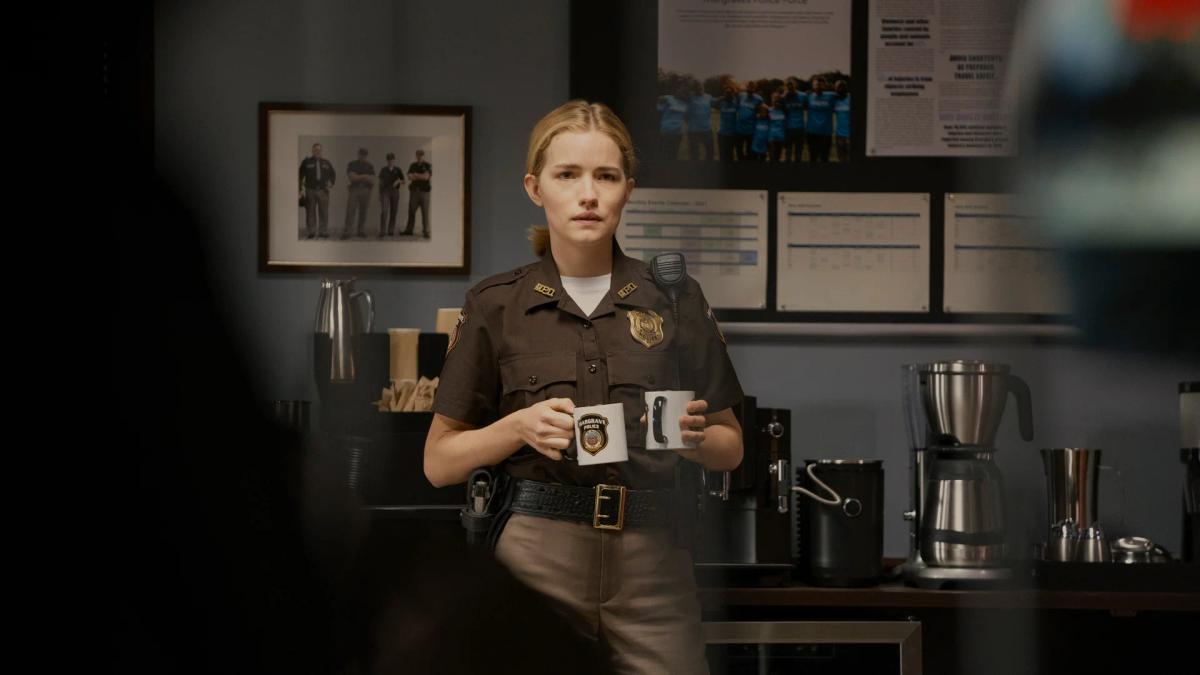
Roscoe Conklin (Willa Fitzgerald) gets the sharpest introduction of anyone. Treated as frightened, she tells him she scored in the 99th percentile for IQ and 80 per cent on the psychological evaluation, and that the evaluation marked her down for not tolerating condescension. Then she demonstrates it on him. It plays as a warning rather than a confession.
Frances Neagley (Maria Sten) arrives late and immediately makes you wish she had turned up sooner, and Charlie Hubble (Kristin Kreuk, who a certain generation will place instantly from Smallville) is written as either guilty or terrified for a long time before the show says which.
The flashbacks, and why Reacher is never called Jack
Most episodes carry a short flashback to Okinawa in 1998, where Jack Reacher is twelve and his brother Joe Reacher (Christopher Russell) is a couple of years older. Older boys are tormenting a local child, Jack Reacher beats one of them badly, and the boy turns out to be a general's son. Joe Reacher takes the blame, and when Jack Reacher refuses to apologise it is their father's career that pays.
The show is patient about handing that over, a piece at a time, instead of explaining him in one speech.
It also answers the surname. Everybody uses it and he corrects anyone who tries the first name, and that is not an army habit picked up later: in the first episode he tells the town barber that even his mother called him Reacher. The flashbacks show her doing it.
Where Reacher Season 1 falls short
The villains. This show writes its heroes carefully and its antagonists as types. There is a sneering rich boy and a corrupt official, both played well, and neither gets the interior life handed out freely everywhere else.
The middle stretch settles into a shape: a lead, an ambush, a fight Jack Reacher wins. The staging slips too. In episode seven one of the enforcers, Dawson, gets a crowbar on him at the Hubble house, beats him with it, and then switches to drowning him instead, which hands over exactly the time and room he needs to turn it. It is the one stretch where you can see the writing instead of the character.
The nudity is incidental too. No scene turns on it and no character is revealed by it, and cutting it would leave the season identical.
Why nothing in Reacher has consequences
Nobody ever pays for any of it. Jack Reacher is a civilian with no badge, no warrant and no standing, and he kills his way across two states. In episode six he lures a tail into a New York alley in daylight, strangles him with his own tie, and walks away to music.
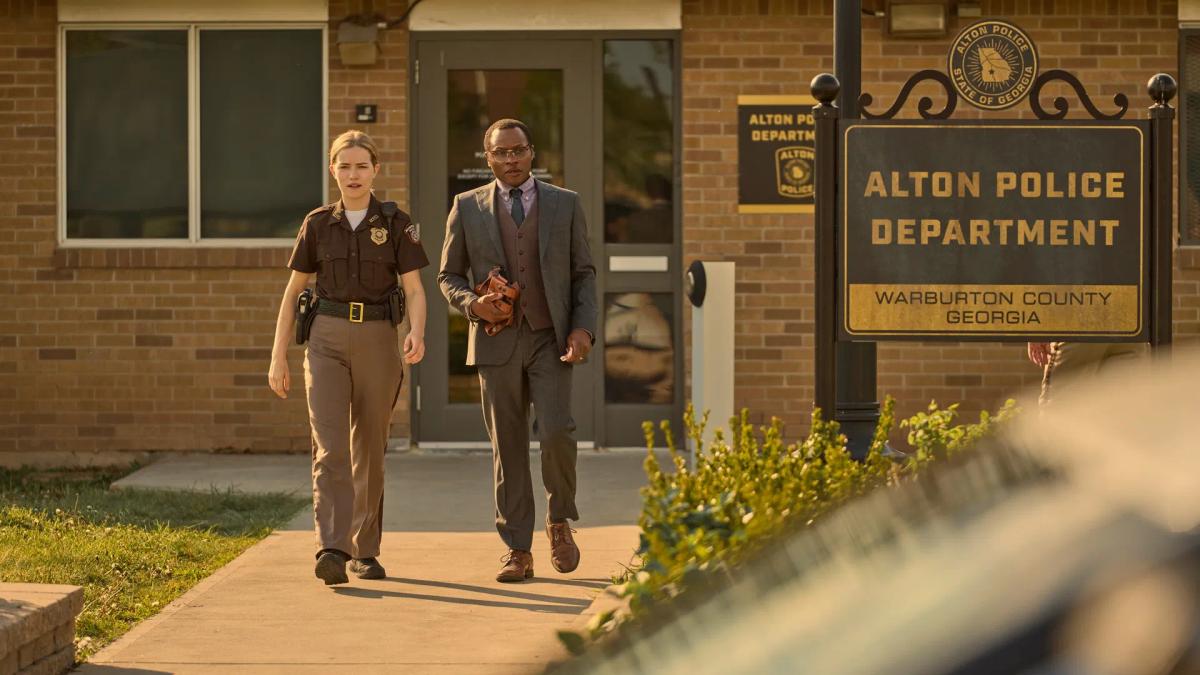
Roscoe Conklin is thrown off the force and carries on shooting people. Oscar Finlay is taken off the case and carries on investigating. The one time the show remembers there is a cost, when Oscar Finlay is arrested for breaking into a suspect's house, it drops the idea and never returns to it.
It is not only the killing. In that same New York episode he gets into a police station by posing as a professor's lawyer, then persuades a sergeant he has just met to keep her under off-books protection. It takes about a minute.
How the show gets away with it
That is the price of entry for the genre. What is unusual is how well this season manages your attention while charging it, by telling you exactly what to look at and why.
This wound. This lawyer. This much cattle feed. The habit does two jobs. It makes the mystery followable, and it keeps you watching the thing being explained rather than the thing being skipped. You do not decide to overlook the body on the fire escape; you are simply never shown anybody who might care.
The release model helps, because all eight episodes landed on the same day and a contrivance that would nag over eight weeks does not survive a binge. Once you have seen the trick you cannot unsee it, and eight hours is a long time to wonder why nobody in either state ever looks up.
Who killed Joe Reacher. KJ Kliner (Chris Webster). He killed the trucker Pete Jobling himself, had Molly Beth Gordon (Laura Jean Chorostecki) killed in the Atlanta subway, and hired the partner of Agent Picard (Martin Roach) to kill the agent in Memphis, sending Dawson down to make sure it was done properly. Dawson beat the body of Joe Reacher (Christopher Russell) after he was already dead. Chief Edward Morrison hid it badly and got himself and his wife killed for the failure. The summary KJ Kliner gives of the family business is that his father had the brains to start it and he had the guts to protect it, which is also his explanation for killing his father.
The one deduction Jack Reacher (Alan Ritchson) gets wrong. In episode six he studies the neck of Kliner Sr (Currie Graham), identifies a Venezuelan butterfly cut, and concludes the Venezuelans killed him. He is right about the method and wrong about the hand. KJ Kliner used that cut precisely so the trail would point overseas. It is the clearest time all season that the show lets its own reasoning lead somewhere false, and it is the cleverest thing it does with a character who is otherwise never wrong.
Agent Picard. The FBI friend of Oscar Finlay (Malcolm Goodwin), brought in to protect the Hubble family, is on the payroll. The clue is handed over early and quietly. Agent Picard says out loud that the arrangement is off the books, that he is burning personal days, that nobody official knows where that family is. The show tells you the safe house cannot be verified by anyone, and then invites you to feel safe about it.
The deduction that closes the loop. Standing over the body in episode one, before he knows it is his brother, Jack Reacher works out that three men were involved. One precise and almost professional. One psychotic, who beat the corpse after death. One cautious, who hid it badly. KJ Kliner, Dawson and Chief Edward Morrison, sketched in the first hour and confirmed in the last.
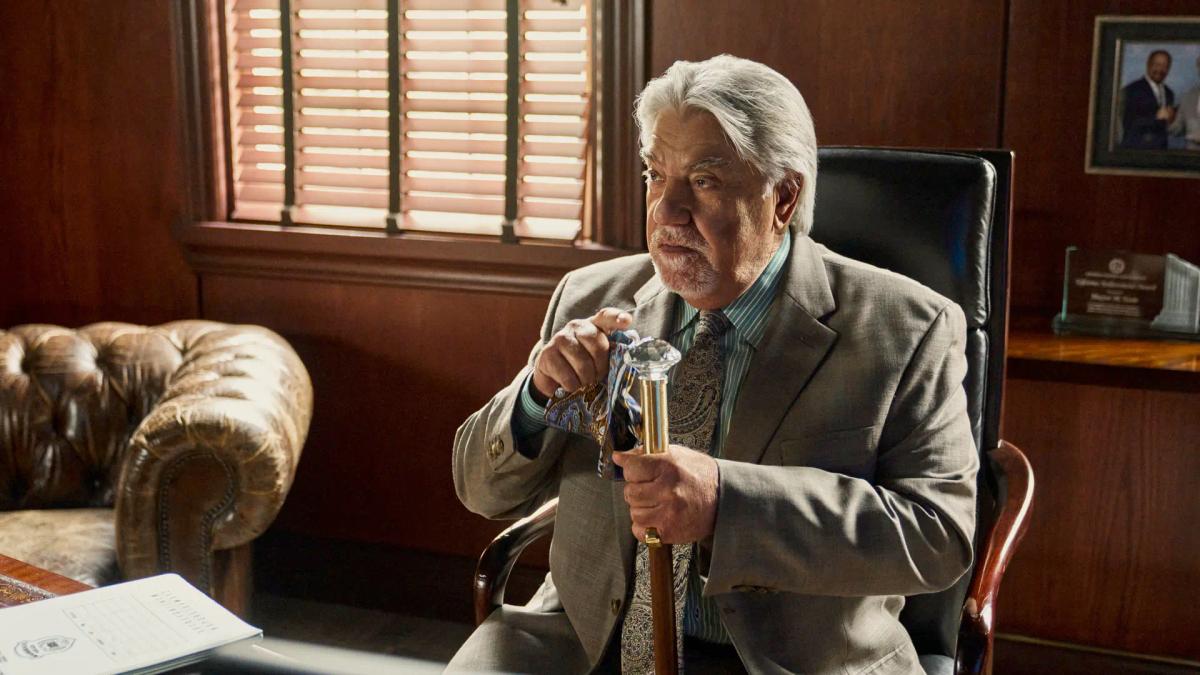
The ending. Jack Reacher burns the counterfeiting operation and kills KJ Kliner in the fire. Roscoe Conklin (Willa Fitzgerald) kills Mayor Grover Teale (Bruce McGill), who had murdered Detective Gray, her mentor and the nearest thing she had to family, and got away with it until she had the head wound re-examined and matched to the top of his walking cane. Oscar Finlay kills Agent Picard. Roscoe Conklin survives, and on his way out Jack Reacher suggests she run for mayor. The season does know the bill exists. Roscoe Conklin warns him the state police and the feds are coming and will want him to stay and answer questions. He says he does not like answering questions and does not like sticking around. Then he hitchhikes out of town and the credits roll.
And the flashback the season has been building to. In the last one the brothers visit their dying mother, Josephine Reacher (Leslie Fray). Before going in they remind each other that no matter what, they do not cry. She tells them she always knew it was Jack Reacher who beat the Okinawa bully and that Joe Reacher took the blame to save him, and that neither she nor their father ever tried to stop them, because the child they were defending was being tormented. She tells Joe Reacher he does not have to solve all the world's problems, that solving some is enough. She gives Jack Reacher his grandfather's French war medal, awarded for bravery in the face of danger, and tells him it takes bravery to do what is right.
Then they leave, and in the taxi Joe Reacher says: now you can cry. And he does.
That is the answer to the surname. Jack Reacher does not use his first name and does not cry, and the only person who could ever release him from either was his brother, who is dead in the first hour of the series, before we have met him. At the end Jack Reacher buries the medal where Joe Reacher was killed and tells him it takes bravery to solve the world's problems too.
Bright Bulbs
- Alan Ritchson is cast for mass rather than speed, and the season is smart enough to shoot him that way.
- The mystery is fairly clued. Every deduction names the evidence it rests on, so you can play along instead of watching.
- Oscar Finlay (Malcolm Goodwin) and Roscoe Conklin (Willa Fitzgerald) get interior lives the plot never needed them to have.
- The humour is deadpan and never announced, and it comes from a man who will not use a euphemism.
- The dog. Three episodes of quiet setup for a rescue that pays off a character rather than a plot.
Dull Bulbs
- Episodes four to six run the same shape three times, and the case stops moving underneath them.
- The romance arrives on schedule rather than out of anything the two of them actually do.
- Nudity that would cost the season nothing if it were cut.
Shattered Bulbs
- Grover Teale (Bruce McGill) and KJ Kliner (Chris Webster) are the only two here nobody gave a private life.
- Eight hours of killing across two states, and the law never once knocks on anybody's door.
Cast
- Alan Ritchson as Jack Reacher
- Malcolm Goodwin as Oscar Finlay
- Willa Fitzgerald as Roscoe Conklin
- Chris Webster as KJ Kliner
- Maria Sten as Frances Neagley
- Bruce McGill as Grover Teale
- Kristin Kreuk as Charlie Hubble
- Currie Graham as Kliner Sr.
- Martin Roach as Picard
- Christopher Russell as Joe Reacher
- Marc Bendavid as Paul Hubble
- Laura Jean Chorostecki as Molly Beth Gordon
- Jonathan Koensgen as Officer Stevenson
More from Reacher
 Reacher Season 1
 Reacher Season 2
 Reacher Season 3