In this piece
- Who qualifies
- How this was scored
- 1Albus Dumbledore
- 2Lord Voldemort
- 3Gellert Grindelwald
- 4Severus Snape
- 5Minerva McGonagall
- 6Bellatrix Lestrange
- 7Filius Flitwick
- 8Kingsley Shacklebolt
- 9Horace Slughorn
- 10Molly Weasley
- The exact tie at the cutoff
- What Newt and Flamel can do
- The other omissions
- What different weights would change
Full spoilers for the seven Harry Potter novels, the eight films and the three Fantastic Beasts films.
Harry Potter (Daniel Radcliffe) defeats Lord Voldemort (Ralph Fiennes). Molly Weasley (Julie Walters) kills Bellatrix Lestrange (Helena Bonham Carter). Draco Malfoy (Tom Felton) disarms Albus Dumbledore (Richard Harris and Michael Gambon in Harry Potter, Jude Law in Fantastic Beasts). Put those outcomes next to one another without their circumstances and this ranking becomes very strange very quickly.
Dumbledore is weakened when Draco confronts him. Harry's final victory involves wand allegiance. Molly, meanwhile, really does beat Bellatrix. That result deserves to survive a ranking even when it makes the familiar order uncomfortable.
Dumbledore leads this combined book-and-film list. Below the leading three, the choice between fighting results and difficult technical magic becomes much harder. Molly takes last place after an exact tie with two very different magicians.
Who qualifies
Each character is assessed at their best established ability, using specific earlier achievements where the story supplies them. The ranking is a composite across adaptations, not a claim that all their details fit one continuity. Merlin and the Hogwarts founders are excluded because their surviving accounts offer too little comparable evidence. Games, deleted scenes, Cursed Child and later television adaptations are outside this version.
How this was scored
Combat carries 35%. It measures effectiveness against resisting opponents, with surprise, assistance and the quality of opposition taken into account. Power carries 25% and measures demonstrated potency or scale, including protection and coercion.
Range carries 25%. It rewards varied, difficult magic and invention, including potions, transfiguration, charms, practical Herbology and mental magic. Control carries 15% and covers precision, reliability and adaptation. A plant or creature can demonstrate handling skill without donating all its own power to the person using it.
Each measure is out of 100, in five-point steps. Ratings from 90 to 100 require exceptional evidence at the top of this comparison pool. Ratings from 75 to 85 indicate advanced ability. Ratings from 60 to 70 reflect a solid but limited or uneven record. Ratings from 40 to 55 indicate narrow or heavily assisted evidence. Missing evidence limits the rating that can be defended, and does not prove a character lacks the skill.
The total is Combat × 0.35 + Power × 0.25 + Range × 0.25 + Control × 0.15. The headline shows that total rounded to a whole number. Exact totals determine the order. These are editorial comparisons, not canonical statistics.
Gaps below two points are close calls. A band joins neighbours that each sit less than two points from the next, so it can stretch past two points from top to bottom, and bands also mark equal totals. Exact ties are ordered by Combat, then Range, then Control, then Power. If all four ratings match, alphabetical order determines the row. A row number inside an equal-score band is not a claim of greater overall strength.
A feat adapted twice counts once. A new film action can add evidence, but the medium is labelled. Shared victories remain shared, and an ambush is not treated as a fair duel. The Elder Wand and creature assistance are acknowledged without inventing a numerical bonus or deduction.
- Ranks 1–2 · within 0.75 points · effectively tied

Albus Dumbledore
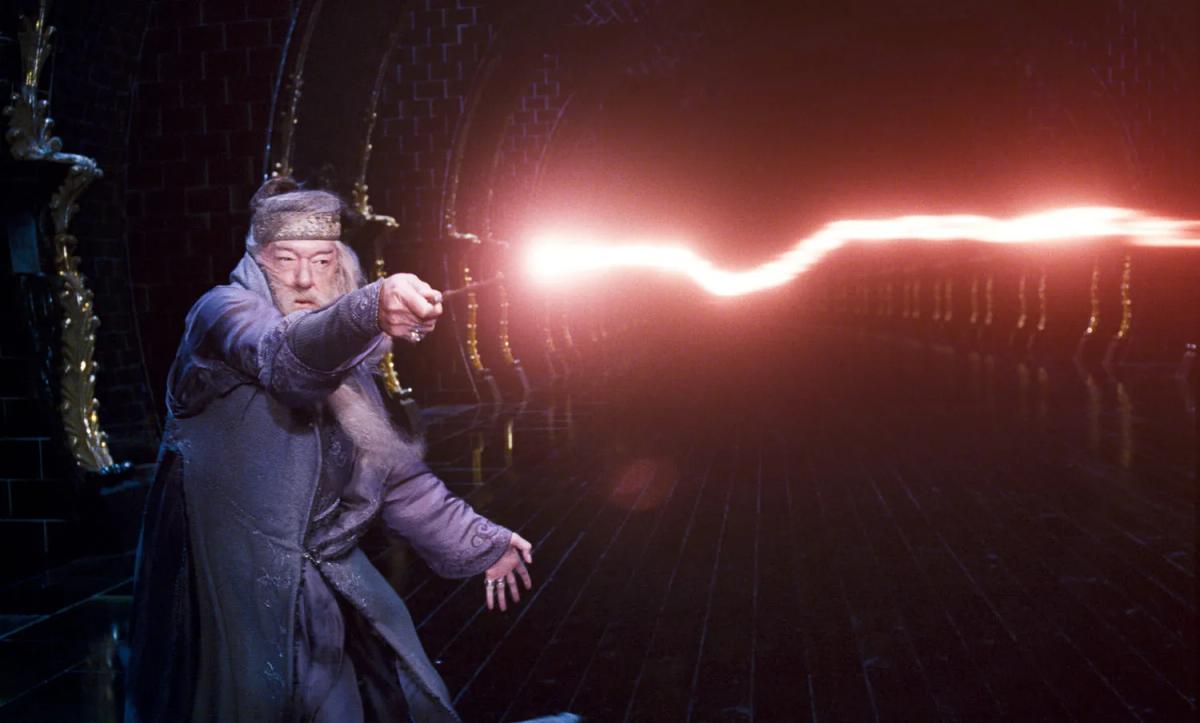
Beats Grindelwald before the Elder Wand is his, and has an answer for every kind of fight.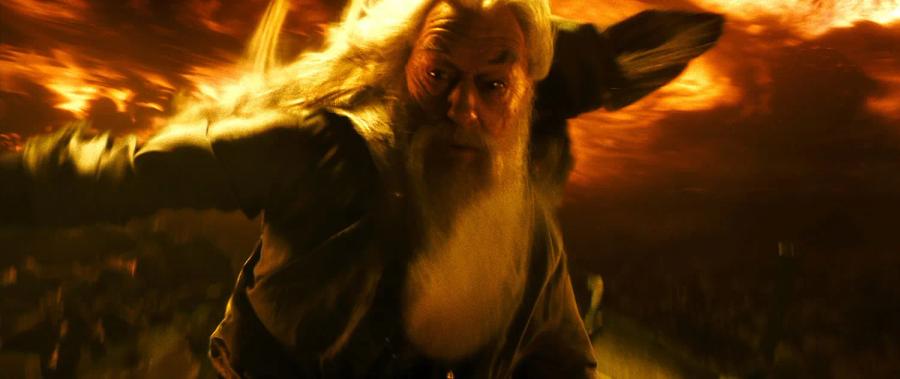
Warner Bros. Pictures - Combat35% of score95Defeats Gellert Grindelwald (Johnny Depp and Mads Mikkelsen, with Colin Farrell as his Graves disguise) in 1945 and holds off Voldemort while protecting Harry.
- Power25% of score95Produces the cave fire despite being badly weakened by the potion.
- Range25% of score100Combines transfiguration, enchantment, mental magic and demanding defensive work.
- Control15% of score95Changes his response as a fight develops. The Credence Barebone (Ezra Miller) confrontation adds precise restraint.
Dumbledore's strongest result comes in 1945. Grindelwald has the Elder Wand. Dumbledore beats him anyway. The duel is reported and not shown in full, though its outcome matters: his strongest historical victory comes before he acquires the weapon that helps him in later fights.
The Ministry duel makes that ability easier to understand. Dumbledore protects Harry while answering an opponent who is trying to kill him, moving between animation, barriers and containment. In the cave, he can barely stand after drinking the potion, yet still summons the fire that gets them out. These are very different problems, and he has an answer to both.
Voldemort has the more destructive record. Dumbledore has shown an answer to more kinds of problem, which gives him the narrow overall lead.
On screen
- Order of the Phoenix adds the shattered-glass defence. Half-Blood Prince retains the Inferi rescue. The Secrets of Dumbledore adds his controlled response to Credence.
In the books
The fountain water enclosing Voldemort is already in Order of the Phoenix chapter 36. Fawkes also intercepts a Killing Curse. The 1945 victory is reported, and the cave rescue appears in Half-Blood Prince chapter 26.
References: Sorcerer's Stone chapter 6. Order of the Phoenix chapter 36. Half-Blood Prince chapter 26. Deathly Hallows chapter 35. Films: Order of the Phoenix, Ministry. Half-Blood Prince, cave. The Secrets of Dumbledore, Credence confrontation.
The case against
The Elder Wand assists his later performances, and Fawkes saves him from a Killing Curse in the Ministry novel. He does not defeat Voldemort single-handedly there. Give destructive power more weight and Voldemort can move ahead.

Lord Voldemort
Holds off McGonagall, Kingsley and Slughorn at once, with the most destructive record here.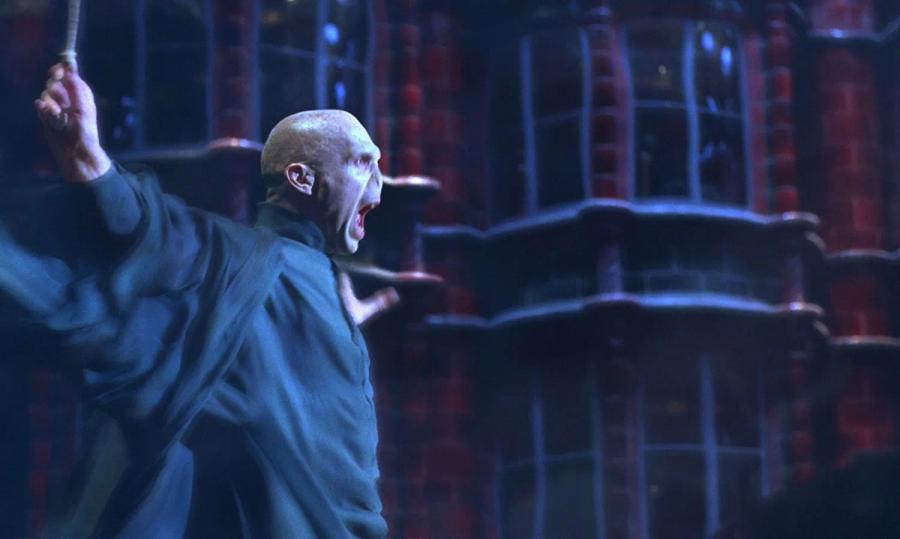
Warner Bros. Pictures - Combat35% of score95Fights Dumbledore and later handles Minerva McGonagall (Maggie Smith), Kingsley Shacklebolt (George Harris) and Horace Slughorn (Jim Broadbent) together.
- Power25% of score100His strongest attacks and the film breach of the Hogwarts shield set the upper benchmark.
- Range25% of score95Horcruxes, unaided flight, possession and curses extend well beyond ordinary duelling.
- Control15% of score90Maintains demanding magic across multiple opponents. Possession and wand use expose limits.
Making Voldemort sound powerful is easy if you count how many people are afraid of him. The more useful evidence is what happens when accomplished wizards fight him. At the end of the Deathly Hallows novel, McGonagall, Kingsley and Slughorn cannot bring him down together. After Bellatrix falls, he throws all three back.
He also pursues magic when nobody is exchanging curses. He achieves unsupported flight and takes the creation of Horcruxes to a grotesque extreme. His willingness to do these things does not itself earn points. His ability to make them work does.
He edges Grindelwald because the evidence is fuller across elite opposition, exceptional Dark magic and repeated demonstrations of force. Fantastic Beasts makes the comparison closer. The effort needed to contain Grindelwald's Paris fire makes it difficult to dismiss him as a distant third.
On screen
- In Order of the Phoenix, Voldemort creates the fire serpent himself and attacks through the surrounding glass. In Deathly Hallows Part 2, he breaches the castle shield with the Elder Wand.
In the books
In Order of the Phoenix chapter 36, Dumbledore's rope of fire changes into a serpent when Voldemort transforms it. Dumbledore vanishes it. The three-on-one fight against McGonagall, Kingsley and Slughorn is in Deathly Hallows chapter 36.
References: Order of the Phoenix chapter 36. Half-Blood Prince chapter 23. Deathly Hallows chapters 4, 23, 36. Films: Order of the Phoenix, Ministry. Deathly Hallows Part 2, shield breach.
The case against
Killing the imprisoned, elderly Grindelwald offers no useful evidence for a contest between them in their prime. Voldemort also fails to understand forms of protection that repeatedly defeat his plans.
Gellert Grindelwald
His Paris fire takes a whole team of wizards to put out.- Combat35% of score90Fights Aurors as Graves and exchanges spells with Dumbledore without a settled winner.
- Power25% of score100The Paris fire requires several capable wizards to contain it.
- Range25% of score90Concealment, curses and selective magical fire show considerable variety.
- Control15% of score90Controls access through his fire and handles several opponents, though he is eventually contained.
Fantastic Beasts gives Grindelwald's reputation a substantial fighting record. Disguised as Graves, he fights Aurors before a coordinated intervention stops him. A Swooping Evil belonging to Newt Scamander (Eddie Redmayne) distracts him, Newt's binding spell brings him down and makes him drop his wand, and Tina Goldstein (Katherine Waterston) summons the wand away. Newt then reveals his identity with Revelio. Each part matters.
Paris is the stronger demonstration of scale. The blue fire in The Crimes of Grindelwald continues threatening the city after its caster has left. Nicolas Flamel (Brontis Jodorowsky) has to organise the others to stop it. Grindelwald does not destroy Paris, but containing his spell requires several capable magicians working together.
His exchange with Albus in The Secrets of Dumbledore supports the idea of a peer, while his offensive reach puts him above the group led by Severus Snape (Alan Rickman) and McGonagall. It does not settle a hypothetical contest with Voldemort.
On screen
- The three Fantastic Beasts films supply the Auror fight, Paris fire and exchange with Albus. Newt forces him to drop his wand during the capture, and Tina uses Accio to retrieve it. The final exchange with Albus in The Secrets of Dumbledore is not the 1945 duel and has no settled winner.
In the books
Deathly Hallows supplies the historical defeat and Dumbledore's account of their closely matched ability. The films add combat evidence to that reported history.
References: Deathly Hallows chapters 18, 24, 35. Films: Fantastic Beasts and Where to Find Them, subway. The Crimes of Grindelwald, rally and cemetery. The Secrets of Dumbledore, final confrontation.
The case against
He has the Elder Wand for much of this record. A score of 100 for Power means the strongest demonstrated tier in this pool, not unlimited power or proof that his unaided spellcasting equals Voldemort's.
- Ranks 4–7 · within 2.75 points · effectively tied

Severus Snape
Invents his own spells and improves the potions he was taught.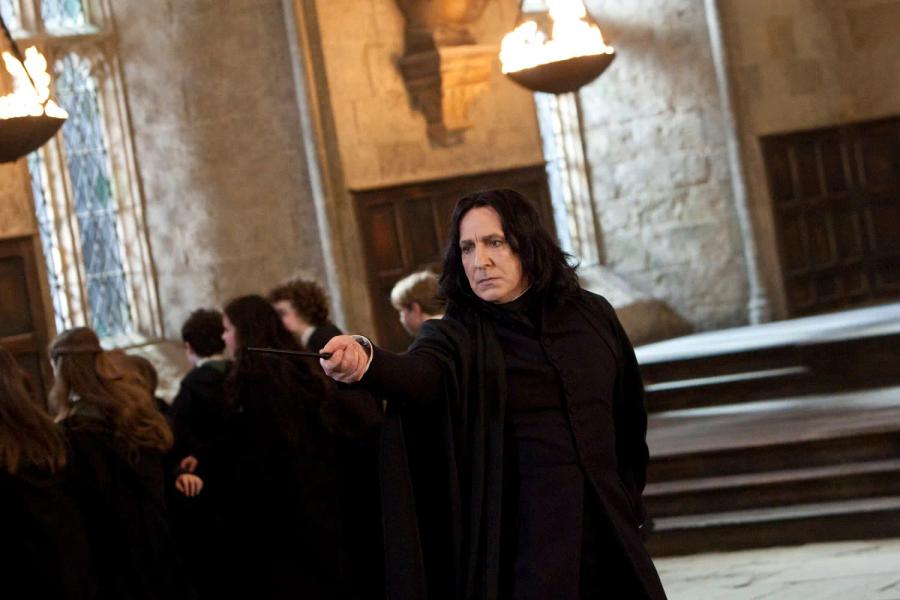
Warner Bros. Pictures - Combat35% of score80Repeatedly counters Harry, but has few completed victories over elite adult opponents.
- Power25% of score75Sectumsempra is devastating. Large-scale magic is less extensively demonstrated.
- Range25% of score95Invents spells, improves potions, practises mental magic and achieves unaided flight.
- Control15% of score95Conceals his allegiance from Voldemort and performs precise defensive magic under attack.
For much of Half-Blood Prince, Harry's sudden improvement in Potions is Snape's achievement with somebody else's name on it. The annotations work. They make established methods better. Sectumsempra goes further: Snape has created a spell that Harry can use without understanding what he is about to do.
His ability to understand and alter magic is the main reason he places fourth. His work extends through potions, curses, counter-curses, mental defence and flight. When Harry attacks him during the escape from Hogwarts, Snape repeatedly stops him. The difference in experience is obvious, but so is the control.
His edge over McGonagall comes from invention and mental magic. His retreat from her supplies no conclusive result between them.
On screen
- Half-Blood Prince retains the potion annotations and Harry's failed pursuit. In Deathly Hallows Part 2, Snape's deflections strike the Carrows during McGonagall's attack. Interpreting every movement as a deliberate rescue goes beyond the observable hits.
In the books
Half-Blood Prince supplies the fullest account of his inventions and defence against Harry. Deathly Hallows explains his flight and concealed work for Dumbledore. The arranged killing of Dumbledore is not a duelling victory.
References: Half-Blood Prince chapters 9, 24, 28. Deathly Hallows chapters 30, 33. Films: Half-Blood Prince, pursuit. Deathly Hallows Part 2, Great Hall.
The case against
Dumbledore's death was arranged. Counting it as an elite duelling victory would badly distort the ranking. Snape has exceptional breadth and fewer decisive adult combat results than Bellatrix.

Minerva McGonagall
Turns Transfiguration into a way of fighting and wakes the castle to defend it.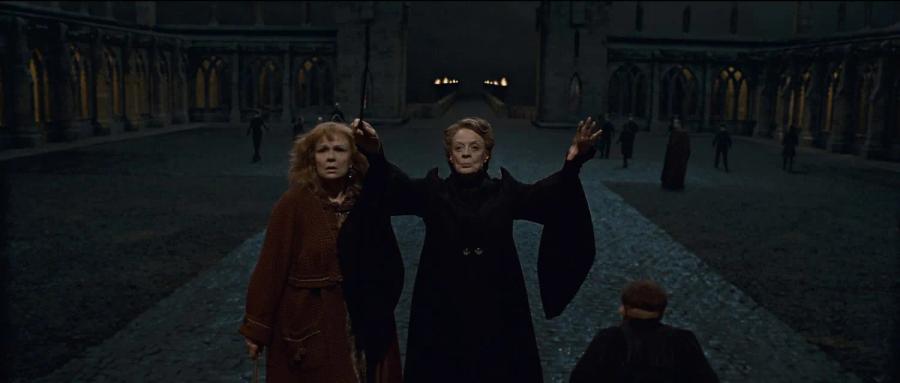
Warner Bros. Pictures - Combat35% of score80Presses Snape into retreat and fights Voldemort as part of a three-person group.
- Power25% of score85Mobilises Hogwarts defenders through extensive animation magic.
- Range25% of score90Her combat transfiguration and Animagus ability demonstrate demanding transformation.
- Control15% of score85Adapts spells mid-exchange and coordinates major defensive preparations.
McGonagall bringing Hogwarts' stone defenders to life is one of the final film's most satisfying moments. The book's confrontation with Snape is more revealing about how she fights. An attack changes form, and she changes it again before the exchange has ended.
Fire becomes a serpent, then smoke and pursuing daggers. Her classroom discipline is a practical weapon. That ability sits alongside the larger task of organising the castle defence and her part in the final confrontation with Voldemort.
Bellatrix has the stronger record of individually defeating named opponents. McGonagall has more demonstrated ways to change a battle, which gives her the advantage across the four measures.
On screen
- Deathly Hallows Part 2 places the Snape confrontation in the Great Hall and prominently shows Piertotum Locomotor animating the stone defenders.
In the books
The intricate transfiguration duel is in Deathly Hallows chapter 30. The group confrontation with Voldemort is in chapter 36. Her classroom Animagus demonstration is in Prisoner of Azkaban chapter 6.
References: Prisoner of Azkaban chapter 6. Deathly Hallows chapters 30, 31 and 36. Film: Deathly Hallows Part 2, the Great Hall and castle preparations.
The case against
Snape has reasons to hold back, and the group fighting Voldemort does not defeat him. Neither scene proves McGonagall can beat those men in an unrestricted solo duel.

Bellatrix Lestrange
The clearest fighting record of any Death Eater, and one decisive defeat.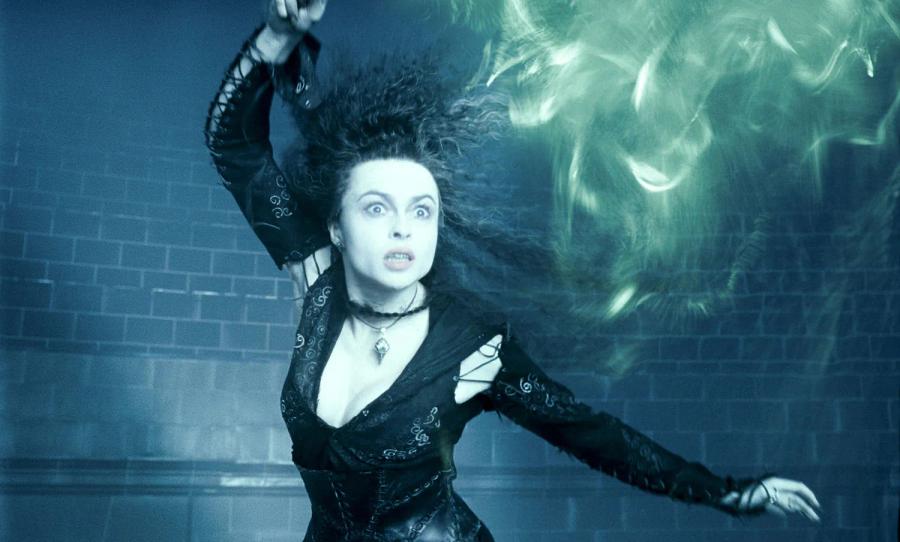
Warner Bros. Pictures - Combat35% of score90In the novel, defeats Nymphadora Tonks (Natalia Tena) and Sirius Black (Gary Oldman) and fights Hermione Granger (Emma Watson), Ginny Weasley (Bonnie Wright) and Luna Lovegood (Evanna Lynch) together before facing Molly.
- Power25% of score85The film Burrow assault and repeated lethal attacks demonstrate substantial force.
- Range25% of score75Occlumency teaching adds to a record otherwise dominated by offensive Dark magic.
- Control15% of score75Effective against multiple opponents, but carelessness and a completed loss limit the score.
Bellatrix has enough actual fighting behind her reputation to test it. In the Order of the Phoenix novel, she defeats Tonks and sends Sirius through the veil. At Hogwarts, the final novel has Hermione, Ginny and Luna fighting her together before Molly takes over. These are useful comparisons because the opposition is trying to resist her.
Sixth may seem low beside that record. The other measures explain it. Draco's Occlumency training establishes mental magic, but her record contains less invention and varied technical work than Snape's or McGonagall's. Combat alone puts her above both.
Molly's victory also stays in the argument. Bellatrix's larger fighting record places her sixth. Molly still won.
On screen
- Order of the Phoenix makes the fatal strike on Sirius an explicit Killing Curse. Kingsley, not Tonks, is shown duelling Bellatrix. Half-Blood Prince adds the Burrow attack with Fenrir Greyback (Dave Legeno). Part 2 retains Molly's victory.
In the books
Tonks's defeat belongs to Order of the Phoenix chapter 35. The same battle ends with Sirius falling through the veil. Deathly Hallows chapter 36 supplies the fight against Hermione, Ginny and Luna before Molly takes over.
References: Order of the Phoenix chapters 35 to 36. Half-Blood Prince chapter 15. Deathly Hallows chapter 36. Films: Order of the Phoenix, veil. Half-Blood Prince, Burrow. Deathly Hallows Part 2, Molly duel.
The case against
Her complacency contributes to the fight she loses, but the loss is still real. A list built entirely around completed wins would also have to give Molly much more room.

Filius Flitwick
Beats Dolohov and builds much of the castle's protection.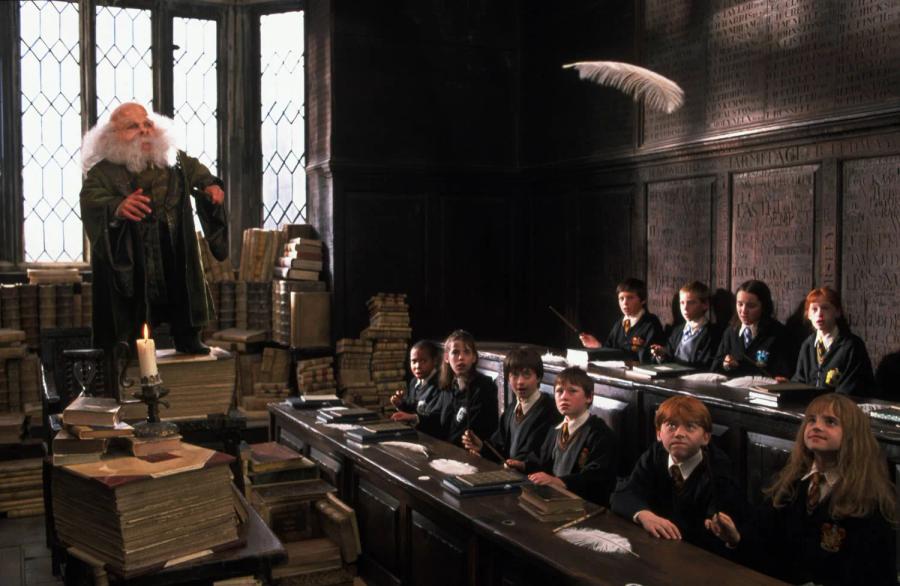
Warner Bros. Pictures - Combat35% of score80Defeats Antonin Dolohov (Arben Bajraktaraj) at Hogwarts, a specific result against a dangerous opponent.
- Power25% of score80Contributes substantial protective enchantments to the castle’s defence.
- Range25% of score85Advanced charms and protective work support more than classroom competence.
- Control15% of score85Can both construct intricate enchantments and selectively remove troublesome magic.
Filius Flitwick (Warwick Davis) gets one particularly useful result: he brings down Dolohov. That matters because Dolohov has already shown he can incapacitate experienced fighters, including Alastor Moody (Brendan Gleeson). His place does not have to rest on the claim that Flitwick used to be a duelling champion, which Hermione originally presents as something she has heard.
His charms work supplies the rest. The castle protections are serious magic, and the way he handles the twins' Portable Swamp gives a smaller but revealing example of technical judgement. He removes it while preserving a piece he admires. The story has spent years making him seem gentle. It never establishes that gentleness as a limit on his ability.
Kingsley has more repeated exposure to adult combat. Flitwick's named victory and more specific technical demonstrations give him the small advantage here. Seventh is defensible, but their records are too unevenly shown for the difference to feel settled.
On screen
- Deathly Hallows Part 2 shows his contribution to Hogwarts' protective barrier. The barrier is a collective achievement, not a shield he creates alone.
In the books
Deathly Hallows chapter 36 records his victory over Dolohov. Order of the Phoenix chapter 38 supplies his handling of the swamp. Hermione reports the duelling-champion story second-hand in Chamber of Secrets chapter 11.
References: Chamber of Secrets chapter 11. Order of the Phoenix chapter 38. Deathly Hallows chapters 30, 36. Film: Deathly Hallows Part 2, shield preparations.
The case against
One important victory carries a lot of weight in a relatively short fighting record. Readers who prefer repeated combat appearances can reasonably place Kingsley above him.
- Ranks 8–9 · within 1.75 points · effectively tied

Kingsley Shacklebolt
Fights dangerous opponents from the Ministry to the Battle of Hogwarts.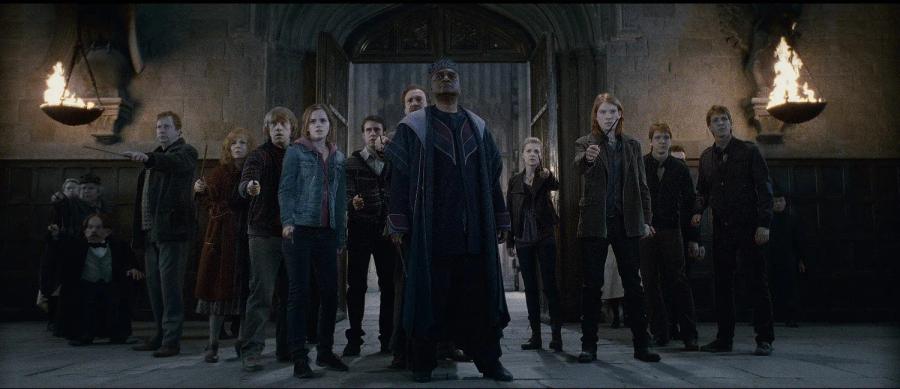
Warner Bros. Pictures - Combat35% of score85Faces Death Eaters at the Ministry, fights in the aerial escape and later confronts Voldemort.
- Power25% of score75His combat magic is effective, though major solo feats of scale are scarce.
- Range25% of score75A speaking Patronus and memory work extend a predominantly combat-based record.
- Control15% of score85Repeatedly functions under attack and delivers an urgent warning after the Ministry falls.
Kingsley's advantage is repetition. The Ministry, the Seven Potters escape and the Battle of Hogwarts all put him against dangerous opposition. He keeps functioning in situations where being a respected Auror would be of very little use without the ability to back it up.
The wedding warning is a different sort of test. His Patronus reaches the guests after the Ministry has fallen, giving them information they need immediately. That spell is easy to overlook beside the final battle, but it is a good example of advanced magic doing a practical job under terrible conditions.
Kingsley stays above Slughorn because his record repeatedly shows him facing dangerous opposition. Slughorn has the stronger specialism outside fighting, but fewer demanding encounters to test it.
On screen
- Deathly Hallows Part 1 retains the wedding warning carried by his Patronus. Part 2 includes him among the defenders preparing Hogwarts.
In the books
Order of the Phoenix gives the fuller Ministry fighting. Deathly Hallows supplies the aerial escape, wedding warning and shared fight against Voldemort. His later ministerial position contributes no points.
References: Order of the Phoenix chapters 27, 35 to 36. Deathly Hallows chapters 5, 8, 36. Films: Deathly Hallows Part 1, wedding. Part 2, castle defence.
The case against
His biggest fights are shared, and few fully described solo victories are available. Repeated participation is valuable evidence, but it is less conclusive than a clear account of exactly whom he defeated.

Horace Slughorn
A potions master who stands with McGonagall and Kingsley against Voldemort.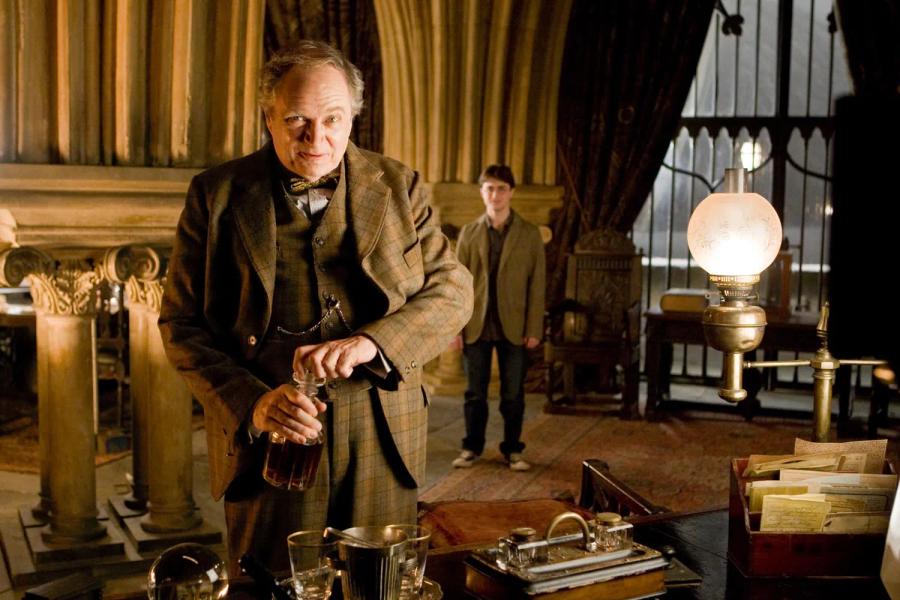
Warner Bros. Pictures - Combat35% of score75Stands with McGonagall and Kingsley against Voldemort, without a solo win to his name.
- Power25% of score75High-level potions and transformation are better established than destructive scale.
- Range25% of score85Potions expertise, self-transfiguration and memory alteration are advanced, but fewer independent achievements are shown than for the highest scorers.
- Control15% of score80Skilful concealment and battle survival are offset by the visibly crude altered memory.
Slughorn makes his first substantial appearance disguised as an armchair. The disguise is funny, which makes it surprisingly easy to forget that transforming yourself into a convincing piece of furniture is difficult magic. Dumbledore finds him out. That does not make the transformation ordinary.
His potions knowledge gives him an extensive technical foundation, and the final novel supplies the fighting evidence people often forget: he confronts Voldemort alongside McGonagall and Kingsley. He is not their equal in every respect simply because he shares the scene, but he is doing more than watching two better fighters work.
Slughorn takes ninth through that combination. Newt and Flamel have more unusual individual achievements. Slughorn brings an advanced specialism, other demanding magic and direct participation against Voldemort. His Range stays below McGonagall's because the evidence of what he independently creates or accomplishes is narrower.
On screen
- Half-Blood Prince retains the armchair disguise and altered memory. His role in the final film is smaller than his book combat record would suggest.
In the books
Half-Blood Prince establishes his potion expertise, memory tampering and self-transfiguration. Deathly Hallows chapter 36 gives him the shared duel with Voldemort, which Part 2 does not stage.
References: Half-Blood Prince chapters 4, 9, 17, 22 to 23. Deathly Hallows chapter 36. Film: Half-Blood Prince, recruitment and Pensieve scenes.
The case against
He has no major named solo victory. His doctored memory is also poor enough for Dumbledore to recognise the tampering, so knowing memory magic does not justify a top Control score.

Molly Weasley
One duel, against Bellatrix, and she wins it.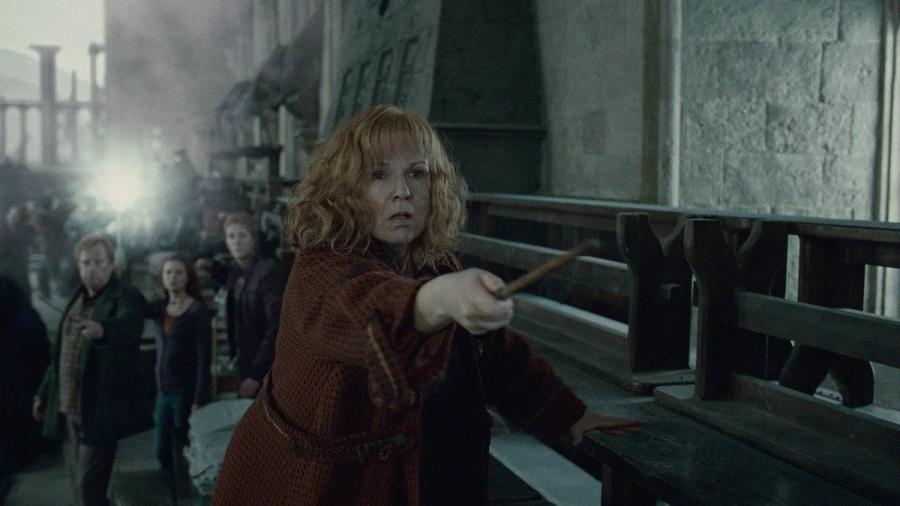
Warner Bros. Pictures - Combat35% of score85Defeats Bellatrix in a direct duel. One exceptional result carries most of the combat case.
- Power25% of score75Her spells prove lethal against a skilled opponent, without comparable evidence of large-scale effects.
- Range25% of score60Practical charms and battle magic are established. Advanced invention and wider specialist work are less extensively shown.
- Control15% of score80Maintains effective defence and delivers the decisive attack during a dangerous confrontation.
Molly's case is unusually simple. Bellatrix attacks Ginny. Molly takes over the fight and kills her. The result holds in both the novel and the film, even though the staging changes. Her anger does not need to be turned into an explanation that removes her skill.
The harder question is how far one result should carry her. Bellatrix has a longer record against named opponents. Molly's everyday charms show competence, but they do not establish the invention, mental magic or specialised enchantments that distinguish several people above her. Her Range score stays at 60 for that reason.
Molly, Newt and Barty Crouch Jr (David Tennant, with Brendan Gleeson as his Moody disguise) finish on 75.50. The published tiebreaker is Combat, the largest component of the score. Molly's 85 beats their 65 and gives her tenth. That settles the order for this list without pretending she has a broader magical education than either of them.
On screen
- Deathly Hallows Part 2 stages her duel with Bellatrix after Ginny is threatened. Molly casts the decisive spells, and Bellatrix disintegrates.
In the books
Deathly Hallows chapter 36 makes the direct duel and Molly's victory clear. Bellatrix falls dead and does not disintegrate. Household charms elsewhere demonstrate useful competence, without the same evidence of advanced invention.
References: Chamber of Secrets chapter 3. Deathly Hallows chapter 36. Film: Deathly Hallows Part 2, the Great Hall duel.
The case against
One extraordinary duel carries a great deal of weight. A ranking that gives more room to specialist achievement can put Newt or Barty above her.
The exact tie at the cutoff
Newt and Barty both score 75.50, exactly level with Molly. Newt's ratings are Combat 65, Power 70, Range 90 and Control 85. Barty's are 65, 75, 85 and 85. Molly's stronger direct fighting result wins the Combat tiebreaker. Newt's higher Range then puts him ahead of Barty among the two exclusions.

Why Hagrid is the closest thing Harry has to a parent
Hagrid bakes Harry’s birthday cake, buys his owl and gives him his parents’ photographs. He also carries Harry at the story’s beginning and again at its close.What Newt and Flamel can do
Newt separates and preserves an Obscurus, although he cannot save the girl. His New York solution depends on preparing the memory-altering venom and having Frank distribute it. The solution is specialist skill with creature assistance. Flamel scores 74.50, with ratings of 50, 85, 95 and 80. Creating the Sorcerer's Stone and helping contain Grindelwald's fire are exceptional achievements. Neither gives him a substantial solo-duelling record.
The other omissions
Moody has a formidable reported career, but Crouch performs the Hogwarts feats often remembered as his. Aberforth Dumbledore (Ciarán Hinds in Harry Potter, Richard Coyle in Fantastic Beasts) has one striking piece of magic in the novel: in chapter 28 his goat Patronus is a decoy to explain away Harry's stag. Credence has destructive power without the same control. Lally Hicks (Jessica Williams) and Theseus Scamander (Callum Turner) have useful film combat records, while Queenie Goldstein (Alison Sudol) is a specialist in Legilimency. Their shorter or narrower records leave more to infer than the final selections.
What different weights would change
Moving ten percentage points from Range to Power puts Voldemort on 96.00 and Dumbledore on 95.75. Moving ten from Range to Combat puts Bellatrix on 84.25, ahead of McGonagall at 83.50 and Snape at 83.25. The order depends on whether power means force, fighting or command of magic more broadly.
Cast
- Daniel Radcliffe as Harry Potter
- Ralph Fiennes as Lord Voldemort
- Julie Walters as Molly Weasley
- Helena Bonham Carter as Bellatrix Lestrange
- Tom Felton as Draco Malfoy
- Richard Harris as Albus Dumbledore
- Michael Gambon as Albus Dumbledore
- Jude Law as Albus Dumbledore (Fantastic Beasts)
- Johnny Depp as Gellert Grindelwald
- Mads Mikkelsen as Gellert Grindelwald
- Colin Farrell as Percival Graves (Gellert Grindelwald in disguise)
- Ezra Miller as Credence Barebone
- Maggie Smith as Minerva McGonagall
- George Harris as Kingsley Shacklebolt
- Jim Broadbent as Horace Slughorn
- Eddie Redmayne as Newt Scamander
- Katherine Waterston as Tina Goldstein
- Brontis Jodorowsky as Nicolas Flamel
- Alan Rickman as Severus Snape
- Natalia Tena as Nymphadora Tonks
- Gary Oldman as Sirius Black
- Emma Watson as Hermione Granger
- Bonnie Wright as Ginny Weasley
- Evanna Lynch as Luna Lovegood
- Dave Legeno as Fenrir Greyback
- Arben Bajraktaraj as Antonin Dolohov
- Warwick Davis as Filius Flitwick
- Brendan Gleeson as Alastor Moody
- David Tennant as Barty Crouch Jr
- Ciarán Hinds as Aberforth Dumbledore
- Richard Coyle as Aberforth Dumbledore (Fantastic Beasts)
- Jessica Williams as Lally Hicks
- Callum Turner as Theseus Scamander
- Alison Sudol as Queenie Goldstein
Reviews in this piece
Read next

Who Is Severus Snape in Harry Potter? His Full Arc, Explained
Snape protects Harry from the first film to the last, yet treats him with contempt. His memories explain why, and why he killed Dumbledore.Read it →In this world
Also on Harry Potter: Review · Deathly Hallows: Part 2 (+7) Quiz · Which Death Eater Are You? (+2) List · The 10 best Ron, Hermione, Neville, McGonagall and Dumbledore moments, ranked (+2)
Everything on Harry Potter
8 reviews · 7 Unscrewed · 3 quizzesRelated quizzes
More from Harry Potter
Which Death Eater Are You?Ten questions put you at Voldemort's table. Find out which of seven Death Eaters, from Bellatrix to Regulus, shares your reasons.- Which Hogwarts Professor?Ten teaching dilemmas at Hogwarts. Find out which professor you'd be: Dumbledore, McGonagall, Snape, Hagrid, Lupin or Trelawney.
- Which Hogwarts House?What would you do with a locked chest and no key? Answer ten questions as yourself at school and find your Hogwarts house.