Why Alicent Hightower Lost Her Power in House of the Dragon?

Every office Alicent ever held came through a man. By season 3 that borrowed power is gone. Was her collapse the point, or did the writing lose her?

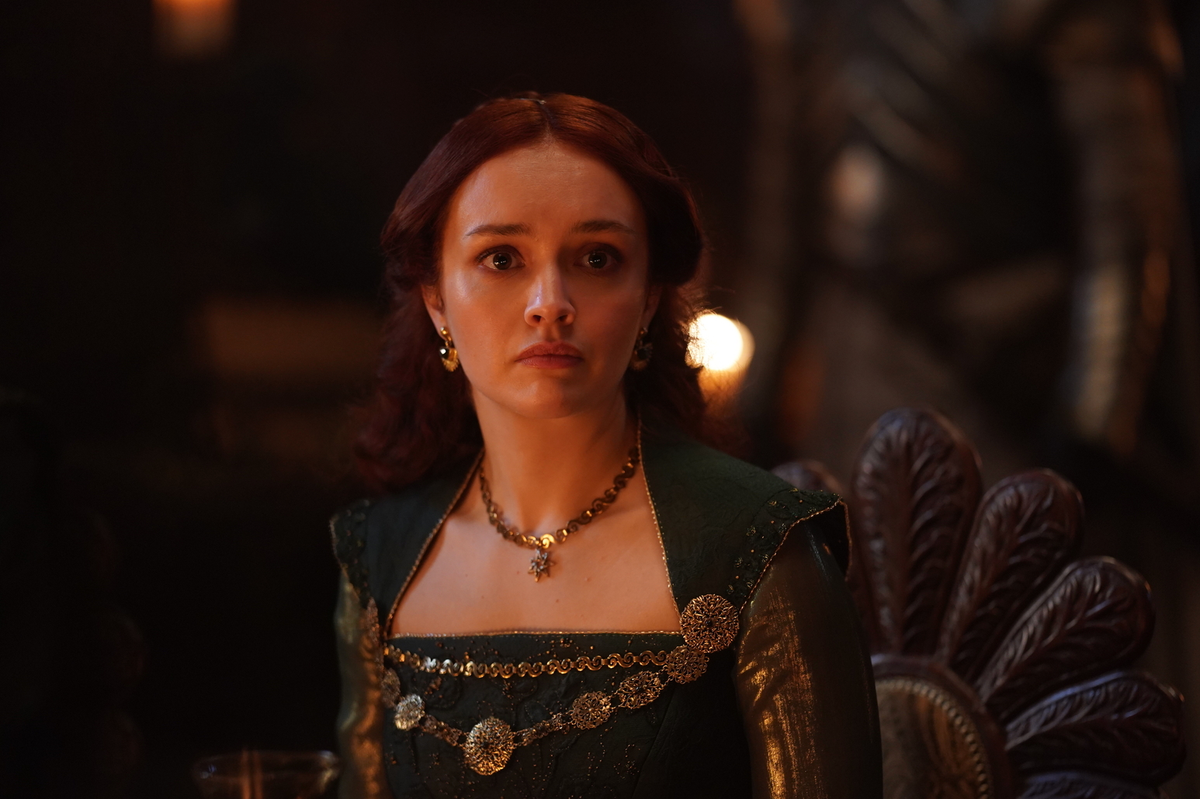
Alicent Hightower seated in a dark green gown, looking off to one side with a guarded expression

HBO

Full spoilers for all three seasons of House of the Dragon. Leave now if you are behind.

Everything happened to Alicent Hightower. Almost none of it was hers to choose.

Every formal source of power Alicent Hightower (Olivia Cooke) has ever possessed comes through a man. She is Otto Hightower's daughter, then Viserys Targaryen's queen, then Aegon II's mother. She becomes extraordinarily skilled at using the influence those positions give her, but the distinction matters. Influence can be withdrawn. The office belongs to somebody else.

House of the Dragon spends three seasons proving the difference.

Where does Alicent start?
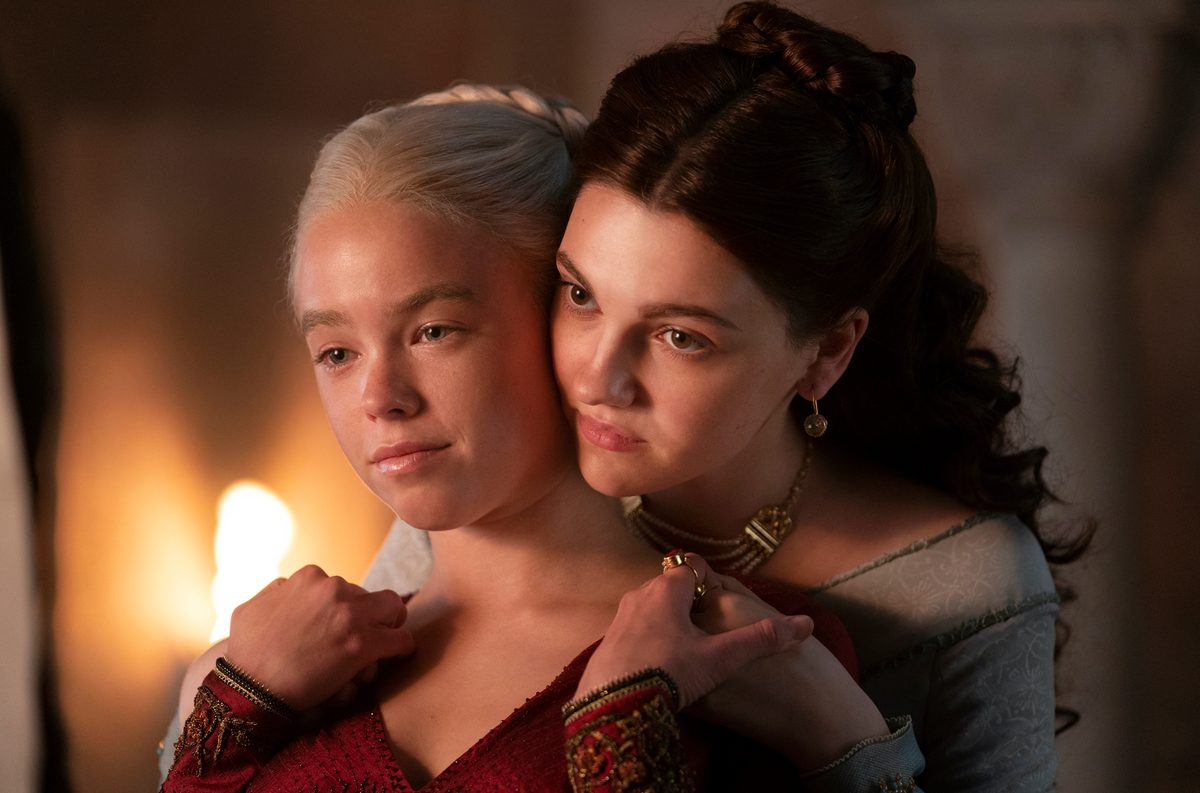
Young Rhaenyra and young Alicent standing close together by firelight, Alicent's arms around her shoulders
HBO

As the other half of the best relationship the show has ever written.

The early episodes, with Emily Carey playing young Alicent opposite Milly Alcock's Rhaenyra Targaryen, are built around two girls who could not be less alike and cannot leave each other alone. Rhaenyra wants a dragon and an argument. Alicent wants to do the right thing, largely because she has been taught with terrifying precision what the right thing is for a girl.

Watch Alicent in those scenes and she is not simply disapproving. She is fascinated. Rhaenyra says the thing Alicent would never say, refuses the thing Alicent would accept, and walks into rooms as though permission is an administrative detail. Alicent watches her do it, feels something complicated, and then goes and does her duty anyway.

That gap between what Alicent admires and what she permits herself to become is the whole character.

What is the green dress actually about?

It looks like the birth of a political player. Alicent learns that Rhaenyra has lied to her, enters the wedding feast wearing Hightower green, and half the room immediately understands that something has changed. It is one of the show's great entrances.

But a dress is not a plan. It is a signal, and signals still require somebody else to respond to them.

The green dress may be the last moment when a purely symbolic act by Alicent is enough to rearrange a room. What follows is messier. She becomes more politically active, more confrontational and eventually more dangerous, but almost always from inside a position somebody else gave her. She can influence Viserys I Targaryen (Paddy Considine) because she is his wife. She can pressure Aegon because she is his mother. She can command attention because she is queen. None of those relationships belongs to her alone.

Whose plan does Alicent inherit?

Otto Hightower's (Rhys Ifans), though that does not make her his innocent instrument forever.

Otto creates the architecture. A grieving king needs comfort, so Otto sends his daughter. Alicent becomes queen. She produces male heirs. The court divides around those heirs, and Otto spends years treating the eventual conflict as inevitable.

Alicent eventually participates in that system willingly. The question of Rhaenyra's children is where she begins operating on her own account. She challenges their legitimacy, pushes the issue inside Viserys's court, and teaches Aegon that simply existing makes him dangerous to Rhaenyra's future. That is agency. It is also agency inside a game Otto taught her to play.

He gives Alicent a political language built almost entirely around duty, family and fear, and she becomes fluent enough in it that she eventually forgets somebody else wrote the grammar.
Why does the Green Council move without her?

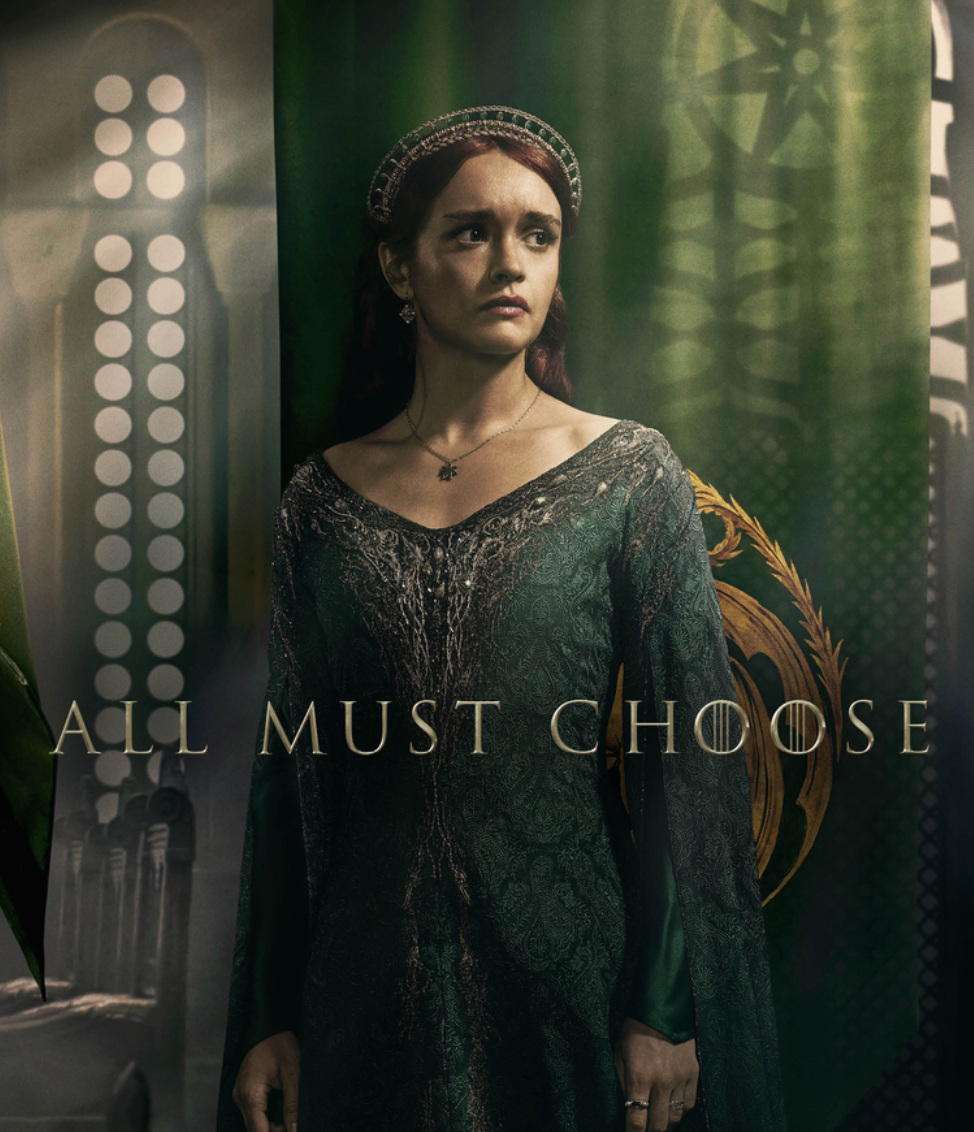
Character poster of Alicent Hightower in a dark green gown and circlet, with the words "All Must Choose"
HBO

Because Alicent mistakes influence for ownership. Viserys dies and she discovers that the men around her have already been planning Aegon's accession without her.

She has spent years believing she is one of the architects of the Green position. Then the architecture starts moving and she finds she is standing inside it rather than directing it. She is not irrelevant afterward. She reaches Aegon before Otto does, and she can still affect events. She simply cannot stop the machine.

The new king is her son, but his crown does not belong to her. The council contains her allies, but the council is not hers. The faction carries her color, but it no longer requires her permission.

The Greens are courteous to Alicent in the way people are courteous to someone whose signature they already have. And the cruel part is that she helped teach everyone around her that this arrangement was natural.

What does the misheard prophecy give her?

Permission, which is more important than causation.

The Green Council does not crown Aegon because Alicent misunderstands Viserys's final words. The machinery already exists. What the misunderstanding gives her is a way to believe that the outcome Otto spent decades preparing is also what her husband wanted.

That matters because Alicent knows exactly who Aegon II Targaryen (Tom Glynn-Carney) is. She knows his cruelty, his appetites and his failures better than almost anyone. Yet when Viserys mutters about Aegon and a prophecy, she accepts the interpretation that makes the terrible thing she is already moving toward feel righteous.

She does not invent the coup. She receives absolution for participating in it, which is darker. Alicent's greatest talent has always been turning what she must do into what she believes she ought to do.

What is left of her power in season three?

Very little that cannot be taken from her, and two moments crystallize what remains.

The first is Helaena Targaryen (Phia Saban) and the moon tea. Alicent tries to make her daughter drink it, framing the act as protection, and when Helaena refuses she attempts to force the choice on her anyway.

It is the bleakest repetition in her story. Her own body was managed for dynastic reasons when she was young, and her wishes were treated as secondary to what her family required. Decades later, given the chance, she reaches for the same logic with her own daughter. Not because she thinks she is being cruel, but because she thinks she is protecting her.

Alicent has inherited the machinery that hurt her so completely that she can operate it with love.

The second is Aemond Targaryen (Ewan Mitchell). By this point she has already reached the stage where she can accept the death of one son as the price of ending the war. With Aemond she goes further and attempts the killing herself, by poison, and fails because Alys Rivers (Gayle Rankin) intervenes.

There is something brutally appropriate about that failure. Alicent has spent her life acting through relationships, whispers, rooms and intermediaries, and even when she finally tries to decide who lives and who dies, the decision still does not become real simply because she made it.

Does Alicent actually believe her own morality?

She does at first, and that is what makes the later version of her interesting.

Young Alicent genuinely believes in duty, propriety, religion and sacrifice. She does not begin as a secret cynic performing goodness for advantage. She follows the rules because she thinks the rules mean something. Then she watches other people break them and prosper. She watches Rhaenyra escape consequences Alicent has spent her life avoiding. She watches powerful men preach one thing and do another. She discovers that obedience does not make her safe, virtue does not make her free, and sacrifice does not guarantee gratitude.

So the morality changes function. It begins as principle and becomes an instrument.

There is Larys Strong (Matthew Needham), whose degrading arrangement she continues because the information is useful. There are her sons, one whose death she accepts as a political necessity and one she actually attempts to kill.

And there is Criston Cole (Fabien Frankel), which is the strand that gives the whole thing away. He is the man at the center of the sexual transgression Alicent once treated as proof of Rhaenyra's dishonesty, and he later becomes her own lover. He is also the only person in this story who wants nothing from her in return. His attachment turns personal rather than dynastic, and it never gets him anything. When he dies at the Butcher's Ball, surrounded and out of options, he ties her handkerchief around his sword hilt. By then it is hard to say what Alicent could have given him even if he had lived, because the queen he loved no longer exists.

The tragedy is not that Alicent never had principles. It is that she followed them long enough to discover they were rules for women, not rules for everyone.

After that she keeps the language, because it is one of the few political languages she knows. But belief has become harder.

Is this commentary, or is the writing failing her?

There is a strong case that Alicent's collapse is exactly the point. The show is unusually precise about where her authority comes from. Otto uses her relationship to Viserys. Alicent uses her relationship to Aegon. Men repeatedly invite her influence when it is useful and remove it when it becomes inconvenient. A woman spends her life operating power she does not technically own, then discovers that borrowed power can be recalled without notice. That is a coherent tragedy.

But a television series can also sideline a character and then insist that being sidelined was the arc. The green dress promised someone capable of moving the political board. Later seasons increasingly ask Olivia Cooke to communicate Alicent's conflict from rooms where the major decisions have already been made, and Cooke keeps supplying an interior struggle even when the plot strips away the exterior leverage. That may be deliberate. It can also still be frustrating.

Perhaps both are true. Her story works best when you stop asking whether Alicent ever had power and start asking what kind she had. She had influence, access and proximity. She had the ability to make powerful men listen while the relationships connecting her to them were intact. What she never had was an institution obligated to obey Alicent Hightower simply because Alicent Hightower had spoken.

One by one, the relationships disappear. Otto loses control over her. Viserys dies. Aegon stops needing her. Aemond rejects her. Criston dies. The council moves on.

And underneath all those titles is not nothing, which would be too easy. What remains is a woman who spent most of her life becoming excellent at using a kind of power that was never hers to keep. Which may be exactly what House of the Dragon is trying to say about her. And if it is not, it has accidentally said it anyway.

Cast

  • Olivia Cooke as Alicent Hightower
  • Emily Carey as Alicent Hightower (young)
  • Emma D'Arcy as Rhaenyra Targaryen
  • Milly Alcock as Rhaenyra Targaryen (young)
  • Rhys Ifans as Otto Hightower
  • Paddy Considine as Viserys I Targaryen
  • Fabien Frankel as Criston Cole
  • Matthew Needham as Larys Strong
  • Tom Glynn-Carney as Aegon II Targaryen
  • Ewan Mitchell as Aemond Targaryen
  • Phia Saban as Helaena Targaryen
  • Gayle Rankin as Alys Rivers

Related