In this piece
Bella's plane was brought down by Gospel John, and Eddie's own brother Freddy helped him do it. Eddie spends most of the finale convinced it was Bobby Glass, commissions his murder, and then races to a prison sauna to stop Marco Moretti's assassin before he kills the one man with a financial reason to keep Eddie alive.
Full spoilers for all eight episodes below.
Who killed Bella in The Gentlemen season 2?
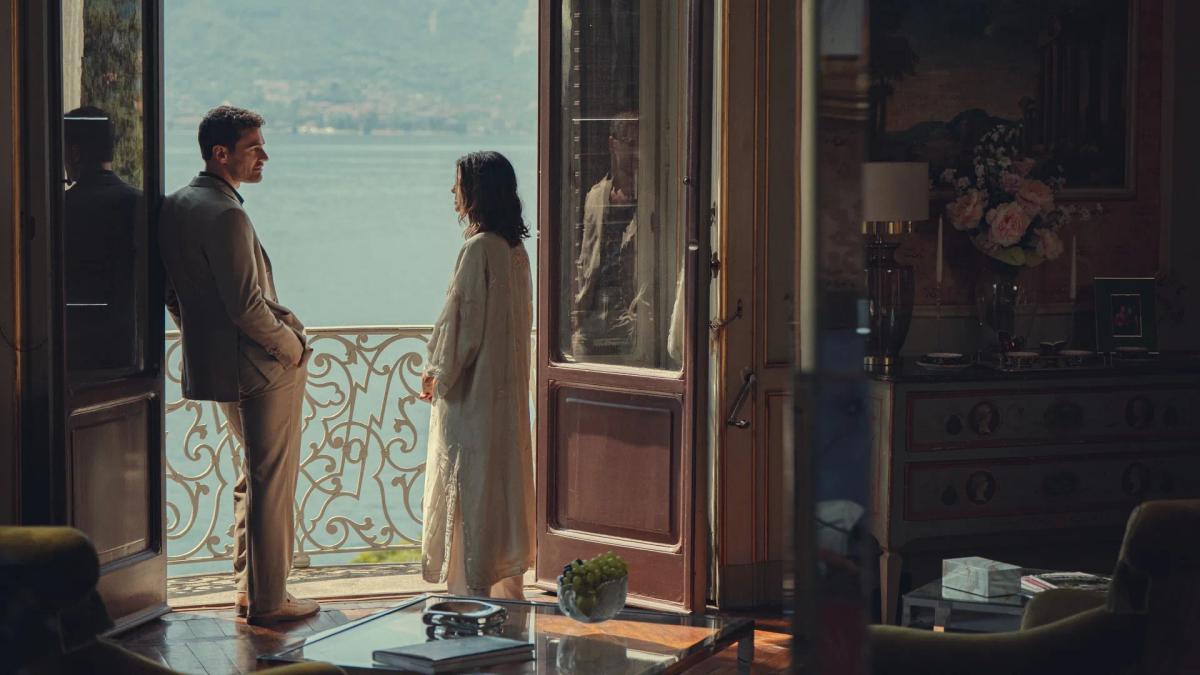
Bella (Benedetta Porcaroli) marries Eddie Horniman (Theo James) at Lake Maggiore and dies within hours. They decide to race to their honeymoon — he takes her car, she takes a seaplane — and as she circles overhead to show off, the plane explodes in front of him.
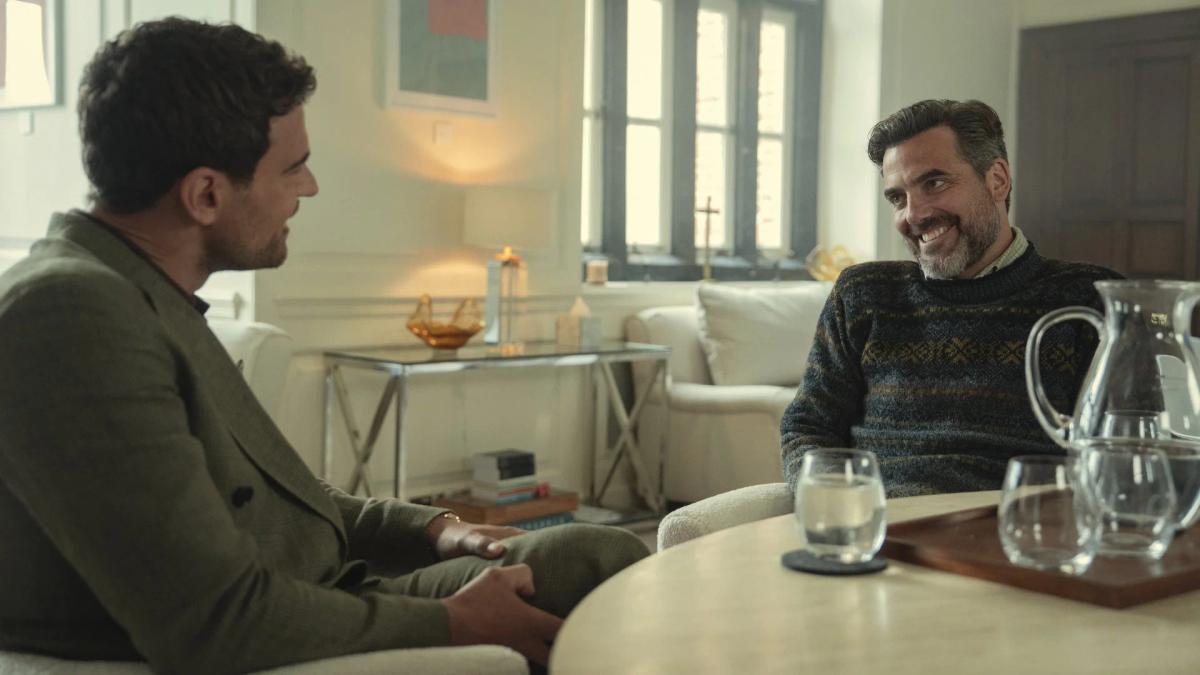
The conspirators are Gospel John (Pearce Quigley) and Freddy Horniman (Daniel Ings). Eddie gets there through a detail his mother mentions in passing: Freddy rang home after a bad dream, worried something had happened to the family. That reminds Eddie that when he visited Freddy to say he was getting married, he also said exactly how Bella would be travelling. Freddy knew about the plane, and almost nobody else did.
One thing the season never settles is whether Bella was the target or Eddie was. He asks. He doesn't get an answer, and the show doesn't supply one either.
Why Freddy did it
The resentment is two and a half years old. Freddy expected to inherit Halstead and the title, his father passed him over for his younger brother, and nothing since has closed that wound.
Gospel John found the wound and worked it. He got hold of Freddy in rehab, presented himself as a spiritual brother who understood what had been taken from him, and gave the grievance a religious shape, comparing the two brothers to Jacob and Esau.
John's own reason is revenge. Freddy killed his brother Tommy in the first episode of season one, and the cruelty of the scheme is that he turned Tommy's killer into the instrument of his revenge, using Freddy's resentment to make him betray his own family. Eddie later completes the circle by forcing Freddy to kill John himself. Freddy's born-again phase, which his mother and sister both clocked as fake when they visited him, was being supervised by the man he had every reason to fear.
John's own account of the plan is colder than revenge. He tells Eddie they wanted to make sure the estate never passed to baby Tarquin, and that two members of his congregation who had lost a child would have raised him. The attack on Halstead and the attempted abduction weren't a threat display. They were an inheritance being redirected.
Why Eddie goes after Bobby Glass first
Because he tortures a man until he hears what he already believes.

Who Is Susie Glass?
Who is Susie Glass in The Gentlemen? Kaya Scodelario's character goes from running her father's empire to quietly building her own.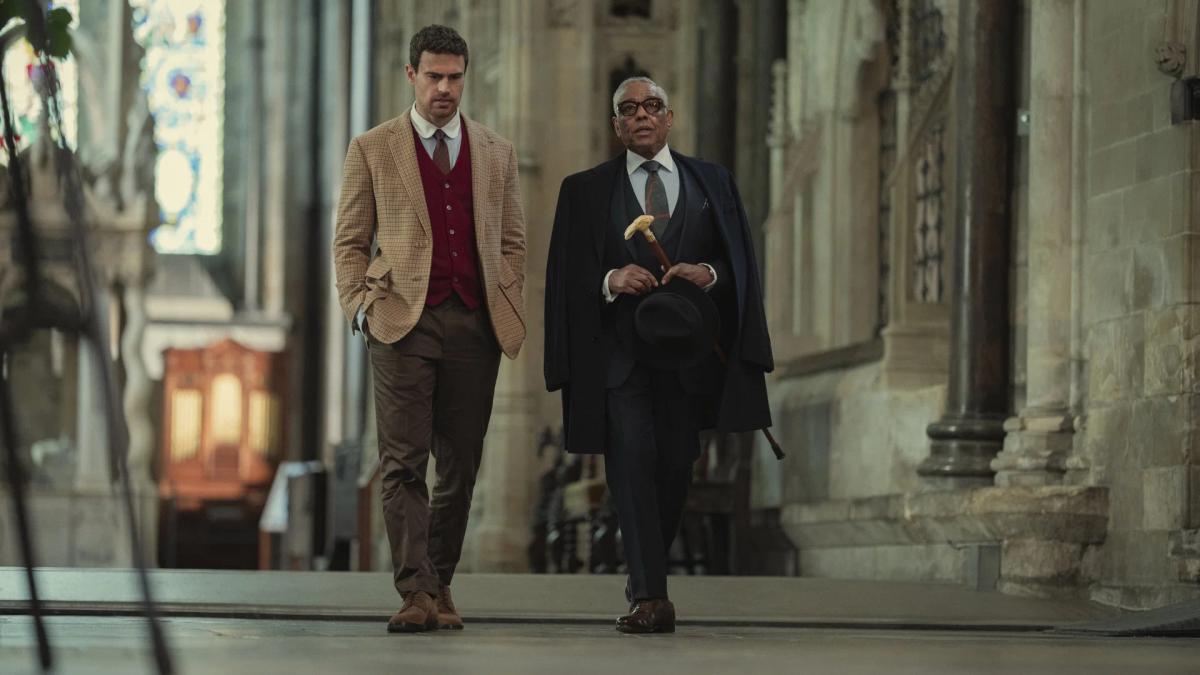
Eddie captures one of the mercenaries from the Halstead raid and works on him with a set of car batteries, repeatedly suggesting Bobby's name until the man agrees. He then hires Marco Moretti (Sergio Castellitto) to have Bobby killed inside prison. He has reason: Bobby had already had him beaten half to death and dumped in a shallow grave for defying him over the decriminalisation bill.
Then it falls apart. Susie Glass (Kaya Scodelario) brings him the piece he's missing — Bobby bought Eddie's debt from Stanley Johnston (Giancarlo Esposito) on the morning of the wedding — and Stanley confirms it on the phone. A man who has just bought your debt is the last man who wants you dead. The captive changes his story under Susie's questioning, and the confession collapses with it.
The assassin is already inside. Eddie reaches the prison in time to help, but Bobby finishes the job himself with a shiv, taking a bullet in the arm on the way. Eddie leaves him with the season's cleanest line: Bobby may own his debt, but he does not own him.
The chainsaw, and why Eddie doesn't kill Freddy
Eddie confronts Freddy on a walk. Freddy denies it, Eddie beats him, and then a van pulls up. Inside is Gospel John, bound and gagged, beside a man holding a chainsaw. Eddie tells his brother that somebody has to die, and puts him in the van.
The doors close. The chainsaw starts. Freddy comes out drenched in blood, holding Gospel John's severed head, and Eddie lights a cigar.
Two readings of that scene, and the show is not neutral between them.
The makers' version, from lead writer Matthew Read, is that this is Eddie forcing his brother to take responsibility for what he set in motion — make or break, a step towards redemption, and what Read calls a ruthless form of therapy. Theo James, in the same Netflix interview, frames it as Eddie psychologically castrating Freddy while getting his revenge on the man who killed his wife, and points to The Godfather Part II as the model: a man getting better at destroying his enemies while losing pieces of himself.
The reading the scene equally supports is simpler. A grieving widower with a captive man and a chainsaw is not administering therapy. Read half-concedes this himself, allowing that the justice Eddie finds is warped because he hasn't processed anything yet. The open question the finale wants you to leave with is whether Eddie has gone mad or is becoming a leader capable of extraordinary things. Read leans towards the second. The last image — a man lighting a cigar over his brother's handiwork — makes the first perfectly available.
Where Susie Glass ends up
Not where her father thinks she is.
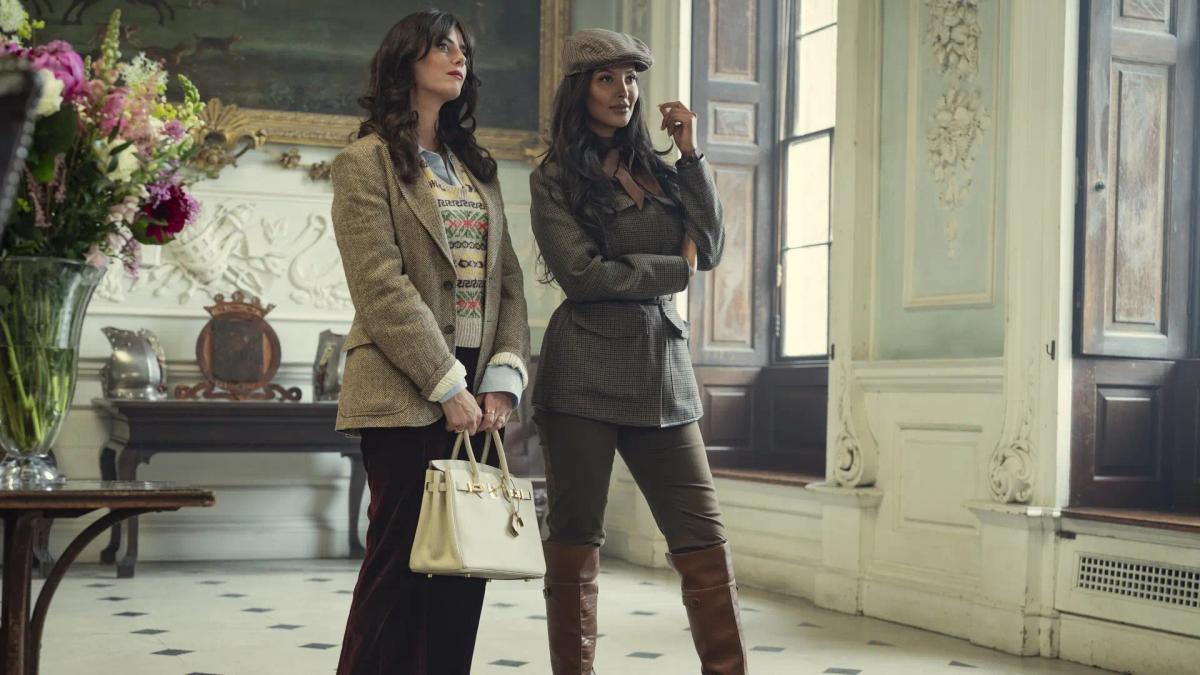
While Bobby is planning to absorb Moretti's operation and spread the Glass empire across Europe, Susie has quietly built a relationship with Carlos Vargas (Cosimo Fusco) that belongs to her rather than to him. It comes out of the wreckage of her cocaine venture with Joe Green (Tyler Conti), who had been lying to her since they reconnected; rather than run with him, she put him on a plane back to Vargas in Peru and turned the disaster into her own arrangement.
That connection is what gets Eddie and Susie to Gospel John in the finale. Scodelario, talking to Netflix about the finale, has described the endpoint plainly: Susie realises she can't operate under her father's name any longer, and can't rely on Eddie as her partner either. She spends the season being managed by two men and ends it with a supply line neither of them controls.
The Bannik and the London Stone
Season two runs a thread of mysticism it declines to explain away. Bobby consults a Bannik — a bathhouse spirit from Slavic folklore that answers a question with a pat for yes or a scratch for no — and it steers a sixteen-million-pound decision. Eddie, separately, has an encounter with the London Stone that restores his nerve after the beating. Stanley Johnston frames Eddie's rise in spiritual and historical terms throughout.
None of it gets resolved. Netflix's own ending explainer treats that ambiguity as deliberate, and Matthew Read has confirmed the mystical escalation across the season was intentional. You can watch the season as one in which something is genuinely guiding these men, or as one in which three violent people have each found a way of telling themselves their decisions were made for them. The show will not adjudicate, and it stops treating the spirit as a joke somewhere around the halfway mark.
What the ending sets up for season 3
The finale leaves three people who have each decided they are the one running things.
Eddie survived the rebellion, buried a wife, and closed the season by telling the man who owns his debt that owning it buys nothing. He looks set to come back, but not as anyone's tenant. Susie has a supply line her father doesn't know the shape of. Bobby is planning a continental expansion on the assumption that both of them still work for him, which is the only part of his plan that has no evidence behind it.
And Freddy is alive. The show leaves open which version of him climbed out of that van.
Netflix has confirmed a third season. Variety reports eight episodes and pre-production, with no scripts finalised and no casting announced.
Cast
- Theo James as Eddie Horniman
- Kaya Scodelario as Susie Glass
- Daniel Ings as Freddy Horniman
- Pearce Quigley as Gospel John
- Ray Winstone as Bobby Glass
- Giancarlo Esposito as Stanley Johnston
- Benedetta Porcaroli as Bella
- Sergio Castellitto as Marco Moretti
- Tyler Conti as Joe Green
- Cosimo Fusco as Carlos Vargas
- Maya Jama as Aisha
Reviews in this piece
Read next

The Gentlemen's Class Satire, Explained
The Gentlemen's real argument isn't that aristocrats were always criminals. It's that they used to be able to make what they did legal.Read it →Who’s who in The Gentlemen

Susie Glass
Who is Susie Glass in The Gentlemen? Kaya Scodelario's character goes from running her father's empire to quietly building her own.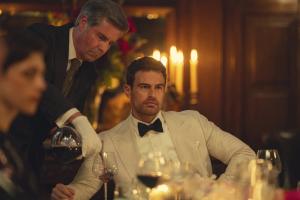
Eddie Horniman
Who is Eddie Horniman in The Gentlemen? Theo James's duke, from reluctant heir to ruthless crime lord, across both seasons.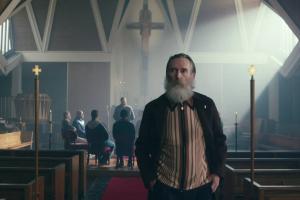
Gospel John
John “The Gospel” Dixon heads the Scouse crime family. Who he is, why he wanted the Hornimans dead, and how the feud ended. Spoilers throughout.


In this world
 TV review
The Gentlemen Season 2
Bigger, darker and far more lavish, but it breaks the partnership that made the first season work.
The Gentlemen's Class Satire, Explained
The Gentlemen's real argument isn't that aristocrats were always criminals. It's that they used to be able to make what they did legal.