In this piece
The line the show sells itself on is that the aristocracy were the original gangsters. It's a good trailer line and it isn't quite what the series argues.
The sharper version is this: the old families weren't criminals, because they had the power to make what they did legal. Parliamentary enclosure consolidated common land into private holdings. The Corn Laws kept cheap grain out to protect landed income. Both were lawful, and landed interests were heavily represented among the people making the law. What separates Eddie Horniman from his ancestors is not morality. It is that he has inherited the estate without inheriting the immunity.
Major spoilers for both seasons follow.
Wolf in sheep's clothing
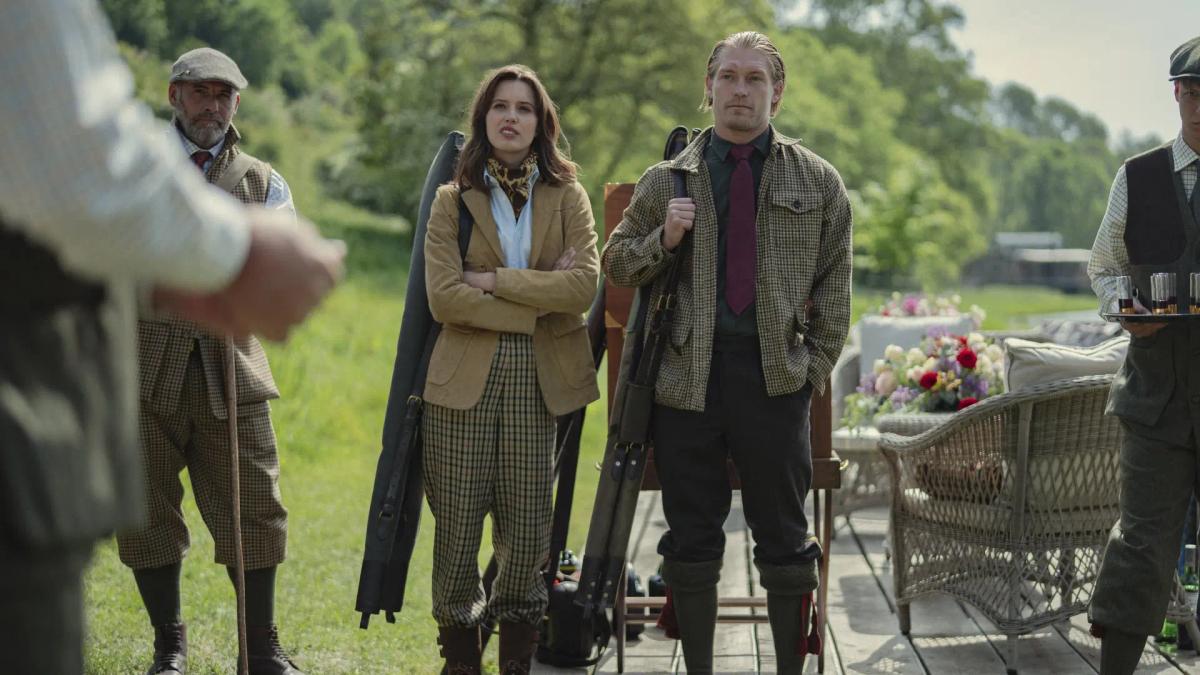
Guy Ritchie's own framing for the show is the zoo and the jungle. Stanley Johnston puts it as a choice — you either survive in the jungle or exist in the zoo. Eddie's answer is the better line: his family have been living in the zoo and hunting in the jungle for generations.
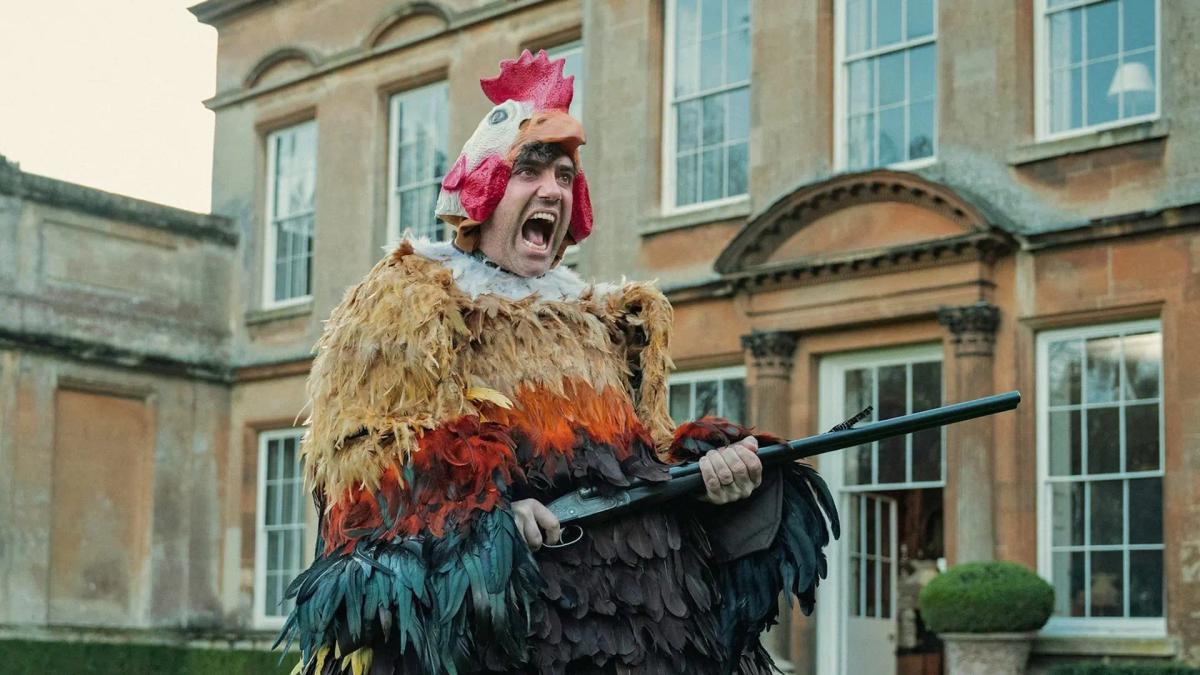
That is the thesis, and it is not really about criminality. It is about presentation. The Hornimans have always done whatever the estate required; the difference now is that they can no longer dress it as anything else. The tailoring, the shooting parties, the manners are all intact. Only the legal cover is gone.
Which is why the show is funniest when the two registers touch. A duke inherits a title and an industrial cannabis farm in the same afternoon, and the series treats them as the same category of asset — because for the family, they are.
Season one is where it works
The first season keeps the argument in the frame almost constantly, because Eddie is new to it and has to have everything explained.

The estate is a fortune on paper and a bill in practice: upkeep, staff, taxes, and a house too big to heat, kept afloat by a crop growing under the lawn. The recurring joke is that many of the aristocrats around Eddie are running the same arithmetic and losing. Lord Bassington is the clearest first-season case; Hawthorne and MacDougall extend the pattern in season two.
That is the show's real observation about the class, and it is more interesting than calling them gangsters. They are not villains. They are a caste whose income stopped arriving and who have too much house to walk away from.
Lady Sabrina Horniman is where this lands hardest, and it lands as comedy. Joely Richardson plays a woman for whom a drug empire beneath the garden is a mild administrative matter, roughly on a par with the flower arrangements. Her delivery does more work than any speech in the series. Nothing surprises her, because nothing about this is new.
The strike
Season two produces the one scene where the show stops being charming about it.

Who Is Eddie Horniman?
Who is Eddie Horniman in The Gentlemen? Theo James's duke, from reluctant heir to ruthless crime lord, across both seasons.The workers on the farm stop production, backing a colleague who was hospitalised after an adverse reaction during a clinical trial and given neither adequate time off nor proper medical support. Their spokesman asks for better pay and conditions.
What happens next is a duke and his business partner putting down a labour dispute on their own land. A final offer. A threat. Then a private warning at gunpoint.
This is the oldest relationship in British landholding, restaged with a different crop: the estate produces, the people who work it ask for more, and the family that owns the ground decides how the conversation ends.
And then the episode blunts its own critique. Ned survives the threat, but the plot has already established him as someone stealing from the operation, and it finishes by having him take an experimental batch and get killed by a rival. The grievance was legitimate. The story nevertheless arranges things so that Eddie and Susie are entitled to treat their spokesman as the problem.
The best joke in the show is the House of Lords
Season two hands Eddie the argument's logical conclusion.
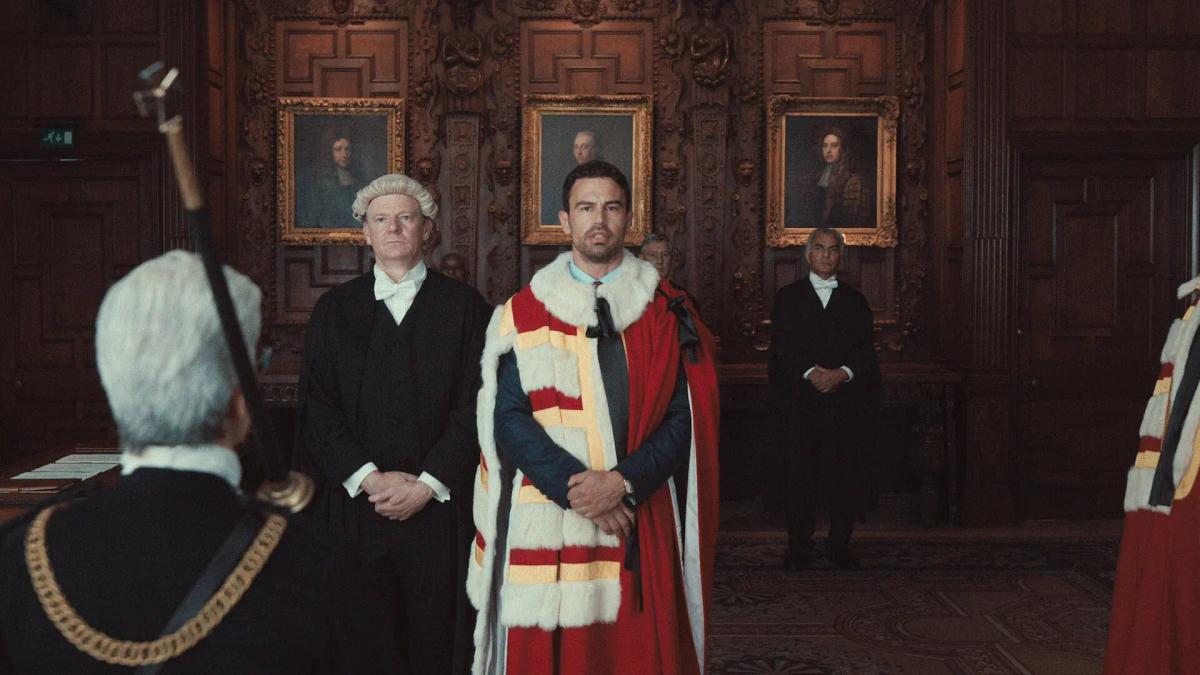
His plan is to change the law on cannabis, invest in the legal trade, and feed illegally produced Glass cannabis into the legitimate market, allowing him to undercut regulated competitors. The show calls this decriminalisation while describing something much closer to a commercial market, which is the first sign that its parliamentary mechanics are drawn broadly.
To do it he needs a seat and he needs votes. A dukedom has not carried a seat automatically since 1999, so Hawthorne helps Eddie pursue one of the hereditary places preserved under the post-1999 system. The plot appears to rely on the law as it stood before 29 April 2026, when those final hereditary places were abolished. Hawthorne's own support costs cash and a night out with Susie's brother. The fictional Bishop of Sussex's support costs considerably more effort: an entangled business of debt, a stolen falcon and a property sale that Eddie has to unpick. Her apparent authority to deliver the Lords Spiritual as a bloc is fictional too.
Take the constitutional machinery as loosely as the show intends it. The shape underneath is exact.
An aristocrat sitting in Parliament to change the law so that his own trade becomes legitimate belongs to a very old tradition: people with property using legislation to protect or enlarge the value of that property. It is not a precise equivalent of parliamentary enclosure or the Corn Laws — those consolidated land and restricted imports rather than laundering anyone's contraband — but it is unmistakably the same instinct.
And then Bobby stops him
Which is where the show is cleverer than its own premise.
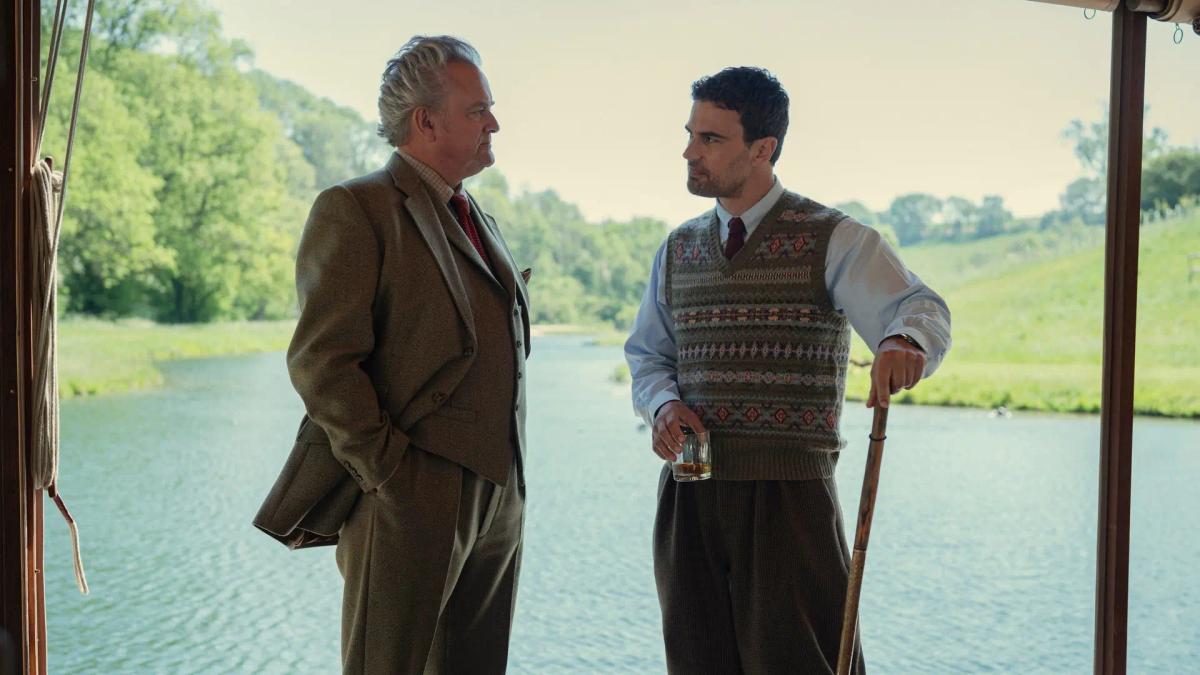
Eddie does not succeed. Bobby Glass wants prohibition kept exactly as it is, because illegality is what protects the Glass monopoly. Scarcity is the business. So from a prison cell he reaches into the same institution, has Hawthorne killed, turns the votes and destroys the bill.
Which is the best idea in either season. The law here is not simply a weapon the aristocracy points at everybody else. It is the ground that old status and new criminal money fight over, and what they are fighting about is which of them gets to take the profit. Eddie wants the trade made legal because legality would make him rich and respectable at once. Bobby wants it kept criminal because criminality is what makes him necessary.
Where the satire goes in season two
That is the honest criticism, and it is not that the argument disappears. It is that the show stops being interested in it.
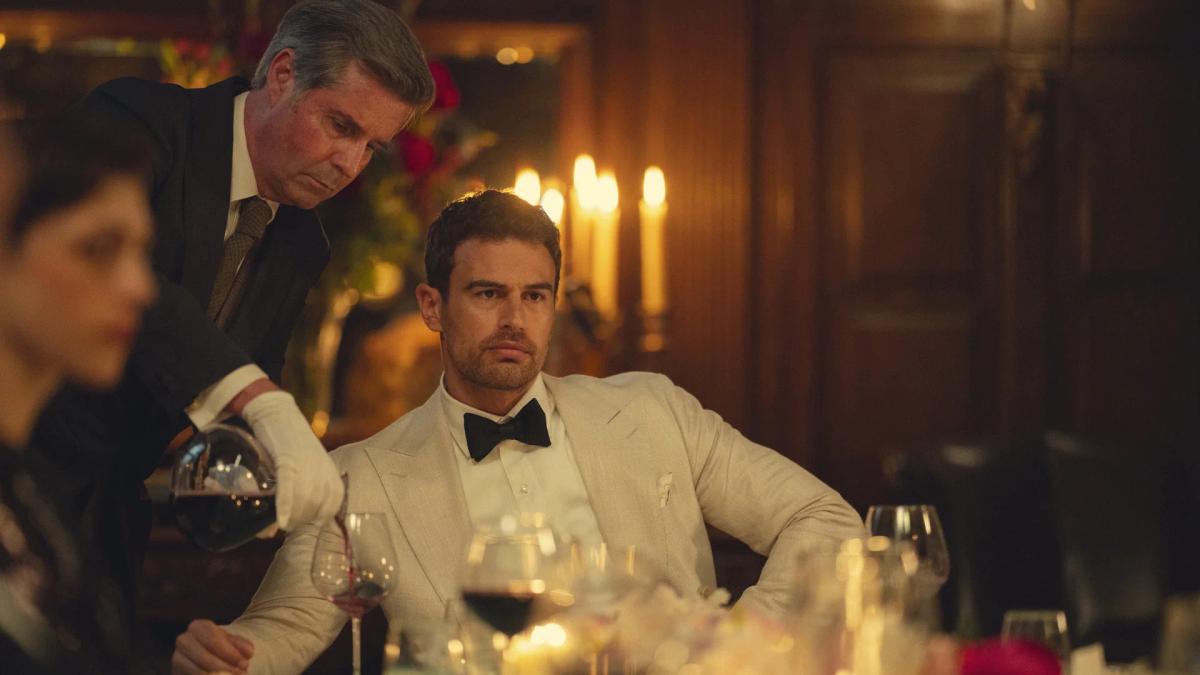
Season one is about a class caught without its legal cover, and Eddie is the audience's way into that. Season two is about Eddie. The estate stops being the subject and becomes his backdrop, the class material thins to a few good lines, and the bill — the plot that makes the argument most directly — is resolved and then set aside so the season can get on with what its lead character is becoming.
The satire was more prominent when Eddie was less important. That is a real cost, and it is the difference between a show about a system and a show about a man.
Is the show on his side?
It is not sympathetic to anyone, which is its saving grace. The workers are disposable, the peers are for sale, the criminals are vain, and the family is held together by a gamekeeper.
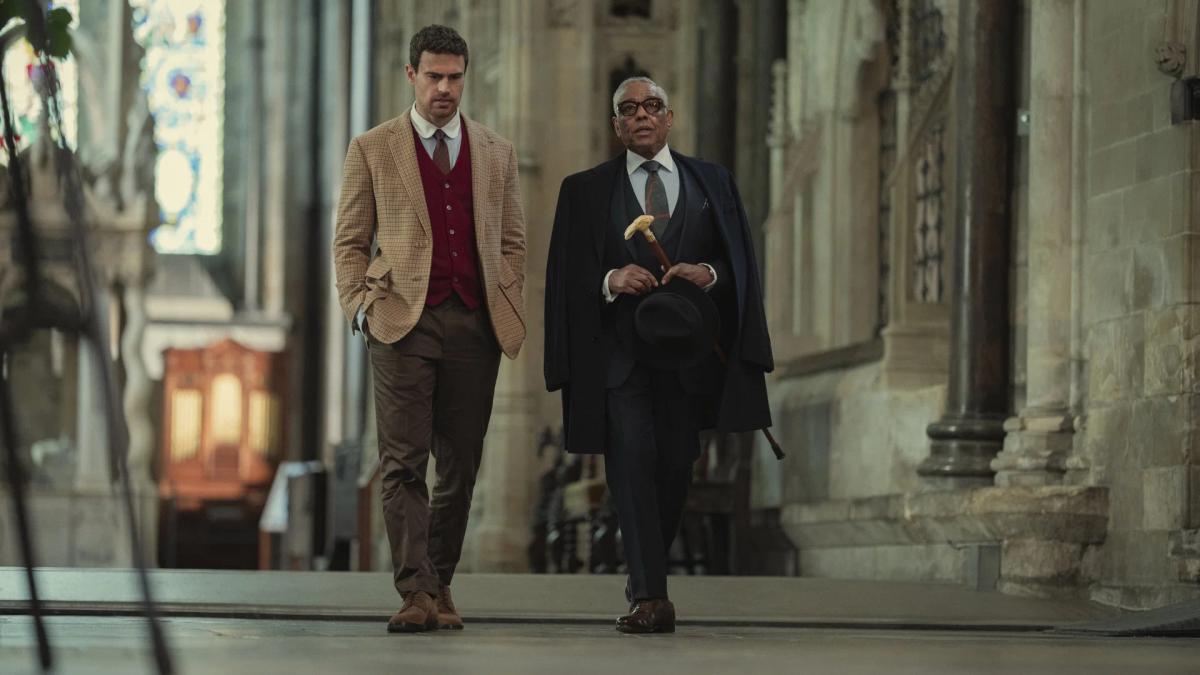
But Eddie's climb is presented as legible, and to a degree admirable, even while the show is dramatising what it costs him. Lead writer Matthew Read has framed the season around whether Eddie wants too much and will lose his soul getting it, and that is on screen. He becomes more capable, more powerful and more recognisably aristocratic at exactly the rate he loses whatever moral distance he once had from the Glasses.
Which is itself the point, if you let it be. That is how the ladder has always worked. The people climbing it did not have to describe themselves as falling.
So does it land?
Yes, and more so in the first season than the second.

The premise is sound, the observation about a cash-poor class with too much house is genuinely good, and the Lords plot is the most pointed thing the series has attempted. What it lacks is patience. It sets the target up beautifully and then cuts away, every time, to something with more momentum.
A show this well dressed could have afforded to sit still for one more scene.
Cast
- Kaya Scodelario as Susie Glass
- Theo James as Eddie Horniman
- Daniel Ings as Freddy Horniman
- Ray Winstone as Bobby Glass
- Giancarlo Esposito as Stanley Johnston
- Benedetta Porcaroli as Bella
- Hugh Bonneville as Lord Hawthorne
- Max Beesley as Henry Collins
- Pearce Quigley as Gospel John
- Sergio Castellitto as Marco Moretti
- Josh Finan as Jethro
- Harry Goodwins as Jack Glass
- Tyler Conti as Joe Green
- Cosimo Fusco as Carlos Vargas
Reviews in this piece
Read next

Who Is Susie Glass?
Who is Susie Glass in The Gentlemen? Kaya Scodelario's character goes from running her father's empire to quietly building her own.Read it →Who’s who in The Gentlemen

Susie Glass
Who is Susie Glass in The Gentlemen? Kaya Scodelario's character goes from running her father's empire to quietly building her own.
Eddie Horniman
Who is Eddie Horniman in The Gentlemen? Theo James's duke, from reluctant heir to ruthless crime lord, across both seasons.
Gospel John
John “The Gospel” Dixon heads the Scouse crime family. Who he is, why he wanted the Hornimans dead, and how the feud ended. Spoilers throughout.

In this world
 TV review
The Gentlemen Season 2
Bigger, darker and far more lavish, but it breaks the partnership that made the first season work.
The Gentlemen Season 3: Everything We Know So Far
Confirmed, eight episodes, Guy Ritchie directing, filming soon. What is actually known about season 3, and what is still guesswork.
