In this piece
- The family Vision had before Byrne's story
- What happens in the 1989 Vision Quest story
- Why he comes back white, and what else is missing
- What happens to Wanda's children afterwards
- How WandaVision changes White Vision's origin
- What VisionQuest carries forward
- Does Vision ever regain his colours in the comics?
- Is VisionQuest adapting Byrne, or Tom King's Vision?
- Where to start reading
Spoilers for VisionQuest Episodes 1 and 2, WandaVision, Agatha All Along and the comics discussed below.
White Vision began as a particularly cruel answer to a rescue story. The Avengers could recover him, put his body back together and return him to Wanda. They could not make the reconstructed man feel what her husband had felt.
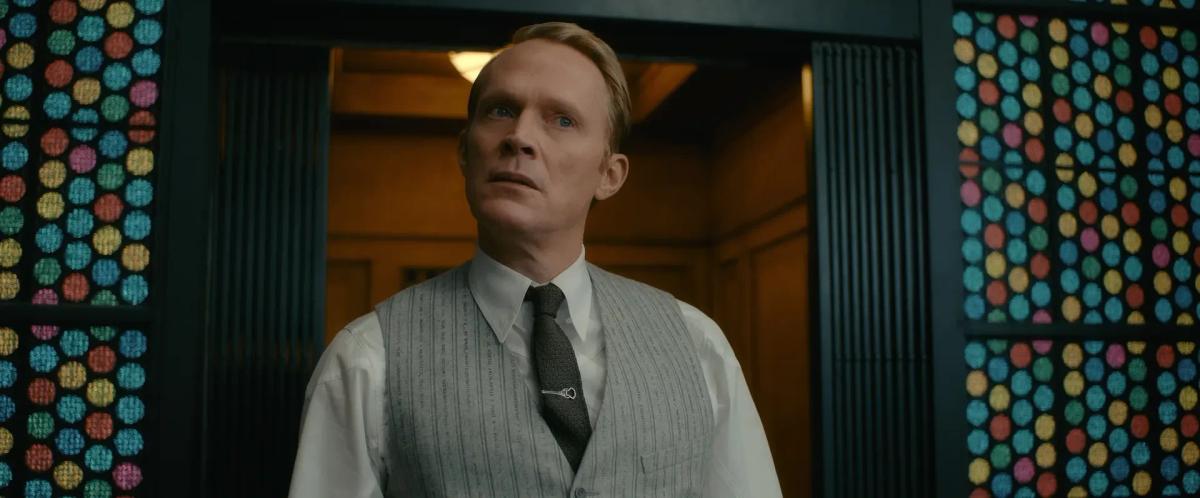
John Byrne's 1989 Vision Quest storyline supplied that version of the character. WandaVision adapted the dismantled body and colourless reconstruction into its own continuity. VisionQuest now follows the rebuilt Vision (Paul Bettany), who has access to his earlier memories but questions whether they make him the same person.
The comic is relevant background, not a confirmed blueprint for the television plot.
The family Vision had before Byrne's story
The Vision first appears in Avengers #57, cover-dated October 1968, by Roy Thomas and John Buscema. Ultron creates him, and the brain patterns of Simon Williams, also known as Wonder Man, are fundamental to his mind.
That second parentage matters when the character is rebuilt. In the comics, restoring his personality involves a question about a particular human donor. The MCU constructs its Vision differently, bringing J.A.R.V.I.S. (voiced by Paul Bettany in the films) and the Mind Stone into the process instead.
The comics Vision marries Wanda in Giant-Size Avengers #4, cover-dated June 1975. Their relationship then extends into family life: Thomas and William are born in The Vision and the Scarlet Witch #12, cover-dated September 1986, by Steve Englehart and Richard Howell.
By the time Vision disappears in Byrne's story, he isn't a machine whose only meaningful connection is to his team. He is Wanda's husband and the father of their children. Rebuilding him without restoring those bonds threatens an existing household.
What happens in the 1989 Vision Quest story
The central arc runs through West Coast Avengers #42 to #45, cover-dated March to June 1989. Byrne writes and pencils the issues, with Mike Machlan inking.
Vision is abducted by Vigilance, an agency led by Cameron Brock. The justification is a security threat: Vision's earlier seizure of global computer systems has demonstrated how much power one intelligence can reach. His captors respond by dismantling him and tampering with the systems that make him who he is.
Mockingbird helps facilitate the abduction and later changes course. By then the damage is done. The Avengers find their teammate taken apart, and Hank Pym faces the task of reconstructing him.
Vigilance wants to neutralise a being it considers dangerously powerful. S.W.O.R.D., in WandaVision, rebuilds a recovered body because it wants a weapon it can use. One organisation fears Vision's independence; the other intends to exploit him. Both treat his body as something they are entitled to control.
Why he comes back white, and what else is missing
The damage to Vision's synthetic body prevents a straightforward restoration of his original appearance. His reconstructed form is colourless. The more consequential loss is in his mind: the patterns that supported his familiar personality and emotional life can't simply be reinstalled.
Wonder Man refuses permission to copy his brain patterns again. His feelings for Wanda complicate that refusal, making the missing component a painfully personal problem rather than a technical inconvenience.
Recognising a wife is not the same as loving her. The rebuilt Vision can't resume the marriage just because the people around him remember it. His connection to Wanda and the children has been broken.
Memory and feeling are related losses, but recovering one wouldn't automatically restore the other. Give this Vision a record of his marriage and he could learn its facts. Those facts wouldn't make him experience Wanda as the woman he loves.
Wanda faces someone who looks like her husband and has been built from his remains, yet can't return the attachment she still feels. The reconstruction brings him back close enough for that distance to hurt.
What happens to Wanda's children afterwards
The loss of the twins comes after the central reconstruction story, in later issues. West Coast Avengers #51 and #52 reveal the connection between Wanda's magical children, Master Pandemonium and fragments of Mephisto.
Wanda created the boys without understanding that connection. Mephisto reclaims the fragments, and the children cease to exist. Agatha Harkness removes Wanda's memories of them.
Later comics return the sons as Billy Kaplan and Tommy Shepherd, the Young Avengers heroes Wiccan and Speed. That history explains why the name of Thomas Shepherd (Ruaridh Mollica) in VisionQuest carries such weight for comic readers. The Mephisto connection, however, belongs to this comic storyline; the premiere has given him no role in its explanation.
The television route runs through WandaVision and Agatha All Along instead. Billy (Joe Locke) works to restore Tommy, supplying an explanation the 1989 comics don't contain. Our Tommy continuity explainer covers that chain in detail.
How WandaVision changes White Vision's origin
In WandaVision, S.W.O.R.D. has the original body of Vision, killed by Thanos (Josh Brolin) in Avengers: Infinity War. Wanda Maximoff (Elizabeth Olsen) sees the dismantled body but doesn't steal it. Her Westview Vision is a separate being created by her magic.
S.W.O.R.D. activates its reconstructed body using Wanda's residual energy from a drone sent into the Hex. This White Vision is sent against the conjured Vision in the finale.
Their meeting becomes the Ship of Theseus debate. If a ship's components have all been replaced, what makes it the same ship? If the original components are reassembled elsewhere, which is the original? The two Visions reach an answer that allows both claims to exist.
The Westview Vision then unlocks the rebuilt Vision's stored memories. White Vision leaves, departing before Wanda says goodbye to the husband and children she created. He has recovered his past without joining their final moments as a family.
The restored memories are the starting point for another problem. They give him knowledge of a life. They don't demonstrate that he has recovered every attachment associated with it.
What VisionQuest carries forward
The first two episodes give the reconstructed Vision a practical version of the same difficulty. He remembers the original's life and has returned to an Edinburgh pub the original Vision and Wanda used to frequent, while resisting the idea that the life belongs to him.
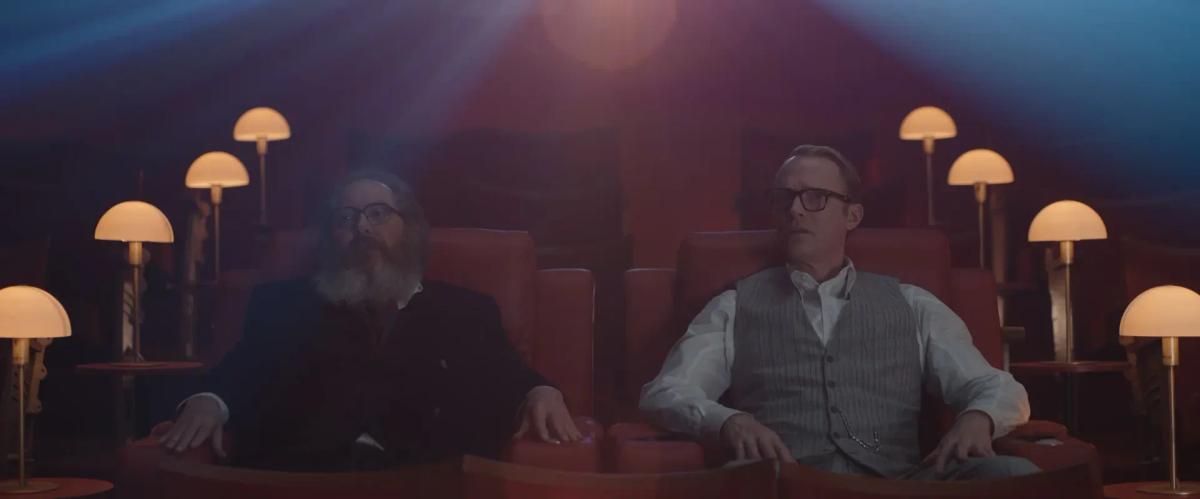
Thomas Shepherd makes that distance harder to maintain. A possible son asks more of him than an archive of old events. His AI companions also behave less like stored files than people to whom he has obligations.
This is where Byrne's emotional reconstruction becomes especially useful background. VisionQuest's protagonist can analyse a relationship while insisting he doesn't feel it. His behaviour sometimes complicates that claim, particularly when another person's safety is at stake.
The series is free to develop that conflict differently from Byrne. It has a different creation history, a different account of the twins and an internal household of Stark-linked AIs.
Does Vision ever regain his colours in the comics?
Yes. The familiar red-and-green appearance returns during the Anti-Vision storyline in Avengers #360 to #363 in 1993, involving an alternate-reality Vision and an exchange of bodies.
It isn't a simple matter of Vision choosing his old look: the story involves deception and another character occupying a body. Nor does the return of his colours date the return of his emotions.
The practical point for viewers is simpler: White Vision was a phase of the comic character, not a separate hero with an entirely isolated history. Television can use that phase without following the same timetable or the same route out of it.
Is VisionQuest adapting Byrne, or Tom King's Vision?
Marvel's and Disney's official VisionQuest features don't present it as a direct adaptation of either run. Terry Matalas has pointed to MCU scenes, including the final encounter between Vision and Ultron (James Spader) in Age of Ultron and WandaVision's Ship of Theseus discussion, when explaining the series' starting point.
The comic influence is readily visible in the reconstructed body and broken emotional connection. A direct adaptation would require much more than those shared features, especially with Wonder Man and the Mind Stone occupying such different places in the two origins.
Tom King and Gabriel Hernández Walta's twelve-issue Vision series, published in 2015 and 2016, is another useful comparison. Vision constructs a synthetic family, Virginia, Vin and Viv, and attempts suburban life near Washington, DC. Their efforts to pass as an ordinary household make the series an especially uncomfortable exploration of his desire to belong. It's worth reading, though none of those characters appears in VisionQuest's first two episodes.
Where to start reading
Read West Coast Avengers #42 to #45 for the central dismantling and reconstruction. Continue to #51 and #52 if you want the twins' fate; those issues sit beyond the core four-part arc. Check the contents of a collected edition before buying, because different Vision Quest collections don't all include the same surrounding material.
For the sons' later lives, start Young Avengers by Allan Heinberg and Jim Cheung. For a self-contained exploration of Vision's attempt at family life, choose the King and Walta series.
None is compulsory homework. They explain why the reconstructed Vision has such a long emotional history behind a seemingly simple question: what, exactly, has survived being rebuilt? Our VisionQuest premiere review assesses the show's own answer so far.